Ethics Observations On Sticks, Leadership, And Chris Christie’s Vindictive Bridge Closing Scandal

Christie apologizes

Before we delve into the starting point for most ethics inquiries—What’s going on here?— a summary…

Last September, the Port Authority of New York and New Jersey closed all but one lane of the George Washington Bridge , horrifically tangling commuter transportation in Fort Lee, New Jersey, just across bridge from Manhattan. The lane closures  delayed emergency responders to four calls, and may have resulted in at least one death. New Jersey Governor Chris Christie’s office had attributed the lane closures to a traffic study.  But smoking gun e-mails emerged proving beyond the shadow of a doubt that the bridge closing was far more sinister: top Christie aides engineered the gridlock specifically to cause problems for Fort Lee, whose mayor had angered the Governor by refusing to endorse him for re-election. It was political payback of a particularly brutal and Machiavellian sort.

“Time for some traffic problems in Fort Lee,” wrote Bridget Anne Kelly, a deputy chief of staff to Christie, in an email on Aug. 13 to David Wildstein, Christie’s appointee at the Port Authority. Wildstein resigned in December after news of the scandal first broke; he has since refused to answer questions in a hearing on the matter, citing the Fifth Amendment. Christie fired Kelly yesterday, and in a long and emotional press conference, profusely apologized while insisting that he knew nothing of the plot, but accepted responsibility for the actions of his staff. The incident is attracting national interest because Christie, a Republican,  is an intriguing and controversial  potential candidate for a 2016 Presidential run.

Observations:

  • This is bad, and there is no defense for it. Government power should never be abused like this, by anyone. Distorting one’s duties to the public to harm members of the public out of such motives as spite, revenge, retribution, intimidation or personal and political gain is the moral equivalent of a crime.
  • In fact, it should be a crime. It can’t be, because the problem is that some degree of such distortions of the duty to act in the public’s best interest are essential political tools that cannot be jettisoned without undermining effective leadership as well. Politics works through the carrot and the stick, and the stick virtually always causes collateral damage. At every level of government, refusing to do what a powerful leader wants must have negative consequences, or nobody will do what the leader wants, and he or she will no longer be effective. That, in the end, hurts the public too–presumably more seriously than the short-term harm from political payback. Continue reading

The Fifth Annual Ethics Alarms Awards: The Best of Ethics 2013

Ethics Story 2013

I decided to start with the Best in Ethics this year, in contrast to other years, on the theory that it would get things off to a positive start in 2014. What it did, instead, was make me realize how negative Ethics Alarms was in 2013. Either there wasn’t much positive going on in ethics, or I wasn’t seeing it. My thanks to those of you who send me nominations for Ethics Heroes (and other stories); even when I don’t write about them, they are valuable. Please keep them coming. In the meantime, I pledge to try to keep the jaundice out of my eye in 2014. Things just can’t be as dire as they seemed last year.

Could they?

Here are the 2013 Ethics Alarms Awards for the Best in Ethics:

Most Important Ethical Act of the Year:

The U.S. Supreme Court declared the Defense of Marriage Act unconstitutional, paving the way for the universal legalization of gay marriage. Yes, it was a legal decision, but it was also based, as all such culturally important decisions are, on a societal recognition that what was once thought to be wrong and immoral was, in fact, not. This is ethics, an ongoing process of enlightenment and wisdom about what is right and wrong, and the U.S. Supreme Court did its part. Continue reading

The Problem Isn’t That MSNBC’s Talking Heads Are “Offensive”…It’s That They Are Unprofessional, Hateful And Loathsome


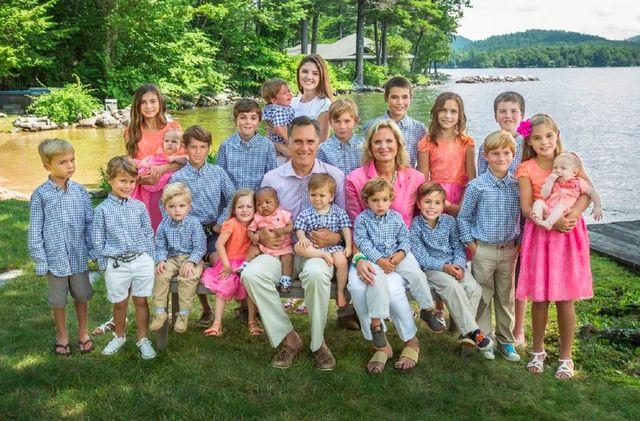
mitt-romney-grandkids

From Mediaite:

“On Sunday’s Melissa Harris-Perry (MSMBC) show, the eponymous host led a panel of entertainers in a rundown of the “photos of the year,” which somehow included a Romney family picture that “a lot of people had emotions about,” according to MHP….“Everybody loves a baby picture,” Harris-Perry said, “and this was one that really, a lot of people had emotions about this baby picture this year. This is the Romney family. And, of course, there on Governor Romney’s knee is his adopted grandson, who is an African-American, adopted African-American child, Kieran Romney.” As Harris-Perry made the introduction, panelist Pia Glenn sang “One of these things is not like the others, one of these things just isn’t the same,” a tune whose original lyrics read “one of these things doesn’t belong.” “And that little baby, front and center, would be the one,” she added. …Comedian Dean Obeidallah chimed in by reducing the baby to a token. “I think this picture is great,” he said. “It really sums up the diversity of the Republican party, the RNC. At the convention, they find the one black person.”

Then the host, without missing a beat and without sensing any irony, said that the next segment would be devoted to answering the question, “Hey..is that racist?” Continue reading

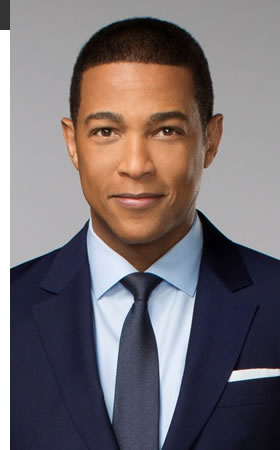
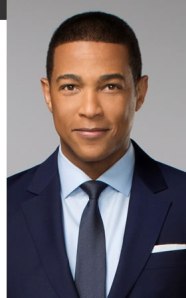
Don Lemon For President

Ethics Hero.

Ethics Hero.

Bear with me: I’ll get to Don Lemon eventually.

In a mature, rational, respectful democracy with an objective and competent news media, difficult and contentious issues would be thoughtfully debated with open minds and fearless honesty, without the toxic influence of rigid ideologies, partisan loyalties, group identification, or biases. The objectives: reach the truth, identify problems, begin solving them.

This process is difficult under the best of circumstances, and in the United States, circa 2013, it is nearly impossible on any issue, and dangerous on the issue of race, with both the media and elected officials actively seeking to exacerbate racial divisions and misconceptions. A recent poll suggests that the perception of racial divisions in America has worsened by 25% since Barack Obama was elected President, following decades of steady improvement. Why is this? There are many reasons, but the cynical pandering to misconceptions in the black community is one major suspect.

President Obama, had he been fair and responsible, might have used his remarks about the George Zimmerman trial to point out that neither the incident itself nor the verdict of the jury were relevant to race issues, or created by a “stand your ground” law that has been a lightning rod for accusations of racism in the justice system. Instead, he talked about how he “understood,” and apparently agreed with, an interpretation of the events based on past African-American experiences with racism. This was irresponsible and wrong. It was as much an endorsement of irrationality, ignorance and bias as it would be to explain that current day racists see blacks through the prism, “those sets of experiences” in Obama’s words, of their region’s history of culturally acceptable slavery, and we have to respect their views as a result. The President has not, as would be a far more justifiable statement, explained that opponents of same-sex marriage are not bigots, but see the issue through the ” sets of experiences” of their religious upbringing. Serial rapists may also see women through the prism of their childhood abuse—those are rather damaging “sets of experiences”— at the hands of their mothers.

There are always powerful reasons why people have hatreds and biases, and reasons why hatreds and biases cripple their ability to interpret reality and act responsibly. We can all understand that, but it doesn’t justify distorting the facts. Blacks are not inferior to any other race, no matter what the “prism” says. Gay marriage poses no harm to society, and gays deserve the same rights as anyone else, and the Bible doesn’t change those facts. Rape victims are not responsible for the misogyny of rapists, no matter how their distorted thinking came to be.

And the acquittal of George Zimmerman was not evidence of rampant white racism, regardless of the African-American experience. The President had a duty to say that. He had a duty to say, “I understand, but you are wrong on the facts.” He did not. Instead, he encouraged and supported a distorted and biased narrative that is harming race relations and respect for the justice system, and far too many in the news media—which is to say, anyone in the media who is stooping to this—are trying to continue the process. For example, Abbe Smith, in the Washington Post this weekend, had an article on a topic I have discussed here more than once: the challenge of a defense attorney representing a guilty and heinous client. It was an excellent piece, but the Post headline writers and editors unconscionably and unethically decided to pander to the city’s  predominantly black population’s bias by publishing it under this:

“What motivates a lawyer to defend

a Tsarnaev, a Castro or a Zimmerman?” Continue reading

Congressional Ethics and Race: A Quiz

QUESTION ONE: If you are the House Ethics Committee, and you find that investigations of two prominent House members have resulted in convincing evidence of serious wrongdoing and ethics violations, and they both are African-American, the most ethical course is to: Continue reading