The Sterling Backlash: Signature Significance, Racism, Hypocrisy, and Double Standards

Bennie Thompson

“No big deal, he’s  just a Congressman…”

I often use the term “signature significance” in posts, and since it is a term that is not often applied to ethics, I thought today would be a perfect time to illustrate it in its original context, while clarifying the ethical murk around the Donald Sterling Ethics Train Wreck.

The original context of the phenomenon of signature significance is baseball, and I just watched an example of it. Today Red Sox left-hander John Lester beat the Oakland A’s, a very good team, by hurling eight innings in which he gave up no runs, only one hit, two bases on balls, while striking out 15 batters. If you don’t know anything about the game, let me tell you: this is extraordinarily good. Pitching performances can be measured and compared by using the “game score” method, developed by sabermetrics (that is, baseball statistics) pioneer Bill James. The best game score ever achieved was 105; the highest score in major league history for a pitcher who did not pitch all nine innings (as with Lester today) is 95, and has only been done once. (Theoretically, a game score could be as high as 145)

James also devised the term “signature significance” in the context of such games. His research showed that pitchers who were not outstanding talents never pitched a game with such a high game score even once—it simply didn’t happen. Thus, he reasoned, pitching a single game like Lester’s (the actual game he used was a similar performance by a young Roger Clemens before anyone knew what Clemens would become) was sufficient proof, all by itself, to conclude fairly and scientifically that the game was meaningful, without any other data. In cases of signature significance, he explained, the usual statistical rule that small sample sizes are not reliable indicators do not apply. Sometimes one incident, performance or episode is sufficient to make a confident verdict.

Signature significance is very useful, I have found, to rebut unethical rationalizations for unethical conduct that are used to excuse the agent of the ethical breach. “It’s only one mistake” and “Anyone can make a mistake” are the main ones. In the case of some serious kinds of bad conduct, this reasoning is misleading and false. Donald Sterling’s comments recorded and publicized by his whatever-you-call-her V. Stiviano have signature significance: they prove he’s a racist. Can you imagine any non-racist individual saying, in public or private, that he didn’t want his girlfriend being seen at his team’s games in the company of blacks?  How could this possibly occur? It wouldn’t, of course. Only those who hold racist attitudes and beliefs think and say such things. Sterling is a racist.

Stiviano, for her part, despite being the one who brought the media, the sports world and the public down on Sterling’s 80-year-old head, now says she doesn’t believe he’s a racist. Of course, she also says she’s his “silly rabbit” and that she is going to be President some day. She is an idiot. But I digress.

Other figures have made statements in the media that also have signature significance of the same sort as Sterling’s, yet the very same groups and journalists who have been whipped into a self-righteous froth over Sterling are strangely silent: Continue reading
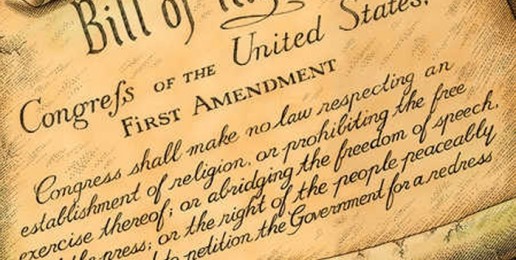
A Brief Ethics and Culture Lesson For First Amendment Pedants

First-Amendment-on-scroll1

Thousands or pundits and web commenters, perhaps hundreds of thousands, in their concerted effort to justify the speech and thought police, (at least as long as the Enforcers are not likely to disapprove of their thoughts and speech), are mocking those who cite the First Amendment as authority for the proposition that the treatment of Donald Sterling, and others, are harmful, sinister, and un-American. The pedants are technically correct, of course. When someone who is fired for posting something offensive on Facebook screams, “My First Amendment right of free speech has been violated!”, that typically speaks of a poor civic education. The Bill of Rights only constrains government action, not private transactions. No rights, which are enumerated and protected from government incursions by the Constitution, have been lost or affected when only private action is involved.

That does not mean, however, that when private action opposes an individual’s Constitutional rights, it is necessarily acceptable, fair, harmless, reasonable or right. Indeed, the government and law serves a crucial function by delineating and encouraging cultural and ethical values. The principles articulated in the Declaration of Independence, the Constitution and the Bill of Rights do not merely constrain government. They form the basis of the ethical values that make the United States a unique culture, and point the way to what Americans, as Americans, regard as right and wrong.

Thus, while searching though a friend’s private e-mail account isn’t a violation of one’s right to privacy under the 10th Amendment, violating a fellow citizen’s privacy is wrong, and the Bill of Rights stands as authority that it is something important to each individual that should be respected. The Constitution and the 13th, 14th, and 15th Amendments won’t and can’t stop Americans like Sterling from being bigots in their private dealings, but they send a clear message that bigotry is not approved by the United States and was not by those who have charted our ethical course. Privately interfering with someone’s right to worship as they please is wrong, and the fact that the government is prevented from doing it tells us so. The First Amendment’s existence also tells us that preserving free speech—open, fearless, speech—is essential to core American values, because it also supports free thought, that which tyrants and dictators fear. Yes, we all have the right to make free speech, thought and discourse costly, difficult and painful, but we should not. We have the right to punish severely the non-conformist, the iconoclast, the rebel, or the citizen who may be a little late, or slow, or reluctant, to accept the conventional wisdom of the moment. We have the right to do it, but it is wrong. It is un-American. The Constitution tells us so.

Addendum: After I wrote the post, I encountered this.


All Aboard The Sterling Train Wreck: The Foolish, The Grandstanders, The Dishonest And The Irresponsible

Hypocrites

The question is, which is which?

I’ll let you puzzle it out; I’ll be busy retching:

And now, the latest and deplorable passengers on this distasteful Ethics Train Wreck…

Sen. Harry Reid

Reid saluted NBA Commissioner Adam Silver for his “work to swiftly move to stamp out bigotry in its ranks,” as if that had any thing at all to do with what Silver was doing. Reid’s endorsement, however, places a high elected official’s stamp of approval on the proposition that those with unpopular ideas and biases should be punished and have their property taken away from them. Reid said that the league has set a new standard for how professional sports leagues should respond to racism. Of course, Sterling did nothing racist at all, not did he attempt to, or publicly announce such intent. The “new standard” that Reid is applauding is economic penalties for non-conforming beliefs. Finally, Reid attempted to make the absurd parallel to the Washington Redskins’ controversial name: “How long will the NFL continue to do nothing — zero — as one of its teams bears a name that inflicts so much pain on Native Americans?” Reid asked Continue reading

A Sterling Ethics Train Wreck Update, Ethics Heroes Opposing The Mob, and The Comment of the Day

thoughtpoliceEthics Alarms commenter Chris Marschner again scores a Comment of the Day regarding the subtext of my recent post about Peoria Mayor Jim Ardis, whose stunning abuse of government power to punish a citizen’s free speech was ignored while destroying NBA team owner Donald Sterling, because he privately articulated offensive views to a vengeful girlfriend, became a media obsession and a national rallying point.

Before I get to Chris’s excellent comment, however, I should bring us up to date on the Donald Sterling Ethics Train Wreck, which has proceeded as I feared it would: Continue reading

Jim Ardis, Mayor of Peoria, Uses The Police To Crush A Social Media Critic, But Never Mind, It’s Not Important Because He’s Not Racist

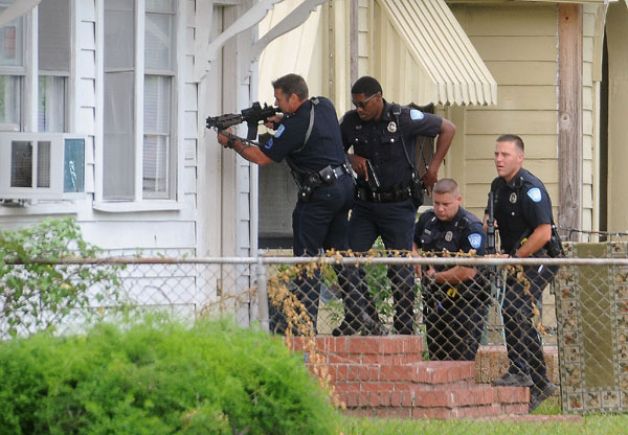
"OK, we know you have tweets in there! We're coming in..."

“OK, we know you have tweets in there! We’re coming in…”

This story is obviously trivial, because the news media doesn’t think it’s worth getting upset about. After all, it doesn’t involve race:

PEORIA — Police searched a West Bluff house Tuesday and seized phones and computers in an effort to unmask the author of a parody Twitter account that purported to be Mayor Jim Ardis. The account — known as @Peoriamayor on the popular social media service that limits entries to 140 characters — already had been suspended for several weeks when up to seven plainclothes police officers executed a search warrant about 5:20 p.m. at 1220 N. University St. Three people at the home were taken to the Peoria Police Department for questioning. Two other residents were picked up at their places of employment and taken to the station, as well. One resident — 36-year-old Jacob L. Elliott — was booked into the Peoria County Jail on charges of possessing 30 to 500 grams of marijuana and possessing drug paraphernalia, but no arrests were made in connection with the Twitter account.”

The Twitter account was obviously a parody, if not an especially deft or clever one. After all, one would have to be a hopeless doofus, and an unusually dim one at that, to believe that the mayor of any city, even Toronto’s ridiculous Rob Ford, would happily tweet about his own drug use, crimes and corruption like the Twitter avatar of the Peoria mayor did.

Yet here was Mayor Ardis’s justification to reporters for his jaw-dropping abuse of power:

“I still maintain my right to protect my identity is my right. Are there no boundaries on what you can say, when you can say it, who you can say it to? You can’t say (those tweets) on behalf of me. That’s my problem. This guy took away my freedom of speech.”

Uh-huh. Show me a how “this guy” broke any law that justifies a police raid, you unbelievably arrogant, incompetent fascist.

Some observations: Continue reading

Ethics Alarms On NPR: The Sterling Ethics Train Wreck

V.-Stiviano-Donald-Sterling

You are welcome to read the transcript and/or  listen to my interview on NPR yesterday with Michel Martin, both of which can be found here.

It’s too bad, really. They seem like such a nice couple…

Ethics Quote Of The Week: Kareem Abdul-Jabbar.

“Shouldn’t we be equally angered by the fact that his private, intimate conversation was taped and then leaked to the media? Didn’t we just call to task the NSA for intruding into American citizen’s privacy in such an un-American way? Although the impact is similar to Mitt Romney’s comments that were secretly taped, the difference is that Romney was giving a public speech. The making and release of this tape is so sleazy that just listening to it makes me feel like an accomplice to the crime. We didn’t steal the cake but we’re all gorging ourselves on it. So, if we’re all going to be outraged…Let’s be outraged that private conversations between people in an intimate relationship are recorded and publicly played. Let’s be outraged that whoever did the betraying will probably get a book deal, a sitcom, trade recipes with Hoda and Kathie Lee, and soon appear on “Celebrity Apprentice” and “Dancing with the Stars.”‘

—Basketball legend Kareem Abdul-Jabbar, in an essay pointing out some of  hypocrisies and excesses in the reactions to the Donald Sterling saga.

"Gotcha! He's screwed now...but he's a racist scumbag, so it's perfectly OK."

“Gotcha! He’s screwed now…but he’s a racist scumbag, so it’s perfectly OK.”

Good for Kareem. I was just about to make this point myself, and preparing to be pilloried for making excuses for a racist. Kareem is a lot bigger than I am, and I’m happy to stand behind him.

I watched two African-American lawyers on CNN today erupt in over-the-top outrage that has become the norm in the “finger-wagging Olympics” that Abdul-Jabbar decries in the rest of his article. One of the lawyers called Sterling’s remarks defamatory—“defamatory?” Sterling didn’t say a word that was negative about blacks; he just said he didn’t want his girl friend taking photos with them. His comments constitute smoking gun proof of racial bias, sure, but they aren’t “defamatory.” The other lawyer called them “the most vile, disgusting...” on and on and on, comments that he had ever heard.  Really? I doubt that. You know, once you award the prize to Sterling’s racist comments, you have no more superlatives left  for really horrible racist remarks. The two sportswriters, Christine Brennan and Bill Rhoden, who preceded my commentary on NPR today, did the same thing. It was a contest over who could express the most outrage.

It is a small surprise, then, in this hyper-charged atmosphere, that the conduct of V. Stiviano is getting an ethics pass, as if betrayal doesn’t matter as long as the betrayed party is despicable, and what she did was justified because she exposed a racist to the world. It’s not justified. The ends don’t justify the means, when the means are betrayal and mean-spirited vengeance, and when the methods used threaten to become a social norm, turning American homes and bedrooms into Stalinesque trap where no secret is safe. We’ve seen this practice before and I’ve condemned it before: the Harvard Law student turned into a campus pariah by a jealous rival circulating a private e-mail to the people most likely to be offended by it; Alec Baldwin’s daughter releasing private communications with her intemperate father to harm his reputation; Mel Gibson’s girlfriend doing the same; e-mail jokes being intercepted and sent to political enemies as a tool of personal destruction; clumsy suitors having their fumbles turned into national ridicule by the objects of their affection. Continue reading

Media Bulletin!

NewsFlash047It looks like I’ll be a guest on NPR’s “Tell Me More” this morning around 11:20 to talk about the Donald Sterling controversy.

The Donald Sterling Mess: Watching An Ethics Train Wreck Develop Before Our Eyes

Circus Train wreck

I realized that the Donald Sterling controversy was going to be a full-blown ethics train wreck when, as I should have predicted but didn’t, President Obama once again tossed his office, authority and power into a completely non-governmental matter that his involvement could only confound, and can’t possibly help. “When ignorant folks want to advertise their ignorance you don’t really have to do anything, you just let them talk,” the President responded during a news conference in Kuala Lumpur,  after being asked about Sterling’s alleged remarks. At least he didn’t say that V. Stiviano, the NBA owner’s mistress who recorded the comments, could have been his daughter.

This continues a pattern, exemplified by the President’s gratuitous statements as the Trayvon Martin case was unfolding, of Obama being willfully ignorant of the injustice done when the President of the United States uses his bullhorn to warp independent investigations before they are complete, and attempts to sway public opinion in matters outside his proper duties. The NBA is currently examining the circumstances of Sterling’s statements, and Obama’s irresponsible interjections can do nothing but upset the process. He simply cannot or will not restrain himself. My view: this stuff is easy, an approximation of being Presidential for a leader who is foundering in dealing with the important, legitimate challenges of his job. It is an expression of weakness.

Meanwhile, it is increasingly likely that, in classic ethics train wreck fashion, everyone connected to and responding to this episode is or will be tainted. Sterling’s girlfriend, for example, broke the law: California is a state like Maryland ( Hello, Linda Tripp, wherever you are!) and others, where it is illegal to record anyone without their consent. Her motives were also despicable: reputedly she had vowed vengeance because Sterling’s wife (oh, yes, her sugar-daddy is still married) has sued her for embezzlement. His wife calls her a gold-digger; perhaps that is unfair, and perhaps she really loves the 80-year-old evident racist for the purity of his soul and vitality in the sack rather than his bank account, just as I may be secretly a bighorn sheep. But the incident roiling the worlds of sports and culture is clearly the product of domestic warfare and at least two thoroughly awful people. Continue reading

Strict Liability For Biases and the Racist NBA Team Owner Principle

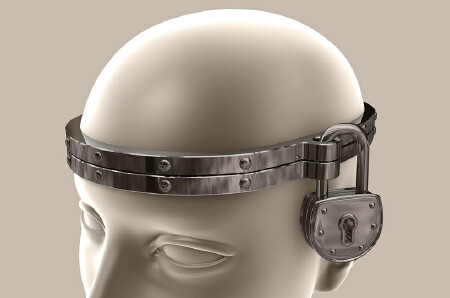
Keep the lock secure, and all the bad stuff inside might not matter...

Keep the lock secure, and all the bad stuff inside might not matter…

I had an unusual  roommate in law school, a former Marine, smart, handsome and charismatic. Let’s call him “Carl.”

He was also a racist, and unapologetic about it. He was an anti-Semite too. After Carl died at the age of 27 in a freak accident, his funeral was attended by several Jewish and African-American law students who considered my roommate a good friend. They had no idea that he was prejudiced, because my friend treated everyone with fairness and respect, at least in my experience. I would ask Carl about this, and he would express surprise that I would be confused at his behavior. “I would never treat anyone with disrespect, no matter who he or she was, or unfairly either,” he said. “That would be wrong, and not Christian.” (He was a Roman Catholic.) Carl also gave annual contributions to the United Negro College Fund, and he was far from wealthy.

That was my introduction to the truth, and it is a comforting one, that biases can be overcome if someone has the character and the strength to recognize them as biases. Racism is just a bias, you know; a particularly harmful and strong one, but still a bias. Having a bias, even a strong one, is not unethical, just as thoughts themselves, without more, are not unethical. A bias is an ethics impediment, a condition that makes being ethical more difficult, and for many of us, impossible. My friend was one of the most honorable and ethical people in his conduct that I ever knew. He had a bias, knew that to be an ethical human being he had to overcome it daily, and did.

If, however, his black and Jewish friends had learned about his private arguments with me, they would have been hurt, and could not have remained friends with him. It would simply be a matter of trust….although, in fact, Carl was completely worthy of trust no matter what race or creed you were. But it is impossible, I think to continue to trust anyone once you know that he is prejudiced against your race.

This brings us to the ugly tale of Donald Sterling, owner of the NBA’s Los Angeles Clippers. His girlfriend, who is black, recorded an argument between the two of them in which he reprimanded her for posting photographs of African-American companions. Continue reading