Institutional Ethics Dunce: The U.S. Congress

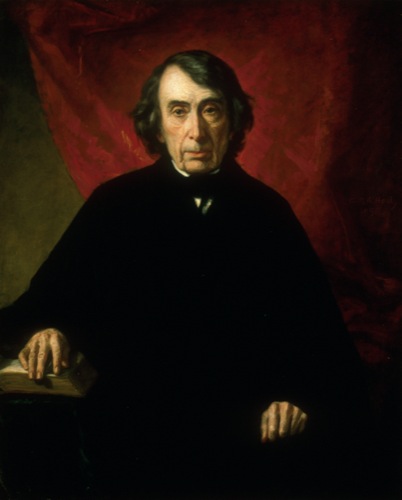
The House of Representatives passed legislation last week ordering the Capitol’s bust of Roger Taney, the Supreme Court Chief Justice who wrote the Dred Scott decision, to Hell, or someplace. It will be replaced by a new bust of Thurgood Marshall, the first black judge to serve on Court.

Of course it will. This naked political grandstanding wouldn’t be complete without installing a black judge’s image as a rebuke to the evil white judge. The legislation now heads to President Biden’s desk to be signed, probably followed by a victory jig.

The pandering legislation says that Taney’s bust is “unsuitable for the honor of display to the many visitors to the Capitol.” It currently sits at the entrance of the Old Supreme Court Chamber in the Capitol where the Supreme Court met from 1810 to 1860. Taney led the court from 1836 to 1864.

“While the removal of Chief Justice Roger Brooke Taney’s bust from the Capitol does not relieve the Congress of the historical wrongs it committed to protect the institution of slavery, it expresses Congress’s recognition of one of the most notorious wrongs to have ever taken place in one of its rooms, that of Chief Justice Roger Brooke Taney’s Dred Scott v. Sandford decision,” the legislation says. I wonder how many of the members who voted for the legislation know anything about Taney or have ever engaged in an objective reading of his opinion. My guess: not many. Maybe none.

Continue reading

Comment Of The Day: “Morning Ethics Warm-Up: 8/23/17”

Like Baltimore removing its politically incorrect statues, here I am in the dead of night trying to catch up with the Ethics Alarms Comments of the Day.

By the way, of all the statues taken down and under attack, the one I can most sympathize with is that of Chief Justice Roger Taney. There is only one reason anyone remembers Taney, and only one thing a statute to him can symbolize: the Dred Scott decision, which he authored. Since it is, by acclamation, the single most disastrous Supreme Court decision in the nation’s history, having a statue of Taney standing in front of the Maryland state house is difficult to defend.

Taney is something of a tragic figure. The rest of his judicial career was distinguished, but that is a bit like saying that the rest of that performance of “Our American Cousin” was terrific. He actually thought the Dred Scott decision would avert a civil war by settling the slavery question once and for all. He was not an evil man, just a horribly misguided one.

There is a street named after Taney in Alexandria. Every time I pass the sign, I think, “This is weird.” Who defends the Dred Scott case? Who has defended it in the last 150 years?

But I digress.

Tippy Scales is an undercover journalist, registering his period disgust at the ethical collapse of his profession here because it is not safe to do so elsewhere. He filed this Comment of the Day two days ago, on the post, Morning Ethics Warm-Up: 8/23/17

(I’ve linked to the topics and posts he  has referred to within his post.)

Let’s review the past few days… Continue reading

Ethics Alarms Awards: The Sioux City GOP Candidates Debate

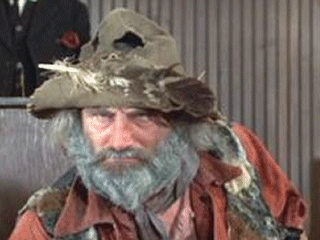
What do Mitt Romney, Ron Paul and Newt Gingrich have in common with "Blazing Saddles'" Gabby Johnson?

There were ethics revelations, lessons and cautionary tales in last night’s final debate before the Iowa Caucuses. The envelopes, please!

The Boy Who Cried Wolf Award

Winner: Rep. Michelle Bachmann

Bachmann  twice protested that she was constantly being accused of not having her facts right, when she really did. This is a hard lesson for people like Bachmann, but she might as well learn it now: when you habitually make factual errors and then deny that you made them, people aren’t going to trust you to be responsible with your claims or to be telling the truth. Nobody has spun as many whoppers and jaw-droppers as Bachmann in the last year, and nobody has more consistently tried to deny the truth when her misrepresentations were brought to her attention. Or to put it another way: once a candidate has claimed that 6th President John Quincy Adams, who was all of 8-years-old when the Declaration of Independence was signed, qualifies as “Founding Father,” nobody is going to credit your representation of “facts” whether they are accurate or not.

The Gabby Johnson Award

Winners (tie): Newt Gingrich, Mitt Romney, Rep. Ron Paul Continue reading