Ethics Quiz: The Reporter’s Non-Compliant Shoulders

Appropriate courtroom fashion?

Appropriate courtroom fashion?

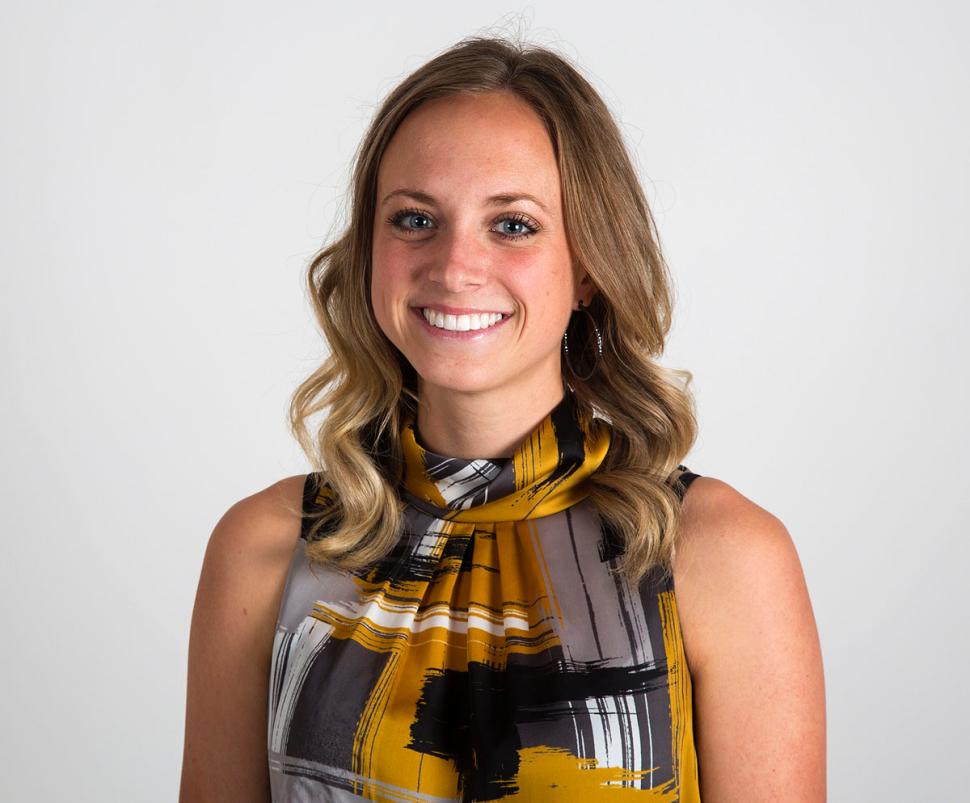
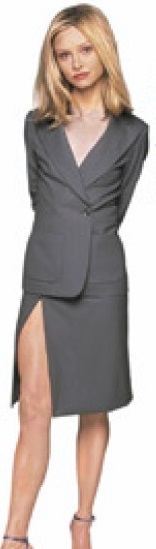
At the 2nd District Court in Ogden, Utah, female reporter Morgan Briesmaster was barred by court security from entering the courtroom to cover a story because her sleeveless blouse (left) violated the official dress code.

She eventually gained access by wearing a parka. Up until then, she told other journalists, she waited in the lobby  “where she watched other courtgoers stroll through security with jeans and low-cut shirts.” Her boss ridiculed the situation, comparing it to high school yearbook dress codes, and noted that “any time a reporter is stopped from covering the news, it’s a concern.” There actually is a rule against wearing “tank tops” in that court, but I wouldn’t call what Briesmaster wore a tank top.
 

Your Ethics Alarms Ethics Quiz, which you may think is too easy, is this:

Was the court security unfair and unreasonable to bar reporter Briesmaster based on her shoulder-baring clothing?

Continue reading →

The Little Bald Girl, The Ethics Incompleteness Principle And The Ethical Way To Handle Obvious Anomolies

Kamryn Renfro with her friend: obviously a troublemaker.

Kamryn Renfro with her friend: obviously a troublemaker.

In Grand Junction, Colorado, Caprock Academy student Kamryn Renfro was banned from attending her school after shaving her head in support of a friend undergoing chemotherapy to treat neuroblastoma, a rare type of cancer. Academy administrators told Renfro’s family that they would not permit the little girl to return to class after spring break because her shaved head violated a school dress code requiring that female students’ hair to be “neatly combed or styled. No shaved heads.”

This is obviously the kind of anomalous situation that calls for, indeed screams out for, a compassionate exception. Any school administrator who couldn’t see that is not just unqualified for his or her post, but not sufficiently intelligent or rational to be trusted with the welfare of children, or, I would say, to take tolls in the Lincoln Tunnel. If there really were a competition to see which enforcement of a “no-tolerance policy” would stand as the most outrageous of all time, I would suspect that this would be an entree. (It still wouldn’t win, though.)

Continue reading →

Comment of the Day: The “I ♥ Boobies” Saga

Me too! Uh, all in the interest of breast cancer detection and awareness, of course. Wait, what did you think I meant?

Me too! Uh, all in the interest of breast cancer detection and awareness, of course. Wait, what did you think I meant?

As is often the case, this topic interests me more than it appears to engage Ethics Alarms readers, so I was thrilled to see the following comment by Ulrike, who seems to share my belief that “Keep A Breast” Foundation is the ethics villain of this First Amendment skirmish, choosing buzz and cheap publicity over responsible messaging and being willing to throw well-aimed, legally immune monkey wrench into the classroom as well. 

Here is the Comment of the Day by Ulrike (who also has amassed a bumper crop of Ethics Alarms brownie points by being the blogs most determined volunteer proof-reader) on the post  The “I  ♥  Boobies” Saga.

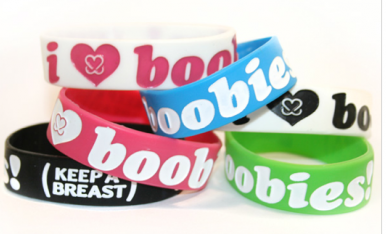
I beg anyone’s pardon if you may find this off topic, but I really need to vent my anger about these bracelets: The message that these bracelets are sending out is not “Save your life by having regular check-ups!” but “Women are perceived as having breasts first, and subsequently as a person”. All this bracelet manages to do is to reduce women to their sexual attractiveness while fighting for their very lives. Well done, “Keep A Breast” Foundation. I wonder what bracelets girls and women who fell victim to aggressive breast cancer and lost one or both breasts are supposed to wear. Maybe “Don’t got boobies you can love anymore”? Continue reading →

The “I ♥ Boobies” Saga

boobies bracelet

Some time in the foreseeable future, we may have the pleasure of reading the various opinions of sages like Antonin Scalia and Ruth Bader Ginsberg regarding the import of bracelets bearing the message, ” I  ♥ Boobies,” and whether it is a constitutional violation for public schools to ban students from wearing them. In August, the Third Circuit U.S. Court of Appeals rejected Pennsylvania’s’ Easton Area School District’s  prohibition of the breast cancer awareness bracelets on the grounds that they were potentially disruptive and inappropriately vulgar.

In late October, the District voted  authorize the district’s solicitor to file a petition with the U.S. Supreme Court seeking to have the high court hear arguments in the case. The controversy has been going on for three years, has cost the district  thousands of dollars in litigation costs that should have been spent on education, and will result, you can bet, in even more egregious expansion of vulgar language in the schools.

This easily avoidable Ethics Train Wreck occurred when two middle school students in Easton wore the bracelets to school with their parents’ permission despite a school ban that called them “distracting and demeaning.”  ETHICS FOUL #2  School is about learning and facilitating learning, not making an effort to intentionally pick fights  in the shadowy realm of First Amendment law. Why did the parents do this? Are the provocative bracelets really essential school fare? Will their presence in the schools have a measurable impact on breast cancer awareness? Was the ability of the girls to wear the bracelets, and their opportunity to bend the school to its will worth all the cost, time and disruption this defiance of a dress code was likely to cause a legitimate utilitarian trade-off?  I don’t think so. Continue reading →

Annals Of The Ethics Incompleteness Theorem: The Snuggle House And “The Dress Code Effect”

Awww! Who could object to a little snuggle?

Awww! Who could object to a little snuggle?

Almost any rule, low or ethical principle can be deconstructed using what I call border anomalies. The first time I was aware of it was as a Harvard freshman in the late Sixties, when all assumptions, good and bad, useful and not, were considered inherently suspect. The college required all students to wear jackets and ties to meals at the student union, and up until my first year, nobody objected. But that fall, my classmates set out to crack the dress code, so they showed up for meals with ties, jackets, and no pants, or wearing belts as ties, or barefoot. (Yes, there were a lot of future lawyers in that class.) Pretty soon Harvard gave up, because litigating what constitutes ties, jackets and “proper dress” became ridiculously time-consuming and made the administration look petty and stupid. Of course, there are good reasons for dress codes—they are called respect, dignity, community and civility—-but never mind: the dress code couldn’t stand against those determined to destroy them by sending them down the slippery slope.

If any rules are to survive to assist society in maintaining important behavioral standards, we have to determine how we want to handle the  effects described by  the Ethics Incompleteness Theory, which holds that even the best rules and laws will be inevitably subjected to anomalous situations on their borders, regarding which strict enforcement will result in absurd or unjust results. The conservative approach to this dilemma is to strictly apply the law, rule or principle anyway, and accept the resulting bad result as a price for having consistent standards. The liberal approach is no better: it demands amending  rules to deal with the anomalies, leading to vague rules with no integrity—and even more anomalies. The best solution, in my view, is to regard the anomalies as exceptions, and to handle them fairly, reasonably and justly using basic principles of ethics, not strictly applying  the rule or law alone while leaving it intact. Continue reading →
This Is The Way It’s Done, Ethics Warriors….Well, ALMOST

Quit being distracting, Triana...

“Quit being so distracting, Triana…”

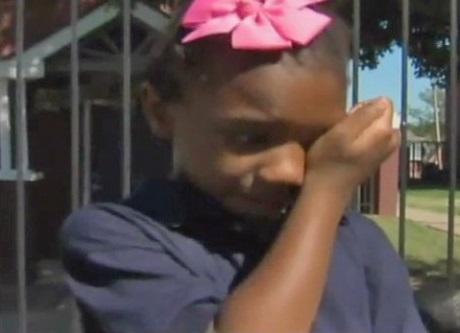
Deborah Brown Community School in Tulsa, Oklahoma forbids its students from wearing their hair in dreadlocks, afros “and other faddish styles.” Terrence Parker, a barber, challenged the rule by sending his 7-year-old daughter Tiana to class there wearing her hair in dreadlocks. She was told that she could not attend school with her hair in a (stupid and ignorant) rule-violating style. Tiana is now attending another school, while the story, reported on the web in various sources, is holding the school up to well-earned ridicule for a dress code that if not racist in intent, is racist in impact. Eventually, I would think, the school will be shamed into seeing the error of its ways, which is enforcing an inappropriately narrowly-viewed, culturally-biased interpretation of what constitutes a “presentable” hairstyle as opposed to one that might “distract from the respectful and serious atmosphere [the school] strives for.”

This is the way unethical rules get changed. Parker confronted the rule by violating it, and accepted the penalty while publicizing the unjust rule to the greater community, which is making its disapproval known. Continue reading →

Ethics Quiz: The Judgmental Judge

"I'm sorry, Miss McBeal, would you repeat that? I lost my train of thought..."

“I’m sorry, Miss McBeal, would you repeat that? I lost my train of thought…”

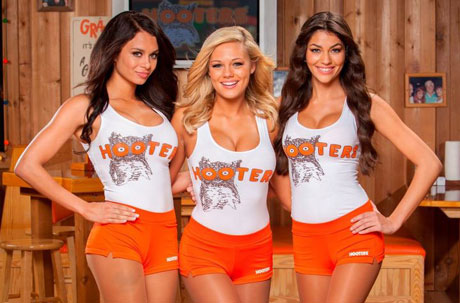
Circuit Judge Royce Taylor in Murfreesboro, Tennessee is being excoriated by some as being sexist or at least presumptuous for daring to broach the topic of attorney attire in the courtroom, specifically female attorney attire. In a memo, he noted that the topic had arisen in recent Bench/Bar Committee meeting, and wrote,

“The unanimous opinion was that the women attorneys were not being held to the same standard as the men. It was requested that the judges require all attorneys to dress professionally. I have advised some women attorneys that a jacket with sleeves below the elbow is appropriate or a professional dress equivalent.”

What? An elderly male judge presuming to tell female professionals what they should or shouldn’t wear?

Your Ethics Alarms Ethics Quiz:

Is it fair and respectful for judges to require female lawyers to adopt the same dress standards as male lawyers in the courtroom? Continue reading →

More Graduation Ethics: The Cap And The Feather

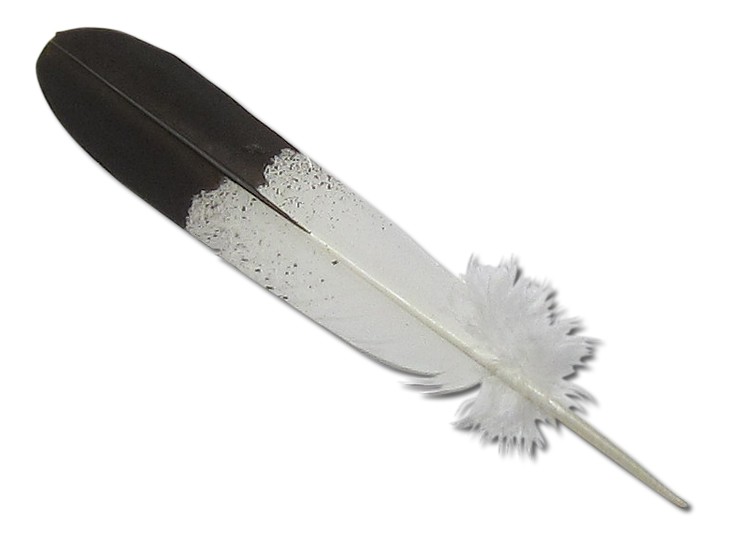
eagle feather

In contrast to the Roy Costner saga, we have the graduation conduct of Chelsey Ramer, proud member Poarch Creek Band of Indians and a graduating senior at  Escambia Academy High School in Atmore, Alabama. Four years ago, graduating members of her tribe had worn ceremonial eagle feathers in their caps at the school’s graduation procession and the handing out of  diplomas. The school tool no action then, because it was taken by surprise, but this year, Chelsey’s class was presented with new dress code, as well as a contract seniors had to sign in order to participate in graduation ceremonies.

It forbade any “extraneous items during graduation exercises.” It also said students violating the agreement would not receive their diplomas until appropriate disciplinary actions were taken and students paid a whopping $1,000 fine.

Chelsey says she refused to sign the contract.  She decided that honoring her heritage with an eagle feather on her cap was worth whatever consequences that resulted. She wore the feather, and now the school is demanding that she pay the thousand dollar fine to receive her transcripts and diploma.

Ethics findings: Continue reading →

Ethics Dunce (Sandy Hook Ethics Train Wreck and U.S. Public School Incompetence Divisions): Logan Middle School in Logan, W.Va.

Sigh.

Send him to the re-education center...

Send him to the re-education center…

I’ll stop flagging the unethical conduct of anti-gun hysterics during the Sandy Hook Ethics Train Wreck when they stop abusing kids and law-abiding citizens in their deranged determination to turn America into a gun-free zone through fear-mongering and intimidation. I’m genuinely sick of writing about this stuff, but not as sick as I am of the idiocy that produces it. Has any sane, prominent, respectable voice from the gun-regulation side registered strong objections to incidents like what happened in Logan? If so, I must have missed it. That’s illuminating, don’t you think?

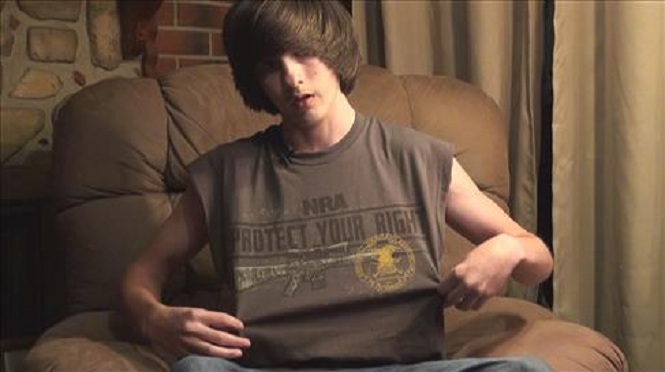
Jared Marcum, an eighth-grader boy at Logan Middle School in Logan, W.Va., was suspended and arrested by police for wearing a pro-NRA T-shirt that depicted a firearm and the phrase “Protect your right” to class. He was charged with “obstruction and disturbing the education process.” It appears that his teacher asked him to remove his shirt, and he refused, prompting the arrest. Marcum was on solid ground, and his teacher was not.  The school dress code reads in part: Continue reading →

An Ethics Riddle: What Do You Get When You Cross The Oklahoma Valedictorian Flap With The Delta T-Shirt Controversy?

Give up?

Pure evil.

The answer is that you get kindergarten student Cooper Barton of Oklahoma City being forced by his teacher and principal to turn his T-shirt inside out under threat of discipline because it celebrated the University of Michigan, and the city’s Soviet dress code requires that school children may only wear apparel supporting Oklahoma colleges, such as Oklahoma University or Oklahoma State University.  Cooper’s mother told the news media that her son had to hide behind a tree to turn his shirt inside-out, and that he was embarrassed by the affair. “They should really worry about academics. It wasn’t offensive. He’s five,” she said.

Gee, ya think? Continue reading →