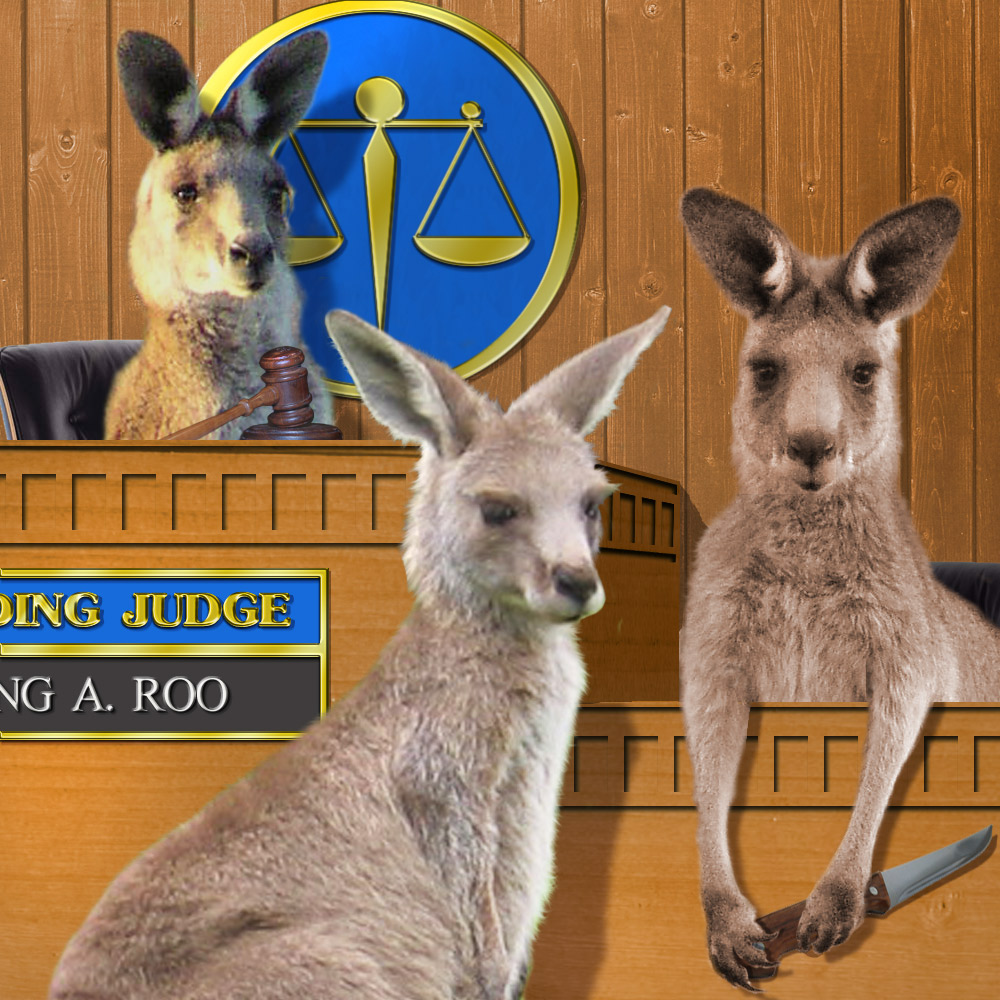
Ethics Hero: NBA Clippers Owner Donald Sterling (And Yes, I Mean It)

When you think about it, the champion in this fight would almost have to be repulsive for a victory to mean anything.

When you think about it, the champion in this fight would almost have to be repulsive for a victory to mean anything.

The other shoe dropped, and however it may be intended, it’s an ethical shoe. Donald Sterling now says that he’ll refuse to pay the 2.5 million dollar fine levied on him by NBA Commissioner Silver and his fellow owners for what he said in his own bedroom.

Good. I was waiting for this, and hoping that would be his course of action. Ironically, a good, compliant, progressive billionaire, and one who was not, unlike Sterling, a repulsive asshole, who was nationally embarrassed as Sterling has been, would crawl quietly into a hole, periodically send out big checks and mea culpas to Al Sharpton, Jesse Jackson, and the NAACP, and in the process, take  big, bloody chunks out of our freedom to think and speak freely, and our personal privacy. Sterling is doing the right thing, although it is going to cause him to be even more vilified by the media and even more assailed as the personification of racism than he has been already—and that has already been disproportionate to his “crime.”

Fighting is also going to be expensive. Never mind. It is revolting to write it, or even think it, but he is fighting for all of us. Continue reading
A Sterling Ethics Train Wreck Update, Ethics Heroes Opposing The Mob, and The Comment of the Day

thoughtpoliceEthics Alarms commenter Chris Marschner again scores a Comment of the Day regarding the subtext of my recent post about Peoria Mayor Jim Ardis, whose stunning abuse of government power to punish a citizen’s free speech was ignored while destroying NBA team owner Donald Sterling, because he privately articulated offensive views to a vengeful girlfriend, became a media obsession and a national rallying point.

Before I get to Chris’s excellent comment, however, I should bring us up to date on the Donald Sterling Ethics Train Wreck, which has proceeded as I feared it would: Continue reading

The Alex Rodriguez Suspension, Barry Bonds, And The Slippery Slope

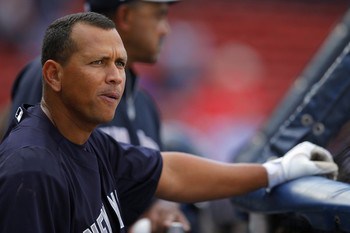
New York Yankees' Alex Rodriguez stretches before American League baseball game at Fenway Park in Boston

In a decision that further defines major league baseball’s cultural standards regarding performance enhancing drugs and the players who use them, New York Yankee Alex Rodriguez was suspended for the entire 2014 season and post-season by an arbitrator yesterday. Rodriguez, a long-time superstar who was once considered a lock to break baseball’s career home run record, and who is the highest paid player in the game, was suspended for illicit drug use without testing positive under the game’s union-negotiated testing system. He was, instead, suspended for a violation of the player’s Basic Agreement under baseball management’s right to police the game and do what is in its best interests.

The evidence that Rodriguez was a flagrant and long-time steroid abuser came from documents obtained from Biogenesis, a lab that developed drugs for athletes and others, as well as convincing testimony. Rodriguez had challenged the suspension in a grievance procedure after MLB handed down a 211 game suspension during the 2013 season. The arbitrator’s ruling, which is confidential, apparently concluded that the player not only cheated, but obstructed efforts to enforce baseball’s intensified anti-drug measures in the wake of the wide-spread use of PEDs in the 90’s and thereafter.

As expected, the result produced the usual complaints and rationalizations from the disturbingly large contingent of baseball fans and writers who remain obdurate regarding the offensiveness of steroid cheating, claiming that it was “a part of the game,” that the objections to it are inconsistent, and that baseball’s vilification of users is hypocritical. They had been practicing these and related arguments for months as they waited for the baseball Hall of Fame voting results announced last week, in which about 65% of the voters showed that they regarded steroid use as a disqualification for the honor, even when a player-user had excelled on the field. Rodriquez’s defeat deeply undermines the cause of the steroid defenders, and the likelihood that their argument will ever prevail. Continue reading

Ethics Corrupter: Yankee Third Baseman Alex Rodriquez; Ethics Dunce: Yankee Manager Joe Girardi; Disgraced: The New York Yankees

Corrupted!

Corrupted!

Today, Major League Baseball announced that it was suspending Alex Rodriquez, the New York Yankees aging superstar, for the remainder of the 2013 season and the 2014 season for  using banned performance enhancing drugs, and impeding baseball’s investigation of his cheating. This was the climax (but not the end) of a long, drawn out, messy process and investigation involving a sleazy Miami drug lab, called Biogenesis, now closed down, which had records indicating that many professional baseball players had obtained banned substances.

Former National League MVP Ryan Braun (who I keep calling “Steve”) has already been banned for the rest of the year by the evidence obtained from Biogenesis records. The process has been marred by serial leaks from MLB  (unfair to the players involved, including Rodriquez) and ugly maneuvering between Rodriguez, who has been recovering from a serious hip issue, and the Yankees, who owe him approximately a gazillion dollars (thanks to an idiotic career contract signed in 2007 after he had already admitted to using steroids once), would like nothing more than for him to vanish in a puff of smoke and sulfur.

To explain the baroque ins and outs of baseball’s steroid wars, its player union relations, and the various intersecting agreements, special clauses and other things that have an impact on Rodriquez’s suspension would take too long here and would even bore the baseball fans. What you need to know now is this: Continue reading

Incompetent Elected Official Of The Month: New York State Senator Greg Ball (R)

Trust me, guys, you really don't want to vote for Greg Ball again...he's embarrassing your district.

Trust me, guys, you really don’t want to vote for Greg Ball again…he’s embarrassing your district.

Every now and then, a public official says something so brain-meltingly ridiculous that I wish I had a traditional blog and could write, “What an idiot!” and leave it at that.  This is one of those times.

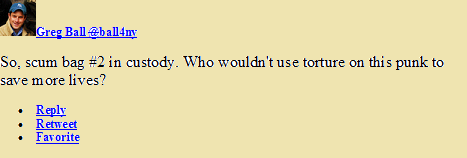
Republican New York State Senator Greg Ball must represent the troglodyte section of New York—you know, that famous district heavily populated with prehistoric cave-dwellers who were discovered frozen in 1989, thawed out alive, and became politically active?—based on his unapologetic,nail-spitting, un-American tweet regarding the younger, surviving terrorist brother who engineered the Boston Marathon bombing:

Ball

What an idiot.

No, no, I can’t say that.

This is an unethical tweet. It’s an irresponsible tweet. Supporting torture “to save more lives” explicitly rejects the principles of the Declaration of Independence as well as the Constitutional requirements of Due Process and the Bill of Rights prohibition against cruel and unusual punishment and compelled testimony against self-interest. The “anything to save more lives” illogic, though recently adopted, to his shame and disgrace, by the presumably less idiotic President Obama in his quest for more gun regulations, is, of course, the open door to martial law and the permanent trade of liberty for security. I wrote about this at some length in the wake of the Abu Ghraib fiasco; reading “The Ethics of American Torture” again now, I would hold the same today, as would, I hope, most of you. (Don’t bother to read this, Senator Ball; it’s more than 140 characters, and you wouldn’t understand it anyway.) I wrote in part, Continue reading

University Justice Isn’t Ethical, Isn’t Reposponsible, And Isn’t Justice, Either.

Oh-oh...

Oh-oh…

The University of North Carolina is charging a student with an honor code violation because she did not acquiesce in a student Honor Court’s decision to dismiss a complaint of rape she filed against another student. The charge against her reads…

You are being charged with the following Honor Code violation(s): I.C.1.c. – Disruptive or intimidating behavior that willfully abuses, disparages, or otherwise interferes with another (other than on the basis of protected classifications identified and addressed in the University’s Policy on Prohibited Harassment and Discrimination) so as to adversely affect their academic pursuits, opportunities for University employment, participation in University-sponsored extracurricular activities, or opportunities to benefit from other aspects of University Life.

The student, Landen Gambrill, faces possible expulsion for her offense. Meanwhile, the man who she says raped her is still on campus.

Wait…what? This sound insane. How can this happen? Continue reading

Ethics Hero: The American Bar Association


This week, the American Bar Association House of Delegates passed Resolution 100.

The measure reads:

RESOLVED, That the American Bar Association urges all state, territorial, and local legislative bodies and governmental agencies to adopt comprehensive breed-neutral dangerous dog/reckless owner laws that ensure due process protections for owners, encourage responsible pet ownership and focus on the behavior of both dog owners and dogs, and to repeal any breed discriminatory or breed specific provisions.

Translation: stop discriminating against pit bulls and all the dogs that look like pit bulls, might be pit bulls, or that people who don’t know anything about dogs might think are pit bulls, as well as the dogs’ owners. It’s not fair, it’s unethical, and it’s un-American. Or, as Elise Van Kavage, chair of the Animal Law Committee of the Tort, Trial & Insurance Practice Section, put it, “People love their pets, no matter what their appearance,” she said. “This is America. Responsible pet owners should be allowed to own whatever breed they want.” Continue reading

Hypocrites of the Year: The NCAA

Emmert: “Never again will the NCAA be blamed for the results of the culture we encourage and support. We hope.” (Or words to that effect.)

What’s wrong with the NCAA’s epic sanctions against Penn State in the wake of the Jerry Sandusky pederasty scandal? I’ve been thinking about this for a couple of days, and I’ve concluded that the answer is “Just about everything.”

Most of the focus of the media and pundits have been on the “punishing the innocent” complaint. As a general rule, I detest aversion to punishing the innocent as a justification for inadequately punishing the guilty or otherwise avoiding necessary steps to address problems; it’s a rationalization for encouraging unethical, exploitive, illegal and even deadly conduct. This toxic rationale has caused incalculable harm across the globe; it currently abets illegal immigration, out-of-wedlock childbearing, and the international crimes of dictators. The United States, within our lifetimes, may drive itself into financial collapse by adopting the theory that it is unfair and unethical to “punish” the expectant beneficiaries of entitlements that the nation can no longer afford by reducing  benefits, or by taxing wealthy citizens who opposed the profligate spending in the first place. As Ethics Bob writes in his post about the Penn State sanctions,

“Accountability for wrongdoing often brings down the innocent along with the guilty. Think about the workers at Enron, Arthur Anderson, or MCI-Worldcom, who lost their jobs when their bosses’ malfeasance destroyed their companies… there is no way of punishing the guilty without harming people close to, or dependent on them. Even a mass murderer–when he is sent away his mother suffers along with him. When Al Qaeda militants are killed, their family members often die with them.”

Bob isn’t making an invalid “everybody does it,” argument, but a practical, “that’s the way the world works” argument.  If we believe in accountability, we have to accept the fact that the innocent will often be collateral damage. It isn’t fair, but this is utilitarianism at its most persuasive. Allowing wrongdoers to  prosper is ethically worse.

If the NCAA sanctions against Penn State were otherwise appropriate, I wouldn’t have a problem with the collateral damage. They aren’t appropriate, however. The sanctions are unethical. Continue reading

The Jack Berghouse Cheating Conundrum: Bad Father? Good Father? Ethics Corrupter?

Should we condemn Jack Berghouse for being a good lawyer?

Should a parent defend a bad egg? A cheating bad egg?

Berghouse has intervened to keep his son, a sophomore at Sequoia High School in Redwood City, California, from being kicked out of the honors program for copying his homework assignment from the work of another student. He doesn’t dispute that his son cheated—-his son admits it, and was caught red-handed. Dad is suing the school because he says its policies are conflicting, and thus his son was deprived of due process. He may be right about that. He is also doing it because, as a father concerned about his son’s future, he worries that the blemish on his record will affect his ability to get into an Ivy League college. He’s probably right about that, too.

But is it right—that is to say, responsible and ethical— for parents to use lawyers and the court system to intimidate schools into whitewashing a student’s records? The vast majority say no, which is doubtlessly the reason why Berghouse reports that he is getting hate mail. Continue reading

Incompetent Elected Official of the Month: Rep. Jim McGovern (D-Mass.)

Rep. Jim McGovern is the champion of the People’s Rights Amendment, which shows that some people are so violently opposed to the Citizens United ruling that they would be willing to give the government sweeping power to censor speech, political or otherwise. This Pandora’s box of an amendment states:

Section 1.  We the people who ordain and establish this Constitution intend the rights protected by this Constitution to be the rights of natural persons.

Section 2.  People, person, or persons as used in this Constitution does not include corporations, limited liability companies or other corporate entities established by the laws of any state, the United States, or any foreign state, and such corporate entities are subject to such regulation as the people, through their elected state and federal representatives, deem reasonable and are otherwise consistent with the powers of Congress and the States under this Constitution.

Section 3.  Nothing contained herein shall be construed to limit the people’s rights of freedom of speech, freedom of the press, free exercise of religion, and such other rights of the people, which rights are inalienable.

This is playing with Constitutional fire, designed to appeal to gullible citizens who don’t understand how the Constitution limits government power and the danger of  making simple-minded fixes. Prof. Eugene Volokh, an expert on Constitutional law, writes, Continue reading