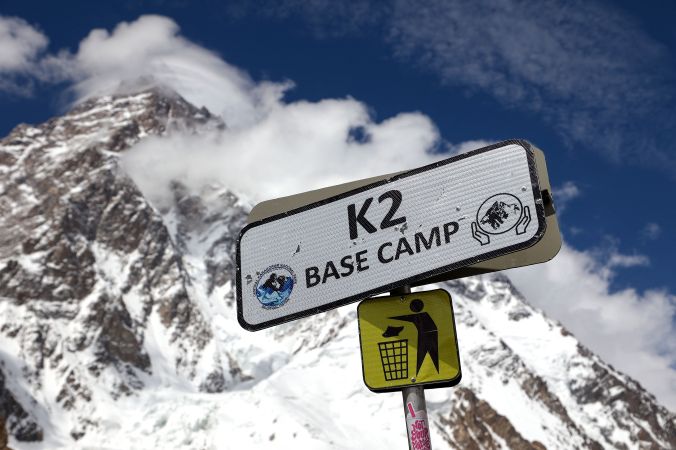
The AP story and ensuing controversy about Norwegian climber Kristin Harila and her decision, along with many other mountaineers, to leave a climbing companion dying in the snow on K2 immediately rang a metaphorical bell: Haven’t we discussed this issue before on Ethics Alarms? Indeed we have.
Back in 2011, I reposted a 2006 essay from the old (but still useful) EA predecessor The Ethics Scoreboard about the death of 34-year-old David Sharp on Mount Everest, after over 40 other climbers walked past him on their trek to the famous peak. It concluded,
The significance of the David Sharp tragedy is not that the mountaineers did the wrong thing. Of course they did the wrong thing. Nor is it that they are callous or unethical people, for they are probably no more so than you or I. The importance of the story is that it vividly shows how difficult it can be to make even obvious ethical choices when powerful non-ethical considerations are in our sights. Every one of us has a goal or a dream or a desire that could make us walk by a dying man. It is our responsibility to recognize what those goals, dreams and desires are, and to force ourselves not to forget about right and wrong as we approach them.
Harila was on K2 to set a record, and she did: along with her Sherpa guide, Tenjin, they became the world’s fastest climbers by getting to the top of the world’s second highest peak, scaling the world’s 14 highest mountains in 92 days. But of course that mission had nothing to do with her decision to leave Mohammad Hassan, a Pakistani porter and father of three, to die after he slipped and fell off the narrow path to the summit. The Norwegian climber told The Associated Press on Sunday that “in the snowy condition we had up there that day, it wouldn’t be possible to carry him down.”
It was impossible! All righty then, case closed!
Drone footage showed dozens of climbers pushing past Hassan to reach the mountain peak, the path to which was unusually crowded that day (July 27), because it was the last day of the season for a possible ascent. The nerve of that guy losing it all up by falling!
Austrian climber Wilhelm Steindl, who shot the drone footage after he had abandoned the climb because of bad weather, told the AP that more could have been done to save Hassan. “Everyone would have had to turn back to bring the injured person back down to the valley. I don’t want to kind of directly blame anybody, I’m just saying there was no rescue operation initiated and that’s really very, very tragic because that’s actually the most normal thing one would do in a situation like that.”
Well, to be fair, it isn’t. What might have changed the way the climbers reacted would have been a strong leader with the personal magnetism and persuasive skills to reorient the climbers from pursuing powerful non-ethical considerations to embracing an ethical one. No doubt about it, trying to get the injured man down the mountain involved sacrifice and risk, and might not even succeed. There is, however, an ethical duty to try. A life was at stake.
Continue reading →






 Ethics Alarms
Mea culpa: I am only now catching up on all of the 144 comments in the December 19 open forum. Once again, the commentariat here covered Ethics Alarms with glory.
The first Comment of the Day from that post comes from a non-U.S. commentator, one of several here, whose perspective is often contrarian but always well-stated.
Here is Andrew Wakeling’s Comment of the Day on the post on the immigration/migrant thread in the post, Open Forum Ethics III: