Comment of the Day: “You’re A Marked Man, Charlie Brown!”

The Lone Ranger, a.k.a. Clayton Moore, unmasked.

The Lone Ranger, a.k.a. Clayton Moore, unmasked.

One of the satisfying aspects of this blog for me is how a post will occasionally spark one of its diverse and intellectually agitated commenters to take the original post in unexpected and delightful directions. This gem from Karl Penny is a prime example. In the article inspired by the legal problems faced by the owner of Charlie Brown’s now grown up cartoon voice, I mentioned the actor who was TV’s Lone Ranger, Clayton Moore, prompting this lovely anecdotd from Karl. Here is his Comment of the Day on the post “You’re A Marked Man, Charlie Brown!“:

“Your comments about Clayton Moore got me to remembering one of the reasons I became such a fan of Clayton Moore, the man, even more than his acting. It’s from William C. Cline in “Those Enduring Matinee Idols”:

“In conclusion, I want to describe a vignette I witnessed during the afternoon that illustrated why Clayton Moore has been so successful and well-loved during his 24-year stint as ‘The Lone Ranger’, and why those of us who cherish serials detected the quality of the man even before then.
As Moore stood talking–with occasional interruption to shake hands with fans, sign autographs, and even speak to a small boy about the dangers of handling real firearms–a young woman timidly approached him holding the hands of a little lad of about seven and a girl perhaps nine years old. The boy gathered up his courage and thrust out his hand boldly. ‘Hello, Lone Ranger,’ he blurted. ‘My daddy says you’re the best. How come you’re not on TV anymore?’

 The little girl just stood there.

‘Thank you, son,” Moore replied. ‘I’m sure your dad is a great fellow, too. Maybe some time later the TV stations will show the programs again. Then you and your sister can see Tonto and me in action like your dad and mother did.’ The little girl continued to just stand there.

Turning to her, Moore noticed the expression on her face–that unique, particular expression that indicates only one thing, blindness. Looking up at the mother, he spoke one word, softly: ‘Total?’ he asked.

‘Not quite, but legally,’ she replied. Continue reading

You’re A Marked Man, Charlie Brown!

And you thought Elmo was in trouble…

Charlie, in happier days...

Charlie, in happier days…

Peter Robbins, now 56, who was the voice of Charlie Brown on the TV special “A Charlie Brown Christmas” as well as other “Peanuts” television shows, has been arrested and charged Wednesday with stalking and threatening his ex-girlfriend and the plastic surgeon who gave her breast implants—no, this was not the little red-headed girl. I don’t think…

He’s accused of terrorizing her, calling her as many as 37 times in a 24-hour period on her cellphone and threatening to  kill her and her son if she did not give back his dog and car. In the most recent and ugliest incident, Robbins allegedly confronted his former girlfriend in a hotel room and began beating his dog—no, not Snoopy!…at least, gee, I hope not… and threatened to continue hurting the dog, not to mention killing her, if she did not promise to get a refund for the breast enhancement.

I have two observations.

1. This sad story illustrates one of the ways in which children are harmed by premature exposure to pop culture fame before they can understand the ramifications to their future. Robbins’ meltdown and shame, as well as his face and name, are all over the national media today, as the idea of Charlie Brown turning into a stalker is too strange and juicy to ignore. Without the link to the lovable “Peanuts” gang, such an item would barely be local news, much less national water-cooler fodder, but thanks to Robbins’ parents’ decision, made for him, not by him, although his life was the one most affected, his reputation is branded far and wide. Parents have an obligation to consider these things with their children’s best interests in mind. Today’s momentary stardom mat be tomorrow’s shame and permanent handicap. Continue reading

Why Can’t We Trust Our Government? Here’s One Big Reason…

A complete lack of accountability.

Now THERE'S something you won't see in Washington: heads rolling.

Now THERE’S something you won’t see in Washington: heads rolling.

Here is part of the Associated Press report on the internal review of the Benghazi Ethics Train Wreck. The bolding is mine: :

“An unclassified version released late Tuesday said serious bureaucratic mismanagement was responsible for the inadequate security at the mission in Benghazi where the U.S. ambassador and three other Americans were killed. Systematic failures and leadership and management deficiencies at senior levels within two bureaus of the State Department resulted in a Special Mission security posture that was inadequate for Benghazi and grossly inadequate to deal with the attack that took place, the panel said.

“Despite those deficiencies, the board determined that no individual officials ignored or violated their duties and recommended no disciplinary action. But it also said poor performance by senior managers should be grounds for disciplinary recommendations in the future.” Continue reading

Comment of the Day: “The Washington Nationals’ Stephen Strasburg Dilemma”

John Glass, a superb and eclectic D.C. area blogger at DramaUrge, weighs in with his usual lucidity on the Stephen Strasburg controversy. Here is his Comment of the Day on the post, The Washington Nationals’ Stephen Strasburg Dilemma: Continue reading

The Washington Nationals’ Stephen Strasburg Dilemma

The real problem with Stephen Strasburg’s pitching arm is that it’s attached to his neck…

I must apologize to those who care about baseball-related ethics matters. I have been so immersed in the problems dogging my sad and dispirited Boston Red Sox that I have neglected the more glaring ethics issue looming over my current home town team, the Washington Nationals, currently on top of the National League East and almost certainly bound for their first post-season appearance. They face that prospect, however, with a problem: before the season began, management pledged that Stephen Strasburg, the team’s young fire-balling ace who seems destined for a Hall of Fame career, will be shut down for good once he hits 180 innings or less. Strasburg has already had serious arm surgery once, and conventional baseball wisdom now holds that throwing too many pitches before a pitcher has matured risks his arm, his effectiveness and his career. What this means now, however, that was hardly conceivable when the pledge was made, is that the Nationals could be battling the best teams in baseball in pursuit of a World Series title with their best pitcher completely healthy but in mothballs.

I had only given this matter perfunctory focus, concluding as a fan that it was a screwball plan that would never be executed, and not thinking much about the ethics of the controversy—and as you might imagine, it’s a big controversy in the Washington area sports pages. It took respected baseball writer John Feinstein to shock me out of my apathy with his sensible and well-reasoned column on the issue today, that ended thusly:

“Pitching a healthy Strasburg in October is not a betrayal, it’s simply recognizing that circumstances have changed. Not pitching him is a betrayal: to the pitcher, to the team, to the fans and to the city.” Continue reading

Reflections On President’s Day, 2012: A United States Diminished in Power, Influence and Ideals

Rep. Ron Paul is fond of saying that the United States shouldn’t be the world’s policeman, and thanks to irresponsible stewardship of America’s resources and horrific maintenance of its ideals, his wish has already come true. One result is a world that has no functioning opposition to evil, a world at the mercy of chaos with no champion or guiding inspiration in sight. The other result is a United States that no longer stands for its own founding principles.

For proof, we have only to look as far as Syria, where a brutal dictator is killing his own people at an accelerating rate. Although his people have tired of his tyranny, Hafez al-Assad, like Gaddafi before him, seems determined to kill as many of his own countrymen as he has to in order to stay in power. Our President, Barack Obama, has delivered stern admonitions and disapprovals, which is this President’s style and approximately as effective as tossing water balloons. The Secretary of State, Mrs. Clinton, expresses frustration, for all the good that does. The killing, of course, goes on.

If you think I’m going to advocate U.S. action in Syria, you are wrong. Quite simply, we can’t afford it—not with a Congress and an Administration that appear unwilling and unable to confront rising budget deficits and crushing debt with sensible tax reform and unavoidable entitlement reductions. Yesterday Congress and the President passed yet another government hand-out of money it doesn’t have and refuses to raise elsewhere, among other things continuing to turn unemployment insurance, once a short-term cushion for job-seekers, into long-term government compensation for the unemployed. Part of the reckless debt escalation was caused by the last President unconscionably engaging in overseas combat in multiple theaters without having the courage or sense  to insist that the public pay for it, and the current administration is incapable of grasping that real money, not just borrowed funds, needs to pay for anything. The needle is well into the red zone on debt; we don’t have the resources for any discretionary military action.

Ron Paul thinks that’s a good thing, as do his libertarian supporters. President Obama, it seems, thinks similarly. They are tragically wrong. Though it is a popular position likely to be supported by the fantasists who think war can just be wished away, the narrowly selfish who think the U.S. should be an island fortress, and those to whom any expenditure that isn’t used to expand  cradle-to-grave government care is a betrayal of human rights, the abandonment of America’s long-standing world leadership in fighting totalitarianism, oppression, murder and genocide is a catastrophe for both the world and us. Continue reading

Did Amy Winehouse Cheat the World?


A mark of failure, or betrayal?

I appreciated Amy Winehouse’s talent rather than enjoyed it. Nevertheless, her death-–many have said her completely predictable death—of a drug overdose at 27 once again causes me to ponder the recklessness with which gifted artists who can give so much to the world throw their lives away.

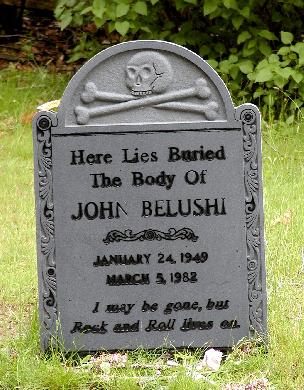
As an ethicist who never hesitates to hold individuals ethically responsible for conduct that harms others, I have not completely worked out in my own mind how to characterize the many artists and performers whose self-engineered destruction have robbed the world of laughter, enlightenment, and joy. Every time I watch John Belushi in “Animal House” or an old Saturday Night Live clip, I get angry at him—I admit it. I know Belushi didn’t want to die young any more than I wanted him to die young, but he treated his life as if it was disposable and without value, when it really was of extraordinary value. When Belushi sacrificed it in a stupid drug binge, it was more than a tragedy for his friends, lovers, colleagues and family; it was a tragedy for the art and history of comedy. Much the same can be said of Amy Winehouse—and James Dean, Jimi Hendrix, Billy Holiday, Heath Ledger, Michael Jackson, River Phoenix, Marilyn Monroe, and Elvis. Continue reading

The Ashley Payne Affair Revisited

What's wrong with this picture?

One of the earliest Ethics Alarms posts concerned Barrow County, Georgia, teacher Ashley Payne, who was forced out of her job at Apalachee High School for posting photos on Facebook that showed Payne drinking beer and wine while on a vacation to Europe. Barrow had a policy stating that employees can be investigated, disciplined and terminated for postings on Web sites that contain provocative photographs, sexually explicit messages, use of alcohol, drugs or anything students are not supposed to do. In the initial post, I took the position that the school over-reacted, but that Payne was still accountable because she knew what the policy was and violated it:  Continue reading

Unethical Quote of the Week: Slate Editor Dahlia Lithwick

“[The G.O.P. nominee for the U.S. Senate, Christine] O’Donnell explained that “when I go to Washington, D.C., the litmus test by which I cast my vote for every piece of legislation that comes across my desk will be whether or not it is constitutional.” How weird is that, I thought. Isn’t it a court’s job to determine whether or not something is, in fact, constitutional? And isn’t that sort of provided for in, well, the Constitution?”

Dahlia Lithwick, current Supreme Court commentator for Slate, during a three-way published exchange about what an unstable, unqualified kook Christine O’Donnell is.

I hope it is at least a little disturbing to Slate that their Supreme Court expert is apparently ignorant of where the basic responsibilities of obeying the Constitution lie. Continue reading

The Arizona Statute Injunction Ethics Verdict: Judge—Right; Arizona—Right; Federal Government—Unethical

I was waiting at a long line in a local CVS, with no clerk in sight. It was late at night; a couple of my fellow customers actually shouted for assistance. We had been there with no service for more than ten minutes, and not a single employee was in evidence. Finally, I stepped out of line—past a police officer, who was also waiting, grabbed the microphone on the counter, turned it on, and announced in stentorian tones: “There is a long line at the check-out counter! Will a CVS employee please report to the front of the store? Thank you!”

The line of people applauded. The police officer smiled and gave me a thumbs up. The clerk, full of apologies, arrived and began taking our money.

Did I have a legal right to use the microphone? No, I did not. But I still did the right thing, and I would do it again.

This is, I believe, the proper way to think about the federal judge’s decision today to block the key provisions in the Arizona anti-illegal immigration law until further examination by the courts. Continue reading