This week’s Major League Baseball All-Star Game got the lowest TV ratings in the history of the so-called “mid-summer classic,” which proves that Lincoln was right: you just can’t fool all the people all of the time—even when they are baseball fans. The All-Star Game was originally devised as a dream competition in which the best players from the American and National League would play a game that was hard-fought and full of the spectacular exploits of the best players alive. For decades it was like that, too, until sky-rocketing salaries and America’s culture of celebrity turned a large proportion of the players into egomaniacal, self-promoting monsters. Continue reading
duty
Breach of Duty: Hallmark Capitulates to the Race Card
Every time an individual or a corporation meekly submits to the demands of bullies, it harms the rest of society by giving that bully more power and credibility. It doesn’t matter if the bullies are jihad-minded Islamic extremists threatening the creators of “South Park,” an extortion-minded Congresswoman threatening NBC of dire consequences if it doesn’t start meeting her racial quotas, or a schoolyard bully intent on stealing lunch money. Give a bullies what they want, and they will continue to abuse their power until someone else does his or her ethical duty, which is to confront bullying and stop it. I call this “The Duty to Confront,” and it is a responsibility of citizenship and being a member of society. Corporations will hold symposiums and issue bold words about their commitment to good citizenship and corporate responsibility, but when it comes to a citizen’s duty to oppose bullies, they are worse than the meekest. weakest wimp in the school yard. Exhibit A: the disgraceful example of Hallmark, which has capitulated to the N.A.A.C.P.’s most ridiculous and embarrassing accusation of racism yet, which is quite an accomplishment. Continue reading
The Problem of Fairness, and David Ortiz: A Case Study
Fairness is a core ethical value. It is also one of the most difficult to embody. We all know what fairness is in the abstract: treatment of others characterized by impartiality and honesty, and an avoidance of self-interest, prejudice, or favoritism. In complex situations involving many interested parties, however, seeking fairness becomes a dilemma wrapped in a conflict surrounded by contradictions. One of these complex situations now faces the Boston Red Sox, as the baseball team deals with the travails of its designated hitter David Ortiz. Sports has a fascinating habit of crystallizing ethical problems, and the Ortiz case demonstrates how hard it is to be “fair.” Continue reading
Comedy Central’s Unethical Self-Censorship
“I disapprove of what you say, but I will defend to the death your right to say it.”
—–Evelyn Beatrice Hall (describing Voltaire’s attitude toward freedom of speech.)
“We will defend to the death your right to say anything to get a laugh, unless you are threatened by religious zealots and terrorists, in which case we will fold like Bart Stupak in an origami competition.”
—–Ethics Alarms (describing Comedy Central’s attitude toward freedom of speech.)
Shin-Soo Choo and the Duke’s Dilemma
You wouldn’t think that a South Korean baseball player could have much in common with John Wayne, but a slugging first baseman for the Cleveland Indians named Shin-Soo Choo now faces an ethical dilemma strikingly similar to the one “the Duke” encountered in 1942. Continue reading
Wanted: Ethical Teaching Aide to Stop Abu Ghraib, Jr.
Yesterday, I wrote about the disturbing incident at an Ohio elementary school, where a sixth grader was systematically mortified and subjected to ridicule because of the length of his hair. That was bad; this is worse.
A teacher at a New York City public school, P.S. 65 in the Ozone Park neighborhood, turned his fourth-grade classroom into a fighting ring and forced two children to duke it out. Continue reading
What Rudyard Kipling Taught My Father
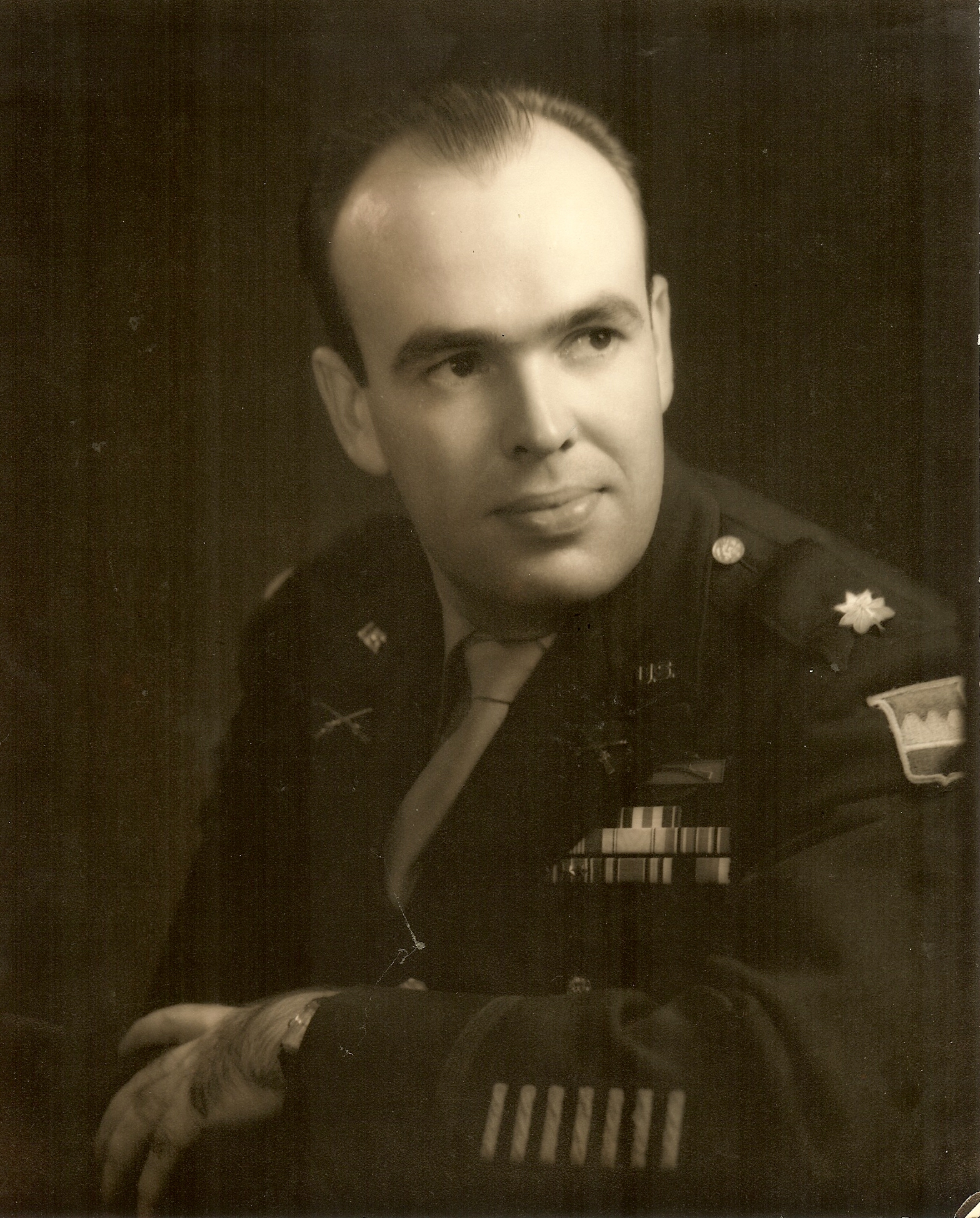
Today the Army buried my father, Major Jack Marshall, Sr., with full military honors. He had earned them, for he was a hero in World War II. Let me correct that: every soldier who serves in battle is a hero, but my Dad had a few special distinctions, like a Silver Star and a Bronze Star to go with his Purple Heart. He sustained a crippling wound to his foot from a hand-grenade, healed enough to jam what was left of it into a boot, and went on to fight in the Battle of the Bulge.
Under the clearest of blue skies, with the cemetery covered in snow, a caisson drawn by black horses, one without a rider, carried my father to a gravesite ceremony where the American flag draping his casket was carefully folded by six soldiers and given to my mother, following a 21-gun salute. My father was a hero off the battlefield as well, a profoundly ethical and courageous man throughout his life, and how he got that way is worth examining. Continue reading
Obama’s Preference: Ethically Correct, Historically Impossible
“I’d rather be a really good one-term president than a mediocre two-term president,” President Obama told Diane Sawyer. That is the right attitude, unquestionably. It correctly places responsibility over popularity, accountability over expediency, courage and conviction over cowardice, and generally endorses ethics and duty over unethical considerations.
The statement is admirable, but interestingly, almost completely unrealistic. For historically it has proven virtually impossible for a one-term President to be good, or even successful. Continue reading
Well, It’s Better Than Senator Burris’s Version…
[An Ethics Alarms reflection on the Christmas Eve Senate vote passing that esteemed body’s version of health care reform…in the tradition of “A Visit From Saint Nicholas,” because 1) you haven’t read enough parodies of that poem this year, 2) it seemed appropriate, but mostly 3) the version Sen. Burris read on the Senate floor was so terrible that I had to get its taste out of my mouth.]
Punishing Pregnant Soldiers
The outrage expressed by women’s groups over the Army’s announced intention to discipline and even court-martial female soldiers who become pregnant in war zones was as predictable as a sunrise. It also carries political firepower, and public appeal.
The complaints are, however, ethically nonsensical. Continue reading
 Ethics Alarms