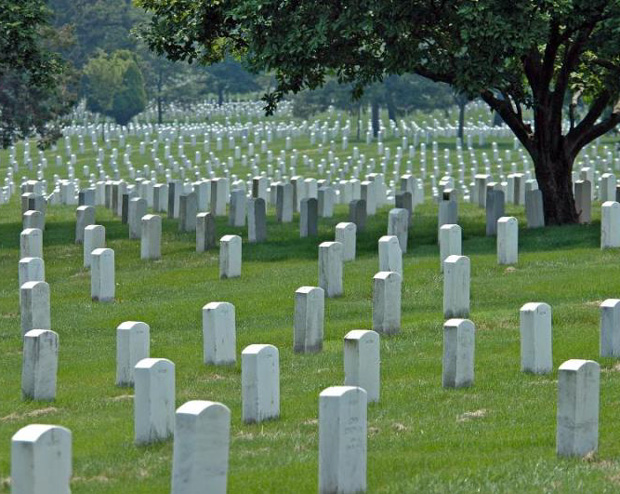
I know my answer to this one right now, but I’m curious about everyone else, and willing to be convinced that I’m a hard-hearted meanie.
Call this one a “Good Disgraced Veteran” story, in the style of the recent spate of human interest tales designed to make us feel sorry that the law has to be enforced when those nice, noble illegal immigrants break it. In this variation, the object of sympathy is Needham Mayes, who was among the first black servicemen to be stationed at Fort Bragg following the President Truman’s executive order desegregating the armed forces seven years earlier. In July 1955, as a 21-year-old private, he walked into a club on the base for non-commissioned officers only. He was quickly confronted by a sergeant; their altercation became violent, and the sergeant ended up shot and bleeding with his own gun. Mayes was arrested and led away in irons, then court-martialed. He left the Army with a dishonorable discharge.
Now in his eighties and ailing, Mayes wants his dishonorable discharge expunged so he can be buried in a national cemetery. [Notice of Correction: I erroneously wrote “Arlington National Cemetery” in the original version] His argument is that after being kicked out of the Army, he turned his life around and has been an admirable, even exemplary citizen.
In 1978, he earned a bachelor’s degree at Adelphi University, then a master’s degree. He became a social worker and therapist. He worked with organizations that fought drug abuse promoted mental health, and worked to prevent the spread of HIV and AIDS. In 2009, when Mayes was 75, he joined the NAACP’s Civic Engagement Committee, and began working with young men in poor, black neighborhoods, visiting homes and jails, and also seeking out anyone who would listen at large community events. All who know him and his work acknowledge that he has changed lives for the better.
“I am a rehabilitated man,” Needham wrote in 2017, in an appeal to have his dishonorable discharge converted to an honorable one, “and I hope to have the right to be buried in a national cemetery with my comrades-in-arms.” His request was denied. Now his lawyers are again mounting an effort to have his record cleansed, assisted by Senator Kirsten Gillibrand.
Your Ethics Alarms Ethics Quiz of the Day:
Should Mayes’ dishonorable discharge be upgraded?
As I said above, I know my answer: no.
Stipulated: Needham Mayes has been a positive force in his community and a fine citizen; based on what I know, I have no difficulty concluding that he is an ethical, virtuous, admirable human being. Nothing he has done since his military discharge, however, alters in any way his conduct when he was in the military, or renders his court martial and discharge any less valid than they were in 1955.
What the Times, Gillibrand, Mayes’ supporters and Mayes himself are arguing for is akin to the Ted Kennedy fallacy, which goes like this: Yes, horny, drunken Ted may have contributed to the death of a young woman and participated in a cowardly cover-up, but he went on to be a hard-working and respected U.S. Senator, so all of that should be forgiven and forgotten. Wrong. Ethics and personal responsibility don’t work like that, and life shouldn’t. Past misconduct isn’t erased by present good works. Its significance in assessing the character and personal achievements of an individual are certainly mitigated and even outweighed by what has come after, but the misconduct remains, and so should its just consequences.
The Times story adds irrelevant factors to its sympathy brief. Meyers is black; black soldiers were court martialed more frequently than white soldiers; he’s old and dying; this is a dying man’s wish; and the man he shot back in 1955 says that he holds “absolutely no animosity toward Mr. Mayes,” and is pleased to that he spent his life helping others. That’s all nice, but it changes nothing.
This is sentimental static designed to interfere with a clear analysis. Needham Mayes was discharged dishonorably after an incident that would have had the same consequences whether the soldier was black, white, or magenta.
Burial in national military cemeteries is earned by a soldier’s service in the military, not by subsequent achievements in civilian life. My father (along with my mother) is buried in Arlington National Cemetery because he served honorably and with distinction during World War II, not because he was wonderful husband and father. I’d love to know what my father would think about Meyers’ case: we once had an argument about whether a convicted murderer who was a decorated veteran should be buried at Arlington. My position was that if a veteran’s military record qualified him to be buried there, nothing he did subsequently short of treason should change that. My dad disagreed, and maybe he would disagree with me here as well.
Tell me what you think.
 Ethics Alarms