Ebola, Trust, Competence, and “The Only Thing We HaveTo Fear Is Fear Itself” Ethics

On the 4th of March, 1933, newly elected President Franklin Delano Roosevelt, taking over the Presidency in the teeth of the Great Depression, intoned his famous words, “The only thing we have to fear, is fear itself!”  It was bravado, of course, and in essence a lie: there was a lot to fear. Roosevelt knew it, and the public certainly knew it. The whole economic system seemed to be falling apart. Anti-capitalist evolutionaries were looking for an opportunity to revolt. Nobody was sure what to do.

The statement was effective, however, in focusing the nation on the challenges at hand and riveting the pubic attention on solving problems rather than cringing in terror in fear of them. Roosevelt was a magnificent speaker, warm and charismatic, and that contributed to the force of his rhetoric, but what was most important is that he was trusted. Every new President  can draw on a full, newly-replenished  account of trust, or at least could, in FDR’s time. A new President’s promises haven’t proven to be air; his political skills and talents, honesty and character have not shown themselves to be inadequate or a fraudulent pose.  In rare cases, and FDR was certainly one, they never do. The President, for good or ill, is the human face of the U.S. Government. If he is trusted, it is trusted. Continue reading

Introducing Rationalization #46: Zola’s Rejection, or “Don’t Point Fingers!”

fingers-pointing

J’accuse …!” ( “I accuse…!”) was a famous open letter to French president Félix Faure, published  January 13, 1898 in the newspaper L’Aurore by novelist Émile Zola. It accused the French Government anti-Semitism and a breach of justice in the prosecution and imprisonment of Alfred Dreyfus, a French Army General Staff officer sentenced to lifelong penal servitude for espionage. His well-argued accusation was the epitome of effective finger-pointing, and played a major role in bringing down a corrupt government.

Nonetheless, pointing fingers where they need to be pointed, when they need to be pointed, is inconvenient for the incompetents, miscreants, con artists, spinners and otherwise accountable parties so accused. Thus they and their allies often exploit this peculiar rationalization, which is better described, perhaps, as rationalization fertilizer, since it is a catalyst for the employment of many others, including the Biblical rationalizations. “Don’t point fingers!”, or its common variation, “Stop pointing fingers!” provides protection for the very people who most deserve to be pointed to, allowing them to deny culpability, avoid the just consequences of their failings, and best of all, divert appropriate attention from what they have done or not done to the supposed meanness and vindictiveness of critics who want to make sure the same mistakes don’t occur again, especially with the same officials in charge.

And, ironically, the cry “Don’t point fingers!” is often followed by those who cry it pointing fingers themselves, at others. It has unlocked, in such circumstances, the use of Rationalization #7, The Tit-For-Tat Excuse, which holds that one party’s unethical conduct justifies similar unethical conduct in return. Continue reading

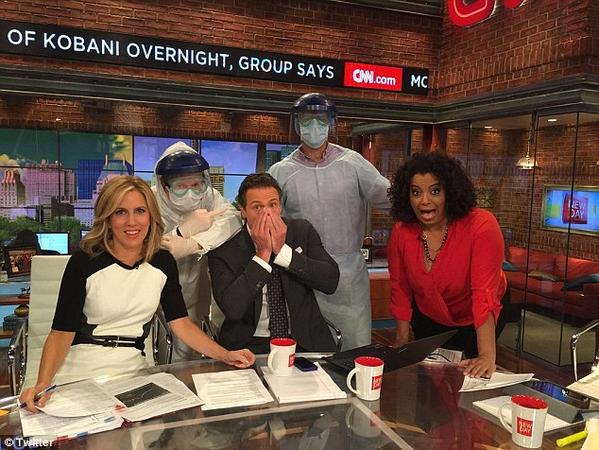
CNN’s Smoking Gun Ebola Gag

Ebola joke

The photo above was deemed so cute and hilarious that CNN’s “New Day” senior producer John Griffin tweeted it to the world. CNN brass, at least those among them who are not demented nor insane, immediately ordered it taken down, but of course it was too late.

We now we know. We’ve known for a long time, those of us who were paying attention at least, but now we know for certain. The photo is smoking gun evidence of a tragic fact with frightening implications for all of us. Broadcast journalism, the occupation that Edward R. Murrow believed would transform and enrich America by creating a better educated, more knowledgeable, more civically literate and involved public, can no longer claim to be a profession, a pursuit dedicated to the public good. It is nothing more than entertainment, and not very professional or sophisticated entertainment at that. Continue reading