
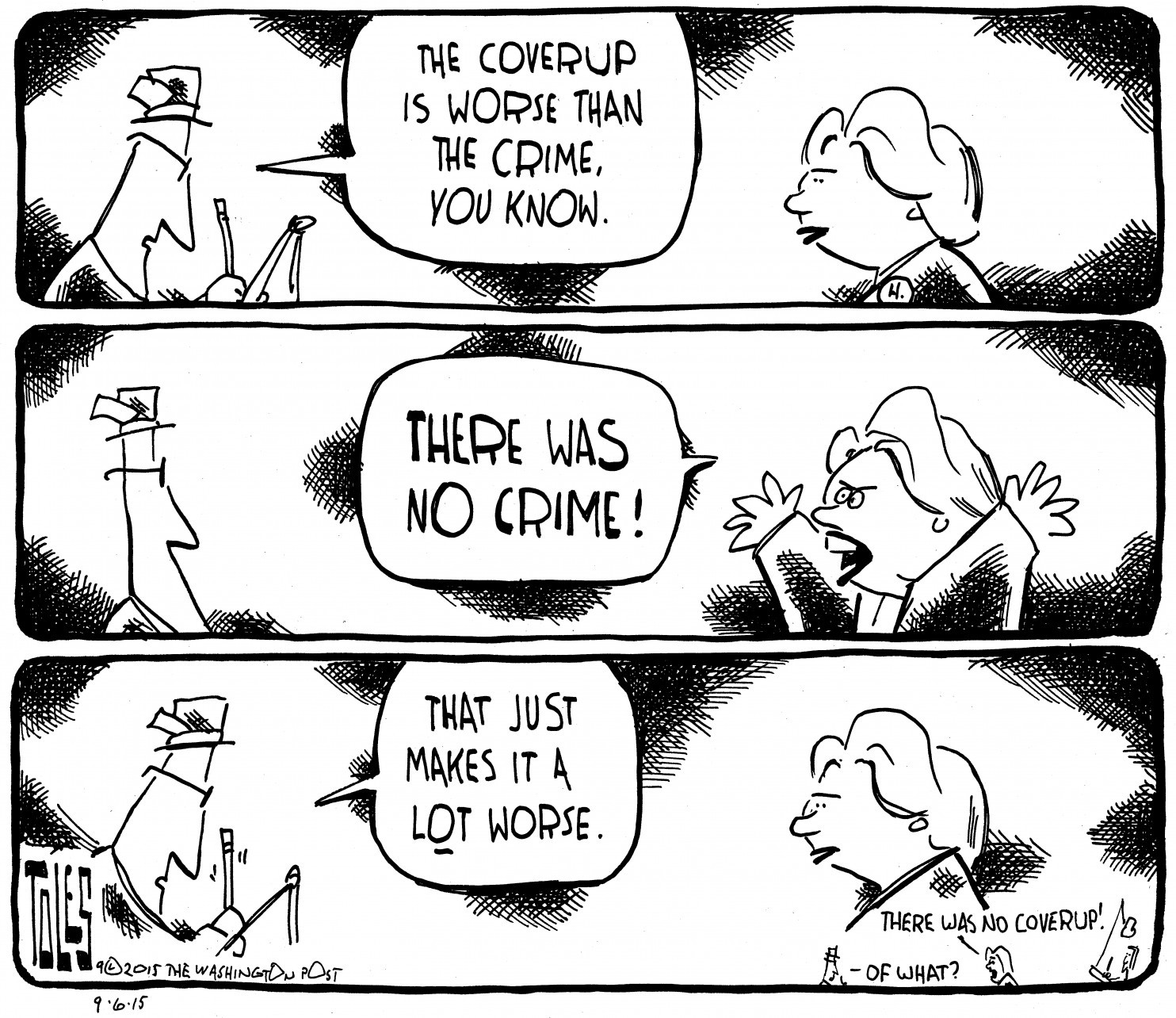
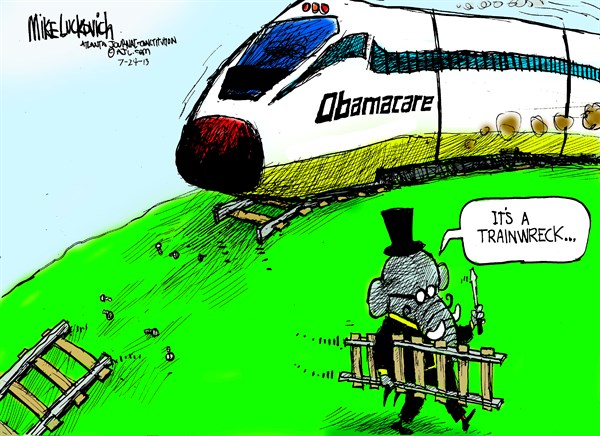
Here (and above) is a sample of the bumper crop of political cartoons inspired by the Donald Trump, Jr. aborted meeting to acquire damaging information on Hillary that never materialized.
They are all, to various degrees, unfair, misleading, or simply untrue. Why is this acceptable? If presenting a false representation of the truth is required to make a joke, and the intended audience accepts what is false as fact, how is that justifiable?
The cartoon above, one of the most unethical, is typical of the work of Tom Toles, the Washington Post’s relentlessly biased cartoonist.
The others are presented below, in approximate order of unfairness and dishonesty.
They collectively state that there has been treason, a crime, corruption, collusion and conspiracy, and that there is actual, as opposed to speculated, “news” that the Trump campaign worked with Russia to interfere with the election. This is old fashioned yellow journalism-style political cartooning, throwing red meat to members of the public who want to believe that the President of the United States is a traitor so they can undo the election. That isn’t funny. That’s disgusting.
As I wrote in 2012, focusing on another dishonest and partisan Toles cartoon:
” Political cartooning peaked as a form of commentary about half a century ago, and has been declining ever since. Now it is dominated by hateful, unfunny and witless culture warriors who have as much in common with Jules Feiffer and Bill Mauldin as Mario Mendoza had in common with Hank Aaron. Are there exceptions? There are always exceptions. Pat Oliphant, Exhibit A, is brilliant, nuanced and clever; he’s also 77 years old, the last of the greats. If there are Oliphants out there, legitimate commentators who can make fair and honest observations with humor and a pen, great: what a wonderful alternative to the typical pundit rants. Put them on the editorial pages. The standard, however, should be content, not form. Political cartoons were once an efficient means of aiming a thousand words at non-readers and members of the public without the skills or education to grasp complex issues. They have become a vehicle for the unqualified and trivial-minded to acquire a platform they don’t deserve, to the detriment of the public and journalism.”
Now the evidence: Continue reading

 Ethics Alarms