Ethics Hero: Judge Richard Posner

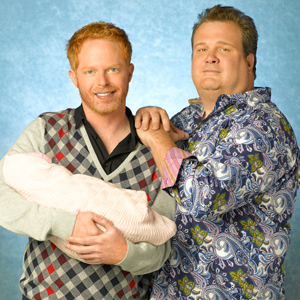
Sure, you have a right to think there's something wrong with that, but the state has no business acting as if it thinks so too.

Sure, you have a right to think there’s something wrong with that, but the state has no business acting as if it thinks so too.

Because Judge Richard Posner of the 7th Circuit Court was appointed by Ronald Reagan, he is usually describes as a conservative judge. He’s better described as an unusually smart, articulate, thoughtful and courageous judge, and in responding to oral arguments  lawyers for Wisconsin and Indiana defending their state’s marriage bans, he proved it.

I have frequently attempted to draw a distinction between those guided by archaic religious morality that causes them to regard same-sex marriage as sinful, and the attempt to use the government, which must not be guided by religion to make such marriages illegal. Morality doesn’t have to be defended by logic—God works in mysterious ways, you know—but laws do. A complete evisceration emanating from a place of authority of the specious and often absent reasoning behind gay marriage bans was much needed, and knowing that he risked criticism as a “judicial bully” for doing so with gusto, Judge Posner came through.

Here is a sampling of the barrage he placed on Indiana Solicitor General Thomas Fisher and Wisconsin’s assistant attorney general Timothy Samuelson: Continue reading


Worst Apology of the Month: First Baptist Church of Crystal Springs, Mississippi

A prominent member of the First Baptist Church of Crystal Springs, Miss.

It’s time to add a new Ethics Alarms category— the Worst Apology. Apologies seem to be flying around faster than usual as campaign season intensifies, though some individuals who desperately need to apologize—like, say, Harry Reid, are not.

I’ll be using the Ethics Alarms Apology Scale to rank the rotten apologies in our future. Ironically, the first winner in the category is a rare form of putrid apology that doesn’t even appear on the scale. The lowest ranking on the scale is a 10 ( “An insincere and dishonest apology designed to allow the wrongdoer to escape accountability cheaply, and to deceive his or her victims into forgiveness and trust, so they are vulnerable to future wrongdoing”), but the recent apology by the First Baptist Church of Crystal Springs, Miss. pulls an 11. Continue reading

Ethics Dunce: Rev. Stan Weatherford

Rev. Weatherford with a parishioner

The First Baptist Church of Crystal Springs, Mississippi has never hosted the wedding of a black couple in its 150 year history, so you can imagine how important it was to the congregation not to break a perfect record. All right, that’s unfair: only a handful of white church members protested to Rev. Stan Weatherford when they learned that he was preparing to wed Charles and Te’Andrea Wilson at First Baptist, but their threat that they would have him voted out of his job if he did was sufficient to cause him to tell Charles and Te’Andrea, just two days before the scheduled ceremony, that they would have to move the event to another church.

“I didn’t want to have a controversy within the church, and I didn’t want a controversy to affect the wedding of Charles and Te’Andrea. I wanted to make sure their wedding day was a special day,” Weatherford told local reporters. Continue reading

Ethics Quote of the Week: Michael Fumento

“As a conservative, I disagree with the political opinions of liberals. But to me, a verbal assault indicates insecurity and weakness on the part of the assaulter, as in “Is that the best they can do?” This playground bullying – the name-calling, the screaming, the horrible accusations – all are intended to stifle debate, the very lifeblood of a democracy.”

—-Michael Fumento, writing powerfully in Salon about the increasingly viscous rhetoric of too many conservatives, and how it has left him estranged from his own political philosophy.

He writes,

“Civility and respect for order – nay, demand for order – have always been tenets of conservatism. The most prominent work of history’s most prominent conservative, Edmund Burke, was a reaction to the anger and hatred that swept France during the revolution. It would eventually rip the country apart and plunge all of Europe into decades of war. Such is the rotted fruit of mass-produced hate and rage. Burke, not incidentally, was a true Tea Party supporter, risking everything as a member of Parliament to support the rebellion in the United States.

“All of today’s right-wing darlings got there by mastering what Burke feared most: screaming “J’accuse! J’accuse!” Turning people against each other. Taking seeds of fear, anger and hatred and planting them to grow a new crop.”

You can read his whole essay, “My break with the extreme right” in Salon, here.

_____________________________________________

Pointer: Volokh Conspiracy

Source: Salon

Graphic: Sleepless heretic

Ethics Alarms attempts to give proper attribution and credit to all sources of facts, analysis and other assistance that go into its blog posts. If you are aware of one I missed, or believe your own work was used in any way without proper attribution, please contact me, Jack Marshall, at  jamproethics@verizon.net.

Ethics Blindness at Joe Pa’s Memorial Service

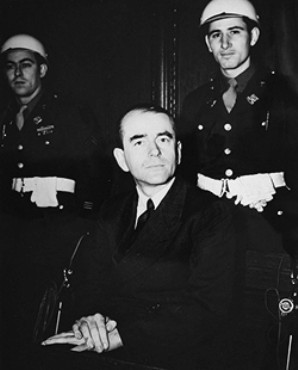
At least Albert Speer didn't have a clear conscience.

I did not expect the speakers at Joe Paterno’s emotional memorial service to avoid stepping on  some of the myriad ethical landmines that lay before them. It was a time to say good things about the late Penn State coach, and there is plenty to say. Still, two speakers did cross deep into unethical territory. Even at a memorial service, when the lessons of the Jerry Sandusky affair are so important for all to learn and accept, it was poor judgment and irresponsible for those honoring Paterno to try to minimize or deny his accountability in the tragedy.

Unethical Statement #1: Nike Co-Founder and Chairman Phil Knight. “Whatever the details of the investigation are, this much is clear to me: There was a villain in this tragedy. It lies in the investigation, not in Joe Paterno’s response to it.”

This got a standing ovation, a reaction every bit as offensive as the Penn State student riots after Paterno’s firing, indeed more so. Knight’s rationalization excuses every Enron executive who knew that the leadership was defrauding investors; every Bernie Madoff family member and enriched investor who knew something was wrong but waited for the SEC to act; every member of the Nixon White House who saw the rule of law being trampled but reasoned that since he wasn’t directly involved, there was no reason to speak up; every member of Congress who knew that Rep. Mark Foley was sexually harassing House pages and kept quiet; and every priest who knew that a colleague was sexually molesting boys and did nothing, because the Church leadership was doing nothing. Knight’s defense of Joe Paterno is a defense of all of these, and indeed a defense of evil. Continue reading

Ethics Quote of the Week: Edmund Burke (1729-1797)

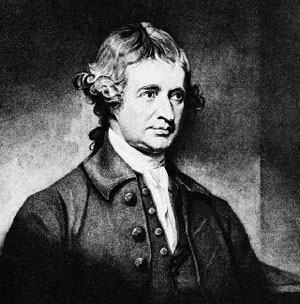
So...any chance of you coming out of retirement, Ed?

“Parliament is not a congress of ambassadors from different and hostile interests; which interests each must maintain, as an agent and advocate, against other agents and advocates; but parliament is a deliberative assembly of one nation, with one interest, that of the whole; where, not local purposes, not local prejudices, ought to guide, but the general good, resulting from the general reason of the whole. You choose a member indeed; but when you have chosen him, he is not member of Bristol, but he is a member of parliament. If the local constituent should have an interest, or should form an hasty opinion, evidently opposite to the real good of the rest of the community, the member for that place ought to be as far, as any other, from any endeavour to give it effect.”

—-Edmund Burke, British political theorist, philosopher and statesman, in his speech to the electors at Bristol, November 3, 1774

Why Burke’s principles are relevant today should be obvious. What is depressing is that I have to resort to quoting an 18th Century statesman to express them, because no current elected officials in the United States seems to be capable of either articulating such ideals or acting accordingly.

Thanks to Ethics Bob Stone for reminding me of one of Burke’s best speeches.