Ethics Quiz: Trump’s Tweet On Fidel’s Demise

castro-tweet-trump

We are taught to speak only good of the dead in the immediate aftermath of one’s demise, and especially in the world of international diplomacy, restraint, respect and the Golden Rule are the accepted standards of ethical conduct on such occasions

This being the case, what is the right ethical diagnosis of President Elect Donald Trump’s tweet above about the announcement of Fidel Castro’s death, which includes an explanation point widely interpreted to suggest “GOOD!” of “Yippee!” ? Trump’s subsequent statement removed all doubt that he was not sorry to see Fidel go to that big sugar cane plantation in the sky, or better yet, well, you know:

“Today, the world marks the passing of a brutal dictator who oppressed his own people for nearly six decades,’ Mr Trump’s statement reads. “Fidel Castro’s legacy is one of firing squads, theft, unimaginable suffering, poverty and the denial of fundamental human rights. “While Cuba remains a totalitarian island, it is my hope that today marks a move away from the horrors endured for too long, and toward a future in which the wonderful Cuban people finally live in the freedom they so richly deserve. Though the tragedies, deaths and pain caused by Fidel Castro cannot be erased, our administration will do all it can to ensure the Cuban people can finally begin their journey toward prosperity and liberty. I join the many Cuban-Americans who supported me so greatly in the presidential campaign, including the Brigade 2506 Veterans Association that endorsed me, with the hope of one day soon seeing a free Cuba.”

Contrast that with President Obama’s equivocal statement, which said in part,

“We know that this moment fills Cubans — in Cuba and in the United States — with powerful emotions, recalling the countless ways in which Fidel Castro altered the course of individual lives, families, and of the Cuban nation. History will record and judge the enormous impact of this singular figure on the people and world around him.”

Then there was former President Jimmy Carter, who said,

“Rosalynn and I share our sympathies with the Castro family and the Cuban people on the death of Fidel Castro. We remember fondly our visits with him in Cuba and his love of his country. We wish the Cuban citizens peace and prosperity in the years ahead.”

Hmmmm!

Your Ethics Alarms Ethics Quiz for this Thanksgiving Day weekend:

Were Trump’s tweet and statement about Castro responsible, prudent and ethical?

I think so, and I’m surprised at my own response. I suppose I am tired of seeing and hearing public figures lie when everyone knows they are lying, and if Carter and Obama really don’t think Castro was a brutal, murderous dictator whose departure is a blessing to all, then the Democratic Party is in even worse shape than I thought it was.

I have a hard Left friend who actually expressed praise for Castro’s legacy today on Facebook. When a figure who is objectively and factually as bad as Castro was, our leaders should not hesitate to be frank and direct. Obama’s non-commital History will record and judge the enormous impact of this singular figure on the people and world around him” is cowardly and evasive. Yes, and if history judges that Fidel’s ends justified his means, then civilization is doomed. Carter’s statement is even worse. “His love of his country”—that’s mitigation for oppression and murder, eh, Jimmy? If love of country your standard, you and Rosalyne must love Hitler.

Trump’s excessive candor and rogue mouth obviously are going to do a lot of damage in the next four years, just as they did during the campaign. Nonetheless, I don’t see anything unethical about calling a murderous dictator when he was, whether it’s on the day of his death or ten years later. This is one time when Trump’s refusal to be politically correct cuts through crap that should be cut through. As Edgar says at the end of “King Lear,”

“We should speak what we feel, not what we ought to say,”

…at least when bastards like Castro die.

Rather than using the occasion to find another excuse to attack Trump, Democrats should think about why it is that so many Castro admirers are in their ranks.

 

Hillary’s New Tactic: When Caught Lying, Resort To Gibberish

Yesterday in Washington, D.C., Hillary Clinton took questions at a meeting of the National Association of Black Journalists and National Association of Hispanic Journalists. She was asked by NBC’s Kristen Welker to explain her jaw-dropping lie on Fox News Sunday a week ago, when she claimed  that FBI Director James B. Comey had said all of her statements had been “truthful,” when anyone who heard Comey’s public statement or Congressional testimony could see that he actually stated that her public statements—for more than a year—were not true. Incredibly, Clinton had no coherent or credible answer for this, though she had to know—didn’t she?—that the question would be asked.

Her answer began with this:

“I may have short-circuited it, and for that I will try to clarify.”

On “The Honeymooners,” Ralph Kramden (Jackie Gleason) used to stutter out, when confronted with his own whopper or otherwise trapped, “Huminahuminahumina…” “Short-circuited” is as meaningful as that. It’s gibberish, but just as obviously means “you caught me lying through my teeth, and I don’t have a good explanation.” Ralph, however, was a humble, none-too-bright bus driver, and not running for President, so the standards in his case can be relaxed a bit.

(Please also note Clinton’s equivocal “might.” )

Ralph always followed  “huminahuminahumina…” with facial expressions and body language showing silent humiliation, and then an abject apology. Hillary, being Hillary, just started lying again. The AP fact-checked her response, and determined that she had trotted out the same shifting, mendacious assertions we have heard so many time before. Concluded the Washington Post’s Chris Cillizza, 

Er, what? What Clinton appears to be saying is that Comey said that everything she said to the FBI was truthful (he did) and since she said publicly exactly what she said to the FBI, therefore everything she said was truthful.

Oh, so that’s what “short-circuited” means! Continue reading

Jumbo, Ethics Dunce, Kaboom And Unethical Quote Of The Month: Hillary’s Jaw-Dropping Lie To Chris Wallace

hillary and Wallace

“Director Comey said my answers were truthful, and what I’ve said is consistent with what I have told the American people, that there were decisions discussed and made to classify retroactively certain of the emails.”

—-Hillary Clinton to Chris Wallace on Fox News Sunday, asserting that what was demonstrably false was true, regarding a public statement by Comey that can be Googled and watched on YouTube instantly.

My reaction when I saw that: KABOOM! The top of my head blew right off, bounced off the ceiling and knocked over the lamp. Wallace asked Clinton directly about what she had been saying to the public about her e-mails since May of 2015: that she did nothing wrong, that her private, secret e-mail server was approved by the State Department, that she never received or sent a classified e-mail…okay, that didn’t work, that she never knowingly sent a classified e-mail…wait, wait, that she never sent or received an  e-mail that was marked classified. Comey, in his televised, live statement announcing his decision not to recommend prosecution for Clinton, directly contradicted her.

In his careful statement Comey said,

“Although we did not find clear evidence that Secretary Clinton or her colleagues intended to violate laws governing the handling of classified information, there is evidence that they were extremely careless in their handling of very sensitive, highly classified information.,,,seven e-mail chains concern matters that were classified at the Top Secret/Special Access Program level when they were sent and received. These chains involved Secretary Clinton both sending e-mails about those matters and receiving e-mails from others about the same matters. …There is evidence to support a conclusion that any reasonable person in Secretary Clinton’s position, or in the position of those government employees with whom she was corresponding about these matters, should have known that an unclassified system was no place for that conversation…even if information is not marked ‘classified’ in an e-mail, participants who know or should know that the subject matter is classified are still obligated to protect it.”

There is no way that an individual of normal facility with the English language can listen to or read that statement and conclude that Comey was saying that Hillary’s answers to questions about the e-mails to the American public and the news media–for over a year!–were truthful, as in “full of truth.” A technical argument can be made, if one wishes, that  Comey didn’t say that Clinton lied, because maybe she is an idiot and incompetent, and didn’t know or understand what “any reasonable person in Secretary Clinton’s position” should have known and understood, leading to her factually false (and constantly evolving as more facts where uncovered) explanations over months and months. Continue reading

Faking The Unicorn: The Hoover Institution’s Victor Davis Hanson Explains Why Republican Will Vote For Trump

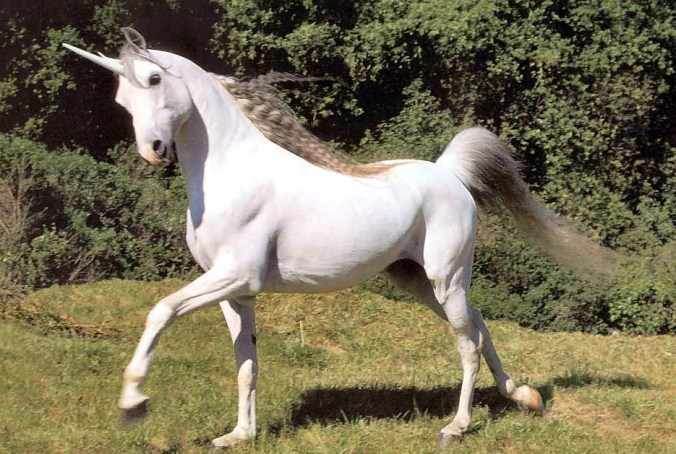
unicorn2

Loyal reader and frequent Commenter “Other Bill” sent me this essay by conservative writer Victor Davis Hanson of the Hoover Intstitution, with the note that it is “Probably as close as you will get to what you’ve been looking for.” I think he’s correct, but since what I’ve been looking for is a single rational reason to vote for Trump, and Hanson’s essay consists of irrational beliefs, rationalizations, terrible logic and skewed values that many Republicans will adopt, it is like sending someone searching for a unicorn this…

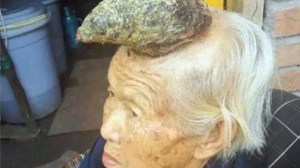
horned woman

It’s interesting but disgusting, and not what I’m after.

Hanson’s piece begins…

If Donald Trump manages to curb most of his more outrageous outbursts by November, most Republicans who would have preferred that he did not receive the nomination will probably hold their noses and vote for him.

How could that be when a profane Trump has boasted that he would limit Muslim immigration into the United States, talked cavalierly about torturing terrorist suspects and executing their relatives, promised to deport all eleven-million Mexican nationals who are residing illegally in the U.S., and threatened a trade war with China by slapping steep tariffs on their imports?

A number of reasons come to mind.

Hanson has already invalidated his essay at the outset by material omission. If the items he mentioned were the only reasons to oppose Trump, his subsequent arguments might make sense….well, more sense than they do. But to even try to list the reasons Trump is unfit is to understate the case. In addition to what Hanson mentions,

  • Trump reduces all debates to ad hominem attacks, which would degrade the standard for all debate, culture wide, with devastating effects should he become President.
  • He has advocated the virtues of bribery, while mocking the virtue of integrity.
  • He sees nothing unethical about conflicts of interest.
  • He has endorsed the use of doxxing to retaliate against critics, indicating his disregard for privacy and confidentiality.
  • He endorses vengeance.
  • He is a misogynist, a sexist, and a sexual harasser.
  • He has lied repeatedly, and then lied about lying.
  • He refuses to apologize even when he has been exposed as engaging in reckless wrongdoing.
  • He has refused to engage in serious study of the issues, preferring instead to improvise answers to policy questions, showing laziness and a lack of seriousness.
  • He is a clinical narcissist, meaning that he is unstable and suffering from a crippling personality disorder.
  • All of the individuals he has appointed to represent him in the media have been exposed as incompetent, indicting Trump’s judgment as well as his claim that he’ll “appoint the best people.”
  • He has endorsed the views of white supremacists.
  • He is incapable of giving a dignified, articulate, coherent speech.
  • He does not understand the difference between rationalizations and ethics.
  • He has no military experience.
  • He has no government experience.
  • He would probably be the least intelligent President in U.S. history. (There are a few we could have a legitimate argument about. Those Presidents, however, had other virtues Trump not only doesn’t have, but doesn’t care about.)
  • This.

Is there more? Of course there is more…much more. Pages and pages more. Hanson gives five policy-based reasons to object to Trump, plus the fact that he is “profane.” (This is equivocation: Trump isn’t just profane; he is vulgar, boorish, undignified and crude.) That’s misleading. That’s deceit. That’s how the supporters of Hillary Clinton, if they were Trump supporters, would falsely try to mislead critics.

Here are Hanson’s “reasons” that “come to mind”—I may not be able to resist an occasional bolded remark before I’m through quoting—: Continue reading

Emory Update: University President James Wagner Vows To Punish Perpetrators Of “Trump 2016” Grafitti, And Reason Whiffs On Why That’s Wrong

Nice equivocating, Reason.

Nice equivocating, Reason.

To avoid burying the lede, let us understand right off that this is known as “chilling free speech,” and is un-American and wrong.

Following the revelation that Emory chief James Wagner ratified the complaints of ideology-disabled students that the expression of support for a major party political candidate was an unacceptable assault on student “safety,” Reason now informs us that Wagner is reviewing security tapes so the students can be subjected to the “conduct violation process.” Although the University has not demonstrated similar verve when chalk-scrawled messages contained more popular content, it is making the disingenuous argument that the manhunt is only about policies requiring prior approval of such chalk campaigns, and that prohibit chalk graffiti that won’t be washed away by rain like the itsy-bitsy spider.

The problem with swallowing that malarkey is that mere chalking has never prompted security camera footage examinations or presidential concern before. This is about condemning and squelching mainstream political speech that the prevailing majority of the campus doesn’t like.  This wasn’t swastikas or “hate speech.” “Trump 2016” at Emory is no different from “LBJ 1968” at Berkeley.

Being gentle and oh so careful to avoid sounding too much like he doesn’t sympathize with Trump-despisers,  Reason reporter Robby Soave writes, Continue reading

Look! “An Illustrated Book of Bad Arguments”!

bad arguments

As various thought fallacies and flawed arguments are constantly being exposed, used, debunked or otherwise referenced during our ethics discussions and debates—the Ethics Alarms compendium is here–this looked like something readers would enjoy. I probably should dedicate this post to former blog Commenter of the Year tgt, in appreciation for his ending—maybe just briefly, we shall see—his latest sabbatical with a flurry of 70 comments while I was lecturing in Newport last week. I didn’t have time to properly engage him or even read all the comments, but he seemed in characteristic form.

Tgt loves the fallacies and delights in slapping them down whenever they occur. His favorite is “No True Scotsman.” I immediately thought of him when I  stumbled upon “An Illustrated Book of Bad Arguments” by the multi-talented Ali Almossawi. Tgt’s  pet fallacy is here, as well as ad hominem, appeals to authority, the straw man, equivocation and others, some under different names than those I am used to. I haven’t read it carefully: there may be one or two that needs to be added to the Ethics Alarms list.

This is a well-researched and written exposition of some major fallacies with lovely illustrations, presented like a vintage children’s book. Someone should actually publish a children’s book like this: I would have been grateful for one when my son was a boy, or when I was a boy.  I’m grateful for this now.

You can find this amazing work of art, ethics, rhetoric and logic here. I’ve already sent the link around to many friends, young and old, and you may want to do the same.


The Ethics Alarms List of Debate Cheats and Fallacies

fallacy

I realized it was time to post the definitive Ethics Alarms List of Debate Cheats and Fallacies after once again having to point out to an indignant commenter that calling  him a jerk based on a jerkish comment was not an ad hominem attack, and that saying idiotic things on-line carry that risk. Here, at last, is the current list, adapted from multiple sources. As with the Rationalizations List, with which this occasionally overlaps, I invite additions. Participants here should feel free to refer to the various fallacious arguments by number, and to apply critically them to my posts as well as the comments of others. Am I immune from occasionally falling into one or more of these bad debate techniques and rhetorical habits? No. The other reason I wanted to get the list up was to reinforce my own efforts to be persuasive without being manipulative.

1. Ad Hominem Attack

An ad hominem attack means that one is substituting the character or quality of an adversary’s thought for the argument the adversary is presenting. This is unfair, as well as misleading. “Your argument is invalid because you are a crook, a fool, an idiot” is an ad hominem attack. It is not an ad hominem attack to prove an argument idiotic, and conclude, on the basis of signature significance, (which requires that an  argument be so idiotic that no non-idiot would conceive such a thing and dare express it),that the one making the argument is an idiot, since only an idiot would make such an argument. Confusing the true ad hominem attack with the latter is a useful deflection by poor advocates of the fair consequence of their advocacy. Idiots can still hold valid positions, and disproving the position has nothing to do with proving they are idiots.

1 a. The Toxic Introduction.

A more subtle application of the ad hominem attack is The Toxic Introduction, where the argument of another is introduced by noting a negative quality about the individual. The effect is to undermine the argument before it has even been heard, by its association with a less than impressive advocate.

2. Butch’s Stratagem (The Straw Man)

Continue reading

The Ethicist, the Farkel Family, and the Perils of “Maybe”

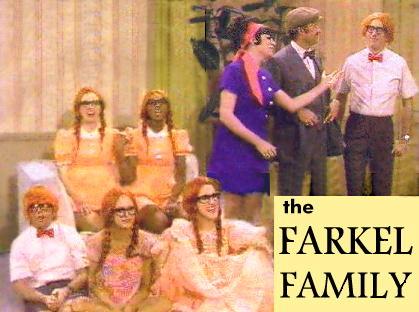
This photo is completely relevant to this post, but if you are under 50, you probably haven't a clue why. Pity. See below for an explanation.*

One of the reasons I started the Ethics Scoreboard, and continued with Ethics Alarms, was my frustration with the ethics profession’s reluctance to render useful opinions on complex ethical problems…unless, of course, the ethicist was being paid for them. Instead, ethicists are prone to issue obtuse and jargon-filled discussions allowing for every possible eventuality and interpretation, usually concluding with vague, equivocal pablum that allows the ethicist to avoid criticism and accountability. The result of this craven preference for “maybe” as the answer to every dilemma is that ethics are rarely included in public discourse or media coverage, as it solidifies its reputation for being technical, ambiguous, and pointless.

A perfect example of the reticence to make a clear choice occurs in this week’s installment of “The Ethicist,” the New York Times Magazine’s ethics column. An understandably anonymous inquirer writes that he unknowingly fathered a child with a married woman in his neighborhood, who raised the child as the offspring of her and her husband.  The mother asked the biological dad to have no contact with the girl, and he has complied. Now he asks, “Does she have a right to know her true parentage upon reaching adulthood? Sooner? Over the objection of the mother? Only when the husband dies? Who can make these decisions and when?” Continue reading