The Unethical French Animator, the Mammalian Duck, Dysfunctional Ethics Alarms

http://www.youtube.com/watch?v=uIeqUOzkdaU

“Oggy and the Cockroaches” is a French animated comedy series produced by Xilam and Gaumont Film Company. Its future on the Nickelodeon children’s TV cartoon channel NickToons is in doubt, however, after the channel was thrust into an unwanted controversy by an unknown French cartoonist’s practical joke.

A recent episode that aired on NickToons featured a brief view of a framed wall hanging showing a cartoon female duck sporting a pair of bikini briefs, sunglasses and bouffant hair-do, and most significantly, naked torpedoesque breasts of a variety more familiar to afficionados of “Fritz the Cat” than the target audience of eight-year-olds. Naturally, the station was deluged with complaints from parents.

The NickToons  website now appears to have removed the show from both its schedule and its homepage. Good start. It should also end any relationship it may have with Xilam and Gaumont.

I know cartoonists are not known for an excess of maturity, but a network needs to be able to reside a modicum of trust in its contractors, suppliers and partners. If an animator would think it’s funny to slip a topless, sexy duck into a kid’s show, then who is to say the next “joke” won’t be a giant talking penis or Adolf Hitler having sex with a cow?

Far more disturbing than the prank itself are the rationalizations and justifications being offered for it in online comments to the story and in social media: Continue reading

Americans Opine On Abortion: Thank You, USA Today, Now I Know Why We’re Doomed

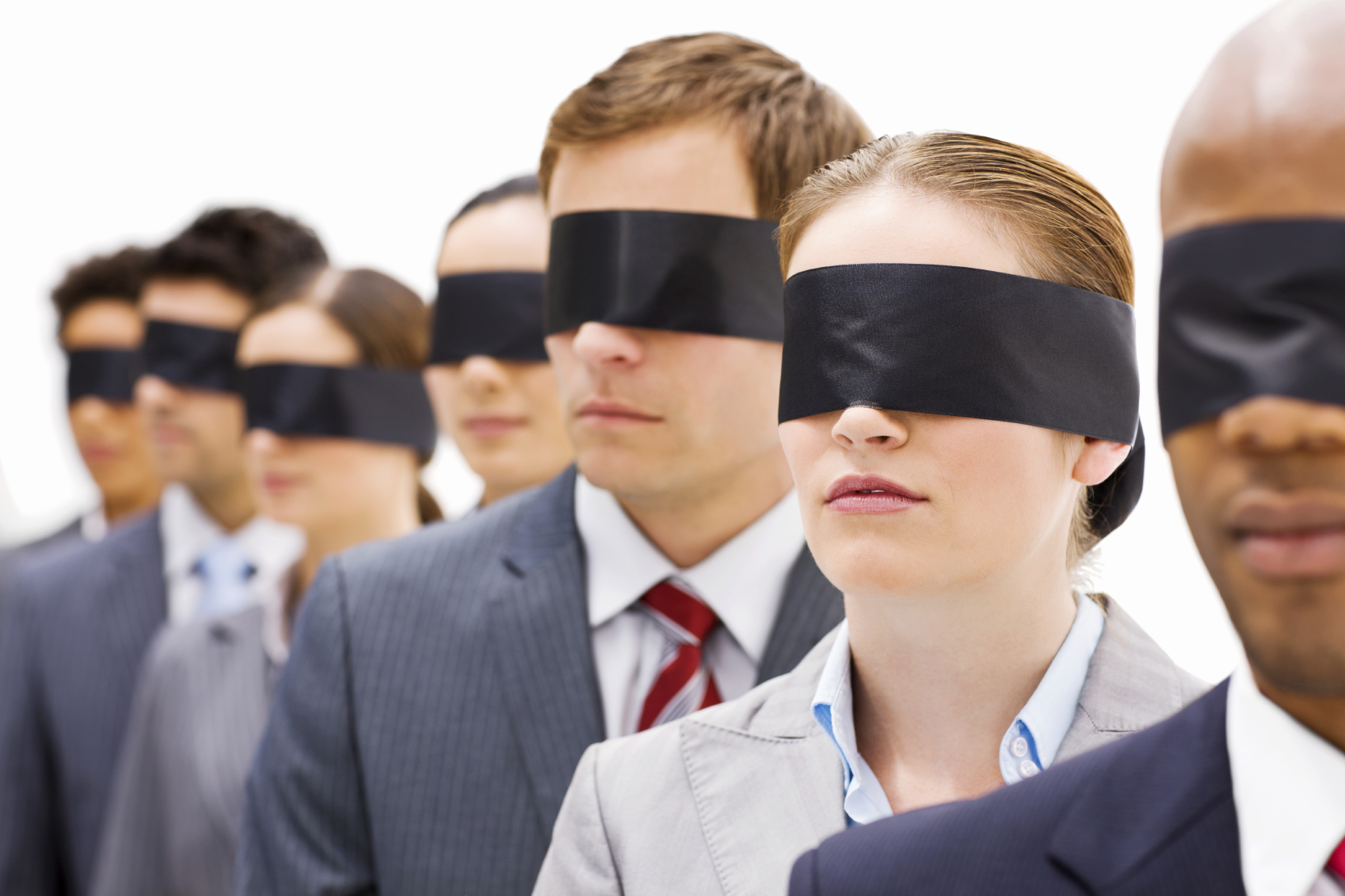
Blindfolded-People

USA Today fashions itself as the newspaper of the average American, and it may well be true. Especially since its redesign, it contains less substance than a single section of the New York Times, pedestrian writing, and mostly bite-size features designed for an audience with an attention span that finds fortune cookies challenging. Every now and then, however, a bit like Family Feud, USA Today’s proud low brow style yields valuable insight. Yesterday’s feature on abortion was such an instance, as the paper gathered reader comments on its Facebook and Twitter locales for America’s opinion regarding Missouri’s new mandated three-day waiting period for women seeking an abortion.

Now that I have reviewed the responses, it all makes sense to me now, and I think I know where we are headed. Oh, there is no valuable insight regarding the measure or abortion among the comments. What is revealing is that among all the responses chosen by USA Today, not single reader could manage sufficient objectivity and critical thinking to produce  well-reasoned, fair, thoughtful insight regarding a public policy issue that demands measuring and balancing interests, values,  and outcomes, the essence of ethical decision-making. Not one.

Here they are, with my comments in bold: Continue reading

On Liberals, Dignity, Dogs, Signature Significance and Toddlers On Leashes

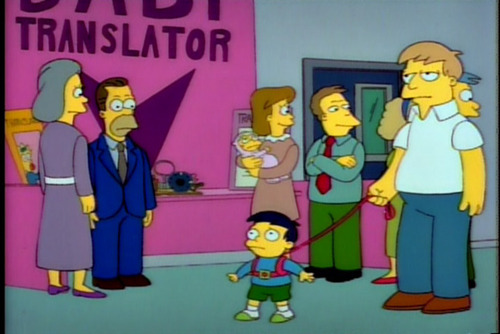
But they LIKE it!

But they LIKE it!

The damndest essays ignite furious debates here. I raised CNN’s mid-day quiz about parents walking children on a leash-–did I mention it featured a video of one mother dragging her prone harnessed child through a store like the kid was a sack of potatoes? I should have—-primarily because 1) it reminded me of “The Simpsons,” 2) because I was struck by the fact that ethics was never brought into a conversation that I would deem as concerning an ethics issue, and 3) because it was notable that CNN wasn’t talking about sunken Malaysian airplanes.

Still, I have been enlightened by the unexpectedly lively discussion, if not encouraged. In particular, this never struck me as an ideological issue, but it certainly seems to be one. Upon reflection, I should have predicted it, though this is not flattering to liberals.

I’ll return to this in a bit.

The defenses of the demeaning practice have been mostly pragmatic, which involves a utilitarian argument: “It works, and the ethical violations either don’t exist, or are too small to care about.” The most annoying defense so far has required  intentionally taking a statement in my post literally that also has an important figurative message, as well as misstating even the literal meaning, all to make it easier to dismiss the intended point. That’s some kind of record for straw men. Or would that be straw dogs? No, I think that’s something else.

The phrase in question was “whether it was fair, kind, respectful or right to treat your child like a cocker spaniel…” To make it easier to attack, my critic has changed that to “…to treat your child in a manner associated with the treatment of dogs.” Sneaky. It is true that dogs are typically kept on a leash, but that is only half the message, as fair readers will acknowledge. The term “treated him-her-them like a dogs/dogs” means, and has meant for a very long time, treating a human being in an inhuman, demeaning, humiliating, unkind, unfair fashion showing a lack of respect and making the human being in question miserable. The description has been used to describe both treatment that is seen in the treatment of actual dogs—such as substandard living conditions, lack of autonomy, domineering oversight, feeding of food not fit for human consumption, and in this case, use of a leash in public, as well as used to describe treatment that would never be literally possible with real dogs, such as too many typing assignments, refusal to give credit or bonuses for effective research, not allowing a family member a sufficient allowance, forcing a child to dress in old, outdated or unattractive clothes, etc. In the current case, both meanings apply, and focusing on just one is intentionally misrepresenting the issue.

As to whether the use of leashes on human children is demeaning, try this thought experiment: Would any white nanny dare to walk in public with two black children on a leash? How about the mother in a mixed marriage, in which the mother is blonde and the children are black? Would not the imagery of whites leashing blacks be inherently distasteful, regardless of the age of the African-Americans involved? Continue reading

Child Care Ethics And Leashes For Toddlers: CNN and Its Viewers Flunk An Ethics Alarm Test

Kids on leashes

It is constantly amazing to me that journalists so seldom identify obvious and critical ethics issues in the topics and events they cover. The rest is mixed emotions: this absence of ethics awareness is a serious culture-wide problem; then again, were this not so, I’d probably be in a different, and less stimulating profession.

Today I sat down to lunch as CNN engaged in a breathless discussion of whether using leashes on toddlers and even older children was a good idea, as it is either a growing trend among parents, or CNN was having a slow news day. The phone lines were open, and many viewers weighed in, with the primary camps expressing the following positions:

1. “If it makes children safer, then there is no reason not to do it. Safety is everything. Kids have been killed running into the street.  A leash will prevent that.”

2. “This shows the decline of child-rearing skills in the United States. If you can’t control your kid better than this, you are the problem.”

If the question of whether it was fair, kind, respectful or right to treat  your child like a cocker spaniel occurred to anybody in this discussion (I know the CNN staff never considered it), I saw and heard no evidence of this. Yet that is the central question, and it is an interesting one to consider. The fact that matters of human dignity, responsibility, respect, fairness, autonomy, kindness, proportion and prudence need to be balanced to answer the question at hand never came into the discussion, and those debating the issue demonstrated neither awareness of the competing ethical values, nor the ability to know how to employ them. Continue reading

Harvard’s Black Mass: An Ethics Problem With No Answer


Impossible.

Impossible.

P versus NPthe Hodge conjecturethe Riemann hypothesisthe Yang–Mills existence and mass gap The Navier–Stokes existence and smoothness. The Birch and Swinnerton-Dyer conjecture. These are some of the unsolved problems of mathematics, but they are child’s play compared to the unsolvable ethics dilemma concocted at Harvard College.

Is Harvard right to allow students to hold a historic recreation of a Black Mass? Is Harvard wrong? Is it unethical for the students to engage in the project? Is it gratuitously insulting to religion, particularly Catholicism? Does it even matter if it is?

To bring you up to date:

The Harvard Extension Cultural Studies Club is planning to recreate a “satanic black mass” on campus next week, enacted by Satanic Temple, a New York-based, Satanist group that engages in outrageous displays to draw attention to First Amendment rights. “Our purpose is not to denigrate any religion or faith, which would be repugnant to our educational purposes, but instead to learn and experience the history of different cultural practices,” the HECSC said in a statement.

The statement lays the foundation for a hung jury in seeking an ethics verdict. Since the Black Mass was originally devised to denigrate the holy mass, saying that recreating the mass isn’t intended to denigrate religion is the kind of thing Captain Kirk used to say to evil, logic-bound computers to make smoke come out of their hard drives. “It-is-true-but- it’s-not-true-but-nothing-can-be-true-and-not-true–KABOOM! Continue reading

Addendum: James Taranto And The Consequences Of Unethical Presidential Leadership

red line

Today, at his press conference in Stockholm, President Obama raised many a hackle by saying,

“First of all, I didn’t set a red line,” Barack Obama said today at a press conference in Stockholm. “The world set a red line. The world set a red line when governments representing 98% of the world’s population said the use of chemical weapons are [sic] abhorrent and passed a treaty forbidding their use, even when countries are engaged in war.”

The President’s critics take this as yet another of his habitual accountability dodges, even though, for once, he didn’t blame George W. Bush. I will give the President the benefit of the doubt here, as he was speaking extemporaneously and is infamously imprecise when he is not delivering a prepared speech. He is saying that the bright line prohibition on chemical and germ warfare was not devised by him, that it is a matter of international law of long-standing, and that his red-line statement only re-affirmed the United States’ pre-existing obligation, in his view, to take action when such a line is crossed. I have no problem with that; the problem is, as this episode has shown, that President Obama did not and does not mean what he said, and the consequences he has devised for the crossing of that red line by the Assad government manage to be weak, insignificant, inadequate, cynical, cruel, dangerous, misdirected, ill-timed and illegal (under international law) all at the same time. That’s quite an accomplishment, but not one I’d want my mother to hand on the fridge.

The Wall Street Journal’s James Taranto, who, at his best, delivers a clarity of ethical analysis and a precision of language that are unsurpassed in U.S. punditry, moved on from mocking the latest red line clarification to an excellent discussion of why the credibility of the American President, and leaders generally, is so important. Credibility is the practical result of integrity: that is the ethical virtue President Obama’s handling of this matter betrayed.

You should read his whole commentary here. This is the key passage: Continue reading

The Selfish Brother, the Stranded Passengers, and the Key To Ethical Problem-Solving

Carolyn Hax is an advice and relationship columnist, not an ethicist. Still, her ethical instincts, values and ethics problem-solving technique are impeccable. This week, she schooled her readers on the most important step in approaching any ethical dilemma: define the problem correctly.

An inquirer asked Hax,

“Am I being selfish in insisting that my parents can stay with us for only two weeks after the birth of our first child? My brother thinks so and isn’t speaking to me.”

As the letter proceeded, crucial details appeared.  The writer’s parents had suffered some kind of financial crisis that required them to move into the brother’s home. The brother’s wife is pregnant. It looks like the stay will be six months, and the brother wants his sibling’s family, new baby notwithstanding, to do its fair share. Two weeks out of six months doesn’t seem fair to Bro.

Hax nailed the problem with the letter immediately: Continue reading

Comment of the Day: “Two Mothers, Young Love and Deception”

Lianne Best, who writes a weekly newspaper column about the challenges of a working wife and mother, weighs in with the alternative point of view regarding my post about a friend’s handling of her daughter’s boyfriend’s deception. I was afraid someone was going to write this, because I find the argument persuasive and it makes me doubt the wisdom of my advice. Still, I think I support my friend’s decision not to blow the whistle on the boyfriend, primarily because he’s 17, not 15. By 17, a child is engaged in an ongoing controversy about autonomy, trust and boundaries; the boyfriend is accountable for defying his mother, but it is his life and I would grant him the right to make his own mistakes, if mistakes they are, without my active interference. Lianne is persuasive, however…and she has a teenage daughter and son of her own:

“I like the advice … but because the horse has already left the barn far behind.

“I am actually pretty horrified that Julia is actively participating in and abetting the subterfuge. Even if she doesn’t agree with Ishmael’s mother’s rules (and let’s note they could be his father’s rules too; and maybe his church’s rules, and his culture’s rules), that doesn’t mean she should be actively plotting to subvert them.

“In this instance were it my own daughter, I would NOT take the decisive action of contacting Ishmael’s mother, but NEITHER would I allow him to spend the night there, and help my daughter make up stories and situations to enable the relationship. She’s happy? Please. Teenage female happiness is tenuous and temporary at best. (Has anyone on here LIVED with a 16-year-old girl??) It’s one year, probably less, until Ishmael is 18. So much can (and will) change in that year! Until then, group get-togethers (movie dates and parties) should be fine. Continue reading

Ethics Challenge: Two Mothers, Young Love and Deception

A good friend—call her Julia— with a teenage daughter (she’s 16) recently  asked me for help with an ethical dilemma.

Julia’s daughter is quiet, seemingly conservative, and socially restrained. She has never had a boyfriend, and has been on few dates, until now. She has been seeing a young man—call him Ishmael— her own age (well, he’s 17) who seems to match her to perfection in every respect. He’s sensitive, polite, and witty,  and on top of everything, he’s really cute, the object of every one of her friends’ and rivals’ awe.

Of course, there is a problem. Ishmael’s mother is fanatically protective: he is not supposed to date until he is 18, and has to check in with her every hour when he is out of the house. The relationship with my friend’s daughter only exists through an elaborate subterfuge, involving complicit friends and relayed phone messages. Once, in order to facilitate a special date to go to a concert, Julia allowed the boy to sleep overnight (in the guest room), when he was supposedly staying a male friend’s house.

My friend wanted to know if she should tell the boy’s mother about his web of lies. A parent has a right to have his or her own rules respected, and not undermined by other parents. The Golden Rule, applied to Ishmael’s mother, yields a demand that she be told; Julia would want to be told if her child was systematically defying her.

On the other hand, she firmly believes that the mother’s restriction on her son are excessive, and she has never known her daughter to be so happy.  She is worried that informing the mother will cause a serious rift with her daughter, and perhaps worse. “What is the ethical course?” she asked me. “What should I do?” Continue reading

Is Corporate Philanthropy Unethical? No, But It’s Important to Ask the Question

I gather not very many readers sample the links on Ethics Alarms, which is a shame. They contain a lot of different approaches to ethical issues, from many philosophical approaches. Well, heck…I use them , which is really what they are here for. One of the more original thinkers represented among the various sites is Jason Christopher Cockrell, author of The Worst-Case Scenario. It appears that he has abandoned blogging, which is a shame, but his last post, at the end of 2010, was full of surprises. In it, he offered an argument against corporate charity, something I have never heard anyone criticize on any level, except to say that there isn’t enough of it.

The theory behind corporate philanthropy is that it is a win-win for everyone involved. The corporation enhances its public reputation and visibility, improving employee moral and making investors proud to hold stock. Society benefits from substantial contributions that support everything from cancer research to Sesame Street to regional theater. It is hard to imagine what the charitable landscape would look like without corporate philanthropy, but the thought of eliminating it is sufficient to give any professional fundraiser hives. I know—both I and my wife were development officers for many years. Continue reading