More Ethics Movies For The Holidays: “Woman In Gold”

portrait-of-adele-bloch-bauer-i-by-gustav-klimt

The movie critics site “Rotten Tomatoes”calls “Woman in Gold” dull, which tells you pretty much all you need to know about “Rotten Tomatoes.” No, there are no explosions, no sex scenes, no CGI, just a well-acted, powerful story of how justice can take a long time to prevail, but given enough dedication, integrity and luck, it still does prevail with sufficient frequency to stave off despair.

“Woman in Gold” is a 2015 film starring Ryan Reynolds and Helen Mirren. It is a virtual docudrama telling the true story (mostly accurately) of Maria Altmann (Mirren), a plucky Jewish refugee in Los Angeles, who, assisted by her young lawyer, Randy Schoenberg, battled the government of Austria  to obtain the return of Gustav Klimt’s renowned portrait of her aunt, Adele Bloch-Bauer. That painting, along with more by Klimt and  other painters as well, were among the art treasures stolen by the Nazis  prior to World War II. The legal battle ended up before the Supreme Court of the United States, and the conflict was finally settled by a shocking decision by an Austrian panel of mediators. You can read about the real case here.

It may be dull to dull minds, as Red Smith famously said about baseball, but I have seen the film twice now, and it moved me to tears both times. “Woman in Gold” shows once more, as I fervently believe, that right can and often does triumph over bureaucracies, greed, power and stupidity, and that lawyers, maligned as they are, are often essential to that process. Schoenberg shows us the epitome of a zealous and courageous lawyer, making personal and professional sacrifices for a cause he comes to believe is important both to his client and to humanity. Continue reading

James Comey’s Ethical Conflict

twopaths2

We now know that James Comey’s decision to inform Congress that the Clinton e-mail investigation had been re-opened (If I hear one more Clinton spinner  tells me that no case is ever “closed,” even one that is “completed,” I am going to run naked through the Safeway, screaming dirty limericks in pig latin. Be warned.) was “against Justice Department policy,” specifically the policy of “not acting in such a way as could influence an upcoming election.” Comey understood he was violating these guidelines, sources tell us,but felt he was obligated to do so because he had promised members of Congress he would inform them of any further developments related to Clinton’s email server misuse. Thus he sent a letter to F.B.I. employees after alerting Congress of the (possible) new evidence that necessitated re-opening the investigation. In the letter,  Comey acknowledged that his actions were unprecedented, but explained that…

I feel an obligation to do so given that I testified repeatedly in recent months that our investigation was completed. I also think it would be misleading to the American people were we not to supplement the record. At the same time, however, given that we don’t know the significance of this newly discovered collection of emails, I don’t want to create a misleading impression. In trying to strike that balance, in a brief letter and in the middle of an election season, there is significant risk of being misunderstood, but I wanted you to hear directly from me about it.

According to the Washington Post,  Comey was also concerned that the discovery of the emails would be leaked to the media after he briefed a team of investigators about them, causing the  F.B.I. to be accused of a coverup to benefit Clinton.

Some ethics conclusions:

1. Comey’s actions are consistent with an understanding of the Ethics Incompleteness Principle, which is often discussed on Ethics Alarms:

The human language is not sufficiently precise to define a rule that will work in every instance. There are always anomalies on the periphery of every normative system, no matter how sound or well articulated. If one responds to an anomaly by trying to amend the rule or system to accommodate it, the integrity of the rule or system is disturbed, and perhaps ruined. Yet if one stubbornly applies the rule or system without amendment to the anomaly anyway, one may reach an absurd conclusion or an unjust result. The Ethics Incompleteness Principle suggests that when a system or rule doesn’t seem to work well when applied to an unexpected or unusual situation, the wise response is to abandon the system or rule—in that one anomalous case only— and use  basic ethics principles and analysis to find the best solution. Then return to the system and rules as they were, without altering them to make the treatment of the anomalous situation “consistent.”

Assuming that the “policy” is a sensible and ethical one to begin with (though it isn’t), this was an anomalous case. The FBI, and Comey personally, were rightly under intense criticism for their handling of the investigation. Among other puzzling decisions, Clinton’s aides were given immunity for no apparent reason; Clinton’s interview was neither videoed nor under oath; and Cheryl Mills, who was directly involved in the private server fiasco, was allowed to serve as Clinton’s lawyer when she was questioned. The policy was designed to protect the Justice Department and its component from suspicions of bias and partisan complicity, and the inept handling of the investigation  had already created those suspicions. When such a policy appears likely to have the opposite effect that it was established for, the rational and ethical approach is to make an exception, which is what Comey did.

2. This was courageous. Continue reading

Stupid Cops Matter

Perfect match.

Perfect match.

In a case where Hanlon’s Razor (“Never assume malice is the explanation if stupidity will suffice”) applies but one can’t really blame a mother for thinking otherwise, police in Newark  inexplicably mistook an innocent pre-teen black boy for an adult robbery suspect and chased him through a Newark neighborhood with guns drawn. This is stupidity, not racism. Well, who knows: there could be racism mixed in there too, but what jumps out is the jaw-dropping incompetence.

Legend Preston, just ten years old, was fetching a basketball that had rolled into the street when he looked up and saw armed cops running towards him as if they meant business. So he ran.

“I was scared for my life,” Legend told reporters. “I was thinking that they were going to shoot me.” Good thinking, kid. If these cope were inept enough to get a ten-year-old  confused with Casey Joseph Robinson, a 20-year-old, dreadlocks-sporting perp with facial hair (he was arrested in the next block), who knows what they might do?

Legend was quickly surrounded by neighbors  who emphatically pointed out to the police that they were chasing a child, as the officers stammered that he “fit the description” of the criminal. Well, sort of. Okay, okay, now that we’re up close, we see that he’s under five feet tall, dressed like a kid, doesn’t have dreadlocks or facial hair, and looks nothing like the guy, except that he’s black, which means we also could also mistake him for Bill Cosby, Jesse Jackson, Morgan Freeman, or LeBron James. Continue reading

Health And Survival Rationing Ethics

cointoss

Beginning in 2012, Dr. Lee Daugherty Biddison, a critical care physician at Johns Hopkins and some colleagues have held public forums around Maryland to solicit the public’s opinions about how life-saving medical assistance should be distributed when there are too many desperately ill patients and not enough resources. The exercise was part of the preparation  for Biddenson’s participation in preparing official recommendations for state agencies that  might end up  as national guidelines regarding when doctors should remove one patient from a ventilator to save another who might have a better chance of surviving, or whether the young should have priority over the old.

Ethically, this is pure ends justifying the means stuff. The Golden Rule is useless—How would you like to be treated? I’d want to be left on the ventilator, of course!–and Kantian ethics break down, since Immanuel forbade using human life to achieve even the best objectives…like saving a human life. Such trade-offs of life for life (or lives) is the realm of utilitarianism, and an especially brutal variety….so brutal that I doubt that it is ethics at all.

When Dr. Biddenson justifies his public forums by saying that he wants to include current societal values in his life-for-a-life calculations, she is really seeking current biases, because that’s all they are. On the Titanic, it was women and children first, not because it made societal sense to allow some of the most productive and vibrant minds alive to drown simply because they had a Y chromosome, but because that’s just the way it was. Old women and sick children got on lifeboats;  young men, like emerging mystery writer Jacque Futrelle (and brilliant young artist Leonardo DiCaprio), went down with the ship. That’s not utilitarianism. That’s sentimentalism.

The New York Times article mostly demonstrates that human beings are incapable of making ethical guidelines, because Kant was right: when you start trading one life for another, it’s inherently unethical, even if you have no choice but to do it. Does it make societal sense to take away Stephen Hawking’s ventilator to help a drug-addicted, habitual criminal survive? Well, should violating drug laws sentence a kid to death? TILT! There are no ethical answers, just biased decisions. Continue reading

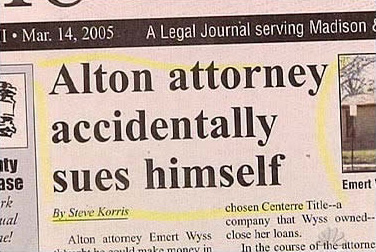
From “The Ethics Incompleteness Theorem” and “The Ends Justify The Means” Files, The Pautler Case: My Favorite Legal Ethics Dilemma Ever!

"Irena's Vow" Pictured L to R: Maja Wampuszyc, Tracee Chimo, Tovah Feldshuh (kneeling), Gene Silvers

The Sundance Channel was doing a “Law and Order” marathon this week, and I happened to see an episode from 2002 that I had missed. It was based on the Pautler case in Colorado from the same year.

In “DR 1-102,”  Assistant DA Serena Southerlyn (Elisabeth Rohm) deals with a hostage crisis in which a man suspected of bludgeoning two women to death claims he will release his captive, held at knifepoint (above), if he can consult with an attorney. Southerlyn volunteers to enter the scene, and obtains both the hostage’s release and the killer’s  surrender, but only by deceiving him into believing that she is his lawyer, and not a prosecutor working for the police and the State. Although Southerlyn is hailed as a hero, the bar seeks to disbar her, charging her with violating Disciplinary Rule 1-102 (now New York RPC 8.4 d., which prohibits lawyers from lying.  .

Actually, Serena did a lot more than that, as did her model, Mark Pautler, the Jefferson County (Colorado) assistant D.A. whose real life conduct created a legal ethics dilemma that is debated to this day.

On June 8th, 1998, Chief Deputy District Attorney Mark Pautler  arrived at a gruesome crime scene where three women lay not just murdered, but chopped in the skull.  All had died from hit in the head with a wood splitting maul. The killer was William Neal, who had apparently abducted the three murder victims, one at a time, and killed them over a three-day period. Now, police said, he was at another locale, having released three hostages he had held in terror for about 30 hours. Neal left in the apartment a tape recording that detailed all of his crimes, including a fourth murder and rape at gun point.

Neal contacted police at the apartment using his cell phone and personally described his crimes in a three-and-a-half hour conversation. The officer speaking with Neal took notes of the conversation and occasionally passed messages to Pautler and other officers at the scene. A skilled negotiator, she urged the maniac to surrender peacefully. Efforts to ascertain the location of Neal’s cell phone were unsuccessful, and it was feared that if Neal did not surrender, others would die.

Neal made it clear he would not surrender without legal representation. The police did not trust the public defenders office to handle the situation, fearing that a defense counsel’s advice might lead Neal not to place himself in police custody. Pautler also believed that a public defender would advise Neal not to talk with law enforcement. Neal was savvy enough, he felt, that a police officer could not effectively pretend to be his lawyer, so Pautler agreed to impersonate a defense attorney over the phone He told Neal that his name was was “Mark Palmer.”

Though in the ensuing phone conversation Pautler tried to avoid giving direct legal advice, it was clear that Neal believed “Mark Palmer” worked for the public defender’s office and represented him. And the deception worked: Neal eventually surrendered without further incident.

Not surprisingly, the Colorado Bar had problems with Pautler’s conduct. He was charged with violating two ethics rules, the equivalent of the one used in the “Law and Order” episode and also Colorado Rule 4.3, which requires a lawyer to inform an unrepresented party so it is clear that he isn’t representing him, and to give no legal advice other than to get an attorney. They could easily have charged him with violating others. like Rule 1.3, requiring diligent representation (Call me a stickler, but trying to trick your client into surrendering to police isn’t what the rule has in mind), Rule 1.4, which requires a lawyer to keep a client informed (“Oh: I’m really a prosecutor!“), Rule 1.6, Confidentiality (Pautler shared what Neal told him with police; a lawyer can’t do that! ) Rule 1.7, Conflicts of Interest (Ya think?) and Rule 4.1, which prohibits lawyers making false statements of fact, like “I’m here to help you.” Continue reading

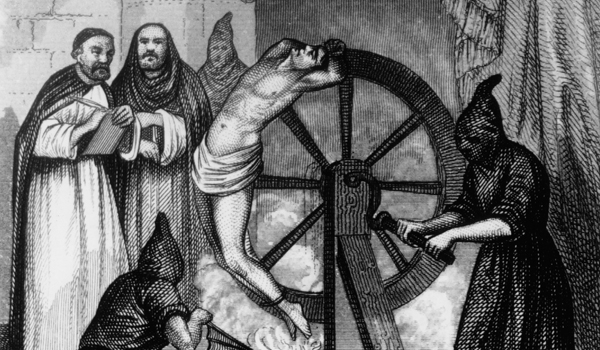
Ethics Dunces: The 21 Republicans Who Voted Against The Torture Ban

torture

As I explained long ago, torture is already a human rights abomination forbidden by U.S. principles, values, tradition and culture. That does not mean, and has never meant, that the nation’s official and sincere opposition to torture as an ethical absolute must not be subject to a genuine existential exception.  It does mean that an official policy that allows torture degrades the very reason for the nation’s existence.

This vital reason doesn’t even reach the fact that the United States has signed international treaties that state, unequivocally, that it deplores and rejects torture. That one is less complex; as I wrote about the Bush Administration’s doubletalk at the time…

Typically, the Administration is trying to finesse this uncomfortable fact by playing legalistic word games, requesting a “clarification” of what constitutes torture. This is intellectually dishonest, and blatantly so. The methods it wants to define as “something other than torture”…threatened drowning, cold room interrogations with subjects doused with water, beatings and other forms of assault and battery, obviously violate provisions of the Geneva Convention such as those requiring prisoners of war to be treated with “personal dignity” and “humanely,” and that they should not be subjected to “hardships and sufferings.” Meanwhile, torture is defined in Article 1 of the 1984 Convention as “any act by which severe pain or suffering, whether physical or mental, is intentionally inflicted on a person for such purposes as obtaining from him or a third person information or a confession.” Simulated drowning, by this definition, is torture, and passing some official “clarification” that declares otherwise won’t change that. Depriving prisoners of sleep and making them stand wet in 50 degree temperatures aren’t going to suddenly become “humane” either, nor will such treatment suddenly cease to cause “hardship” and “suffering.”

The United States exists on the ideal that it, unique among nations past and present, asserts and acts upon its original dedication to the values of human life, liberty and pursuit of happiness above all else. The United States’ identity is that of the Good Citizen, the hero, the trustworthy one. Of course that’s a high aspiration; of course we will fall short of it sometimes, of course such an aspiration appears arrogant and superior to others, and so what? Continue reading

Comment of the Day: “Ethics Hero: Toya Graham, The Baltimore Riot’s ‘Mom of the Year’”

Baltimore mom

I don’t know if a 24 hour period has ever produced as many provocative, passionate and well-argued comments on Ethics Alarms before. This, commenter Holly’s reaction to my designation of the viral  Baltimore mom Toya Graham clobbering her rioter son during the Freddie Gray disruptions in Charm City, is just one of several. I’ll address some of the issues she raises after the post; in the meantime, here is Holly’s Comment of the Day, in a day that will probably have more than one, on the post, “Ethics Hero: The Baltimore Riot’s ‘Mom of the Year’”:

I am surprised at this response. For a number of reasons. In any other circumstance, this woman probably would be going to jail. But if we watch the video more closely, the following observations can be made:

1. This child was leaving with his mother and she was so angry that she chases him to pull him back towards her to continue the beating. He appeared to be complying and in her anger continued to the assault the kid during the walk away.

2. The child was not in imminent danger. There are bystanders all around I saw no rocks being thrown in this video nor police for that matter. It does not appear the threat of losing his life was immediately in front of them.

3. The assault starts with a few close-fisted strikes as well as continuing with open-fisted strikes or what people are calling “smacks”.

Exemplary action on the part of this mother would not have been beating her son as he walked away from the riot, however.  It would have included not allowing a 16 year out of her supervision to wander in the riot in the first place. Continue reading

Ethics Hero: Toya Graham, The Baltimore Riot’s “Mom of the Year”

It is odd that the now-anointed “mom of the year” is a woman videotaped beating her son, and rather violently at that. That’s the Ethics Incompleteness Principle for you: even conduct that is “always” unethical may be made ethical by unusual circumstances. Seeing your grown son participating in looting and rioting that are destroying your neighborhood changes the rules, or perhaps makes them inapplicable.

Here is what the unidentified woman (UPDATE: Her name is Toya Graham) was doing that is an ethical duty: she was fixing the problem to the extent she could. Utilitarian? Yup. Would Kant approve? Well, if every mother of those rioters intervened, they would have had more success than the Baltimore police did.

As for the Golden Rule, her conduct passes that test as well. If I were getting pulled into violent, mindless mob violence like that kid, I would want my caring parents to stop me by any means short of shooting me. If it were my son wearing that hood, I’d be tackling him.

I don’t know if she’s really “Mom of the Year”—I’d like to think that a really exemplary mother won’t raise a rioter.  She’s an Ethics Hero, though, beyond question.