“A Christmas Carol”

-A-Christmas-Carol2

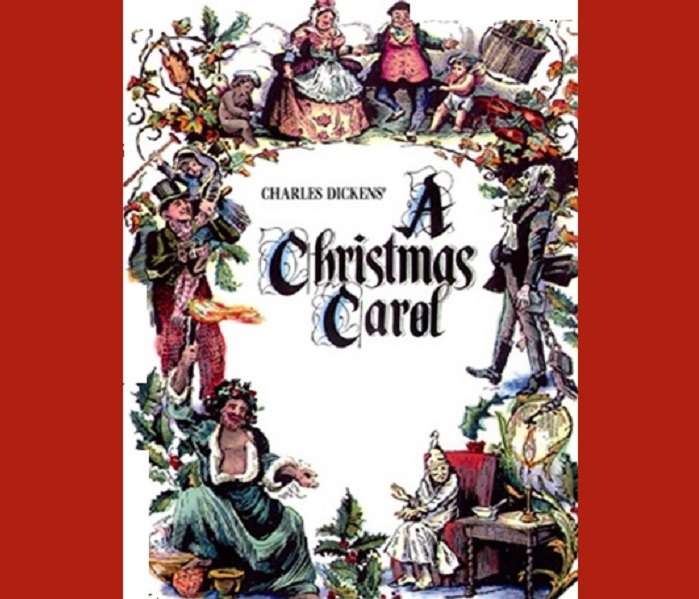
The entire text of “A Christmas Carol” is and has been for a long time listed under Inspirations on the Ethics Alarms homepage. If you haven’t read it (preferably out loud, to your family) recently, I urge you to do so. It is wonderful, and still, after all the movies and TV specials and songs and rival Christmas-themed stories, the best of the genre. It is also delightful literature, and, because I am an incurable romantic, a sap, and a Christmas addict, the story and Dickens’ telling of it gets to me every time.

I just realized that the last time I directed a production that wasn’t my own, it was a staged reading of “A Christmas Carol.” I miss directing greatly—no one has been clamoring for my comeback—so it that was my last hurrah, I can live with that. “A Christmas Carol” is, after all, one of the greatest ethics tales of all.

The first version of the film adaptations of “A Christmas Carol” I saw when I was knee-high to Robert Reich was the version starring Alistair Sim. Many aficionados of “A Christmas Carol” movies think it is still the best, and I won’t argue with them. Because the movie is in black and white and has been superseded by so many other versions, it is hard to find it on TV now except for the streaming services. Even the much inferior version starring Reginald Owen (with the entire Lockhart family, including young pre-“Lassie,” pre-“Lost in Space” June, as the Cratchits) is shown more than the classic Sim film. In these cynical times, the version of “A Christmas Carol” most likely to be available, sort of, is Bill Murray’s “Scooged.” It’s not the worst version—the musical starring Albert Finney wins that booby prize (“Thank you very much! Thank you very much!” Yecchh.)—but cynicism and dark humor really don’t belong in this story

My personal choice for the best adaptation goes to the 1984 George C. Scott version, if you don’t count “Mr. Magoo’s Christmas Carol,” and you probably shouldn’t, though I love it. The 1984 film has David Warner as Bob; Edward Woodward is the best (and tallest) Ghost of Christmas Present ever; and I think this is the scariest version of Marley.

Here it is…

The 2023 Ethics Companion To “Miracle On 34th Street” [Updated and Expanded]

2023 Introduction

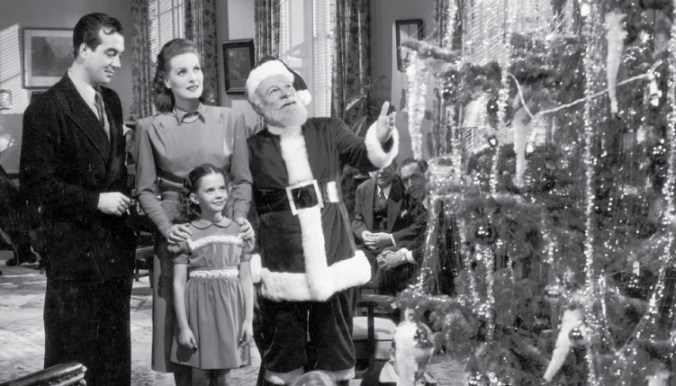
What makes “Miracle on 34th Street” the most appropriate classic Christmas film for 2023 is its theme: the importance of conquering cynicism and  pessimism, and always keeping one’s mind and heart open to hope. This has been a truly awful year, not one of the worst in our history but to a lot of Americans it seems that way (because they “don’t know much about history,” like Sam Cooke), but bad enough that we should be glad to see it go. I know my year has been especially miserable on multiple fronts. Nonetheless, I remain, at heart, about 12 years old. The same things make me laugh; my level of optimism remains high; I believe in this nation’s miraculous ability to somehow get out of the fixes it gets itself into; I’m still a romantic, and, yes, I think with a little luck and one more starting pitcher, the Boston Red Sox can make it to the World Series next year. I am being constantly confronted with old friends, some much younger than me, who have suddenly decided to be old: they think old, they act old, and they seem to have given up the future as irrelevant. The Santa Claus myth represents faith in the possible, or rather the impossible. Yes, its easier when you are a child, but it is worth the fight to never lose the part of you that still believes in magic and miracles. Kris Kringle really isn’t Santa Clause: he’s nuts, basically. But somehow that tiny wisp of a hope that he might be the real Santa is alive at the end of the movie. It’s really quite wonderful. It’s also important.

The production of “Miracle on 34th Street” itself epitomizes the ethical values of competence and integrity. Watch any of the attempts to remake the film over the years; some aren’t bad, but none equal the original, or even justify a remake that places the story in contemporary times.There have been four remakes starring, as Kris Kringle, Thomas Mitchell, Ed Wynn, Sebastian Cabot, and Richard Attenborough. That’s a distinguished crew to be sure. Mitchell was one of the greatest character actors in Hollywood history. Wynn was nominated for an Academy Award (for “The Diary of Ann Frank”) and Attenborough won one, Best Supporting Actor Award in 1967 for “The Sand Pebbles.” Cabot wasn’t quite in their class, but he was a solid pro, and looked more like Santa Clause than Mitchell,  Wynn, or Attenborough.

None of them, however, were as convincing as Edmund Gwenn. He made many movies—all without a white beard— and had a distinguished career in films and on stage, but even audience members who knew his work had a hard time reminding themselves that he wasn’t Kris Kringle while they watched the movie. I still have a hard time.

 The film is one more example of the special, unappreciated talent of Maureen O’Hara, who never was quite regarded as a top rank a movie star, as lovely and strong an on-screen presence as she was. Her ability to anchor great movies while never dominating them is the epitome of the “collaborative art” they always blather about during the Oscars, but which is seldom truly honored.  O’Hara was the female lead in four genuine classics: “The Hunchback of Notre Dame,” “The Quiet Man,” “How Green Was My Valley,” and “Miracle on 34th Street.” She also starred in the original “The Parent Trap” for Disney.

“Miracle on 34th Street” is an ethics movie in part because its artists committed to telling a magical story and charming audiences by working as an ensemble selflessly and  efficiently. John Payne, as the idealistic lawyer in love with Maureen, is never flashy, just completely convincing. One reason may have been that, as he told an interviewer once, the role of Fred Gaily perfectly matched his own ideals and beliefs.  This is the magic of performing talent: they make audiences suspend disbelief because they seem to believe in the story and characters too. The director,  George Seaton (who also directed “Airport,” which is NOT an ethics movie), also wrote the script that won him an Oscar. He cast his movie brilliantly, and making the correct but bold decision to stick with a matter-of-fact, realistic, unadorned style that keeps the story grounded. There are none of the corny features or inexplicable gaffes in this film that make other holiday-themed classics inherently unbelievable, like the cheesy battlefield sets in “White Christmas” or the heavenly dialogues in “It’s a Wonderful Life.”

“Miracle on 34th Street” is, as I said at the start, about the importance of believing in good things, hopeful things, even impossible things. Today many of my friends, colleagues and associates are depressed and fearful of the future—their future, the future of the nation, even the future of the planet. (The planet will be fine…the rest? As Samuel L. Jackson says in “Jurassic Park, “Hold on to your butts.”) “Miracle on 34th Street” reminds us that wonderful things can happen even when they seem impossible, and that life is better when we believe that every day of our lives. Of course, some days are easier than others.

Never mind. As the Fairy Godmother in the musical version of “Cinderella” sings, “Impossible things are happening every day.” Continue reading

The Ethics Alarms 2023 “It’s A Wonderful Life” Ethics Guide, With A New Introduction

2023 INTRODUCTION

It’s time again for the Ethics Alarms annual posting of its ethics guide to perhaps the best ethics movie ever made, Frank Capra’s now iconic “It’s a Wonderful Life.” Past time, in fact: last year I concluded that the movie really belonged in the Thanksgiving movie canon, not Christmas. However, as I wrote in the 2022 preface,

 Like George, I often feel like I didn’t achieve and experience what I could have, that my choices too often didn’t pan out, that I barely missed the breaks that I needed when I most needed them…What makes our lives successful (or not), and what makes makes our existence meaningful is not how much money we accumulate, or how much power we wield, or how famous we are. What matters is how we affect the lives of those who share our lives, and whether we leave our neighborhood, communities, associations and nation better or worse than it would have been “if we had never been born.” It’s a tough lesson, and some of us, perhaps most, never learn it…I’m not sure I have learned it yet, to be honest with myself. Intellectually, perhaps, but not emotionally.

I have to admit that I still haven’t genuinely accepted the lesson of the film. Maybe it’s time to watch it again; I haven’t since last year, and recently I’ve been feeling a bit too much like George to get up the courage. I’m posting this the day after my birthday, an all-time low for the number of friends, colleagues and relatives who remembered it (five, and my wife didn’t recall until mid-morning, with my son remembering around 10 pm), cards (one) and gifts (none). I don’t care about any of those things really, but I once believed that with as much ability and talent I had been lucky enough to be born with, and the additional advantages of wonderful parents and citizenship in the United States, I would have achieved enough that, oh, I don’t know, I might have earned a Wikipedia page by now. It’s stupid; I know it is. This is a tough time for my business and my family, and a lot of the problems are the result of my own selfish choices and mistakes as well as my hard-wired proclivity to cause trouble and not back down after the consequences start becoming clear. I’m seriously considering not celebrating Christmas this year, and we have always been a big Christmas family, because several recent disasters  require the money to go elsewhere.

And yet, as I have been musing about all of this lately, I cannot deny that I, like George, have had a wonderful life, and, frankly, one that has been a lot more interesting and varied than George’s was. My various crazy projects and eventually defunct missions have been responsible for many marriages and many children, and now grandchildren. I’ve inspired some people to take risks that panned out well for them, and have advanced the careers of several artists. I’ve made a lot of people laugh. There are some plays and musical being performed more frequently now that my theater company rescued from obscurity, and, weirdest of all, a student theater organization that I started is about to celebrate its 50th anniversary. And, of course, there is my son, who we adopted from a hell-hole in Russia and who is making the most of his opportunities in the land of opportunity.

It’s not a bad legacy. I’m not heading to the bridge, but I need to snap out of this mood…cue Cher!

I guess it is time for me to watch “It’s a Wonderful Life” again….

1. “If It’s About Ethics, God Must Be Involved”

Continue reading

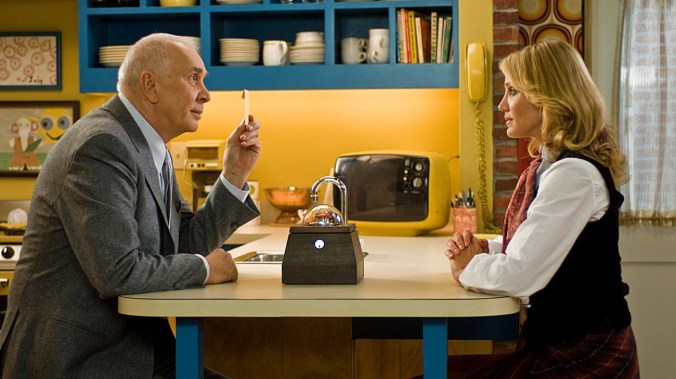
Ethics Alarms Offers, For Your Halloween Ethics Horror Movie Viewing Pleasure, “Drag Me To Hell”

Ethics horror movies comprise a sparsely-populated genre, but 2009’s “Drag Me To Hell” is a sterling example. It is at once scary, campy and clever, but its ethics lessons are valid and even inspiring.

The story involves a young bank loan officers who allows ambition to override her natural ethical instincts, resulting in the young woman being on the receiving end of a gypsy curse. On the way to the film’s surprising conclusion, she has several ethical dilemmas to solve, with mixed results. She also eventually takes full responsibility for her disastrous unethical act, for all the good it does her. (Lesson: Don’t expect a reward for doing the right thing.)

Continue reading

Why Our Culture Needs Old Movies

Typical of the free-association manner in which my brain works, a fatuous essay by a New York Times pundit about a subject he doesn’t understand (but I do)–performing—excavated an ethics memory from my childhood that hadn’t sparked a neuron in decades.

Frank Bruni, for some reason, felt it was necessary to re-hash the ancient debate over whether a movie star is really a skilled “actor,” and can be deserving of an Oscar over “real” actors. Naturally, his target was Tom Cruise and his performance in “Top Gun: Maverick,” the most popular and successful movie of the year. I don’t feel like arguing with Bruni over this; I’ve had the debate too many times. (No, Cruise isn’t going to get an Oscar for this sequel, but he has given Oscar-worthy performances before, because nobody can play Tom Cruise as well as he can). I’ll just give the short version: if an actor plays a part better than any other actor could, it is irrelevant that he can’t play any other part. As a director, I’ll cast a charismatic one-trick pony who is perfect for a particular role over a brilliant, versatile artist who could play Hamlet to cheers every time.

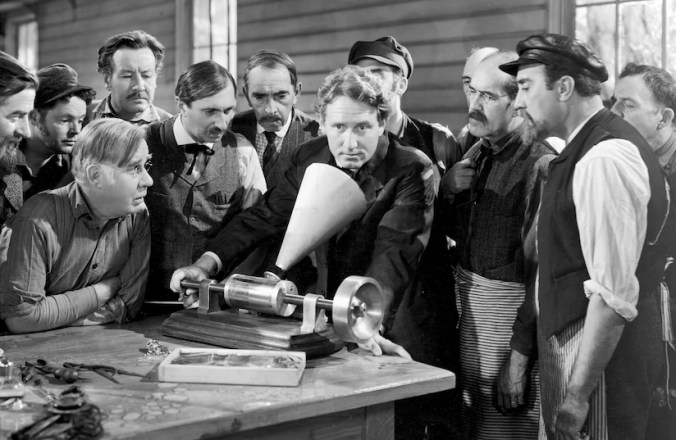
But that is neither here nor there. Here is there: Bruni’s discourse made me think of Spencer Tracy, a movie star and superb actor who had a wonderfully dismissive view of his own field, and then “Edison the Man,” the 1940 biopic, starring Tracy, about Thomas Edison. It was a black and white film that my father made a point of having me see. That film sparked my early interest in Edison, American inventors, technology and extraordinary people through history.

One scene in the movie, however, made a special impression. Edison and his research lab have been laboring on the creation of a practical incandescent light bulb day and night for months. Finally they think they have the right design, and the tungsten filament bulb to be tested is carefully assembled. The new bulb is handed to Jimmy, a teen who does odd jobs at the laboratory, and he dashes across the facility to give it to Edison. In his excitement, Jimmy trips and falls, smashing the precious bulb. Edison’s crew is furious; Edison reproaches the lad. Jimmy is devastated and inconsolable. When Edison’s men finally craft a replacement bulb, Edison calls for Jimmy and give him custody of the bulb, and asks him again to carry it to its destination on the other side of the building. Jimmy, striding carefully and slowly this time, completes his historic task.

Continue reading

Tardy Ethics Observations On The Netflix Series “Unbelievable” [RE-Corrected]

I have at least four posts written already in my head this New Year’s Day morning, but I wanted to begin 2023 with a discussion that is at least a little bit positive, hence this. In truth, the 2019 series “Unbelievable” is the reason the first post of the year is going up so late: disgusted with the vulgar and idiotic New Year’s Eve coverage on the networks (“Do you two have children, are will you be making one tonight?” one of ABC’s celebrity hosts asked a kissing couple.) Grace and I started watching “Unbelievable” on Netflix for the third time. I thought it was better this time than before, and on the earlier viewings I thought it was great. Thoroughly engrossed we couldn’t stop midway, so as a result, the Marshall got to bed after 3 am last night. (And I woke up with a cold.)

Over at “Simple Justice,” lawyer/blogger Scott Greenfield wrote about his regret that so many examples of flaws within the justice system escaped his metaphorical acid pen in 2022. Yeah, welcome to my world, Scott. I write three or hour posts a day to his one, and I still miss more ethics issues, often major ones, than I cover. I do not understand why I didn’t write about “Unbelievable” in 2019, or in 2021, when I watched it again. In such situations, I’m just letting readers down. “Unbelievable” is not only an ethics story, but an important one; it also happens to be true. (It was also partially created by the Marshall Project. I am awash in shame.)

I usually don’t worry much about spoilers, but in this case, I don’t want anyone to enjoy the series less because I’ve given away the plot completely, although, as I said, I enjoyed “Unbelievable” more the third time around, but perhaps for different reasons than I did on first viewing. If you want to experience the story, the performances (which are all excellent), the incrustation and emotional finale cold, then maybe you should stop reading here. But I’m going to try to make some ethics points here without giving too much away: Continue reading

Merry Christmas! And Here’s The Ethics Alarms 2022 Companion To “Miracle On 34th Street” [Updated And Revised]

2022 Introduction

Our ethical standards and ethics alarms are affected by what we see, hear, like and respond to, and this is why even a wonderful holiday classic like “Miracle on 34th Street” has to be looked at critically. If popular holiday movies inject bad ethics habits and rationalizations into our character, especially at a young age, that is something we should at least be aware of by the tenth or eleventh time we watch one of them. Parents are wise to talk about films and the lessons contained in them with their children. I’m not sure what the right age is to show this movie to children: probably as soon after they express skepticism about Santa Claus as possible.

The production of “Miracle on 34th Street” itself epitomizes the ethical values of competence and integrity. Watch any of the attempts to remake the film over the years; some aren’t bad, but none equal the original, or even justify a remake that places the story in contemporary times.There have been four remakes starring, as Kris Kringle, Thomas Mitchell, Ed Wynn, Sebastian Cabot, and Richard Attenborough. That’s a distinguished crew, to be sure. Mitchell was one of the greatest character actors in Hollywood history. Wynn was nominated for an Academy Award (for “The Diary of Ann Frank”) and Attenborough won one, Best Supporting Actor Award in 1967 for “The Sand Pebbles.” Cabot wasn’t quite in their class, but he was a solid pro, and looked more like Santa Clause than Mitchell,  Wynn, or Richard Attenborough.

None of them, however, were as convincing as Edmund Gwenn. He made many movies—all without a white beard— and had a distinguished career in films and on stage, but even audience members who knew his work had a hard time reminding themselves that he wasn’t Kris Kringle while they watched the movie. I still have a hard time.

 The film is one more example of the special, unappreciated talent of Maureen O’Hara, who never seemed like a movie star, as lovely and strong an on-screen presence as she was. Her ability to anchor great movies while never dominating them is the epitome of the “collaborative art” they always blather about during the Oscars, but which is seldom truly honored.  O’Hara was the female lead in four genuine classics: “The Hunchback of Notre Dame,” “The Quiet Man,” “How Green Was My Valley,” and “Miracle on 34th Street.”

“Miracle on 34th Street” is an ethics movie in part because its artists committed to telling a magical story and charming audiences by working as an ensemble selflessly and  efficiently. John Payne, as the idealistic lawyer in love with Maureen, is never flashy, just completely convincing. One reason may have been that, as he told an interviewer once, the role of Fred Gaily perfectly matched his own ideals and beliefs.  This is the magic of performing talent: they make audiences suspend disbelief because they seem to believe in the story and characters too. The director,  George Seaton (who also directed “Airport,” which is NOT an ethics movie), also wrote the script that won him an Oscar. He cast his movie brilliantly, and also made the correct decision to stick with a matter-of-fact, realistic, unadorned style that keeps the story grounded. There are none of the corny features or inexplicable gaffes in this film that make other holiday-themed classics inherently unbelievable, like the cheesy battlefield sets in “White Christmas” or the heavenly dialogues in “It’s a Wonderful Life.”

I think this is the best Christmas holidays movie for 2022. It is about the importance of believing in good things, hopeful things, even impossible things. Today many of my friends, colleagues and associates are depressed and fearful of the future—their future, the future of the nation, even the future of the planet. (The planet will be fine…the rest? As Samuel L. Jackson says in “Jurassic Park, “Hold on to your butts.”) “Miracle on 34th Street” stands for the idealistic proposition that wonderful things can happen even when they seem impossible, and that life is better when we believe that every day of our lives.

After all, as the Fairy Godmother in the musical version of “Cinderella” sings, “Impossible things are happening every day.”

Chapter 1.

Meet Kris Kringle

The movie tells us right at the start that 1) the charming old man in the white beard can’t possibly be Santa Claus, and 2) that he’s nuts. He tells adults who are paying attention this as soon as he starts complaining to a New York City storekeeper that his window display has the reindeer mixed up: “You’ve got Cupid where Blitzen should be. And Dasher should be on my right-hand side. And another thing…Donner’s antlers have got four points instead of three!”

Let’s see:

  • No Christmas display has ever distinguished between Santa’s reindeer (except for Rudolph), because the individual reindeer have never had any identifying characteristics in reality or myth. Are we to assume that there are name-tags on the models? If so, why wouldn’t Kris be complaining about the features of all of them, not just “Donner’s” antlers?
  • The names of the reindeer, even if there are flying reindeer, were 100% the invention of the poem “A Visit from St. Nicholas,” or “The Night Before Christmas,” originally published in 1823.  No one has ever claimed that the author had some kind of special info on the actual names of the reindeer when he wrote,

    More rapid than eagles his coursers they came,
    And he whistled, and shouted, and called them by name;

    “Now, DASHER! now, DANCER! now, PRANCER and VIXEN!
    On, COMET! on CUPID! on, DUNDER and BLIXEN!

    …and anyway, if he did, those were their names 120 years before the movie takes place. Nobody has ever claimed the reindeer were immortal, either. I suppose Santa Claus, in a nod to the poem’s popularity (it has been called the most famous poem of all time), could have adopted the practice of always having the reindeer named after the poem’s versions, and when one Vixen dropped of old age, the young reindeer that took her place became the new Vixen.

I suppose.

  • A bigger problem is that the movie’s alleged “St. Nicholas” calls the seventh reindeer “Donner.” It gets confusing here. The original St. Nicholas was Greek, the Christian bishop of Myra, now Demre, in Lycia.  Nicholas gave gifts to the poor, in particular presenting three impoverished daughters of a pious Christian with dowries so that they would not have to become prostitutes.  THAT would be neat poem! Saint Nicholas is buried in Italy. He was later claimed as a patron saint of children (also archers, sailors,  pawnbrokers, and the cities of Amsterdam and Moscow). The name “Santa Claus” is derived from the Netherlands version of St. Nick called Sinterklaas,  or “the Christmas man,” de Kerstman in Dutch. This explains “Dunder and Blixen,” meaning thunder and lightning in Dutch, and the movie later confirms Kris’s Dutch origins. (But why does he speak in a British accent?)

Never mind that: why would he call Dunder “Donner”? The “real” Santa wouldn’t. Though the original version of the poem got the names right (we know it’s Blixen and not “Blitzen” because it rhymes with Vixen), various editors, transcribers and  the author himself kept changing the names in subsequent printings. Dunder became “Donder” and eventually “Donner,” which is a meaningless Anglicizing of “Dunder.”

Santa Clause, aka Sinterklaas,wouldn’t be confused: he named the beasts. He’s correcting the shop-keeper while passing along a misnomer?

Baloney.

Well, enough of that. The next scene shows Kris encountering the Macy’s Thanksgiving Day Parade Santa pre-parade. He instructs him in the use of his whip on the reindeer! In the German Santa mythology, the jolly old elf used the whip on naughty children, but nowadays, using a whip on either kids or reindeer is pretty much excised from Santa’s methods, and should have been in 1947. It’s an unethical image…

…even though artists have worked hard to confuse us….
No, an ethical Santa Claus wouldn’t use a whip. He also wouldn’t put a poor old guy with a drinking problem out of work during the holidays, but that’s what Kris does next. He smells liquor on the costumed Santa, and shows no mercy:

“Don’t you realize there are thousands of children… lining the streets waiting to see you… children who have been dreaming of this moment for weeks? You’re a disgrace to the tradition of Christmas… and I refuse to have you malign me in this fashion. Disgusting!”

Then he tracks down Doris Walker, who is in charge of the parade, and gets the man fired. That’s just mean; there’s no way around it. I bet a lot of Macy Santas have had a few nips before and during the parade, and so what? How hard is it to say “Ho Ho Ho”?

Kris manages to get Drunk Santa’s job, having single-handedly gotten him sacked, no pun intended.

Why is Kris, if he’s the real Santa Claus, hanging around New York City and moonlighting in the Macy’s parade when the big night is just around the corner? This is no time for a vacation or boondoggles. If he’s really Santa, he’s goofing off, and he has the gall to tell a temporary parade Santa that he’s risking disappointing children!

Kris is not off to a good start. Continue reading

The Ethics Alarms 2022 “It’s A Wonderful Life” Ethics Guide, Revised And Updated

2022 Preface

I had this year’s introduction all written in my head—that’s how I write, you know—and then discovered hat it was what I wrote last year. No wonder it seemed so obvious. Well, never mind: there are still plenty of new matters to consider.

The main one is that “It’s a Wonderful Life” is a Thanksgiving film as much as it is a Christmas story. In the end, it is all about being thankful and grateful for life, family, friends, being lucky enough to live in the United States, and avoiding bitterness and regret. George Bailey is a good man who is nearly destroyed by bitterness, anger, frustration and regret, and Frank Capra, who directed and partly wrote the screenplay, is telling us that this is no way to live, or even survive. It’s a tough lesson: I have been tempted many times to fall into that trap. Regular readers here have seen me do it. Like George, I often feel like I didn’t achieve and experience what I could have, that my choices too often didn’t pan out, that I barely missed the breaks that I needed when I most needed them. I feel this way even though my father constantly lectured me, really all the way through our relationship, never to fall into George’s pit of despond. As long as you’re breathing, he said, there is always opportunity and hope. Reflecting on what might have been is foolish, depressing and paralyzing.

Ironically, Capra’s fable shows a man for whom revelations of what might have been are decisive evidence that his life, however disappointing to him, nonetheless had meaning. “It’s A Wonderful Life” is perhaps the first screen time travel parable, a forerunner of “Back to the Future,” and anticipated chaos theory long before Edward Lorenz figured out how chaos works. Harry’s toast at the finale, as I wrote last year,

states a life truth that too many of us go through our own lives missing. What makes our lives successful (or not), and what makes makes our existence meaningful is not how much money we accumulate, or how much power we wield, or how famous we are. What matters is how we affect the lives of those who share our lives, and whether we leave our neighborhood, communities, associations and nation better or worse than it would have been “if we had never been born.” It’s a tough lesson, and some of us, perhaps most, never learn it.

I’m not sure I have learned it yet, to be honest with myself. Intellectually, perhaps, but not emotionally.

I just watched the film again today; every time I notice something new, which is reflected in the updated guide  below.  I am also convinced that this is the greatest, riches, most complex ethics movie of all time.  “A Man For All Seasons” was long my winner in this category, but having watched that film too again recently, it doesn’t measure up to Capra’s masterpiece. Recalling the the real Thomas More burned heretics alive rather takes the sheen off Paul Scofield’s marvelous performance.

I also realized that this is very much an adult film. Kids don’t get it; indeed, I wonder if anyone under 40 really does. That makes it a strange Christmas movie. I grew up without seeing the film; the period when it was sold at junk prices to local TV stations which then resuscitated it reputation by wide exposure (I live when that happens) began while I was in college. Now that I think of it, I don’t know if my son has seen the movie. The black-and-white film block for so many younger Americans is a genuine obstacle to both cultural literacy and ethical instruction, and no, Ted Turner’s colorized version of IAWL doesn’t help, since it stinks.

Last year I wrote—and this was one of the points I had forgotten that I had made in last year’s introduction—

This movie’s intended message needs to be considered and taken to heart in 2021. Frank Capra, the movie’s director, designed the film to explain why it’s a wonderful country we live in. It may be that more and more vocal and powerful people want to send the opposite message today than ever before.

Tragically, it is definitely true that more vocal and powerful people want to send the opposite message today than even last year. Show them the movie, and all they will do is count black faces: yup, the only black resident of Bedford Falls appears to be the Baileys’ maid. Clearly, that means that “It’s a Wonderful Life” is just one more relic of systemic racism, and should be ignored and forgotten.

A society that can or will no longer learn from “It’s a Wonderful Life” is doomed to creeping stupidity and confusion. Ethics Alarms presents this annual ethics guide in the hope that we have not reached that desperate state yet.

1. “If It’s About Ethics, God Must Be Involved”

Continue reading

“A Simple Plan”: An Ethics Movie

I watched the 1998 film “A Simple Plan” again last night, and as usual with movies I see several times, I noticed some details and themes that eluded me in previous viewing. This is an ethics film, and one that would support a seminar, yet virtually none of the reviews of “A Simple Plan” mention ethics at all. That is to be expected, since ethics isn’t on Hollywood’s radar or that of 99% of the participants in the film industry, including reviewers. Checking the archives, I discovered that I mentioned the movie in an ethical context three times, but never seriously examined the film itself.

“A Simple Plan,” based on a novel by the same name, stars Bill Paxton, Billy Bob Thornton as the very different Mitchell bothers in rural Minnesota, Hank (Paxton) and Jacob (Thornton) who, along with Jacob’s friend Lou discover a crashed private plane in a snowy field. Along with the dead pilot, the wreck contains over $4 million in cash.

The simple plan of the title is the three men’s decision to take the money, hold on to it until the plane is discovered, and then divide it up afterwards if nobody is looking for the cash. Hank, the only one of the three with firing neurons, initially wants to report the crash and the cash, obviously the legal, safe and ethical course, but allows his genial but dim-witted brother and his habitually drunk friend convince him to try the “plan.”

This illustrates at least nine vital ethics lessons right up front:

Continue reading

The Ethics Alarms 2021 Christmas Eve Edition Of The Complete “It’s A Wonderful Life” Ethics Guide!

Wonderful Life2

2021 Introduction

I haven’t seen the film yet this holiday season, but I did listen to the radio version, also starring James Stewart and Donna Reed last night. It’s not much of a substitute. As it was with last year, this movie’s intended message needs to be considered and taken to heart in 2021. Frank Capra, the movie’s director ,designed the film to explain why it’s a wonderful country we live in. It may be that more and more vocal and powerful people want to send the opposite message today than ever before.

The fascinating and moving documentary “Five Came Back” (on Netflix) has been shown several times in the Marshall house this year. It tells the story of how five of Hollywood’s greatest directors, William Wyler, George Stevens, John Ford, John Huston and Frank Capra were recruited by the Pentagon to document World War II, some of their efforts to be used as propaganda, some as a record of remarkable time. All five directors were profoundly changed by what they saw, and Capra was no exception. He went into the war as perhaps America’s most popular film director, creator of upbeat movies celebrating common Americans doing extraordinary things, the nation’s families, the power of love and American exceptionalism. They called his movies “Capra Corn,” and the description fit such classics as “Mr. Smith Goes To Washington,” “Meet John Doe,” and other critical and box office hits. Following World War II and his experience overseas, Capra no longer felt as upbeat about life and human nature, though he remained a passionate patriot. Like the returning soldiers found the culture changed and his emotions raw. Families whose loved one had died or returned with disabling wounds struggled to believe that their sacrifices were justified. The atom bombs that ended the war also opened up a dangerous new era of paranoia and fear.

Capra and his director compatriots in the war effort decided to start a new production company, driven by directors rather than soulless studio moguls.  “It’s A Wonderful Life,” a far more complex and often dark story than the pre-war Capra creations, was chosen to be the first project of the new Liberty Pictures. Based on an idea by author Philip Van Doren Stern, it was the story of a good man who becomes bitter and disillusioned when his plans and aspirations become derailed by the random surprises of life.  Unable to get his short story published, Stern had sent it to friends as a 21-page Christmas card. Film producer David Hempstead read it, and bought the movie rights for Capra’s company. The story was just what America needed, Capra reasoned, to restore its belief that what the nation had accomplished was worth the pain, loss and sacrifice, and that the nation itself had led a “wonderful life” despite many mistakes and missteps. The new film could restore the nation’s flagging optimism, pride and hope.

Capra immediately thought of actor and now war hero James Stewart to play protagonist George Bailey. Three years of flying bombing raids against the Nazis in the US Air Force had left the the 37-year-old suffering from post traumatic stress syndrome, and like his non-celebrity comrades in arms, Stewart returned home in 1945 to find that everything had changed: his contract with MGM had run out, his agent had retired, and other stars had taken his place. Stewart signed on with the ambitious project, hoping neither of them lost their  touch.

As production proceeded in 1946, the cast and crew felt they were making an important movie. Bedford Falls became one of the largest American film sets ever created to that point at four acres, with 75 fake stores and buildings, a three-block main street, and 20 full-grown oak trees. To avoid the traditional problem of fake-looking snow, the special effects department invented a new and more realistic process. (I wish it was used more often: fake snow drives me crazy in movies.)

Stewart, who was still suffering from the effects of the war and at times was close to quitting. In the scene where George, in a roadside bar, desperate and defeated, is praying to a God he doesn’t believe in. He rubs a trembling hand against his mouth, and starts to cry. The gesture wasn’t in the script, or requested by Capra. It was real.

Stewart explained years later,

“I felt the loneliness, the hopelessness of people who had nowhere to turn, and my eyes filled with tears. I broke down sobbing. That was not planned at all.”

Stewart felt George Bailey was his career’s best performance (it is) and Capra believed he had made his best film. “I thought it was the greatest film I ever made,” he said later. “Better yet, I thought it was the greatest film anybody ever made.”

It may be, but it started out as a catastrophic flop. The movie lost money and its failure killed Capra’s production company. His directing career never recovered, and what he believed was his greatest work was forgotten for decades. Republic Pictures, which owned the film’s copyright, didn’t bother to renew the rights in 1974. It was essentially free to local television channels, and they began showing it constantly.

Quality and genius have a way of defeating critics. Capra was right, Stewart was right, the cast and crew were right. It is a classic; more than that, it is a movie that can change lives. The story accomplishes just what Capra intended it to accomplish. In a New York Times piece about the movie by a self-professed cynic, Wendell Jamieson wrote about seeing the movie for the first time as teen in a classroom showing, and confessed,

It’s something I felt while watching the film all those years ago, but was too embarrassed to reveal….That last scene, when Harry comes back from the war and says, “To my big brother, George, the richest man in town”? Well, as I sat in that classroom, despite the dreary view of the parking lot; despite the moronic Uncle Billy; despite the too-perfect wife, Mary; and all of George’s lost opportunities, I felt a tingling chill around my neck and behind my ears. Fifteen years old and imagining myself an angry young man, I got all choked up. And I still do.

Yeah, me too. But the reason isn’t that its a manipulative, sentimental ending, though that was what contemporary critics complained about. The reason is that Harry’s toast states a life truth that too many of us go through our own lives missing. What makes our lives successful (or not), and what makes makes our existence meaningful is not how much money we accumulate, or how much power we wield, or how famous we are. What matters is how we affect the lives of those who share our lives, and whether we leave our neighborhood, communities, associations and nation better or worse than it would have been “if we had never been born.”

It’s a tough lesson, and some of us, perhaps most, never learn it. “It’s A Wonderful Life,” though it shows how one man finally got  the message using Heaven, alternate reality, angels and fantasy to do articulate it, can be a powerful ethics tool.

1. “If It’s About Ethics, God Must Be Involved”

Continue reading