Baseball, Ted Williams and Ethics Zugzwang

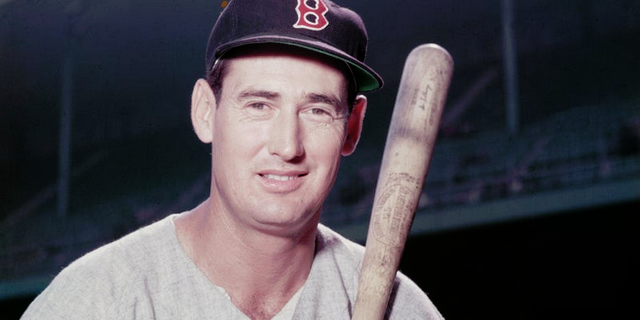
Baseball has an potential ethics problem involving baseball legend (and Red Sox icon)Ted Williams that I don’t think can be resolved.

Williams, or “Teddy Ballgame” as he liked to call himself (He also called himself “Ted Fucking Williams the Greatest Fucking Hitter Who Ever Lived”) is renowned as the Last of the Four-Hundred Hitters, Batting .406 in 1941. (He also lost the MVP vote that year to Joe DiMaggio because Joltin’ Joe hit in 56 straight games, a statistical anomaly.) That .406 average looks especially impressive in 2025, when only one player in the National League, Trea Turner, even managed to hit .300.

But just for fun, let’s imagine that Turner hit exactly .400. Ted Williams would no longer be the last of the .400 hitters, right? But there is a problem. When Ted hit .406, baseball counted sacrifice flies—when a batter makes an out with a fly ball that is deep enough that a runner on third base can tag up after the catch and score—like any other out. They counted against a player’s average. In 1953, though, baseball changed the rule so a “sac fly” didn’t count as an out. If Williams’ sac flies had been hit under the new (and current) rules, his average (he had 8 that year), would have been .413. If Turner were playing under the 1941 rules—-he hit 2 sac flies this season—those two outs would drop him below the .400 mark.

Continue reading

The Trump-Epstein Statue Mini-Ethics Train Wreck

[Before I return to my own blog after circumstances beyond my control left me unable to post for most of yesterday, I want to thank the EA commentariate for coming through with a stellar performance on yesterday’s emergency Open Forum. I expected nothing less, but the range of posts and topics was dazzling.]

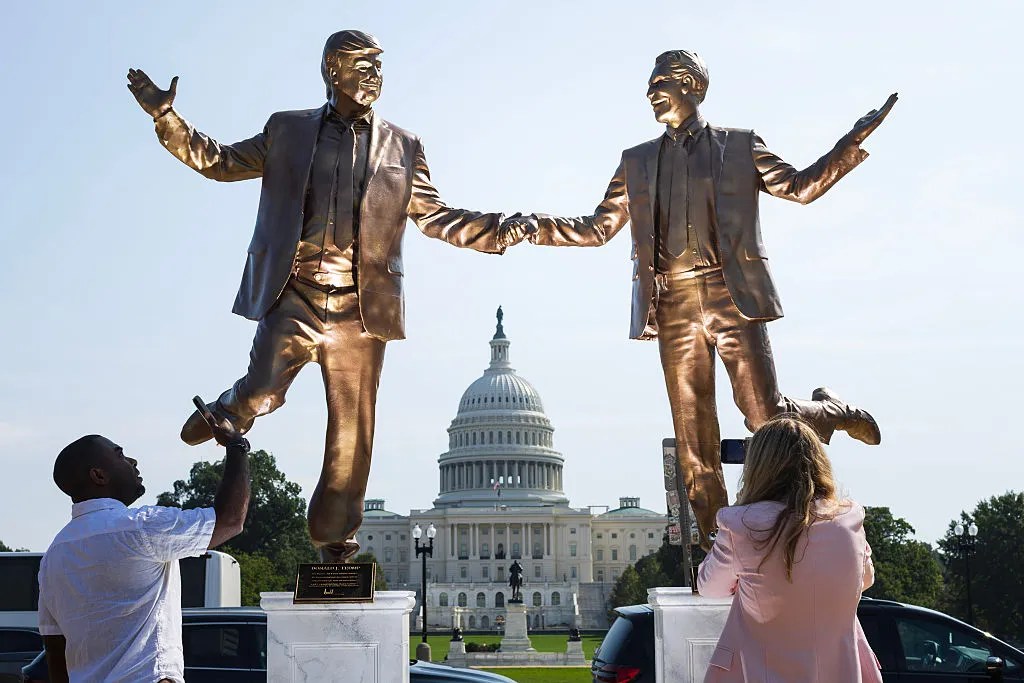
I missed the Mall statute controversy until this morning. Here is the statue, which was only on display for a day before the National Park Service took it down:

Nice.

A permit for the thing was approved on September 16, and originally authorized the disparaging statue to remain on display at the National Mall until 8 p.m. ET this coming Sunday. A plaque beneath the bronze figures of the late convicted pedophile and sex trafficker and the President of the United States read: “In honor of friendship month, we celebrate the long-lasting bond between President Donald J. Trump and his ‘closest friend’ Jeffrey Epstein,” followed by a silhouette of two hands making a heart shape. The stated purpose of the artwork was “to demonstrate freedom of speech and artistic expression using political imagery.” That was deceit. The purpose of the statue was to promote the desperate Axis talking point that President Trump was involved in Epstein’s criminal activities, of which there is no evidence whatsoever and has never been any evidence.

Again, nice.

Continue reading

Ethics Zugzwang Exemplified: The “Friend in a Lousy Show” Conflict

I’d be surprised if I haven’t posted on this before, but a recent advice column article about the issue made me realize that the common conflict almost all of us with friends in the performing arts face routinely is as perfect example of the phenomenon I have termed “ethics zugzwang” as there is.

A theater reporter in the New York Times wrote a column titled, “My Friend’s Show Was Kind of Terrible. What Do I Say When I See Them? (You can always consider telling the truth, but it may not be advisable in this case.) [Gift link!] He breaks down the options as,

  • “Tell the truth, as a form of tough love.
  • Find something to say that is appreciative but also incomplete.
  • Lie.”

After reporting on interviews with performers and others in show biz, the reporter concludes that the most ethical option is “Lie.” He concludes, “So what to do? The consensus among those I spoke with is that the best way to be a friend is to be supportive. Leave the critical feedback to other people and other settings. ‘I think the move is always to lie,’ said the musical theater composer Joe Iconis . ‘Whether you enjoyed the show or not, if you’re actually a friend to the person who is part of the production, your job is to say ‘great job, fantastic show.’ I have never once appreciated a friend who came to a show of mine and offered unsolicited negative comments.’”

Continue reading

“The Ethicist” Begins 2025 With a De Minimis Ethics Dilemma and an Impossible One

2024 was a bad year for the New York Times’s ethics advice columnist, Kwame Anthony Appiah. “He”The Ethicist” showed unseemly sympathy for the Trump Deranged all year, and not of the “You poor SOB! Get help!” variety, but more frequently of the “You make a good point!” sort, as in “I can see why you might want to cut off your mother for wanting to vote for Trump!” I was interested to see if the inevitability of Trump’s return might swerve Prof Appiah back to more useful commentary on more valid inquiries. So far, the results in 2025 have been mixed.

This week, for example, Appiah thought this silly question was worth considering (It isn’t):

I am going to tell a brief story about my friend at his funeral. The incident happened 65 years ago. The problem is that I am unsure whether the details of the story, as I remember them, are factual or just in my imagination. No one who was a witness at the time is still living. Should I make this story delightful and not worry about the facts, or make the story short, truthful and perhaps dull?

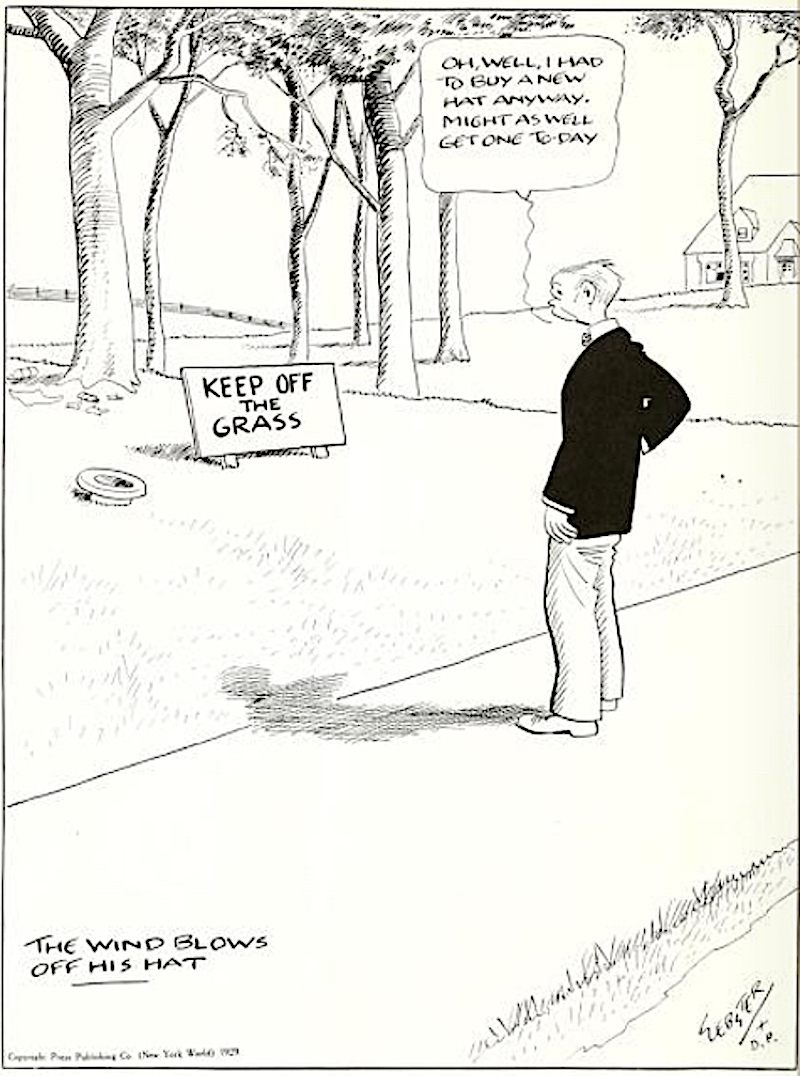
Good heavens. This guy is the living embodiment of Casper Milquetoast, the famous invention of legendary cartoonist H.T. Webster. Casper was the original weenie, so terrified of making mistakes, defying authority or breaking rules that he was in a constant case of paralysis. The idea of a story at a memorial service or funeral is to reveal something characteristic, admirable or charming about the departed and, if possible, to move or entertain the assembled. This guy is the only one alive who can recount whatever the anecdote is, so to the extent it exists at all now, he is the only authority and witness. So what if his memory isn’t exactly accurate? What’s he afraid of?

The advice I’d be tempted to give him is, “You sound too silly to be trusted to speak at anyone’s funeral. Why don’t you leave the task to somebody who understands what the purpose of such speeches are?” Or maybe tell him to watch the classic Japanese film “Rashomon,” about the difficulty of establishing objective truth. “The Ethicist,” who shouldn’t have selected such a dumb question in the first place, blathers on about how “everybody does” what the inquirer is so worried about and cites psychological studies about how we edit our memories. Blecchh.

Continue reading

The Liz Cheney Ethics Zugswang Problem

Now this is an ethics conflict.

It is increasingly clear that former Congresswoman Liz Cheney broke the law as well as several ethics rules while doing her utmost to incriminate President Trump during the all-Democrat/ Never-Trump Republican J-6 committee star chamber orchestrated by Nancy Pelosi. It is wrong to break the law. It is especially wrong to break the law when you are an elected official and law-maker. Such officials should not only be held to a higher standard, but should be role models for the public that elected them. It follows, then, that when they break the law—it seems that Cheney participated in the destruction of evidence as well as coaching a witness, Cassidy Hutchinson, to lie under oath while unethically meeting with her, a represented witness, without her lawyer being present—they should be treated like anyone else who breaks the law.

If elected officials are not prosecuted and held to account when they violate the law, it is the worst manifestation of the King’s Pass, the insidious and pervasive rationalization (#11 on the list) in which individuals who are famous, popular, powerful, accomplished, productive or successful are allowed to escape the earned consequences of their own misconduct when a less powerful or popular individual would face the full penalties of the law. Such episodes seriously erode public trust in our legal system and power structure. The cliche is “No one is above the law,” but except for the case of indisputable bribery or violent felonies, elected officials are seldom prosecuted, and sometimes not even for those crimes.

Continue reading

THIS Is Ethics Zugzwang: The Infrastructure Problem

The tweet above illustrates a modern ethics zugzwang phenomenon. I was struck by the tweet because I had recently had an argument with my relentlessly Democratic sister about the Supreme Court’s decision in Relentless v. Department of Commerce and Loper Bright Enterprises v. Raimondo, striking down the landmark 1984 decision in Chevron v. Natural Resources Defense Council that made federal agencies the presumptive lawmakers in matters Congress had not specifically addressed if an agency rule was “reasonable.” She believes that Chevron’s fall will be a disaster.

Continue reading

Ethics Dunce: “Emmy Award-Winning Reporter” Jake Hamilton

Former teen starlet Blake Lively (yes, that’s really her original name) has done better than most negotiating the transition from Hollywood ingenue to mature actress, but as she approaches the perilous territory of 40 (she’s 36) the social media mob is trying to “cancel” her for what has been called “insensitive” responses to questions by Hollywood reporter and podcaster Jake Hamilton.

Lively is making the rounds to promote her latest project, the film It Ends With Us alongside her costar, Brandon Sklenar (who appears to be a stereotypical dim bulb actor, like Joey in “Friends.”) The movie, adapted from Colleen Hoover’s novel of the same name, is the tale of a woman who is in an abusive relationship—domestic abuse, an ugly topic that Hollywood has visited relatively rarely. (I’m squeamish about watching dramatic portrayals of it myself, and most violence on-screen doesn’t faze me.)

Hamilton asked Lively at one point,

“For people who see this movie and relate to the topics of this movie on a deeply personal level, they’re really going to want to talk to you. This movie is going to affect people and they’re going to want to tell you about their life.  So if someone understands the themes of this movie and comes across you in public and they want to really talk to you, what’s the best way for them to be able to talk to you about this? How would you recommend they go about it?”

Continue reading

Being Fair To Imane Khelif

I sure am glad I had the sense (for a change) to wait a while before writing about what is likely to be the most lasting ethics controversy of the 2024 Paris Olympics. The initial hysteria in the conservative media didn’t add up. My prize for the worst headline goes to the conservative sports blog Outkick: “Olympic Boxer Pretending To Be A Woman Pummels Opponent in 26 Seconds, Making Her Cry.” Nice.

What happened to launch this mess was an Olympic women’s boxing march pitting Algerian Imane Khelif and Italian boxer Angela Carini against each other. After 46 seconds Carini quit, something that almost never happens in in Olympic boxing. She didn’t shake Khelif’s hand after the referee raised it, then sank to her knees, weeping. She told reporters that she quit because of the pain from those opening punches from her opponent, saying that she has never been hit so hard in her life. Instantly, critic made the episode part of the trans women in sports controversy, a la Lia Thomas et al. That was simply wrong, careless, sloppy and unethical. Here is how the conservative commentary collective PJ Media described the scene:

On Thursday, the Olympics put on a disgraceful show, pitting a man with XY chromosomes against a biological woman. Algeria’s Imane Khelif won the 16 welterweight bout over Italy’s Angela Carini after pummeling his opponent’s head over and over again. After having her head slammed by the biological male for 46 seconds, Carini was done. She removed herself from the match and then crumbled to the mat in tears. Everyone who watched saw that the Italian boxer was no match for the Algerian, who had been disqualified from previous competitions for testing positive for male chromosomes. 

Wrong. Imane Khelif is not a biological man, but intersex, meaning that the proper analogy for her dilemma in Olympic competition is the intersex runner, Caster Semenya, whom I most recently discussed last fall. Here is how that post ended…

Continue reading

Ethics Zugzwang In Trump’s Immunity Appeal

It’s pretty obvious that Donald Trump is going to lose his case before the three judges on the US Court of Appeals for the District of Columbia Circuit panel. The former President is claiming that all former Presidents are absolutely immune from prosecution for crimes they may have committed while in office. It’s easy to knock that argument down as just bad policy, and the judges did just that at oral argument this week.

Judge Florence Y. Pan asked Trump’s attorney, D. John Sauer, demanding a yes or no answer,“Could a president who ordered SEAL Team 6 to assassinate a political rival, who was not impeached, would he be subject to criminal prosecution?”

Sauer answered that prosecution would only be permitted if the President were first impeached by the House and convicted by the Senate. Of course that can’t be right. It would mean that a President with a large majority in both Houses of Congress could do virtually anything without legal consequences. One might argue that such a clear “crime or misdemeanor” would always trigger a bi-partisan impeachment, but after seeing most Republicans refuse vote to eject certified rotter George Santos from the House and Democrats line up behind Rep. Bowman after he set off a fire alarm to disrupt a House vote and then lied about it, I am no longer sure.

Continue reading

Ethics Quiz: Miss Zimbabwe!

Guess which beauty won the Miss Zimbabwe title! It was 21-year-old Brooke Bruk-Jackson, the only white woman among the contestants.

Brooke was crowned Miss Universe Zimbabwe, and will represent the African nation at the next Miss Universe pageant. Reportedly fewer than 1% of the African nation’s population is white. Her victory has upset many residents of Zimbabwe. “All those beautiful melanated women, and you telling me the European woman won a contest for Black people?” one outraged X-user tweeted.

Your Ethics Alarms Ethics Quiz of the Day is….

Was giving the prize to a white woman ethical?

This is a bit of a trick question. In a normal competition, the answer would be easy: if she won, she won. Beauty contests, however, are like dog shows: they are completely arbitrary and subjective contests pretending to be objective. It’s a Bizarro Wotld ethics problem: such competitions are phony (that is, unethical) anyway. They have no integrity; how can they have an ethical or unethical result?

Since any result is tainted by the inherent lie that it is based on objective criteria, isn’t this an ethics zugzwang situation? Choosing the only white woman in the competition has the appearance of bias and discrimination; so too does not choosing a competitor because she’s white, if her “objective” qualities would have made her Miss Zimbabwe if she were the “right” color.

If I were a judge, recognizing that beauty contests are absurd and that the criteria is hopelessly subjective, I would avoid choosing the only white contestant because it would raise all of these questions. If a black contestant were crowned Miss Zimbabwe, nobody would blink a metaphorical eye. Now Brooke is a target of hate mail and death threats, the pageant is under attack, the black population feels insulted, and everyone is miserable.

Good job, everybody!