Facebook Ethics: Making Your Facebook Friends As Ignorant As You Are

Foto-Facebook

All of a sudden, for some unknown reason (maybe THIS story!) there is an avalanche of Facebook users posting this language, or the equivalent:

Now that there has been a change in Facebook’s privacy policy, I am making the following change: I do not give Facebook or any entities associated with Facebook permission to use my pictures, information, or posts, both past and future. By this statement, I give notice to Facebook it is strictly forbidden to disclose, copy, distribute, or take any other action against me based on this profile and/or its contents. The content of this profile is private and confidential information. The violation of privacy can be punished by law.  NOTE: Facebook is now a public entity. All members must post a note like this. If you prefer, you can copy and paste this version. If you do not publish a statement at least once it will be tactically allowing the use of your photos, as well as the information contained in the profile status updates. DO NOT SHARE. You MUST copy and Paste.

================================
PRIVACY NOTICE: Warning – any person and/or institution and/or Agent and/or Agency of any governmental structure including but not limited to the United States Federal Government also using or monitoring/using this website or any of its associated websites, you do NOT have my permission to utilize any of my profile information nor any of the content contained herein including, but not limited to my photos, and/or the comments made about my photos or any other “picture” art posted on my profile. You are hereby notified that you are strictly prohibited from disclosing, copying, distributing, disseminating, or taking any other action against me with regard to this profile and the contents herein. The foregoing prohibitions also apply to your employee, agent, student or any personnel under your direction or control.

The contents of this profile are private and legally privileged and confidential information, and the violation of my personal privacy is punishable by law.

UCC 1-103 1-308 ALL RIGHTS RESERVED WITHOUT PREJUDICE.

Impressive!

Scary!

Legal sounding!

But oh so wrong in every way. Continue reading

The Strange, Conflicted, Unethical Holiday We Call Columbus Day

"Yes, it seems like a catastrophe now, but some day creatures called human beings will celebrate this day..."

“Yes, it seems like a catastrophe now, but some day creatures called human beings will celebrate this moment…”

What are we celebrating on Columbus Day, and is it ethical to celebrate it?

When I was a child, I was taught that we were celebrating the life of Cristoforo Columbo, popularly known as Columbus, who was convinced, against the prevailing skeptics of the time, that the Earth was round rather than flat, and in the process of proving his thesis, made the United States of America possible by discovering the New World in 1492. Virtually none of what we were taught about Columbus was true,  so what we thought we were celebrating wasn’t really what we were celebrating. Columbus wasn’t alone in believing the world was round: by 1492, most educated people knew the flat Earth theory was dumb. He blundered into discovering the New World, and by introducing Spain into this rich, virgin and vulnerable territory, he subjected millions of people and generations of them to Spain’s destructive and venal approach to exploration, which was, in simple terms, loot without mercy. The Spanish were like locusts to the Americas; South and Central America are still paying the priced today. Surely we aren’t celebrating Columbus’s complicity in that. Continue reading

The Associated Press And The Scandal That Wasn’t

It was tough giving my dog the bad news that the AP had screwed up...

It was tough giving my dog the bad news that the AP had screwed up…

Over the local evening news came a stunning report: Terry McAuliffe the Democratic candidate for Governor of Virginia, where I vote and make my home, had been accused in federal documents of lying to investigators checking the facts behind a Rhode Island death benefits scheme. Confirmation bias being what it is, I had no trouble giving the report full credence ( I long ago concluded that McAuliffe is sleazy and will lie whenever there is a perceived up-side for him, though I never thought he was stupid), and informed my dog, Rugby, for whom I am organizing a write-in campaign, that his chances of being Governor were looking up. Then, less than two hours later, I was preparing to write about this latest development in the most ethics-free governor’s race in the country, and checked online for more details. I discovered only this:

RICHMOND, Va. (AP) The Associated Press has withdrawn its story about documents in a federal fraud case alleging that Virginia Democratic gubernatorial nominee Terry McAuliffe lied to a federal official investigating a death benefits scheme. The indictment did not identify McAuliffe as the “T.M.” who allegedly lied to investigators.

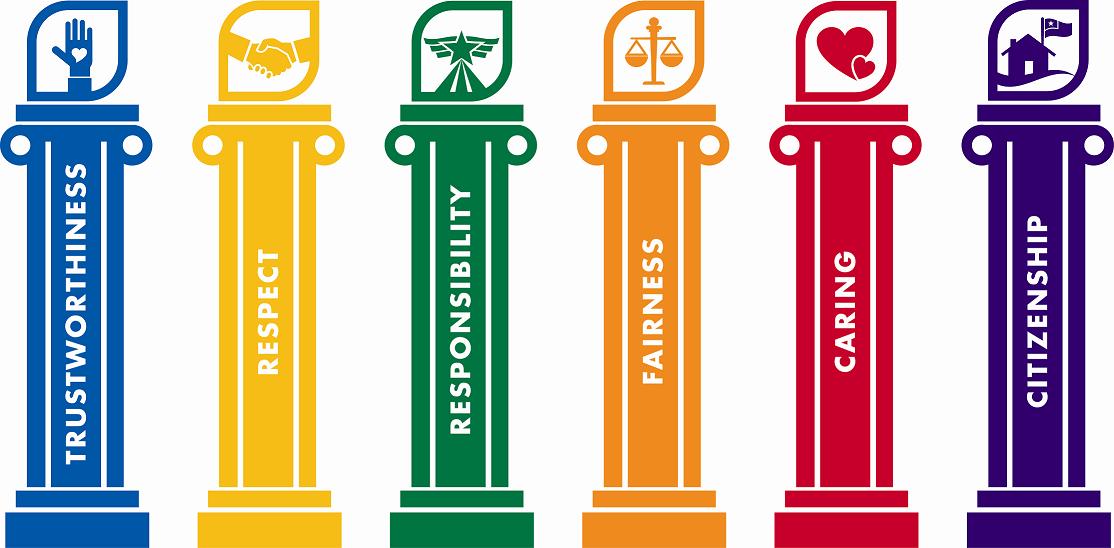
Wait…how could this happen? How could the Associated Press, the nation’s premiere news agency, essentially accuse a candidate for high office in a highly contested election of a felony less than a month before votes are cast, just in time for the story to be the lead story all over the state in question, and then withdraw it shortly thereafter? Don’t tell me about “mistakes”: the AP and the profession of journalism have standards and procedures of long-standing that, if followed diligently, ensure that this never happens. Facts must be checked and confirmed by reliable sources. Supposition must not be stated as truth. Here is the AP’s distillation of its ethical framework: Continue reading

Ethics Hero: Matt Labrum, Union High (Roosevelt, Utah) Football Coach

Six Pillars

Matt Labrum, head coach of Union High School in Roosevelt, Utah, suspended all 80 of his players, citing  a lack of character. He instructed them all to turn in their jerseys and their equipment, and announced that there would be no football until they earned the privilege to play. Labrum gave his shocked players a letter titled “Union Football Character” which declared in part,

“The lack of character we are showing off the field is outshining what we are achieving on the field. It is a privilege to play this wonderful game! We must earn the opportunity to have the honor to put on our high school jerseys each Thursday and Friday night!”

Instead of practicing during the days leading up to this weekend’s game, the students were ordered to perform community service, to attend study hall and go to a class on character development. They were also required to perform service for their own families, and write a report about their actions. Academically, the players were told to be on time for classes, and to improve their grades.

It is unclear what prompted the coach’s action, though some of the players, he felt, had engaged in cyber bullying, and he was aware of other instances in which various players had not, in his view, lived up to exemplary standards of behavior. Several of them had been rude and obnoxious, he had learned to other students and teachers—in other words, they were behaving like high school football players. Rather than punish individual students, Coach Labrum decided to impose team wide measures designed to foster good character. His theory, clearly, was to encourage a team culture of ethical conduct, strengthened  by group encouragement and enforcement of shared values. Labrum is also a gifted salesman, since it appears that opposition from students, their parents and the school administration has been minimal.

In many schools, including colleges, football players are the biggest jerks on campus: the culture of school sports too often nurtures entitlement and arrogance. Imagine a school athletic culture in which the athletes were expected to embody the best of ethical values both on and off the field.

The implications are staggering.

_________________________

Pointer: Lianne Best

Sources: Yard Barker Deseret News

Rationalization # 35: Victim Blindness, or “They/He/She/ You should have seen it coming.”

"Yup, should have seen THIS coming..."

“Yup, should have seen THIS coming…”

Mark Draughn, who blogs at Windypundit, proposed this latest addition to the Ethics Alarms Rationalizations list,  after I forgot to add it to the list in December 2012, when it was first proposed by reader Dwayne Zechman. It is an excellent one, and both Dwayne and Mark deserve the credit for it.

Asserting the rationalization of Victim Blindness attempts to shift responsibility for wrongdoing to the victims of it, who, the theory goes, should have known that their actions would inspire the conduct that caused them harm, and thus they should have either avoided doing what sparked the unethical response, or by not doing so waived their right to object to it. This is closely related to a sub-category of #7, The Tit-For-Tat Excuse, which holds that one party’s unethical conduct justifies similar unethical conduct in return. The sub-category is “They asked for it.” Victim Blindness is similar, but it applies even greater responsibility to victims: whether they asked for it or not, they should have known their actions would be met with this unethical response, and their ignorance,  carelessness or stupidity constitutes a waiver of ethics. Continue reading

Ethics Hero: Minneapolis Dairy Queen Manager Joey Prusak

"Good job, Joey!You made Dairy Queen proud and brought honor to the store, Here's 40 dollars."

“Good job, Joey!You made Dairy Queen proud and brought honor to the store, Here’s 40 dollars.”

It’s a simple story, trivial in a way, but with an important ethics lesson.

Joey Prusak, the 19-year-old store manager at a suburban Minneapolis Dairy Queen, watched as a female customer with a heart of ice saw a vision-impaired man drop a $20 bill, picked it up, and instead of returning the money to the unaware customer, slipped it into her own purse. When the certifiably awful woman got up to the counter to order, Prusak told her what he had seen and demanded that she return the bill as a condition of service. The woman, as one might expect from someone who would take money under such circumstances, refused, so Prusek reimbursed the visually impaired customer with $20 of his own.

A customer who saw the incident e-mailed Dairy Queen in praise, and now Prusak has become something of a folk hero.

The important ethics lesson is “Fix the problem.” If you are in a position to right a wrong or prevent one, it has become your obligation to do it. Don’t adopt  any of many rationalizations available to persuade you to do nothing— “It’s not my job,” “Mind your own business,” “Who am I to judge?”, “It’s not my fault”, “What if I’m wrong?”—or, in a case like this one, manufacture excuses for the vile miscreant who took the money—–“Maybe she’s desperate,” “Finders keepers”-–and just act. Fix the problem. Continue reading

Your Introduction To “Private Re-Homing”

Puppy, child, what's the difference? The point is make it someone else's problem, right?

Puppy, child, what’s the difference? The point is t0 make it someone else’s problem, right?

Every time you see a national newscast take up valuable time telling us about Miley Cyrus, the Kardashians, Chelsea Clinton or the White House waterdogs, think about Inga, or Quita, victims of the increasingly common practice of underground adoption known as “private re-homing,” in which adopted children are traded around like dogs or kittens, and abused dogs and kittens at that.

I don’t have a lot of commentary about this horrible practice. My life was a little bit happier before it was brought to my attention. In the history of Ethics Alarms, perhaps the most upsetting story I have had to write about was the horrific conduct of Torry Hansen, a Tennessee mother who adopted a Russian child and then, finding that she couldn’t cope with his problems, put him, alone, on a plane bound for Russia with a note pinned to his jacket. I wrote that post with tears in my eyes; it upsets me to write about it now. Yet something very like what Hansen did to her son is being done via the internet, frequently and with little interference from the government or anyone else. I wish I didn’t know about this—no, that’s not quite right. I wish this wasn’t a feature of our society, so I wouldn’t have to know about it, much less write about it. Continue reading

Now THAT’s Unethical!


“All right! We can lie without simply following the rule “It is permissible to lie< “ and instead, followa rule that pertains only to specific circumstances, like “It is permissible to lie when doing so will save a life, and thus  such a rule can be made a universal law without contradiction, don’t you see? No?”

“All right! We can lie without simply following the rule “It is permissible to lie“ and instead, follow a rule that pertains only to specific circumstances, like “It is permissible to lie when doing so will save a life, and thus such a rule can be made a universal law without contradiction, don’t you see? No?”

From Russia comes this story:

“A “passionate argument” about 18th-century Enlightenment philosopher Immanuel Kant, renowned for his treatises on ethics, “deteriorated into a fistfight” between two men waiting in line for beer during an outdoor City Day event in the southern Russian metropolis of Rostov-on-Don, police said Monday. The argument ended when one of the debaters pulled out an air gun and shot the other in the head, local police said in a statement. The shooter then fled the scene but was later detained, police said. The other man’s wound was not critical, but he was hospitalized, the statement said…”

I am fairly certain that Kant would have said that shooting someone in the head with an air gun to settle a debate over ethics violates his Rule of Universality, which has the seldom-cited codicil, “Don’t shoot people in the head, unless you want to live in a world where everyone gets shot in the head.” It is a perfect example of losing an argument by winning an argument.

And you thought the ethics debates got heated on Ethics Alarms!

________________

Pointer: Volokh Conspiracy

Vote Rugby Marshall For Governor Of Virginia: It’s The Right Thing To Do!

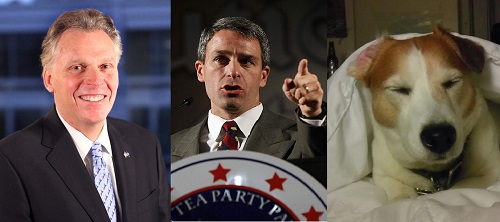
That's Rugby on the right...

That’s Rugby on the right…

Periodically,  the same contentious argument breaks out on Ethics Alarms after I assert my position that voters should support the candidate who is the most honest and trustworthy–the one with the most ethical character—regardless of his or her policy positions. My argument is bolstered when someone like Anthony Weiner—and fortunately there aren’t many candidates like him—  runs for office on the extreme opposite concept, that even demonstrably horrible character and dubious trustworthiness are irrelevant as long as a candidate holds the right policy views. He was just clobbered in his quest for NY mayor, getting just 5% of the vote, every one of them cast by a lunatic, porn star, mental defective or ethics dunce.  I doubt that his wife voted for him. Client #9. Eliot Spitzer, also lost in his race for Controller…and he is like Weiner.

My position is shaken when faced with a fiasco like Virginia governor’s race, where a proven huckster, Terry McAuliffe, is carrying the Democratic banner and Ken Cuccinelli is the Republican choice. (I live in Virginia.) That McAuliffe is corrupt to the core, like his pals, the Clintons, there is no doubt. He is pure Machiavelli, and worse, he is gleeful about it, like his pal Bill, but without the charisma. I learned all I needed to about McAuliffe’s character when I learned that he tried to bribe Ralph Nader to drop out of the 2000 Presidential race, but that was hardly the only evidence. Virginia Democrats disgraced themselves by nominating him. I wrote about his public dissembling here and here; I didn’t even go into his dubious financial dealings andthe strange way —well, if you think cronyism is strange— he got rich investing in Global Crossing—as I said, the sliminess of his character has never been in doubt.

Cuccinelli, however, is worse: he’s just unethical in different ways. Continue reading

Presenting the Ethics Alarms Heroes’ Hall Of Honor

remember

Today, the anniversary of September 11. 2001, American minds should be occupied with thoughts of gratitude for heroes, the often anonymous and unknown people we may pass in the street every day, as well as the justly famous and celebrated, who make our lives and many others better by living their own selflessly and well. They are our salvation, role models and neighbors, and they teach us the lesson that all is never lost, and hope is always thriving, as long as there are good and courageous people who will do the right thing, no matter what the cost, when fate turns to them.

This seems like a propitious time to dedicate the Ethics Alarms Heroes Hall of Honor, the list of the Ethics Heroes Emeritus whose stories have been told here (and on this site’s predecessor, The Ethics Scoreboard.) Every current member of the Hall is now deceased, like the brave men and women who died this day, 12 years ago. Each of them, in a unique way, teaches how human beings can rise above the vicissitudes of mere survival, self-interest, personal benefits and the base desires of the species  to live  meaningful and virtuous lives. Some accomplished this over decades, some with one brilliant and transforming act of distinction.

There are currently 32 members enshrined in this virtual Hall. Obviously, it is far from complete. They are just symbolic representatives, worthy ones, of millions more who once breathed the same air we do today, and like those who perished twelve years ago, face the prospect of being forgotten over time, as we all go about the consuming task of getting from one day to another. Each one of us, I believe, is capable of emulating their example.

Here are the thirty-two members and their stories, as of this date,

September 11, 2013... Continue reading