Comment of the Day: “You’re A Marked Man, Charlie Brown!”

The Lone Ranger, a.k.a. Clayton Moore, unmasked.

The Lone Ranger, a.k.a. Clayton Moore, unmasked.

One of the satisfying aspects of this blog for me is how a post will occasionally spark one of its diverse and intellectually agitated commenters to take the original post in unexpected and delightful directions. This gem from Karl Penny is a prime example. In the article inspired by the legal problems faced by the owner of Charlie Brown’s now grown up cartoon voice, I mentioned the actor who was TV’s Lone Ranger, Clayton Moore, prompting this lovely anecdotd from Karl. Here is his Comment of the Day on the post “You’re A Marked Man, Charlie Brown!“:

“Your comments about Clayton Moore got me to remembering one of the reasons I became such a fan of Clayton Moore, the man, even more than his acting. It’s from William C. Cline in “Those Enduring Matinee Idols”:

“In conclusion, I want to describe a vignette I witnessed during the afternoon that illustrated why Clayton Moore has been so successful and well-loved during his 24-year stint as ‘The Lone Ranger’, and why those of us who cherish serials detected the quality of the man even before then.
As Moore stood talking–with occasional interruption to shake hands with fans, sign autographs, and even speak to a small boy about the dangers of handling real firearms–a young woman timidly approached him holding the hands of a little lad of about seven and a girl perhaps nine years old. The boy gathered up his courage and thrust out his hand boldly. ‘Hello, Lone Ranger,’ he blurted. ‘My daddy says you’re the best. How come you’re not on TV anymore?’

 The little girl just stood there.

‘Thank you, son,” Moore replied. ‘I’m sure your dad is a great fellow, too. Maybe some time later the TV stations will show the programs again. Then you and your sister can see Tonto and me in action like your dad and mother did.’ The little girl continued to just stand there.

Turning to her, Moore noticed the expression on her face–that unique, particular expression that indicates only one thing, blindness. Looking up at the mother, he spoke one word, softly: ‘Total?’ he asked.

‘Not quite, but legally,’ she replied. Continue reading

When Is Human Cloning Unethical? When You Do THIS, For Starters…

Coming attraction at the San Diego Zoo.

Coming attraction at the San Diego Zoo.

Much of the ethics debate over cloning is and has always been pure “ick factor” confusion. Cloning is strange and unnatural, and to many people, that means it is immoral and wrong, as in, “If God had wanted us to be created from nose hairs, he wouldn’t have given us sex organs!” But there is nothing intrinsically unethical about cloning. The problem is that there are many theoretical applications of cloning that are monstrous (See: “The Island”), and too many scientists whose attitude is, “Why not?”

It is difficult to imagine a more perfect example of this than the news that Harvard Medical School geneticist George Church is plotting to create a Neanderthal human, if he can find, in his words, “an adventurous female human” willing to be Mommy to Alley Oop. Continue reading

Danger! Shameless Opportunists At Work!

Lance Armstrong wouldn't understand this movie at all.

Lance Armstrong wouldn’t understand this movie at all.

Less than two weeks after Ethics Alarms wrote about the ethics-free deliberations in the Lance Armstrong camp about whether or not to finally tell the truth and “apologize,” Armstrong prostrated himself in a 90 minute confession to Oprah Winfrey, who has branded herself as America’s confessor, capable of washing away sin and shame with a hug, a tear, and a stern word.

It makes me want to vomit, frankly.

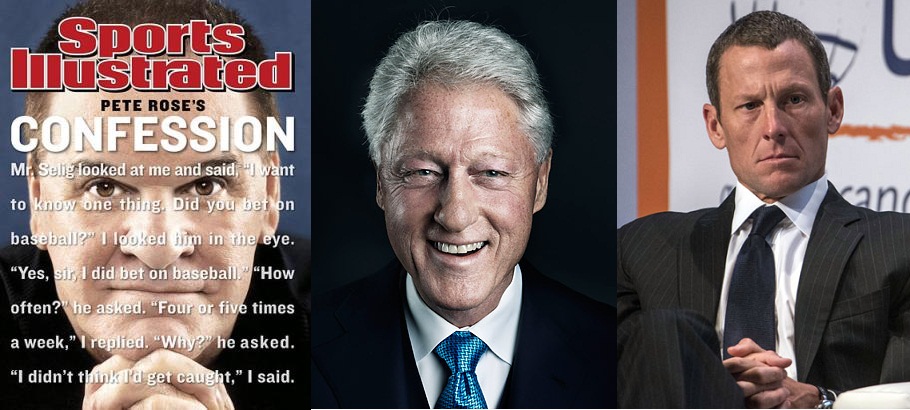
I saw this coming, of course, as did you. One thing we could count on with Lance (and Bill, and Pete, whose odious club Armstrong joins with the Oprah tactic) was that he would do whatever was necessary to benefit him. There is nothing, absolutely nothing, in common with a genuine confession and a real apology in Armstrong’s 180 degree reversal with Oprah, or in the necessary preparations for it he engaged in, like apologizing to the cycling community and the Livestrong staff. When Armstrong thought he could continue to fool some of the people all the time by lying, posturing, and viciously attacking—sometimes with lawsuits—those who he knew were telling the truth about his cheating, he continued to lie. Now that the jig is up and he has no other options, he’s going to come clean and weep softly with the Big O. Sociopaths are usually very good actors. Some of them have won Academy Awards. Continue reading

Comment of the Day: “Are Musicals Reviewed By Ignoramuses?”

WordPress, for only the second time in three years, was kind enough to include my recent post about Stephen Sondheim’s footnote lament that musicals were the only art form largely reviewed by incompetents. This has brought a lot of new visitors to Ethics Alarms, and I hope they are interested in ethics as well as musicals. One such new reader is a Prof. Ratigan, who apparently does some reviewing himself. Here is his Comment of the Day, on the Jan 3, 2013 post (Here’s something weird—last year’s Jan.3 post was also about Sondheim!) Are Musicals Reviewed By Ignoramuses?…

Two points. The first is the literacy issue. I think it’s interesting that it would appear that a good reviewer is either a novice or a master where everything in between is amateur. I’ve been reviewing movies for the past year (on a blog) and I’ve definitely felt that in my own stuff. The more movies I watched and connections I could draw, the more it became apparent how much I really needed to do to become proficient. I needed to read a lot more literature, read a lot more scripts, and watch a lot more movies. Otherwise, I would start to create a context but have a nagging feeling that the director/writer/actor (who are often scholars of film) might/probably know more than me and were doing something else. It seems that these musical reviewers aren’t expected to take the next step from reviewer to analyst. Continue reading

The Fourth Annual Ethics Alarms Awards: The Worst of Ethics 2012 (Part 2)

reid

The 2012 Ethics Alarms Awards for the Worst in Ethics continues (you can catch up with Part I here , and the Best is here), and yes, it gets worse…

Worst Friend and Relative

Lori Stilley, who faked cancer to get sympathy, favors, parties and money from those who cared about her.

Most Unethical Advice

Emily Yoffe, Slate’s “Dear Prudence,” wins for a year of bad advice in kinky situations, the bottom of the barrel being when she advised a daughter who observed her mother illegally filling out her invalid grandparents’ 2012 absentee ballots to reflect the mother’s electoral preferences to do nothing about this combination of elder abuse and voter fraud.

Shameless Bad Character Division Continue reading

The Fourth Annual Ethics Alarms Awards: The Worst of Ethics 2012 (Part 1)

Trayvon

Welcome to the Fourth  Annual Ethics Alarms Awards

Recognizing the Best and Worst of Ethics in 2012!

This is the first installment of the Worst. (Part 2 is here, the Best is here.)

2012 inspired over 1000 posts, and Ethics Alarms still missed a lot. And the last week of 2012 was sufficiently ethics packed that the Awards are late this year. My apologies.

In a depressingly unethical year, these were the low points:

Ethics Train Wreck of the Year

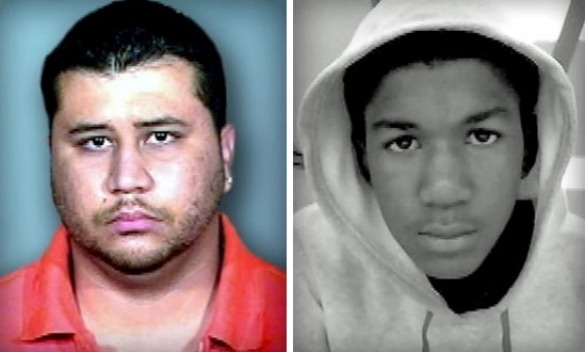
Was there ever any doubt? The Trayvon Martin- George Zimmerman fiasco, naturally, which is far from over. This year’s winner may be the worst ethics train wreck since Monica and Bill were dominating the news.  So far it has involved dubious, unprofessional or clearly unethical conduct by, among others, Martin’s parents, their lawyer, Zimmerman, his wife, the police, Zimmerman’s first set of lawyers, the prosecutor, the Congressional Black Caucus, NBC (which repeatedly broadcast an “accidentally” truncated tape of Zimmerman’s 911 call that made him sound racist), the rest of the broadcast media, conservative talk radio and bloggers (who decided their contribution would be to try to show that Martin deserved to be shot), Spike Lee, Rosie O’Donnell, the New Black Panthers, and President Obama, who ratcheted up the hate being focused on Zimmerman by implying that the killing as racially motivated, and by connecting himself to the victim. Runner-up: The 2012 Presidential campaign.

“Incompetent Elected Officials of the Year” Division Continue reading

Lance Armstrong and the Sociopath’s Dilemma: When Honesty Is No Longer Ethical

Welcome to the club, Lance.

Welcome to the club, Lance.

Rose

In 2004, 15 years after he had been banned from baseball after a finding by the Major League Baseball’s Commissioner’s Office that he had violated the games rules against betting on Major League Games, Pete Rose publicly admitted that his denials over that time were all lies. Yes, he had bet on baseball, and he was very, very sorry. Rose’s admission did little to change the verdict in and out of baseball that he was a rogue and a liar. His confession was obviously part of a cynical and calculated strategy to get reinstated in the game, after the strategy of denial and waiting proved ineffective. In addition, Rose needed money, and the confession was part of the hook for his new autobiographical book, which was released at the same time he withdrew his protestations of innocence.

For Pete Rose, honesty was not an ethical value that he respected or returned to in penance after years of straying. It was just another means to an end.

Clinton

In 1998, President Bill Clinton was in the midst of the Monica Lewinsky scandal, denying that he had ever “had sex with that woman.” He called up his old friend, advisor and pollster, Dick Morris, and asked what he should do. Together they decided that Morris ought to take a poll to see what the public’s reaction would be if Clinton retracted his denials and admitted the affair. Morris reported back, after taking such a poll, that while the public would forgive the sexual relationship, anger over the President’s untruthful denials might sink his administration. Clinton decided that honesty would not work to his advantage, and continued to lie.

To Bill Clinton and Morris, honesty was just one of several tactical options to solve a political crisis. If had nothing to do with ethics, or doing the right thing.

Armstrong

It is 2013, and the New York Times reports that Lance Armstrong, now stripped of all his cycling titles, banned from athletic competition worldwide and separated from his commercial sponsors and the cancer charity that bears his name,

“has told associates and antidoping officials that he is considering publicly admitting that he used banned performance-enhancing drugs and blood transfusions during his cycling career, according to several people with direct knowledge of the situation. He would do this, the people said, because he wants to persuade antidoping officials to restore his eligibility so he can resume his athletic career.”

Armstrong, it is clear, is traveling in the well-worn and slimy footsteps of Rose and Clinton, fellow sociopaths to whom conscience, shame, contrition and remorse are alien concepts and for whom atonement and redemption are just games to win, with honesty being an indispensable, if unpleasant, tactic. When one is considering whether or not to be honest and admit what one has long denied based on cold calculations of personal costs and benefits, truth-telling is no longer a matter of ethics, or doing the right thing regardless of consequences. It is merely another weapon, along with lies, manipulation, deceit and posturing, in the arsenal of one of the lifetime predators whose sole goal in life is to prevail and profit over the rest of the trusting suckers who share the Earth with them, and who will do anything, even to the extent of briefly embracing ethical principles, to get what they want.

Should he decide to finally admit what everyone knows and he has long denied, even to the extent of suing those who declared his guilty, Lance Armstrong should be seen as no more ethical or noble than the criminal who pleads guilty in court on the advice of his lawyer, because the evidence is overwhelming, conviction is certain, and confession is the only route to a lighter sentence.

Individuals like Pete Rose, Bill Clinton and Lance Armstrong defile ethical values by their brief embrace of them.
A Compliant, Law-abiding and Unethical Murder House Sale

Immaterial

Immaterial

We last considered the issue of realtors sneaking murder houses by trusting purchasers nearly two years ago, when Jon Benet Ramsey’s home and place of death came up for sale. We had a knock down, drag out argument about it too. My position: while it might be legal for a seller not to disclose that a home was the site of a murder or worse (and in most places it is), and while many regard sensitivity on such matters mere superstition not worthy of serious respect, the seller and the realtor have an ethical obligation to inform  potential buyers when the property for sale is a murder scene As I wrote in the conclusion to the post about the Ramsey home:

“The truth is still this: there is something about the $2,300,000 house that makes it undesirable to a lot of prospects, and that means that even if the law doesn’t require the seller to tell interested house-hunters the story of the little dead girl in the basement, fairness and the Golden Rule do.”

This applies to the case at hand, where Pennsylvania’s Superior Court recently ruled that a murder-suicide occurring in a home is not a “material defect” that requires disclosure in that home’s sale. While a murder-suicide occurring in a house might be “psychological damage” to the property or its reputation, the court said, realtors don’t have to disclose it. Continue reading

Ethics Quote of the Week: Ann Althouse

“And, by the way, I’ve gotten some pushback in email and on the web  saying that it was “shameful” and “appalling” for me to tie Clinton’s health problems to a possible intent to avoid testifying about Benghazi. Let me tell you that a core motivation to my blogging — and I’ve been going at this for 9 years now — is to stand tough against people who try to cut off debate with this kind of shaming. So I’m glad that this performance of outrage was directed at me. I know it when I see it, and it fires me up. You want silence? You want backing down? You want me not to dare say a thing like that? That’s how you want to control political debate in the United States? Thanks for reminding me once again how deeply I hate that and for giving me an (easy) opportunity to model courage for the more timid people out there who are cowed by the fear of shaming.”

—- Law professor and blogger Ann Althouse

I know I’ve been citing Prof. Althouse a lot lately, but she’s been on quite a roll. Her quote is self-explanatory. Brava!

UPDATE: Right after I posted this, I read Kathleen Parker’s Washington Post column headlined “The Character Assassination of Hillary Clinton.” In it, Parker essentially makes exactly the objection that Althouse says she hates. Continue reading

Cast Your Vote For The 2012 Curmie Award, Honoring The Worst In Education!

Teacher, blogger, deep thinker and Ethics Alarms combatant Rick Jones launched his annual Curmie Award last year, bestowed on the person or institution who most embarrasses the profession of education, on his superb blog, Curmudeon Central. Most of Rick’s Curmie nominees would have to be called ethics miscreants, and indeed several of them were featured on Ethics Alarms, so I asked Rick if I could present his nomination to the Ethics Alarms community and invite you to vote on this year’s winner. Here are Rick’s finalists, with his commentary and links to his posts about them. (Note: the link is the same with many of them, as several of the ultimate nominees were first exposed in the same, epic post. And you think I write long blog entries…) Rick writes of his criteria:

“I have tried to weigh a variety of factors: the egregiousness of the offense on its face, the extent to which it might be portentous of further bad things to come, any sense of particular injustice (punishment of the innocent or even of the heroic, for example), the degree to which the Curmie-worthy outrage might have been a spur-of-the-moment outburst rather than a deliberate act, any mitigating circumstances, whether the problem seems to have been appropriately addressed, whether the case looks a lot like a different nominee, etc.”

Now here are his nominees (in Rick’s words): Continue reading