Cast Your Vote For The 2012 Curmie Award, Honoring The Worst In Education!

Teacher, blogger, deep thinker and Ethics Alarms combatant Rick Jones launched his annual Curmie Award last year, bestowed on the person or institution who most embarrasses the profession of education, on his superb blog, Curmudeon Central. Most of Rick’s Curmie nominees would have to be called ethics miscreants, and indeed several of them were featured on Ethics Alarms, so I asked Rick if I could present his nomination to the Ethics Alarms community and invite you to vote on this year’s winner. Here are Rick’s finalists, with his commentary and links to his posts about them. (Note: the link is the same with many of them, as several of the ultimate nominees were first exposed in the same, epic post. And you think I write long blog entries…) Rick writes of his criteria:

“I have tried to weigh a variety of factors: the egregiousness of the offense on its face, the extent to which it might be portentous of further bad things to come, any sense of particular injustice (punishment of the innocent or even of the heroic, for example), the degree to which the Curmie-worthy outrage might have been a spur-of-the-moment outburst rather than a deliberate act, any mitigating circumstances, whether the problem seems to have been appropriately addressed, whether the case looks a lot like a different nominee, etc.”

Now here are his nominees (in Rick’s words): Continue reading

The House Ethics Committee Sends A Message: “Keep Your Corruption Within The Loopholes, And You’re Still ‘Ethical'”

"We just want to be friends."

“We just want to be friends.”

Let us stipulate that when a body’s ethics committee shows itself to be hopelessly confused about ethics, the chances that the body it is supposed to enlighten will be anything other than habitually, shamelessly and irreparable unethical are somewhere between Frosty’s chances of surviving in Hell, and the likelihood of me doing an infomercial for Wen Hair.

Remember the “Friends of Angelo” scandal? This was the so-called  “VIP program” that former Countrywide founder and CEO Angelo Mozilo used, not to be unkind, to bribe lawmakers into assisting Countrywide’s predatory mortgage loan practices, or at least to look the other way. In June 2008  it was revealed that key policy makers, including former Senate Banking Committee Chairman Christopher Dodd  (D-Conn.), and current Senate Budget Committee Chairman Kent Conrad (D-N.D.) received special terms on mortgages from Countrywide.

In 2009,the House Oversight Committee began investigating the program and learned that similar sweetheart loans were extended to almost a dozen lawmakers, executive branch officials, and other employees of Congress, the White House, Fannie Mae, Freddie Mac, and other government agencies. Countrywide also allowed some VIP program participants “free floats,” which meant that if interest rates fell during the time when loans were being processed, the company allowed applicants to take the lower rate at closing, something it does not typically do.

Let’s be clear: these are bribes. No matter whether they fall within or without specific laws or regulations, they are bribes. This is a large corporation providing special benefits to legislators and others in the government that it did not make available to the general public, in order to make “friends” with them. Why would a financial company like Countrywide want policy-makers indebted to it, to “like” it? Use your imagination. This is called creating a conflict of interest and warping independent judgment. We should expect our officials and elected representatives to recognize such transparent corruption, and avoid it. But they didn’t, and don’t.

One reason they don’t is that voters refuse to hold them accountable. Another is this:

From the LA Times:

“The House Ethics Committee has found no rules violations by  lawmakers and staffers who used a VIP loan program from Countrywide Financial Corp. saying the allegations of special treatment fell outside the panel’s jurisdiction. The committee’s leaders said its investigation largely led to the same conclusions as the Senate Ethics Committee, which determined in 2009 that there was “no substantial credible evidence” that Sen. Kent Conrad (D-S.D.) and former Sen. Christopher Dodd (D-Conn.) had broken rules by accepting loans through the special program…”

“The House Ethics Committee statement said that people in the VIP program appeared to be offered ‘quicker, more efficient loan processing and some discounts.’ But the committee said there was evidence showing those discounts “were not the best deals that were available at Countrywide or in the marketplace at large.” Because participation in the program “did not necessarily mean that borrowers received the best financial deal available either from Countrywide or other lenders,” it was not a violation of House rules to participate, according to the Ethics Committee.” Continue reading

Comment of the Day: Ethics Bob Asks: “Did Torture Lead Us To Bin Laden”? My Answer: “So What If It Did? It Was Still Wrong.”

How did we end up discussing torture on Christmas Eve?

Sorry about that.

timebombHere is a stimulating comment by Zoebrain in the “Zero Dark Thirty” torture thread. I’m especially fond of it, because as theoretical and probably impossible as her resolution would be in practice, it neatly addresses the central problem conflict in the “torture is an absolute wrong but you might have to use it to save the world” scenarios, like the familiar “ticking bomb” hypothetical.  In her analysis. one violates the absolute rule, but accepts a proportional penalty for doing so.

I advocate a similar approach in legal ethics in situations where a lawyer decides as a matter of personal conscience that he or she must violate core legal ethics values, like keeping the confidences of a client, in furtherance of a higher objective not recognized be the Rules of Professional Conduct, such as keeping a serial killer from going free.

Here is Zoebrain’s Comment of the Day on the post, Ethics Bob Asks: “Did Torture Lead Us To Bin Laden”? My Answer: “So What If It Did? It Was Still Wrong.” Continue reading

Your Ethics Assignment…

christmas_carol_02

…read “A Christmas Carol,” out loud if possible.

As literary celebrations of ethical values go, there is nothing better.

Here.


Ethics Bob Asks: “Did Torture Lead Us To Bin Laden”? My Answer: “So What If It Did? It Was Still Wrong.”

It's all for the best.

It’s all for the best.

The last time my friend “Ethics Bob” Stone blogged about ethics, it was way back in August, and he was writing about some guy named “Romney.” Now he’s back on the job, thank goodness, with a comeback post titled “Zero Dark Thirty: Did torture lead us to Osama bin Laden?”. And he’s ticking me off.

“Zero Dark Thirty” is Hollywood’s treatment of the search, apprehension and execution of Osama Bin Laden. The film suggest that methods of torture were employed by the CIA to uncover crucial intelligence that led to the terrorist mastermind’s demise. Torture opponents, including some U.S. Senators, are alarmed by this, and disputing the film’s account. (Imagine that: a movie that misrepresents history!) Meanwhile, conservatives, neocons, Bush administration bitter-enders, talk radio hosts and admirers of Dr. Fu Manchu and James Bond villains are citing the film as confirmation that they were right all along: torture is a wonderful thing.

I am puzzled that Bob got in the middle of this debate as an ethicist. “It worked!” and “It came out all right in the end!” are not valid ethical arguments or justifications. The first is an embrace of a pure “the ends justify the means” rationale, a favorite tool of Auric Goldfinger and Dr. No. The other is consequentialism. When ethicists and principled opponents of torture allow the issue to be adjudicated on this basis, they are surrendering their principles at the outset. “Torture doesn’t work” is a pragmatic argument, not an ethical one. If the societal consensus regarding torture is going to be determined by how much we can benefit by returning to the rack and wheel, then ethical considerations have already been jettisoned. Continue reading

Unethical Quote of the Week: W.G. Hamm

“What I know about Lance Armstrong is that he inspired thousands of cancer victims and made their lives better. What I know about Mr. Armstrong is that when my wife and my son were both suffering from cancer, his story and his book helped them cope with their diseases. What I know about Mr. Armstrong is that the good that he did far outweighs the fact that he was trapped in a culture of drug use within the cycling fraternity. What I know about Mr. Armstrong is that he has been needlessly demonized by people who do not realize the balance between his good deeds and his bad deeds.”

—-W. G. Hamm, in his Letter to the Editor of the Washington Post. Hamm was praising a fatuous, rationalization-riddled  column by Post sportswriter Sally Jenkins in which she catalogued and endorsed every excuse and justification trotted out by Armstrong’s enablers and defenders.

would have loved Vlad.

W. G. would have loved Vlad.

I don’t know W.G. Hamm. I’m sure he’s the salt of the earth, and a part of me is queasy about picking on his letter praising Jenkins’ ridiculous column rather than tackling the truly ethically offensive and brain-dead column itself. One reason is that I have written extensively, frequently and recently about the arguments, if you can call them that, made by Jenkins. Her column really is spectacularly bad; here’s one passage that send me to the bathroom, for example:

“Maybe I’m not angry at Lance because for two decades now I’ve had serious questions about the wisdom and fairness of the “anti-doping” effort, which consists of criminalizing and demonizing athletes for what boils down to using medications without a prescription.”

No, it boils down to using medications without a prescription and using them to cheat in athletic contests for money and fame, while defrauding the public, you silly, dishonest woman. Continue reading

A Christmas Story Redux: Alek and the Controllable Christmas Lights

Go ahead! Try em!

Go ahead! Try em!

Christmas is right around the bend, so it is again time to celebrate Alek O. Komarnitsky and his creative, slightly wacky, Christmas lights extravaganza that he has transformed from a mildly unethical spoof to an act of charity and generosity.

Back in 2004, Alek received national attention for his whimsical holiday website that allowed people all over the world to turn his elaborate Christmas lights on and off from their home computers. Everyone had fun, which was clearly Alek’s design. Still, when it became known that his site was a hoax and that the lights going on and off were only an illusion, I weighed in (on The Ethics Scoreboard) with the opinion that perpetrating such a large-scale deception was wrong, no matter how well-intentioned and light-hearted. Alek took issue with my criticism, and we had a spirited e-mail debate.

Then, at a significant cost in time and money, Alek devised a way to really let people all over the world turn on his lights. He has done this ever since, and uses the site to raise money to cure Celiac disease. He writes: Continue reading

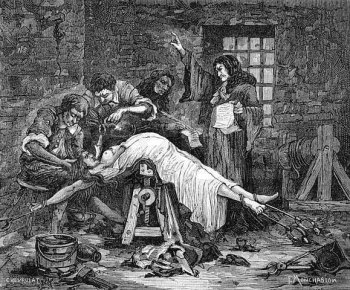
Ethics Quiz: The Murderer On The Sidelines

Support the man, not the drunk-driving killer, who also happened to BE the man. Right?

Support the man, not the drunk-driving killer, who also happened to BE the man. Right?

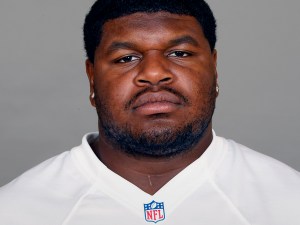
Eight days after he was locked up for manslaughter as a result of being drunk at the wheel in a car accident that took the life of a team mate, Dallas Cowboys player Josh Brent was allowed on the sidelines with his team during its game against the Philadelphia Eagles.  Brent’s teammates had requested that he be present to show their support, and apparently this had the blessing of Jerry Brown’s mother, whose deceased son was the victim in the crash.

ESPN commentator Dan Graziano took to his keyboard to pronounce the Cowboys public embrace of a player charged with killing someone while driving drunk misguided and wrong: Continue reading

“White Christmas” Ethics

White-Christmas

I just completed my obligatory annual viewing of “White Christmas,” one of the stranger members of the Yuletide Movie Pantheon. Yes, I still get a lump in my throat when the old general, played by Dean Jagger, gets saluted by his reunited army unit, which has gathered at his struggling, snowless, Vermont inn on Christmas Eve to remind him that he is still remembered and loved. Nonetheless, it is by far the strangest of the Christmas movies, and also the most unethical. Though everything works out in the end, the characters in the rather sloppy plot spend the whole movie lying, extorting, betraying, manipulating and generally mistreating each other, always with no recriminations at all, and usually with no consequences either.

The movie starts out with guilt extortion, as army private Phil Davis (Danny Kaye) rescues his smooth-singing captain, Bob Wallace (Bing Crosby) from being crushed by a falling wall in a World War II bombing raid, and then uses Wallace’s debt of gratitude to coerce him into accepting the aspiring comic as a partner in Wallace’s already successful civilian act.  This is obviously unfair and coercive, but Bing accepts the ploy with good spirits, and the next thing we see is the new team of Wallace and Davis knocking ’em dead and rising in the ranks of stage stars. Now they have a show on Broadway, and as a favor to a mutual army buddy, they agree to watch the boonies nightclub act of “The Haynes Sisters” (Rosemary Clooney and Vera-Ellen, of wasp-waist fame). Bing is immediately smitten with older sister Rosemary, but there is a tiff over the fact that younger sister Judy fooled them into seeing their act: she, not her brother, had sent the letter asking for a “favor.” This is the first revealed of many lies woven into the script. Continue reading

An Ethics Hero Potpourri!

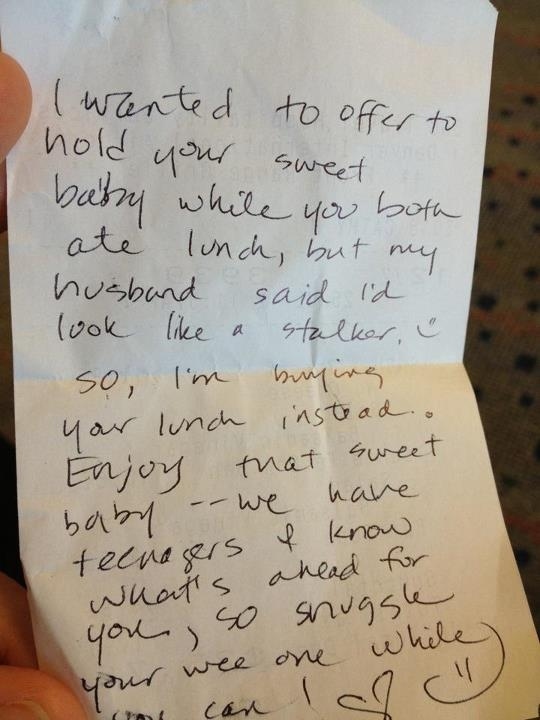
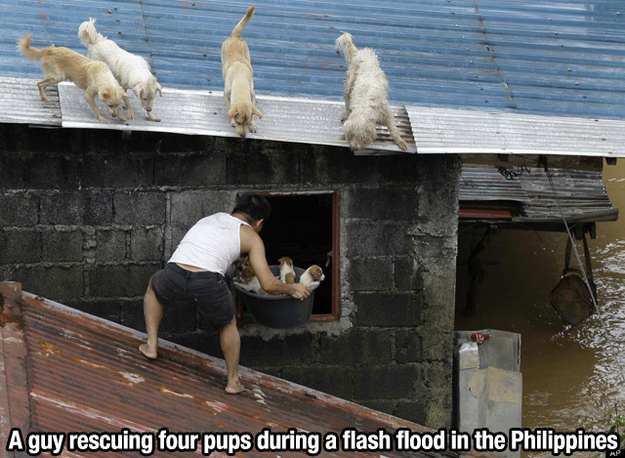
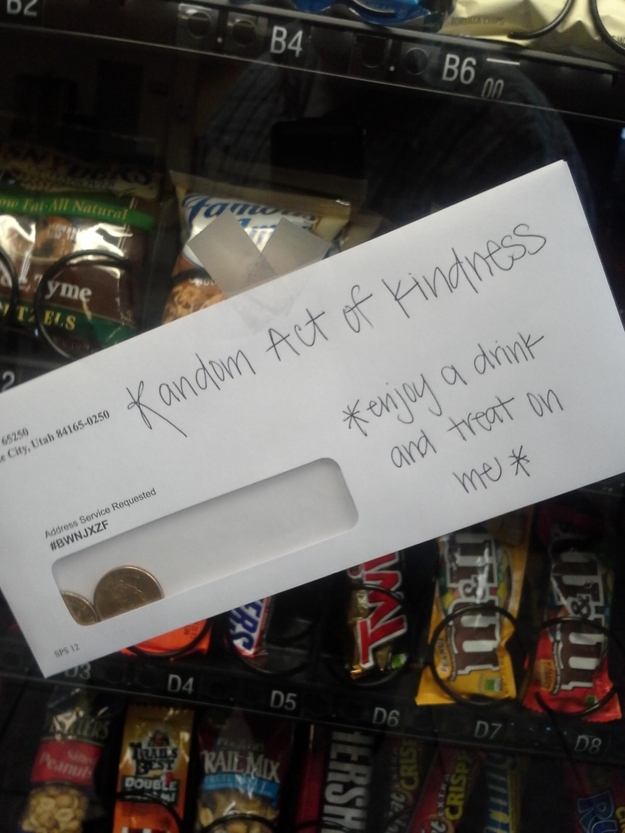
Earlier this year, Buzzfeed gathered and posted these sixteen photographic records of people being kind just because that’s how we should be. Yes, I guess one or more of them may be fake; it doesn’t matter much. It is still helpful to remember, especially in my business, that there are a lot of good people out there.

Thanks, Buzzfeed.

1.

Kindness 1

2.

Kindness2

3.

Kindness3

Continue reading