Morning After Report: Six Steps Forward and Seven Back In The Quest For A Trustworthy Congress

We’ll never get a trustworthy Congress this way.

So much for “the wisdom of crowds.” Last night, knowing (theoretically, at least) that the one completely irrational choice for the nation at this critical juncture in its history is more gridlock born of ideological intransigence, voters sent a dysfunctional Congress back to Washington, opting for a radical conservative House and a radical liberal Senate despite telling pollsters that this was the least trusted Congress in history. Just to make sure compromise and movement would be as difficult as possible, the public also re-elected a President who, whatever his other virtues, has shown neither the ability nor the inclination to engage in effective negotiation with his political adversaries on the Hill. There were plenty of more responsible options available to voters:

  • Commit to the President, and give his party majorities in both Houses of Congress so he could get his policies implemented, for better or worse,
  • Give the Senate back to the GOP, so some of the bills the House has passed can be sent to the President’s desk
  • Sweep everybody out and try a new team to see if it can do any better.

But no. The American public, in its infinite wisdom, opted for nearly the exact toxic partisan mix that has served the nation so miserably for the past two years. Unquestionably, the biggest ethics failure on election night was this one.

Yet there was progress, as voters rejected some of the more unethical officials offering their services. Unfortunately, these wise and ethical choices were greatly diluted by other unforgivable ones. On the plus side: Continue reading

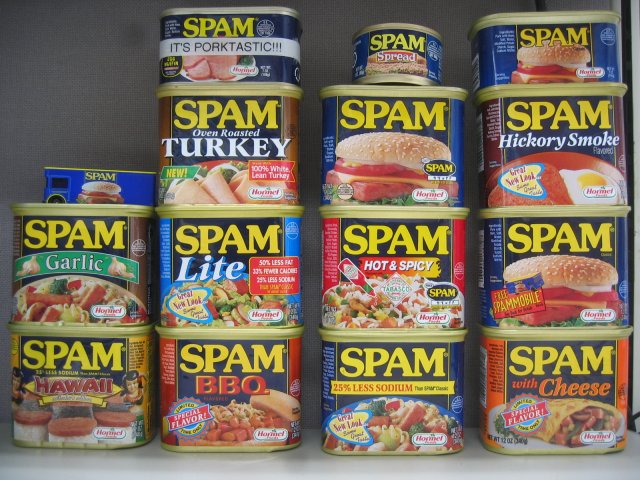
Spam Report: I Hate You, Lista De Emails!

My spam filter has caught 260,504 spam comments to Ethics Alarms to date, and I have read every damn one of them. This is to make certain that one of your comments doesn’t end up in spam purgatory, which sometimes happens, especially if you include a link, or your parents named you “Penis Enlargement” for some reason. You also end up there if you send me a anonymous comment with a fake e-mail, or if you become too insulting or otherwise annoying to justify whatever enlightenment your opinions might provide. I just sent “Another Child of the Future” to Spam Land, as well as “Joe”.

To say I resent spam and spammers wildly understates the case. It is unethical conduct to say the least, and the companies that facilitate the process are beneath contempt. Lately, the field has come to be dominated by something called “lista de email,” which deposits about 100 pieces of junk on Ethics Alarms every day. I really, really hate it, and everyone connected with it. They are vandals, freeloaders, cheaters, liars and frauds. They have added to the abundant wasted time in my life, which was already seriously crowded with the hours I spent studying anti-trust law and the novels of Conrad and Butler,  the weeks I spent trying to read “War” by Raymond Aron, and every second I spent watching soccer, “Hart to Hart,” and “American Idol.”

That is not to say that reading all that spam doesn’t have its occasional rewards, for it is often amusing in a surreal way.  For example: Continue reading

Ethics Hero Emeritus, Sort of: Russell Means (1940-2012)

“Fly swift, like an arrow.”

Clarence Darrow, the greatest of all American criminal defense lawyers, admired more than one criminal. One he especially admired was John Brown, the radical, violent and possibly insane abolitionist whose deadly 1859 raid on Harper’s Ferry, Maryland was a terrorist act by any definition. Brown was hung for it, but he became a martyr for the anti-slavery movement, and his raid a rallying point for its cause. Darrow believed that some societal wrongs were so resistant to law and democracy that their grip could only be loosened by violence, and so he extolled men like Brown, whom he regularly eulogized in public with a fiery speech that concluded,

“The earth needs and will always need its Browns; these poor, sensitive, prophetic souls, feeling the suffering of the world, and taking its sorrows on their burdened backs.  It sorely needs the prophets who look far out into the dark, and through the long and painful vigils of the night, wait for the coming day.  They wait and watch, while slow and cold and halting, the morning dawns, the sun rises and waxes to the noon, and wanes to the twilight and another night comes on.  The radical of today is the conservative of tomorrow, and other martyrs take up the work through other nights, and the dumb and stupid world plants its weary feet upon the slippery sand, soaked by their blood, and the world moves on.”

I immediately thought of Darrow’s words about Brown* when I learned that Russell Means had died this week at the age of 72. Clarence Darrow would have loved Russell Means. Continue reading

The Global Warming Debate Is The World Series of Confirmation Bias

Confirmation bias is the dastardly human thought tendency that makes objectivity virtually impossible, and fair analysis nearly so. It is the human instinct to view external facts and events in such a way that they confirm preexisting beliefs, or, if they challenge these beliefs, to find reasons to distrust the facts or explain them away.

A line in a Washington Post book review caused me to realize that nothing  exemplifies confirmation bias at work better than the global warming controversy. It was a review by Post business editor Alan Sipress of “Spillover,”  a new book about how pandemics spread. He wrote:

“This year, a mild winter and an unusually hot summer — which look suspiciously like results of man-made climate change — yielded a bumper crop of virus-carrying mosquitoes. The result is an unprecedented outbreak that has sickened people in almost every state.”

Wait a minute: why does the past year’s mild winter and unusually hot summer “look suspiciously like results of man-made climate change”? Were there never mild winters with scorching summers before scientists developed climate change models? And why do those two factors, when paired, “look suspiciously” like man-made climate change? What about the winter and summer of 2012 screamed “man-made”? Continue reading

Trust and “The Paradoxical Commandments” of Dr. Keith

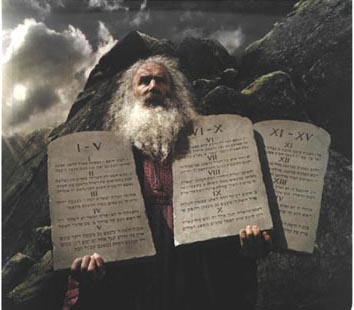
In case you were wondering what was on that third tablet that Moses dropped…

I’m preparing a long business ethics program for a large corporation with some ethics issues (which is to say, for a large corporation), and while reviewing my files on business leadership re-discovered some material that I hadn’t looked at for a long while. One of them was “Anyway,” a poem that was also turned into an inspirational book by its author, Dr. Kent M. Keith.  He first wrote it for student leaders in 1968 while an undergraduate at Harvard.

One wonders if what he called “The Paradoxical Commandments” would have occurred to anyone but a student, before he could become jaded, cynical, disillusioned, or stuffed with so many scholarly  details, controversies and nuances regarding ethics that such an idealistic view was tainted forever.  (I should note that Dr. Keith has obviously become none of those things, perhaps because he was able to remain true to his own youthful advice.)

The poem is really about trust, the essence of ethics. There is no question that those who trust—in people, in institutions, in justice, in fairness—will inevitably be betrayed and disappointed, sometimes tragically.  Yet to stop trusting in those things, which so much human experience and simple logic dictates is the safest, most sensible course, is to damn one’s life and the society we live in to perpetual mediocrity, fear, and darkness. Democracy is based on trust of an idea: that human beings can be trusted to live their own lives, and that under the inspiration and catalyst of freedom, will create, persevere, love and build a healthy and happy society. There is plenty of evidence that suggests that trusting this idea is risky and foolish, yet trust is its only hope for fruition. So we must trust anyway.

I’ve never posted Dr. Keith’s poem on Ethics Alarms before. I should have. Here it is: Continue reading

A Choice, A Doubt, and One of a Million Moments

In the end, a life is made up of more than a million choices, large and small, that we make according to a witch’s brew of factors. There is timing, and how we are feeling at the moment, and there are random factors, our emotions, past experiences and needs, and, just maybe, some ethical analysis involving altruism, the Golden Rule, a careful balancing of outcomes, and solid principles of right and wrong. We hope to make good choices, and yet even a good one can have disastrous effects, leaving us illogically hesitant to make the same choice the next time. We hope, if we strive to be ethical and learn from our mistakes while not learning the wrong lessons—cowardice, fecklessness, self-obsession, fear of responsibility and risk, procrastination—from our failures, to reach the finish line having made existence better for more of our fellow human beings than we made miserable, and having been a net benefit to civilization while we were part of it.

Yet there really are a million or more such choices,  many of them present themselves without any warning, and the results of the choice are often unknown. The only one keeping score is you, most of the time. I was presented with such a choice tonight, and I fear that I chose badly. Continue reading

ARRGH! “The Good Wife” Did It AGAIN!

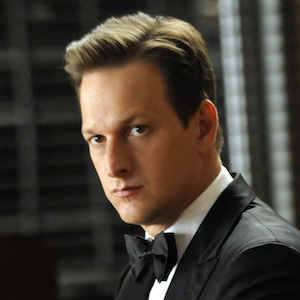
For God’s sake, Will! A) You just got off one suspension for unethical conduct—what are you DOING? B) They had to have taught you better than this at Georgetown Law!

“It” is misleading Americans who may be in litigation requiring settlement and who don’t know that lawyers cannot, must not and largely do not agree to financial settlement terms without getting the approval of their clients. I have dubbed this “The Hollywood Lawyer Fallacy,” and Will (Josh Charles) just did it again.

I know—every lawyer TV drama skips this part, as does virtually every movie about lawyers. Yes, I know it is done for pacing and dramatic purposes, that having a scene where the lawyers asks her client, “They’ve offered this amount, and I think we should take it, OK?” and the client says, “Sounds great!” just slows things down. But here is what repeatedly watching this inaccurate portrayal of  lawyers breaking one of the cardinal rules of the profession does: it sets up clients of incompetent lawyers to be misled, manipulated, and cheated. As I wrote the last time the otherwise ethically astute CBS drama did this while I was watching:  Continue reading

The “Homeland” Dilemma

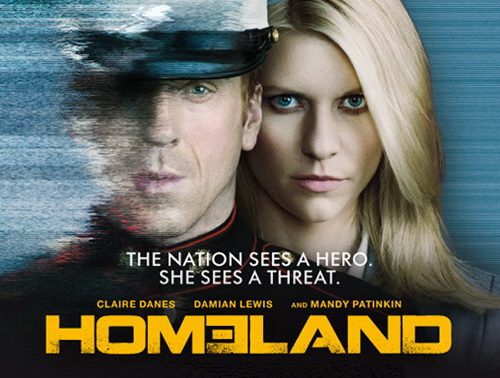
In “Homeland,” Showtime’s excellent Emmy-winning drama starring Claire Danes, a G.I. named Nick Brody imprisoned for years returns to the states a hero, and, secretly, a converted Muslim and terrorist. By Season Two, which premiered last night, Brody has risen to be a member of Congress, where he is working from the inside to benefit the interests of his captors. He has kept his conversion to Islam secret from everyone but his teenage daughter Dana, who accidentally caught him praying to Mecca in the basement in the first season.

Now Brody’s name is being floated as a possible running mate for the current Vice President, who is a presumptive presidential nominee. The Veep tells Congressman Brody that if there are skeletons in his closet that his researchers wouldn’t have found—I’m pretty sure being a secret terrorist would qualify—Brody needs to air them. Brody says there aren’t any. We know better.

Meanwhile, at Sidwell Friends, the tony Quaker private school in D.C. that all the pols send their kids to, Dana is fuming because she has to listen to the  Vice-President’s obnoxious son  go on about how “Muslims aren’t like us” and “don’t respect human life.” Dana, having been admonished for insulting him, blurts out, “Well, my father’s a Muslim!” in class.  Dana’s subsequent position is that she was joking to make a point. At home, however, her outburst causes a domestic crisis, as her mother feels that Brody has been lying to her, which he has.

I’ll leave Rep. Brody out of this ethical dilemma, as he is suffering from an Islamic strain of the Stockholm Syndrome, but what about the family? From their perspective, which is that they don’t suspect for a second that Brody is a traitor, what is their ethical obligation should he announce that the Vice President is going to choose him as a running mate, and that he expects them to keep his secret?

His argument, of course, is that his religion shouldn’t and doesn’t matter. It is true that the “public would want to know,” and also that the public would probably not feel very comfy electing a Muslim these days to be a heartbeat away  from the Presidency, fair or not. The family knows he is a good man (they think) and like the idea of being Second Family; there is no reason to sink his career and their aspirations to celebrity by allowing irrational bigotry to take hold. Is there?

That’s not the whole truth, however. Brody has lied to the Vice President and to his constituents, and they do have a right to know that. In my view, both wife and daughter have an ethical duty as citizens to tell husband and father that if he accepts the nomination, they will be forced to expose him. They should also tell him that he needs to resign from Congress, or, if he’s willing, tell the public about his deception and ask for their forgiveness. I think, in short, that this is a John Edwards situation.

Is that what you would do, in their place?

And my favorite hypothetical of them all, that I refuse to believe wasn’t lurking in the minds of the writers:

Michelle discovers Barack praying to Mecca in the basement.

Tomorrow.

What would be her ethical duty?

Policies Don’t Fix Unethical Professors

“Here is your assignment, class: Vote for who I tell you to.”

I saw this story and decided it was too obvious to write about. A community college math professor distributes to her class a pledge to vote for Obama and the Democratic slate, and demands that the students sign it—come on! Is anyone going to defend that as ethical? Then a reader sent me several links to the item (thanks, Michael), and after reading them, I was moved to reconsider.

The professor, Sharon Sweet, was put on unpaid leave pending an investigation; I can’t fault Brevard Community College (in Florida) for not firing her yet. What troubles me is the college’s statements that her conduct is just a breach of policy. BCC Spokesman John Glisch told the press that “The college takes this policy [prohibiting employees from soliciting support for a political candidate during working hours or on college property] extremely seriously. It is very important that all of our faculty and staff act in that manner at work and while they’re on campus.” So college provosts are reminding employees about the policy.

Let’s be clear. Associate Professor Sweet’s conduct was an abuse of power and position, an insult to the autonomy of the students and an attempt to take away their rights as citizens, disrespectful to them and the values of the nation, and an attempt to circumvent election laws and to subvert democracy. It was also, quite possibly, illegal. If a college needs to have a policy to stop teachers from behaving like that, it is hiring the wrong kinds of teachers—individuals whose ethics are those of totalitarian states, and whose respect for individual rights are nil. This was an ethical breach of major proportions, not a policy misunderstanding. No teacher should require a policy to tell her that this conduct is indefensible and wrong. Continue reading

The Egypt and Libya Embassy Attacks: So, Are We Going To Have An “Everybody Make An Insulting Film About Muhammad Day” Now?

Why not? It’s your right!

“We went into this knowing this was probably going to happen,” said Steve Klein, a consultant on Nakoula Basseley Nakoula’s anti-Islam, Muhammad-bashing film. The film is apparently the reason two U.S. embassies were attacked yesterday, resulting in the death of the U.S. Ambassador to Libya and others. That was the “this” Klein was referring to. Nakoula and his Isreali backers set out to make a film that denigrates both Islam and its prophet, knowing what the response in Muslim nations has been to such things, as well as the deaths caused by podunk bigot pastor Terry Jones, with his Quran-burning stunts.

Now people are dead, the Arab world is inflamed, and the perpetual tinderbox known as the Middle East is ready to ignite. The online film has had almost no audience yet, but don’t worry: international violence was probably part of the marketing plan. Maybe Nakoula will be really lucky, and have his First Amendment-protected agitprop start World War III, and he can take his place in history next to Gavrilo Princip, in the coveted “Insignificant Jerks Who Started World Wars” category.

Indeed, as an American citizen, Nakoula has a sacred right to make any movie he wants, write any book, draw any cartoon, burn any book. Americans have a sacred right to be irresponsible, and thanks to electronic communication, they can now be irresponsible on a grand scale, disrupting diplomacy, inciting international unrest, fanning racial, ethnic, international and religious discord. That means that sometimes an exercise of  the right of free speech can be legal, cherished, and terribly wrong. Among those times are when you know that shooting off your metaphorical mouth has a strong probability of getting people other than you killed.

I agree that there is something amiss when “The Book of Mormon” is winning accolades on Broadway, knowing well that if the satirical musical targeted Islam instead of Mormonism the Great White Way might be running red with blood. I agree that it reeks of a double standard when columnists like Charles M. Blow can tweet about Mitt Romney’s “magic underwear” but American Muslims are immune from similar indignities because, well, they might kill us. This elevates instability, intolerance and lack of respect for human life to an asset, and that is itself intolerable—but what is the solution? Charles Krauthammer, condemning our Egypt embassy’s conciliatory response to the mob attack on it  yesterday, said that our response should be “Go to hell.” In this he was endorsing the response of the Everybody Draw Muhammad Day crowd, which decided that an organized, mass insult to Islam was the intelligent response to one Islamic terrorist intimidating Comedy Central into censoring South Park. Their reasoning: “You can’t kill us all.”

They can kill our Ambassador, though, can’t they?

Since there is no justification for hateful, intentional denigration of anybody’s religion, there should be a bright line between caving to Islamic threats over satire and humor, which is disgraceful and un-American, and not setting out to agitate the Arab street with calculated insults, which is the domain of Jones and Nakoula. The latter is flagrantly irresponsible and reckless, and should not be condoned or excused, Constitutionally protected though it is. Nakoula, it was reported, was in hiding for his life.

If so, good.

“We went into this knowing this was probably going to happen,” said his colleague. Having to fear for one’s life seems like a fair punishment for someone who knew his hateful, rinky-dink movie might get other people killed and cause mass violence, and made it anyway.

___________________

Sources:

Graphic:  No Short Corners

Ethics Alarms attempts to give proper attribution and credit to all sources of facts, analysis and other assistance that go into its blog posts. If you are aware of one I missed, or believe your own work was used in any way without proper attribution, please contact me, Jack Marshall, at  jamproethics@verizon.net.