My Field of Dreams

Yesterday, an Off-Broadway musical closed that I launched on its remarkable run nearly 12 years ago. The show had productions in four states, D.C. and London; it had over 450 performances; it became the cornerstone of one very talented (and very nice) actor’s career, and an important opportunity for several others. It gave a dear friend immense pleasure, satisfaction and recognition in the final decade of his life, and probably saved my theater company from bankruptcy. Most important of all, perhaps, is that it entertained thousands of people. If I got bopped by a trolley tomorrow, the show would undoubtedly stand as one of the major accomplishments of my entire strange, eclectic, under-achieving life.

And yet…feeling good about the unlikely saga of the show, now that it has finally (probably—it has risen from the dead before) seen its last audience, takes considerable effort for me, and has from the beginning. My satisfaction is more intellectual than emotional, because I know that I personally benefited less from the show in tangible ways in proportion to my contribution to it than anyone else involved. Although I restructured the script, re-wrote, added and cut lines, wrote new lyrics to one song and added two others to the show, including the finale, I’m not credited as a co-auther. I own no part of the property, and never received a dime in compensation. Those closely connected with the original production know all of this, but the extent of my role in the creation and success of the show has been invisible to audiences for over a decade. Continue reading

Ethics Dunces: The Journalism Education Association and the National Scholastic Press Association

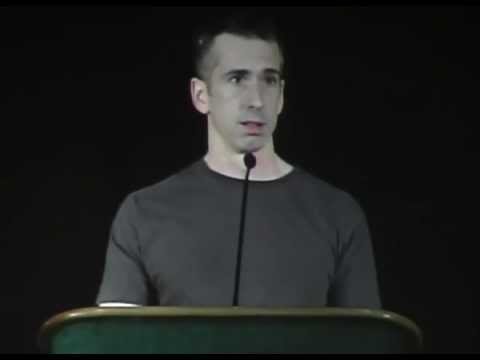
Savage being Savage.

Now some of you will wonder, when a speaker addressing a national conference of high school journalists on the topic of anti-bullying measures starts a hateful rant against the Bible, religion, and any students in the audience who believe in either, why the speaker wouldn’t be the designated dunce. The speaker in this sorry case, however, was Dan Savage. Savage is a talented writer, a gay rights advocate, and a gifted humorist; he is also a very angry, self-righteous, arrogant gay man with a tendency to be unapologetically vicious. While it is true that angry, “take-no-prisoner” activists have their uses on the road to social change, lecturing about the evils of bullying is not one of them, because these people are themselves prone to bullying. No, the ethics dunces are the organizations that inflict such individuals on young, idealistic student journalists who didn’t travel to a conference to have a speaker call them “pansy-assed.”

That’s what the Journalism Education Association and the National Scholastic Press Association did when they irresponsibly invited Dan Savage to speak to the students, about 100 of whom walked out as Savage launched into an angry, but thoroughly Savage-like diatribe against Christians and Christianity. Continue reading

The Perplexing Law and Ethics of Copyright Violations On The Web

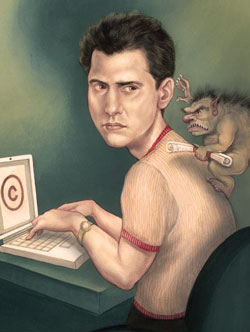
For once I’m not going to try to summarize a useful article, but will just suggest that you read it. From the future (the article is mysteriously dated May 1, 2012), journalist Eriq Gardner tells of his experience with Righthaven, the organization that was created explicitly to sue bloggers and others for copyright violations on the web. He tells of how he came to believe that the defenders of copyright law, not those who would destroy it, had fairness, logic and ethics on their side.

The article is well-timed, given my current travails with an unapologetic plagiarist, and my own position on copyright, which is consistent with the author’s. It also features a guest appearance by attorney Marc Randazza, the First Amendment specialist who came to my aid when  I was threatened with a lawsuit over an opinion someone didn’t like.

The article, titled The Righthaven Experiment: A Journalist Wonders If a Copyright Troll Was Right to Sue Him, is well worth your time.

Comment of the Day: “Ethics Chess Lesson: The Tale of the Kidney and the Ungrateful Boss”

New commenter Christine has a valuable personal experience to relate, as an individual who donated a kidney to a stranger herself.  The main thrust of her post covers a topic that I have written on before but did not mention in this case, though I should have. Someone who performs a kind and generous act counting on rewards, copious thanks and gratitude, is  doing it for the wrong reasons. The act itself is all that matters. Certainly, gratitude is the right way to respond to generosity, but an act done in anticipation of personal benefits isn’t really altruistic. It is opportunistic. This is a cliché to be sure, but true nonetheless: the generous act must be its own reward.

Here is Christine’s Comment of the Day on the post, Ethics Chess Lesson: The Tale of the Kidney and the Ungrateful Boss.

I want to also commend Christine for following the comment policies, which many of the new visitors here who commented on this post did not do. I prefer full named on posts, but I only require that I am informed of  every commenter’s real name and have a valid e-mail address within a reasonable time of their first submitted comment. One way or the other virtually all of the regular commenters here have managed to do this, and it makes a difference, even in my responses. I regard such commenters as collaborators , not just marauders, and most of the time, I treat them accordingly:  tgt, Steven, Lianne, Margy, Glenn, Tim, both Michaels, Karl, Neil, Karla, Rick, blameblakeart, Barry, gregory, Eric, Curmudgeon, Eeyore, Julian, King Kool, Joshua, Jay, Tom, Bill, Danielle, Elizabeth, Patrice, Ed, Bob, The Ethics Sage and Jeff…I know there are others.   Thanks to all of you for letting me know who you are.

Now, Christine: Continue reading

Teacher Manuael Ernest Dillow: An Ethics Dunce, But, Of Course, An Aberration

“THIS will teach you lousy kids not to disrupt class….KIDDING!!!”

We don’t have to belabor this one. Manuael Ernest Dillow, a welding teacher at a vocational school in Abingdon, Virginia, wanted to get the attention of his students, so he lined up twelve of them against a wall, took out a pistol, and fired at them multiple times. The gun was loaded with blanks.

Oh! Well that’s all right, then!

This idiot was arrested, and it looks like there is a good chance he’ll get serious jail time. Obviously he is an aberration in the great, essential and honored field of teaching. Continue reading

Unethical Ethics: How Business and Government Encourage Unethical Thinking In Their Ethics Training

Show us the way, O Wise and Ethical One!

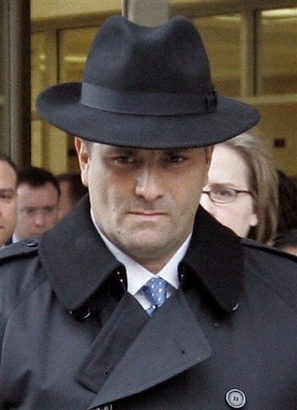
Jack Abramoff, the corrupt lobbyist turned federal prisoner, then author and now ethics expert, will be giving a lecture on government and personal ethics at The University of Texas at Austin’s business school on May 2. This is not as unusual as it seems. My biggest competitors are felons and disbarred lawyers—they literally step right out of professional disgrace, and sometimes jail, into the lecture circuit. They are draws, and in a field like ethics, which is often prescribed as substitute for barbiturates, this is irresistible to professional development programmers and conference organizers. It also attracts the participants that most need real ethics training, but who seek what these fake ethics presenter usually have to offer:  real life-based advice on what you can’t get away with. This lesson has about as much to do with ethics as it does with Parcheesi, but unfortunately, that’s what is generally regarded as practical ethics.

Characters like Abramoff don’t have ethics alarms; they have survival alarms.  Business schools, politicians and the media still believe that aiming reforms at those alarms, in the form of tougher rules and enforcement, will make business and government more ethical. Think about it: the cultures will still be unethical; the people in them will be just as unethical, but because proven scofflaws and ethics corrupters like  Jack Abramoff will explain where they went wrong, all these people with dead ethics alarms, further deadened by absorbing  the wisdom of the most corrupt of a corrupt breed, will stop behaving unethically.

Good plan. Continue reading

The Unethical Rationalization List: 24 and Counting

Ethics Alarms frequently refers to rationalizations, which lie at the core of most unethical conduct. They are, as one ethicist put it, lies we tell ourselves to allow us to pretend that what we know is wrong, isn’t. Some rationalizations are used so frequently, by us and others, that we come to believe them.

The list of rationalizations has been available on the blog under the Rule Book heading from the beginning, but it is constantly updated, and even though posts frequently link to it, it is clear to me, especially from comments that resort to exactly the same examples of flawed ethical reasoning that populate the list, that a lot of visitors never see it. For those readers, and also those who may not have read the Unethical Rationalizations and Misconceptions page recently, I am posting the whole list of 24 rationalizations here. If you have a candidate for #25, please send it in. Continue reading

Ethics Hero: Ashley Judd

Actress Ashley Judd (Full Disclosure: I am a long-time fan) finally has had it with snarky and degrading public speculation about her face, her weight, her appearance, and whether the star of TV’s “Missing” has “had work done,” and properly slams the celebrity media and those journalists who either write about her like she’s a competitor in a dog show or question her conduct and character based on their assessment of what she “should” look like.  Her verdict: it’s misogyny. The acting member of the Judd family has written a passionate, perceptive, articulate (if you forgive occasional lapses into feminist jargon, like objectification otheration, and (yuck)  heteronormative) and courageous essay over at the Daily Beast. If you have a daughter, have her read it. If you have a son, have him read it too. Heck, everybody should read it….here.

I wonder if the Daily Beast editors read it.  Here is Ashley Judd, eloquently pleading that women should be assessed base on how they do their job rather than on their perceived sex appeal, and where does the website post it?

On the page called “The Sexy Beast.”

You have a lot of work to do, Ashley, but you’re fighting the right fight.

Brava.

Farewell To A Professional Journalist: Mike Wallace (1918-2012)

Mike Wallace, professional.

Mike Wallace, the tough interviewer who formed the backbone of “60 Minutes” in its heighday, and who was one of the last links to the Golden Era of Walter Cronkite and Edward R. Murrow, when broadcast journalism was seen as a public service rather than entertainment and partisan sport, has died. That’s amazing in itself, for I had come to believe that he would live forever. He was only 93.

There will be many tributes to Wallace in the coming days, but for now, you can remind yourself of his remarkable career here. Mike Wallace performed a difficult job well longer than anyone else, and he always strived to meet the highest ethical standards in a profession that once had some.

He will be missed.

Hell, he was already missed.