Ethics Quiz: What if the Westboro Baptist Church Is Just Kidding?

I know just how you feel, Homer.

This is a unique Ethics Alarms quiz, because I am offering it while having absolutely no idea what the answer is, or even, perhaps, what the right question should be.

The story you can read here describes the Westboro Baptist Church’s interactions with an openly gay DJ. You will recall that the church’s followers have achieved infamy by loudly protesting on the scene of private funerals for military personnel killed in combat, with “God Hates Gays” being one of their signature protest signs. Yet the DJ, when he visited the group, found them to be friendly, unthreatening, civil and kind. They hugged him. The asked him over for dinner.  The surprised and puzzled writer suggests that the Fred Phelps followers’ act may be a form of First Amendment-testing performance art, sort of like Bill Maher. Maybe they aren’t really hateful after all. Maybe they just act that way!

My Ethics Quiz question for you to consider:

Does the fact that they can be kind, tolerant and accepting in the privacy of their abode make the Westboro Baptist Church protesters less unethical, more unethical, or does it make no difference at all? Continue reading

Depressing Fun From CREW: “Are You More Ethical Than A Member of Congress?”

And yet, it once was even worse...

The Citizens for Responsibility and Ethics in Washington have a neat little feature on their website, an interactive survey entitled, “Are You More Ethical Than A Member of Congress?” It is well done, pointed, educational, and, if you hadn’t already figured out that the ethics on Capital Hill (and the character of the elected officials displaying them is beyond redemption, really depressing.

It is only a slight exaggeration to say that if you aren’t more ethical than a member of Congress, you are probably either in jail, or should be.

You can take the survey here.


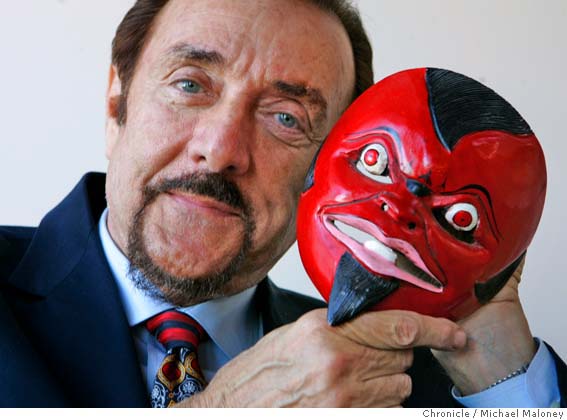
Dr. Z’s Tips to Avoid Unethical Influences in the Workplace and in Life

The wise and provocative "Dr. Z" (on the left)

I’m giving ethics seminars to lawyers and accountants today at a non-profit conference in Washington, D.C. While I’m gone, I thought you might want to think about one of the topics I’ll be talking about, the problem of avoiding unethical influences and being co-opted by an unethical culture. What follows are some of the principles advocated by psychologist  Philip Zimbardo, “Dr. Z” to his students, who is best known for devising the infamous Stanford Prison Experiment (it was even made into a movie), that demonstrated to a frightening degree how ethical individuals could engage in horrendous acts when placed in the right (or wrong) environment. Zimbardo has studied, taught and written about this phenomenon extensively, and I find his advice bracing and wise, as well as fodder for debate and discussion. Here it is: Continue reading

Unethical Advertising Slogan of the Month: Reebok

You read that right: the slogan, which Rebok printed up for use by an affiliated gym in Germany and which quickly went viral on the web, is

“CHEAT ON YOUR GIRLFRIEND, NOT ON YOUR WORKOUT!”

As blatantly unethical exhortations in pursuit of commerce go, this one is pretty spectacular. Consider:

  • It is disrespectful of women.
  • It advocates betrayal, dishonesty, disloyalty, infidelity, promiscuity and cheating.
  • It designates a higher priority to narcissistic self-maintenance over love, commitment, and stable relationships.
  • It represents an athletic equipment company giving the stamp of approval to cheating.

That’s a remarkable amount of bad ethics in just eight words. A masterpiece of economical cultural poison. Bravo! Continue reading

Ethics Hero: NFL Commissioner Roger Goodell

Today the National Football League announced the following response to the results of its investigation of bounties being offered and paid by the New Orleans Saints to its players for injuring key opposition players in games. From the NFL press release:

“Commissioner Roger Goodell notified the New Orleans Saints today of the discipline that will be imposed on team management for violations of the NFL’s long-standing “bounty” rule that endangered player safety over a three-year period.

“Discipline for individual players involved in the Saints’ prohibited program continues to be under review with the NFL Players Association and will be addressed by Commissioner Goodell at a later date. The program included “bounty” payments for “knock-outs” and “cart-offs,” plays on which an opposing player was forced to leave the game. At times, the bounties even targeted specific players by name.

“The NFL’s extensive investigation established the existence of an active bounty program on the Saints during the 2009, 2010, and 2011 seasons in violation of league rules, a deliberate effort to conceal the program’s existence from league investigators, and a clear determination to maintain the program despite express direction from Saints ownership that it stop as well as ongoing inquiries from the league office.

“We are all accountable and responsible for player health and safety and the integrity of the game,” Commissioner Goodell said. “We will not tolerate conduct or a culture that undermines those priorities. No one is above the game or the rules that govern it. Respect for the game and the people who participate in it will not be compromised.”

“A combination of elements made this matter particularly unusual and egregious,” Commissioner Goodell continued. “When there is targeting of players for injury and cash rewards over a three-year period, the involvement of the coaching staff, and three years of denials and willful disrespect of the rules, a strong and lasting message must be sent that such conduct is totally unacceptable and has no place in the game.”

…Based on the record, Commissioner Goodell has imposed the following discipline on Saints management: Continue reading

Easy Call: Employers Asking For Facebook Passwords? It’s Unethical. So Let’s Stop It.

Ethics Alarms’ predecessor, The Ethics Scoreboard, had a feature known as “Easy Calls,” where I would render periodic ethics verdicts I thought should be obvious. Today’s talk radio and blogosphere sensation, the report that asking for a job applicant’s Facebook password is becoming a common practice of employers, is a classic easy call. And like a lot of those on the Scoreboard, an amazing number of people are getting this easy call wrong anyway.

For example, I heard lawyer-radio talk-show host Laura Ingraham today mock complaints about the practice, saying it was a legal request. Sure, it’s legal. It is still wrong, an indefensible incursion of personal privacy. “You are always free to look for a job somewhere else,” Ingraham says, as if that makes everything fine. Being free to reject an unfair and coercive job requirement doesn’t make it any less unethical. Law professor Orrin Kerr says that the Facebook demand is in the same league as demanding a job applicant’s house keys. Let’s see, what else could a prospective employer ask? Continue reading

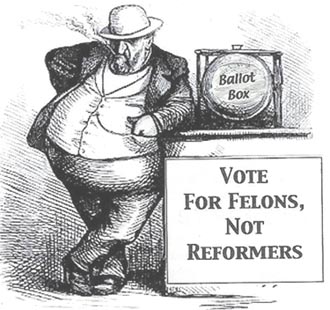
No, Center For Public Integrity, New Jersey Obviously Is NOT the “Least Corruptible State, ” and Stop Confusing Compliance and Ethics

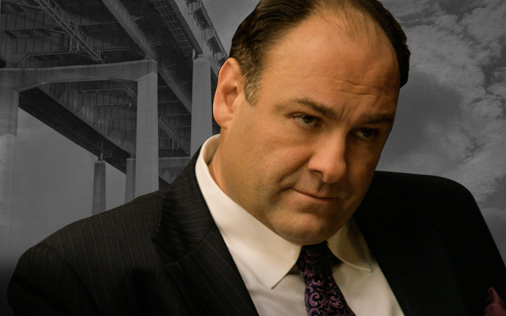
Sorry, Tony! Overnight, New Jersey became uncorruptible. Time to move to Washington, D.C.

The Center for Public Integrity got what it wanted yesterday, which was headlines about its extensive new study of public ethics laws in the U.S. In order to get its cherished publicity, the Center added to the public’s confusion about what corruption is, what ethics is, and how one discourages one while iencouraging the other in our various governments. They released results that graded the 50 states according to “corruptibility”, and found that New Jersey was the least corruptible of all.  I hope the Center’s officials and scholars are happy with their PR, but if they have a shred of integrity and common sense, they should be ashamed of themselves. Continue reading

“Luck,” Causation, and the Complex Computation of Mixed Motivations

Was it good luck, or bad luck?

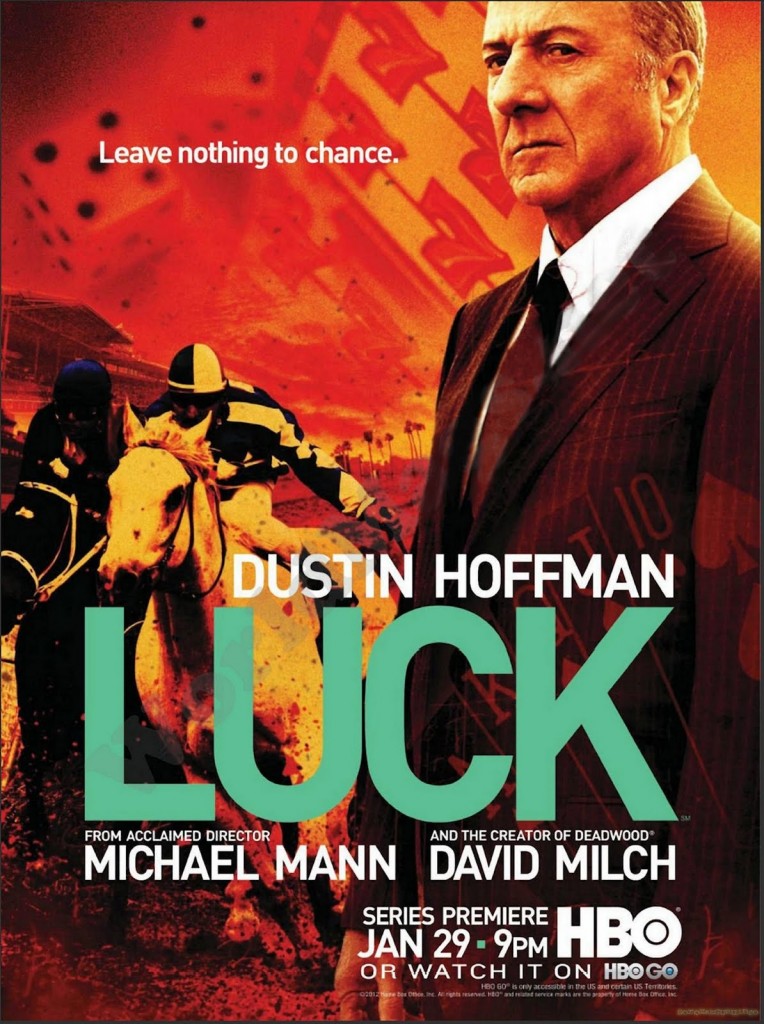
HBO has announced that it is cancelling “Luck,” its well-reviewed series about corruption in the sport of professional horse-racing. Why? Well, that’s an interesting question.

The immediate impetus for the decision was the death of a one of the horses used in the series. It was the third horse to die, so the announcement took the form of a sensitive and humane decision based on concerns for the animals. “While we maintained the highest safety standards possible, accidents unfortunately happen and it is impossible to guarantee they won’t in the future,” HBO’s statement said. “Accordingly, we have reached this difficult decision.”

I was initially impressed, but a couple of things about the move, which seemed uncharacteristically ethical by show business standards, bothered me. “Luck” was much-praised but low-rated, despite a cast headed by Dustin Hoffman and Nick Nolte and a production team headed by respected film director Michael Mann. Though it had been renewed for a second season, some felt that the renewal was dictated by a corporate decision not to embarrass its Hollywood royalty. Continue reading

Ethics Hero Emeritus: Rushworth Kidder (1944-2012)

Not everyone named Rush is an uncivil blow-hard. This Rush, Rushworth Kidder, was a dedicated ethicist, teacher, author and philanthropist who was one of the pioneers in the field of professional ethics. His trademark phrase was “moral courage,” but it was more than a motto: Rush thought about it, taught it, and lived it.

He founded his Institute for Global Ethics in 1990, just as the idea was beginning to take hold that organizational ethics was something that needed to be formalized and made part of the culture in companies and professional communities, and unlike many who were to enter the field as it grew, Kidder never sold out. He wasn’t in the field of ethics to make a buck. He believed. Continue reading

White House “Ethics”: Obamacare Justifies The Means

Supreme Court protests: pointless when anyone else organizes them, unethical when the White House organizes them.

I was stunned by the news reports of the White House organizing pro-Obamacare demonstrations outside the Supreme Court, and then found myself stunned that I was stunned.

It should have been obvious to all, which includes me, that President Obama and Democratic supporters of Obamacare were so determined to pass this mess that it stopped mattering to them long ago what democratic and constitutional principles were nicked, warped, distorted and violated in the process. This should be obvious regardless of whether one likes the final product (as if anyone knows what that really is, even today—principle nicked: transparent government).

The final bill was passed with a series of legislative maneuvers that had never been mustered all in the support of one controversial bill (principle warped: process and representative democracy); it was built on an expansion of Congressional power the is either unconstitutional or a frightening slippery slope (principle distorted: individual freedom); the individual mandate was (and is) simultaneously sold to the public as not being a tax while argued to the courts as one (principle violated: honesty and integrity), the Congressional Budget Office’s verdict was obtained using accounting tricks and deceitful projections (principle nicked: fairness); and misrepresentation was the norm on both sides of the debate (principles violated: respect for the public; candor, transparency and honesty). Now that the President is already campaigning for re-election and the health care law remains his signature accomplishment—if you consider it that and not a fiasco—the White House has made it clear that, while it may not be fair to say it will stop at nothing to save it, what it won’t stop at to protect the measure is a damning indictment of its integrity.

From the New York Times, one of the few non-conservative media sources to cover the story: Continue reading