Ethics Dunce: Sen. Rand Paul

Sen, Rand Paul, protester.

Sen. Rand Paul, libertarian and Republican U.S. Senator from Kentucky, has a choice: he can be a high elected official of the United States government, or he can engage in civil disobedience. He cannot do both.

Sen. Paul was detained today by the Transportation Security Administration in Nashville, Tenn., after refusing a full body pat-down following an image scan that did not clear him through security. I feel his pain. But a United States Senator must obey the law and cooperate with all lawful activities of the U.S. government and its agencies. If he objects to pat-downs so much, he has the power and influence to wield to try to change procedures and policies. Apparently they were not so burdensome while thousand of other citizens endure them every day.  Now that Sen. Paul is facing a feel-up from a gloved stranger, he is suddenly over-come with principle. Easy for him, too, since unlike us mortals, Senators are exempted by the Constitution from being detained while on the way to work.

For a U. S. Senator to defy a TSA agent who is attempting to keep the skies safe in the manner determined to be appropriate by the U.S government encourages and implicitly endorses defiance by everyone else.  That is a breach of Paul’s duty as a high elected official of the United States.
Recent Race Card Rankings: Trying Out The Knight Scale

I can see Michael Moore from here!

Ethics Alarms recently proposed the Knight Scale, a way to rank attempts to play the race card or otherwise accuse politicians, satirists, writers, pundits and others of racism in order to silence them, ruin their credibility, or score cheap political points in the media. The Knight Scale was made possible by blogger Christopher Knight, who somehow managed to find a cartoonist’s substitution of Michelle Obama for Marie Antoinette ( as a commentary on the First Lady’s ill-timed–some say—taste for lavish parties and social activities) in a famous painting. Despite the fact that the French queen was not, to my knowledge, black, Knight somehow found this to be blatant racism, thereby establishing the tippity-top of the Knight Scale: you just can’t come up with a more far-fetched, unfair, factually indefensible accusation of racism than that. With that outrageous complaint as a 10, the most outrageous, where would other, necessarily lesser bogus racism claims rank?

Let’s look at last week. From here on, we can count on an ever-increasing number of Knight Scale candidates, since an African-American President  presents such an irresistible temptation for unscrupulous race-baiters, and the entire Obama Administration is seemingly conditioned to cry race bias whenever criticism get hot, so consider this a trial run: Continue reading

A Ban on Threatening “Spiritual Injury”: Unconstitutional But Ethical?

There you go, Bill, letting people be unethical again...

Eugene Volokh, a First Amendment  provocateur, notes that Minn. Stat. Ann. § 211B.07 makes it a gross misdemeanor to

“….directly or indirectly use or threaten force, coercion, violence, restraint, damage, harm, loss, including loss of employment or economic reprisal, undue influence, or temporal or spiritual injury against an individual to compel the individual to vote for or against a candidate or ballot question.

The professor opines that the spiritual injury part, at least, is unconstitutional. Interesting.

Prohibiting the interference and manipulation of a human being’s rights of autonomy and self-determination by using threats to compel his voting choices is a legitimate area for the law, because ethics is notoriously inadequate at preventing electoral abuses. It is also an area where the law is an especially blunt instrument, and many conceivable violations of § 211B.07 would seem to risk colliding with free speech. “If you don’t vote for Ron Paul, I’ll never speak to you again!” comes to mind. The threat of “spiritual harm”—“Vote for Mitt Romney, my flock, or I condemn you to Hell!” adds the  free exercise of religion to the mix, particularly when the threat is linked to a position of a candidate that violates religious doctrine.

I have no difficulty concluding that any and all threats to force a citizen to vote according to another citizen’s desires are wrongful and damaging to democracy, and should be condemned and discouraged to the maximum extent possible. Ethical though such prohibitions may be, some, like the use of threatened spiritual injury, are impossible under the Bill of Rights.

So threatening to send someone to Hell if they vote for Newt Gingrich—a reasonable result, when you think about it—is unethical, but a law punishing that threat is unconstitutional.

Sorry, Ethics…looks like it’s all up to you!


Poll: 84% Don’t Have a Clue What “Ethical” Means

Was Norman Bates unethical or sentimental? Well..wait, WHAT?

OK, that was a somewhat misleading headline. According to a poll run by ABC News, 84% of the public thinks that cloning dead pets is unethical. But since there is absolutely nothing unethical about cloning dead pets, I think the headline above is accurate. Well, maybe 84% accurate.

The story is over at Sodahead, which is dedicated to dumb polls. The analysis of the poll, if one can call it analysis, is almost totally bereft of anything remotely connected with ethics or ethical theory. In a previous poll on the subject, Sodahead asked those polled to choose whether the practice was “unethical” or “sentimental”, which is a choice akin to, “Do you like baseball, or can you swim?” Of course cloning a pet is sentimental—why else would someone do it? Who came up with the boneheaded idea that sentimental and unethical were mutually exclusive? Norman Bates dressing up as his beloved mother and killing people was sentimental, but I’d also say it was less than ethical. Continue reading

Ethics Hero: Google

Yesterday, Google demoted its own Google Chrome homepage in pagerank for at least 60 days following the revelation that the browser’s online advertising campaign violated Google’s policy banning the use of paid links. Google had contracted with an outside firm to handle Chrome’s the campaign, and it mutated into a scheme where bloggers were paid to link to a video that extolled the virtues of Chrome to small businesses.

Thus Google was violating its own policies, the stated punishment for which is demotion in search results. Google says that it didn’t know that its sub-contractor was doing this, but nonetheless issued this statement:

We’ve investigated and are taking manual action to demote http://www.google.com/chrome and lower the site’s PageRank for a period of at least 60 days. We strive to enforce Google’s webmaster guidelines consistently in order to provide better search results for users. While Google did not authorize this campaign, and we can find no remaining violations of our webmaster guidelines, we believe Google should be held to a higher standard, so we have taken stricter action than we would against a typical site.”

Today, if you do a Google search for “browser,” Chrome doesn’t appear on the first page of results.

Living by your own rules is the mark of integrity. This time, Google delivered.

The Third Annual Ethics Alarms Awards: The BEST of Ethics 2011

Why is the The Best in Ethics 2011 only about 33% the size of the “Worst”?

This troubles me. My objective is not to be negative. The problem, I think, is that ethical conduct is still much more common than unethical conduct, and it is usually less controversial to identify: most of the time, good ethics is self-explanatory. All of us learn more from mistakes and misdeeds, our own and those of others, than we do from meeting societal standards. Most of what Ethics Alarms does is to try to identify unethical conduct, what was wrong with it, why it happened, and how we can discourage it.

Which is all well and good, but I still would like to make 2012’s Ethics Alarms  more positive year than this one, if possible. Help me, will you, find more topics involving good ethics, so next year’s Best list can hold its own with the Worst.

Here are the 2011 Ethics Alarms Awards for the Best in Ethics:

Most Important Ethical Act of the Year: Acquitting Casey Anthony. The Florida jury charged with deciding if Casey Anthony murdered her daughter faced the ire of a lynch mob-minded public that wanted the unsympathetic Anthony convicted, based on suspicious conduct and a dubious explanation,  but the evidence just wasn’t there. Thus the courageous twelve upheld the American values of fairness, objectivity, and justice under the law. It is interesting that the most ethical act of the year also sparked some of the most unethical arguments of the year, by too many citizens who benefit from our nation’s ideals without comprehending them. Continue reading

The Third Annual Ethics Alarms Awards: The Worst of Ethics 2011 (Part 2)

The 2011 Ethics Alarms Awards for the worst in ethics continues (you can catch up with Part I here) with the large and depressing…

 Shameless Bad Character Division

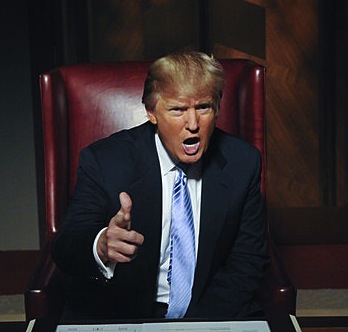
Jerk (defined as an individual who habitually places his personal benefit and ego gratification above the welfare of everyone and everything else) of the Year: Donald Trump

The Dennis Rodman Award, (Awarded to a professional athlete for a career and lifetime of  behaving like a jerk): Jose Canseco. Jose’s done it all, from being baseball’s Typhoid Mary of steroids, to getting arrested for various assaults, to writing a series of tell-all books designed to rat out the very players he corrupted, not as a service to his sport, but as revenge for it rejecting him. In 2011, he hit a new low, accepting money to appear in a celebrity boxing match (the 21st Century version of becoming a circus geek to pay the bills) and sending his less-talented, equally dim-witted, identical twin brother Ozzie to perform instead, hoping to fool the fools who hired him. This, of course, was fraud. It takes quite a jerk to take this award from Manny Ramirez, who became eligible in 2011, but Jose was up to the task.

Asshole (defined as an individual who intentionally and maliciously causes pain and harm to others because he can) of the Year: Rev. Terry Jones, the publicity-seeking leader of a tiny rural church, who caused riots and deaths abroad and ramped up political tensions between America and Muslim nations by threatening to burn, and finally burning, the Koran as a demonstration of contempt for Muslims and the Islamic faith. Continue reading

The Third Annual Ethics Alarms Awards: The Worst of Ethics 2011 (Part 1)

Yes, it was Joe Paterno's year, all right.

Welcome to the Third  Annual Ethics Alarms Awards, recognizing the Best and Worst of ethics in 2011!

This is the first installment of the Worst; Part 2 is here. And the Best is here. 

2011 prompted more than 1000 posts, and even then I barely scratched the surface of all the ethical dilemmas and unethical conduct swirling around us. If you have other choices for the various distinctions here and in the subsequent Awards posts, please make them known.

Here are my selections:

Unethical Community of the Year:  Huachuca City, Arizona. Leading the way among American communities that believe, in their hysteria, that former sex offenders who have served their sentences are nonetheless fair game for persecution and the denial of basic rights as citizens and human beings, Huachuca County passed an ordinance that bans registered sex offenders from the use of all public facilities, including parks, school and libraries.  Runner-up: Obion County, Tennessee. Last year, Ethics Alarms gave the county runner-up status as “Unethical Community of the Year” for sending its volunteer fire department to watch a man’s house burn down because he had failed to pay a $75.00 fee. In 2011, it did it again. I swear: if Obion County hasn’t come up with a better system and this happens again in 2012, Obion County will get the title no matter what some other unethical community does.

Most Warped Ethical Values: The Penn State students who protested the firing of football coach Joe Paterno, because, you know, he was such a great football coach that a little thing like allowing a predatory child molester to run amuck on campus shouldn’t be blown all out of proportion. Runner-up: Ron Paul supporters.

Unethical Website of the Year: Lovely-Faces, the anti-Facebook stunt pulled by Paolo Cirio, a media artist, and Alessandro Ludovico, media critic and editor-in- chief of Neural magazine, to show how inadequate Facebook’s privacy controls were. To do it, they stole 250,000 Facebook member profiles and organized them into a new dating site—without the members’ permission. The site embodied “the worst of ethical thinking: taking the identities of others for their own purposes (a Golden Rule breach), using other human beings to advance their own agenda (a Kantian no-no) and asserting that their ends justify abusing 250,000 Facebook users, which is irresponsible utilitarianism.” Continue reading

Comment of the Day: “Ethics Quiz: The Case of the Fake But Accurate Social Security Card”

My ethics conundrum regarding the fake but accurate Social Security card solution—the Dan Rather approach, if you will— continued to garner a wide range of responses. Rick, as usual, has delivered one of the most thoughtful and provocative, and it is a worthy Comment of the Day.

Here is his comment on “Ethics Quiz: The Case of the Fake But Accurate Social Security Card”:

It strikes me that sometimes—not always, but sometimes—ethics is on a continuum. There’s the truly ethical, the not unethical, and the unethical, with many finer distinctions to be made.

I don’t running screaming into the night at the idea of faking a card, under the circumstances. Still, the truly ethical thing to do in this situation is to tell the prospective employer the truth. And the availability of all those other possible means of identification is indeed relevant. Provide one of the non-Social Security card alternatives and whatever other documentation is available. Importantly, if the employer, for whatever reason, is unwilling to accept this legally sufficient documentation, you don’t want to work for this person, no matter how much you need a job. Continue reading

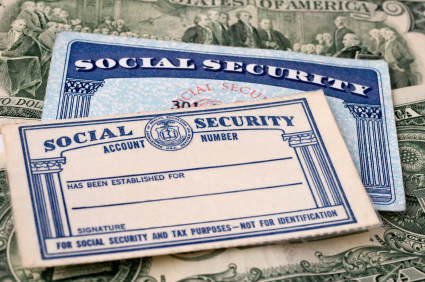
Ethics Quiz: The Case of the Fake But Accurate Social Security Card

A conundrum I have been asked to solve:

A mother is working to get her foreign adopted child a new copy of his Social Security card, which was lost. The child is a citizen since infancy, and a SS number has been assigned to him, but the process for a naturalized alien to get another is long and fraught with red tape, delays and frustration. So far, replacing the card has taken ten months, though it was supposed to take three. Now the son is waiting for the card to be issued. Social Security says it is waiting for final approval from Immigration, and Immigration says that there is a bottle neck, but not to worry.

Meanwhile, the boy has a standing job offer for a job that he is excited about and that would help family finances considerably. He cannot be processed without a Social Security card, however. And the job will not be held open forever.

For $250, a friend of the mother’s can get a counterfeit Social Security card with the son’s real number on it. He can have it in a week,

Your Question, in the last Ethics Quiz of 2011:

Granted that getting such a fake card is illegal, is it unethical?

None of the agencies involved dispute his citizenship, that he is enrolled in Social Security or that his number is valid. He has a document from Social Security that lists his number. The fake card would not assert anything that wasn’t true, except that he actually had the official card. He would be offering fake proof, but fake proof of something that is undisputed and true.

Is this one of the rare cases when conduct would be both illegal and ethical?

I’ll take your responses and update this with commentary later.