“The Star Thrower” and Ethics

My response to the Ethics Alarms reader who pronounced my efforts here pointless and futile received many kind responses from commenters, several of who have pointed me to the story of the man who threw starfish into the sea. I had never read it or encountered it is any way. The fable is often simplified to represent the lesson that just because one person cannot “save all the starfish dying on all the beaches,” saving one by throwing it back into to the sea is still worth the effort, if only to the starfish that is saved. I am grateful for that analogy to what I do, but even more grateful for being alerted to the original  “The Star Thrower,” by anthropologist/philosopher/ writer Lauren Eiseley (1907-2007)

He had a lot more wisdom to convey  to us. You can read “The Star Thrower ” here.

Hole-in-the-Roof Ethics: If Obama Asks For Massive Infrastructure Renewal, the GOP Must Support It.

Seldom is a solution to a problem so obvious, and so conducive to bi-partisanship. It is a solution to two problems, really: America’s dangerously rotting infrastructure, and the nation’s dismal unemployment rate. Spend the money, trillions if necessary, to repair and replace existing roads, railway beds, waterways, sewer systems, airports and bridges.  It still won’t get us where we need to be, but we’ll be much better off than if we let the current deterioration continue, and we’ll save money in the long run, too—real savings, not phony health care reform savings that evaporate once reality kicks in.

There is no justification not to do this, nor is there any legitimate excuse for any elected official not to vote for it. (And no, not wanting to give the President a victory is not legitimate…or ethical, or patriotic.) Repairing the infrastructure isn’t “discretionary spending,” it is essential, unavoidable and cost-effective spending, unless it is diverted into new boondoggles and pork. No new structures, unless they replace unrepairable old ones. No light rail systems or bullet trains; what is needed is basic maintenance and repair….everywhere. It is already late, but “better late than never” has seldom been as appropriate. Continue reading

Comment of the Day: “Flying the Confederate Flag…”

Blogger Edward Carney, who writes about the revelations of daily life (check out his blog here) put his finger on a central issue in the Confederate flag debate in his Comment of the Day.  Flying or displaying the provocative banner sends multiple messages simultaneously, and the individual responsible for the flag  is also responsible for the consequence of all of them. Claiming that one means no offense while knowing that one of the messages is unequivocally offensive is disingenuous,  naive, or willfully rude.

Here is the Comment of the Day on the post, “Flying the Confederate Flag..”:

“I’ll say this for those citizens and politicians who insist on flying the Confederate flag at local monuments and public events: at least they can make the argument that it represents history and a set of values that is still acceptable, even laudable, today. They can make that argument, however disingenuous it may be. The same cannot be said of everyone. Continue reading

Labor Day Ethics Dunce: The Muscular Dystrophy Association

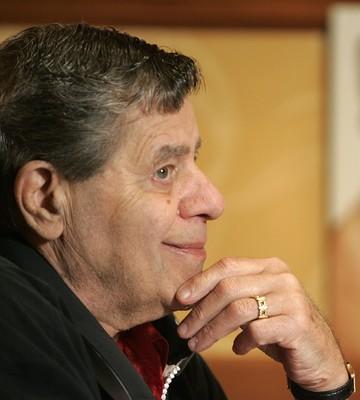
Jerry Lewis earned the right to say good-bye on his terms--even if they were the wrong ones.

Nobody expected it to be easy for the Muscular Dystrophy Association to part ways with Jerry Lewis, who gave everything he had to building the organization over nearly six decades. Now 85, Lewis, a famously difficult talent with an outsize ego even by show-business standards, was bound to insist that he be allowed to all but drop dead at his post, mid-Labor Day telethon. In recent years, that seemed a real possibility, as Jerry’s health and age made him more a figure of pity and curiosity than a viable host.

Nonetheless, Jerry Lewis has raised, by the MDA’s own calculations, about $2,5 billion dollars, beginning when Eisenhower was president and TV was a novelty. The organization owes him, well, everything. They certainly owed him the opportunity to exit on his own terms, even if it was too late, even if it was self-indulgent on his part, and even if, though this is highly unlikely, it cost the organization more in lost contributions than kicking him to the curb will. Continue reading

Ethics Quote of the Week: Greta Van Susteren

Welcome to the Wisconsin Supreme Court!

“Are any of the newspaper asking for them to step down? People have very serious disputes and their whole lives depend on decisions on the Supreme Court, and this isn’t fair to the people. Are newspaper editors saying they got to go?”

—-Fox News Host Greta Van Susteren, asking Milwaukee-Journal Sentinel reporter Jason Stein why the Wisconsin news media has not demanded  the removal of Justice David Prosser and  Justice Ann Walsh Bradley or both, since by all accounts they turned ideological differences into a physical altercation in chambers. The reporter ducked the question, and blamed it all on Gov. Scott Walker, thus taking “missing the entire point” to art form status.

Van Susteren is not only right, but obviously right. Continue reading

The Ethicist, the Farkel Family, and the Perils of “Maybe”

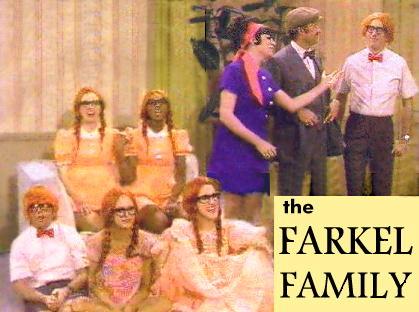
This photo is completely relevant to this post, but if you are under 50, you probably haven't a clue why. Pity. See below for an explanation.*

One of the reasons I started the Ethics Scoreboard, and continued with Ethics Alarms, was my frustration with the ethics profession’s reluctance to render useful opinions on complex ethical problems…unless, of course, the ethicist was being paid for them. Instead, ethicists are prone to issue obtuse and jargon-filled discussions allowing for every possible eventuality and interpretation, usually concluding with vague, equivocal pablum that allows the ethicist to avoid criticism and accountability. The result of this craven preference for “maybe” as the answer to every dilemma is that ethics are rarely included in public discourse or media coverage, as it solidifies its reputation for being technical, ambiguous, and pointless.

A perfect example of the reticence to make a clear choice occurs in this week’s installment of “The Ethicist,” the New York Times Magazine’s ethics column. An understandably anonymous inquirer writes that he unknowingly fathered a child with a married woman in his neighborhood, who raised the child as the offspring of her and her husband.  The mother asked the biological dad to have no contact with the girl, and he has complied. Now he asks, “Does she have a right to know her true parentage upon reaching adulthood? Sooner? Over the objection of the mother? Only when the husband dies? Who can make these decisions and when?” Continue reading

God, Beck, and the Confirmation Bias Trap

Hurricane Irene proves that God agrees with Glenn Beck. Glenn Beck says so, and he must be right, because God agrees with him. Hurricane Irene proves it.

Policy makers, decision-makers, journalists, and indeed all of us have an ethical obligation to be on the alert for confirmation bias, that insidious human tendency to interpret all external phenomena as confirmation of our established opinions and beliefs. Why do we have the obligation? We have it because confirmation bias makes us dogmatic, inflexible, close-minded, incompetent, and, in a word, stupid. Life can make us wiser, but not if we misinterpret everything so as not to disturb our most cherished certainties. Continue reading

Ethics Reading Assignment…

If you are waiting for Irene to hit or simply looking for some ethical enlightenment, here are some scintillating posts from around the web on ethics, social norms and morality. It is also an opportunity to check out some of the excellent blogs and websites in the Ethics Alarms links, which I heartily recommend.

Here are...

Ethics Bulletin To Camden, New Jersey: Money Isn’t The Solution To Everything

Just pay him to come to school, and he'll be a model student. No, really!

It’s not that surprising that the people who run the city of Camden think that money is the panacea to every problem. After all, that is the predominant message sent by our leaders in Washington, the media and the popular culture. Still, Camden’s new policy of  rewarding selected high school students $100 each to go to school in the first three weeks of the year displays ethical obtuseness rare even for school systems.

The idea is to fight truancy with a new program called I Can End Truancy (ICE-T). To receive their promised C-note, each of 66 targeted students must attend classes as well as conflict-resolution and anger-management workshops for the first three weeks of school. “We had talked about it [truancy] for a long time,” Camden Mayor Dana Redd told reporters. “We wanted to come up with an innovative model.” The required state minimum attendance rate is 90 percent, and Camden is threatening to miss it. After all, it’s the statistics that count, not whether the students actually pay attention in school, or learn anything. If this plan doesn’t work, presumably Camden will bring the required number of children to school at gunpoint, and drug them unconscious until the bell sounds. Continue reading

Ethical Quote of the Week: Angels Pitcher Jered Weaver

Is enough ever enough?

“How much more do you need? Could have got more, whatever. Who cares? If $85 million is not enough to take care of my family and generations to come, then I’m pretty stupid.”

—Los Angeles Angels pitching ace Jered Weaver,after signing a 5 year, $85 million contract to stay with Angels.

Weaver hardly signed for chicken feed, but his statement should be heeded by greedy athletes and corporate executives alike. After next year, he probably could have demanded another two or three million dollars a year or more from the highest bidder for his services, in exchange for leaving a team and a city where he is appreciated and comfortable, putting additional pressure on himself, and using funds that otherwise could pay the salaries of many lower paid club workers who might end up with no jobs at all. Continue reading