Air Passenger Etiquette: Who Gets the Armrests?

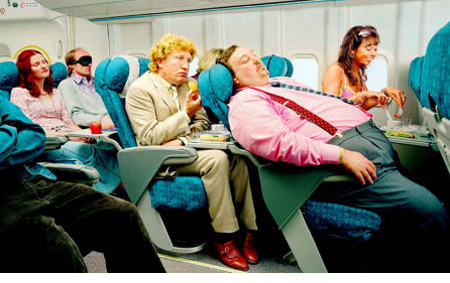
A site called Neatorama polled various ethicists, travelers and air flight experts regarding who should get the armrests when all three seats in a row in coach are occupied.

Actually, the graphic accompanying the column suggests that it also discusses two other flyingetiquette issues as well: do you recline your seat, and if you have a window seat and need to use the rest room when the other two passengers are asleep, what do you do?
Ah, air travel. Such a pleasure.

I can’t find any answers to those in the column, though, and that’s fine I know them already: Continue reading

Comments of the Day: “Bully Ethics…”

I was in New York all day, and returned to find a plethora of excellent comments on the post, “Bully Ethics: Lessons from Casey the Punisher.” Two of the finest follow, and they go well together: Michael on the dilemma facing the bullied child, and Lianne on her family’s solution.

First, Michael:

“Bullies only understand violence. If you are being bullied, how can you stop it? Continue reading

Bully Ethics: Lessons From “Casey the Punisher”


Go get him, Ralphie!

The YouTube video of the tormented 16-year-old Australian student who provides a surprise ending to a 12-year-old bully’s fun at his expense by suddenly slamming the younger boy to the ground—breaking the bully’s ankle in the process— has set off an international debate that could help clarify some important ethical dilemmas regarding bullying, or muddle them further.


The video shows a heavy teen, one who classmates say has been bullied by other children for years, enduring repeated punches by a smaller student as his humiliation is being videoed for posterity. Then, emulating Ralphie’s sudden rage against the evil Scut Farkus in one of “A Christmas Story’s” iconic scenes, he suddenly fights back…and how. Continue reading

The SATs: Flat Learning Curve=Unfair Questions

The secret to acing your SATs? Know your Kardashians!

After all the anger, debate and controversy in the Sixties over affirmative action and the Scholastic Aptitude Tests, with the case finally being made to the public’s satisfaction that including test questions  based on cultural references likely to be unfamiliar to African-Americans or lower-income students (such as, famously, questions about yachting) negatively affected their test scores, wouldn’t you think that it would have been thoroughly understood by the people who make up the SAT scores that questions with a cultural bias were inherently unfair and incompetent questions?

Here is the prompt for the essay question in the SAT test given to high school students across the country last week : Continue reading

PETA’s Definition of Being Ethical to Animals: Kill Them

Good...play dead, and maybe PETA will leave you alone...

I have long believed that PETA, the Norfolk, Virginia-based “People for the Ethical Treatment of Animals,” not only gave ethics a bad name, but also people, and you might as well throw in pita bread while you’re at it. This conviction was partially based on such stunts as PETA’s using Michelle Obama in ads without her permission and offering to pay Octomom money to put a billboard on her lawn comparing herself to an overly fecund pet.

Then there is PETA’s fondness for killing puppies and kittens. Continue reading

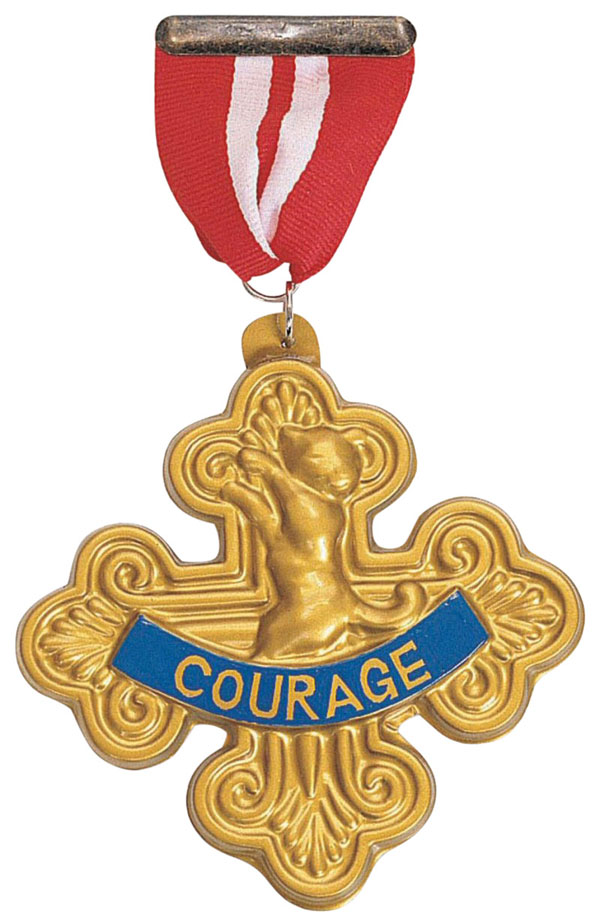
Ethics Heroes: The Fukushima 50, Reminding Us What Real Heroism Is

We all throw around the words “hero” and “heroism” too readily, and it cheapens the real thing, which is rare, and awe-inspiring. Teachers are heroes, cancer patients are heroes, mothers and dads are heroes, legislators who ignore polls are heroes, quarterbacks are heroes. There is much heroism around us, certainly—those who do vital jobs and make courageous choices at personal sacrifice deserve praise and recognition, as do those who overcome tremendous personal challenges. We should appreciate these acts when we see them.

Still, this leaves us unable to muster the words to distinguish the rarest and most remarkable of heroes, like the fifty Japanese nuclear technicians who have remained behind to try to prevent a nuclear catastrophe at the Fukushima Dai-ichi nuclear plant damaged by Friday’s earthquake. They are not merely risking their lives, but quite probably trading them, for the well-being of their country and its citizens.

We should all aspire to such courage, selflessness, and character.

In the pantheon of ethical conduct, the Fukushima Fifty deserve the most honored place of all.

“Lethal Advocacy”: Not Ethical, and Not Protected Speech, Either

"Go ahead! Jump! You know you want to!"

William Melchert-Dinkel, aged 48, posed as a female nurse in internet chat rooms and preyed on depressed people by talking them into killing themselves.  A misguided mission? A perverted hobby? A salesmanship challenge? Who knows. But occasionally, he was successful.

Melchert-Dinkel was charged with assisting suicides after he encouraged IT technician Mark Drybrough, of Hillfields, Minnesota, to kill himself. Drybrough, who was recovering from a nervous breakdown, received e-mails from Melchert-Dinkel, found on his computer, containing detailed advice on how Drybrough could hang himself. He used that advice to commit suicide in 2005. Melchert-Dinkel also provided encouragement and guidance to Canadian Nadia Kajouji,  18, who drowned herself by leaping into an icy river in 2008. Continue reading

Ethics Quiz: Find The Tell-Tale Mistake!

Unfortunately, James O'Keefe is no Nellie Bly

Kansas City Star reporter Mary Sanchez has posted an excellent column entitled “James O’Keefe and the Ethical Bankruptcy of ‘Gotcha’ Journalism.” Outside of an unfortunate final “Let’s see some genuine evidence that NPR’s coverage is biased” conclusion (you mean, other than its choice of stories, its lack of ideological balance, Nina Totenberg, its treatment of Juan Williams, and its institutionalized positions on issues like Palestine, gun control, abortion,  and illegal immigration?), she makes a strong case. But her piece is marred by a tell-tale gaffe that makes me doubt her own ethical orientation.

Your challenge in today’s Ethics Quiz: Find it! It occurs in this section: Continue reading

I’m Worried About “The Good Wife”

Shape up, Alicia.

CBS’s “The Good Wife” seems to be getting more cavalier with its ethics breaches, a disappointing trend. Showing the ethical fudging that undoubtedly goes on behind the scenes at major law firms (on occasion) is appropriate; treating major violations with a shrug is not. I know it is tempting for the show to assume it has the intelligent legal TV show championship sewed up, since “the Defenders” is a joke and “Harry’s Law” is a disgrace, but it’s standards have been high, and it is dispiriting to see them flag with such missteps such as…

  • Prosecutorial misconduct casually brushed off as nothing. When Alicia asks why a videotape  is so much clearer than the one the prosecutor’s office turned over as evidence, she is told that what she received before was a copy of a copy of a copy–“just to mess with you.” Continue reading

Nuclear Crisis Ethics

Meltdown! Radiation! Mutations! Well, I guess that's all we have to know.

I just heard, for the twelfth time, Sen. Joe Lieberman telling “Face the Nation” that the United States should put the brakes on nuclear energy plant construction “right now until we understand the ramifications of what’s happening in Japan.” Meanwhile, the anti-nukes crowd is out in full force, seeing Japan’s crisis as their opportunity to scare the bejesus out of the public, which is nervous about nuclear energy anyway since they know nothing about it, other than that something bad happened at Three-Mile Island, the Russians had a catastrophe at Chernobyl,  Jane Fonda made that scary movie, “The China Syndrome,” where they shot Jack Lemmon— “And don’t they make bombs with that nuclear stuff?”—and the fact that Homer Simpson works for a nuclear plant that creates three-eyed fish and is run by that evil old Montgomery Burns. Continue reading