For You, Dad.

Jack Marshall Sr Army portraitI lost my dad, Jack Marshall, Sr., five years ago today, and for some reason the loss feels especially sharp right now. This has been another miserable birthday, but not so miserable as that one, and I found myself once again revisiting my father’s favorite poem, which was a personnel credo for him and which has often served me well in hard times too. It is linked in the “Inspiration” section on the  Ethics Alarms home page, as well as quoted in my post here on the day my father was buried in Arlington National Cemetery.

Nonetheless, I am going to post Rudyard Kipling’s “If” once again. My father’s favorite line was…

If you can meet with Triumph and Disaster
    And treat those two impostors just the same;   
That was Dad to the core. He never looked back, never cursed his luck, never thought too highly of himself (or anyone else), always believed in tomorrow, and that no victory was final, and no defeat was forever. And I know he was right, though it doesn’t often feel like it. So this is for you, Dad. Thanks for everything.

“If”

If you can keep your head when all about you

Are losing theirs, and blaming it on you,

If you can trust yourself when all men doubt you,

But make allowance for their doubting too;

If you can wait, and not be tired by waiting,

Or being lied about, don’t deal in lies,

Or being hated, don’t give way to hating,

And yet, don’t look too good, nor talk too wise:

If you can dream – and not make dreams your master;

If you can think – and not make thoughts your aim;

If you can meet with Triumph and Disaster

And treat those two imposters just the same;

If you can bear to hear the truth you’ve spoken

Twisted by knaves, to make a trap for fools,

Or watch the things you gave your life to, broken,

And stoop, and build ’em up, with worn-out tools:

If you can make one heap of all your winnings

And risk it on one turn of pitch-and-toss,

And lose, and start again at your beginnings

And never breathe a word about your loss;

If you can force your heart and nerve and sinew

To serve your turn, long after they are gone,

And so hold on when there is nothing in you

Except the Will which says to them: “Hold on!”

If you can talk with crowds and keep your virtue,

Or walk with Kings – nor lose the common touch,

If neither foes nor loving friends can hurt you,

If all men count with you, but none too much;

If you can fill the unforgiving minute

With sixty seconds’ worth of distance run,

Yours is the Earth and everything that’s in it,

And—which is more—

You’ll be a Man, my son!


Watch “Blue Bloods”

Blue Bloods

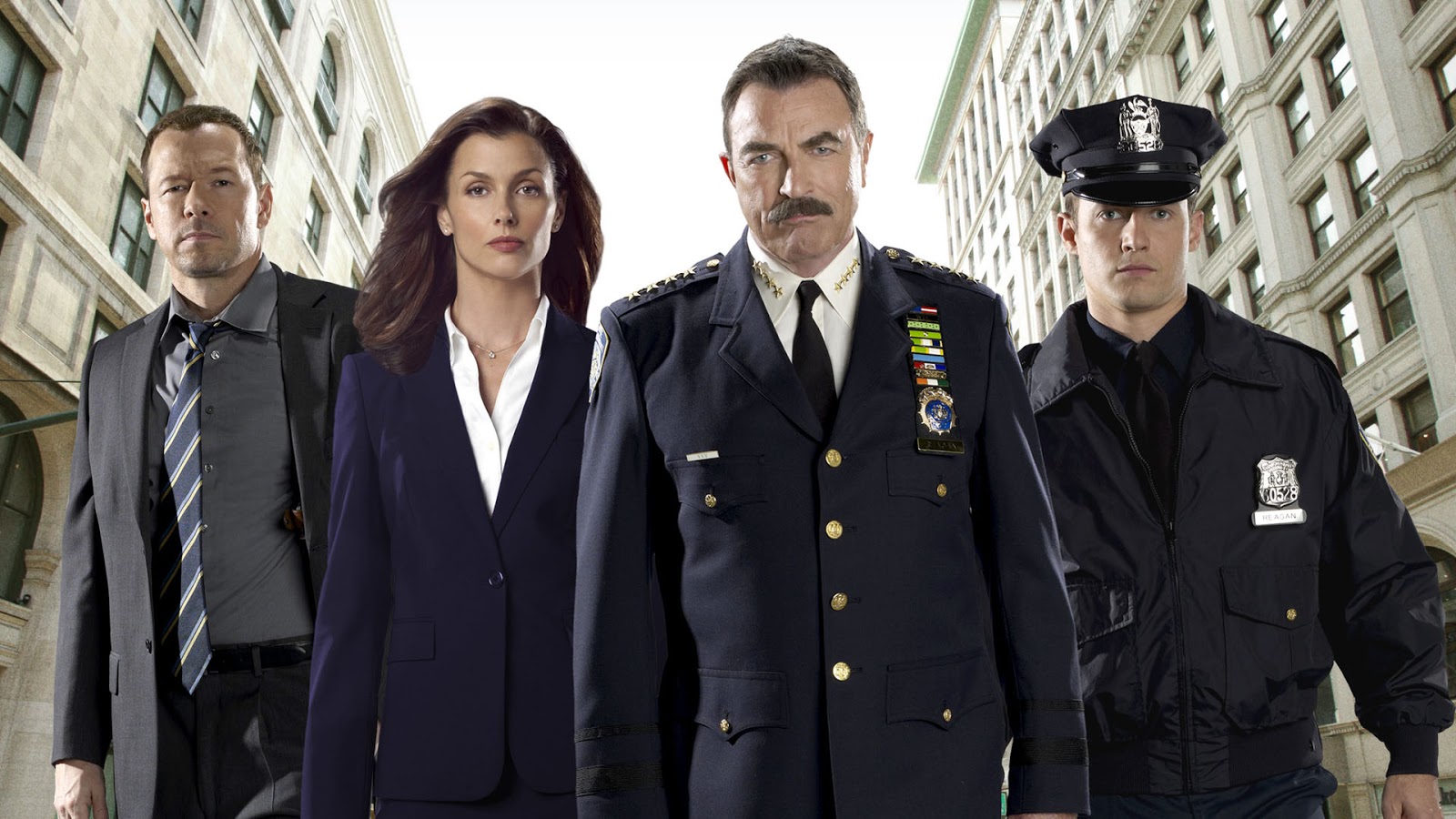
I owe Tom Selleck an apology. The long-time genial hunk, famous as “Magnum, P.I.” and notable in show business lore for missing the career opportunity of a lifetime when contractual obligations forced him to turn down the role of Indiana Jones in “Raiders of the Lost Ark,” has guided his CBS police series “Blue Bloods” to five seasons, exploring tough ethics dilemmas in virtually every episode, and usually doing it very well. For some reason, I’ve only cited the show a few times, once critically, and it deserves better. Netflix started streaming the show, and my wife has been watching about three a day. I really hadn’t been paying sufficient attention, or respect. It’s a wonderful ethics show, the best since “Star Trek, the Next Generation’s” hay day, and one of the very best ethics TV shows of all time.

Selleck plays fictional New York City police chief Frank Reagan. The show could be called “The Conflicts of Interest Family, ” because law enforcement is the family business, and Selleck’s large brood includes two sons, one a patrolman and the other a detective, under his command, and a daughter who is an assistant district attorney. Reagan delicately balances the jobs a father, mediator and boss, all while being given back-seat advice from his father, who is retired but was also a NYC police chief.

I have found myself thinking about how Selleck’s character would react to the Ferguson ethics train wreck. Police shootings have been frequent topics of episodes, as have political efforts to demonize police. Frank was a fan of New York’s controversial stop-and-frisk policy, and accusations of profiling do not reduce him to a mass of apologetic jelly. Meanwhile, he has forged a working relationship or trust with the City’s black mayor, whose loyalties to the black community, and more than a few dubious civil rights headline-seekers.

Selleck is a credentialed, if low-key, Hollywood conservative, and his show’s demographics are just short of Social Security territory.  It’s too bad: teachers should assign the show and discuss the episodes in class. The episode I wrote about earlier was an entire ethics course on its own, but hardly unique in the series: What should an undercover cop do when a child is imperiled in a burning building, and he is the only one who can get to the kid in time? If his photo is taken by the media that arrive on the scene, not only is his cover blown, but his life and family may be in danger. He hands off the child to his partner, who is the on photographed and becomes a hero. The city is clamoring for the Chief to decorate him as a hero. Naturally, the real rescuer is a Reagan.  Should the partner be willing to live a lie? Should the Chief deceive the public and preside over a fake ceremony to preserve an undercover operation that might bust the mob?  This was a memorable “Bluebloods” episode. but many reach this level of ethics complexity, and the duds are far and few between. This season the show has explored many ethics problems that have been debated in the news, such as campus rape, police body cameras, the “blue line,” news media bias, and others.

I apologize, Mr. Selleck. I have neglected your excellent efforts to present ethical dilemmas in law enforcement, leadership and parenting to the public in an intelligent, balanced, courageous and entertaining manner. Great job, on a great show. Please keep it up. I promise to pay closer attention.


Israel’s Home Razing Policy: You Disappoint and Depress Me

bulldozer

There are times, not many, but a sufficient number to make my existence significantly grayer than I wish it to be, when I feel as if my professional endeavors have been in vain, and indeed, a waste of time. One such instance was the widespread defense of torture during the Bush administration. Another has been the reaction of some readers here to my post about Israel razing the homes of the families of presumed terrorists. I do not see how anyone who grasps the basic principles of ethics as they are explored and explicated on Ethics Alarms daily can pronounce such a policy as justified, justifiable, or anything other than unethical. If regular readers hear can come to a different conclusion, I am either not doing my job well, or the job itself is not worth doing.

Yesterday, Human Rights Watch called on Israel to stop razing the homes of Palestinians accused of attacking Israelis. The group called it a war crime, and I don’t like the concept of war crimes generally. The New York based organization’s argument, however, is irrefutable:

“Israel should impose an immediate moratorium on its policy of demolishing the family homes of Palestinians suspected of carrying out attacks on Israelis. The policy, which Israeli officials claim is a deterrent, deliberately and unlawfully punishes people not accused of any wrongdoing. When carried out in occupied territory, including east Jerusalem, it amounts to collective punishment, a war crime.”

Putting the war crime label aside, it is wrong enough that the act punishes those who have done nothing wrong other than be associated with a wrongdoer. There is no ethical system under which such an act is ethically defensible. It is an abuse of power. It fails any standard of Kantian ethics, using human beings as a means to an end, and proposing a standard that would, if universally adopted, send civilization into barbarism. It even fails extreme utilitarian ethics, for this means doesn’t even achieve a desirable end. The Israeli army believes that the razings do nothing to stem terrorist attacks, and there is no way that contention can be disproved. It is simply Old Testament justice of the most irrational and brutal kind. Continue reading

“Drunk Girl In Public”: This Trend Will Ruin Trust, Spontenaity, Kindness and Fun, and There Is Absolutely Nothing We Can About It Except Complain

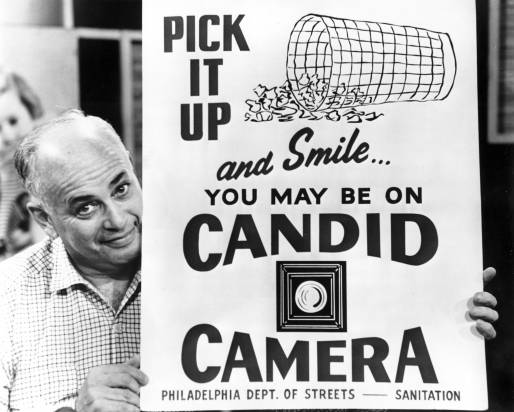
I guess it all began with Allen Funt.

If Allen knew what he would be starting, he would have opened a deli.

If Allen knew what he would be starting, he would have opened a deli.

Back in the Fifties, he came up with the idea of using a hidden camera to record the reactions of innocent bystanders “in the act of being themselves.” He staged situations, sometimes Twilight Zones set-ups like a door that opened for everyone but the target, and filmed the results, first for a guest segment on TV talk shows and finally on his own, long running hit, “Candid Camera.” Funt would never have dreamed of using actors and faking the reactions, because first, he didn’t need to; second, if he was caught, it would ruin him; and third, he was an honest professional. The idea, however, has thoroughly metastasized in all directions, to “practical joke shows,” reality shows, and such monstrosities as ABC’s “What Would You Do?” and James O’Keefe. Perversions were limited as long as the shows were restricted to television, but now YouTube makes everyone a potential producer, and among the thousands trying to create a viral video, there are many, perhaps most,  who are not decent, ethical professionals like Allen Funt, but just greedy jerks who will gladly cheat, lie to and humiliate others to gain fame and fortune. Continue reading

So Soon? The Bill Maher Ethical Condundrum Strikes Again…In Ferguson!

It's baaaack!

It’s baaaack!

No sooner did I announce the Bill Maher Ethical Conundrum than a perfect example of it—not involving Bill Maher—hit the news…and joined the Ferguson Ethics Train Wreck.

In August, the Federal Aviation Administration agreed to a request by the St. Louis County police to restrict about 37 square miles of airspace over Ferguson, Missouri, then engulfed in the most violent of the protests and rioting sparked by the shooting of Michael Brown. The restriction lasted for 12 days, and the reason given for it was safety concerns. Shots had been fired at a helicopter at one point during the violence in the city.

Safety is surely a valid concern, and since there were legitimate reasons to believe that the no-flight restrictions were prudent in the interests of safety, the measure was ethical. Or was it? The Bill Maher Ethical Conundrum, for those who missed the recent post:

Is the ethical nature of an act defined by its intent, or by an objective assessment of the act alone without reference to motive?

The Associated Press obtained tapes of the FAA’s air traffic managers discussing how to redefine the flight ban to allow commercial flights to operate at nearby Lambert-St. Louis International Airport and to permit police helicopters to fly through the area while meeting the goals of the ban. On the ban, they heard an administration manager say, about the St. Louis County Police Department, “They finally admitted it really was to keep the media out. But they were a little concerned of, obviously, anything else that could be going on.” A manager at the administration’s center in Kansas City said the police “did not care if you ran commercial traffic through this T.F.R. all day long. They didn’t want media in there.” Acknowledging that a ban that said “…you know, ‘OK, everybody but the media is OK,’ ”  the FAA managers then developed wording that they felt would keep news helicopters out of the controlled zone but not impede other air traffic.

Bingo! A flight ban in the interest of safety, serving the interests of safety, but motivated primarily by the illegal, unconstitutional, unstated motive of interfering with the public’s right to know through exercise of the Freedom of the Press.

Ethical or unethical?

The Bill Maher Ethical Conundrum strikes again!

___________________

Facts: New York Times

The Bill Maher Ethical Conundrum

Wits

“One of these things is not like the other…”


The Bill Maher Ethics Conundrum is not what you probably think it is.

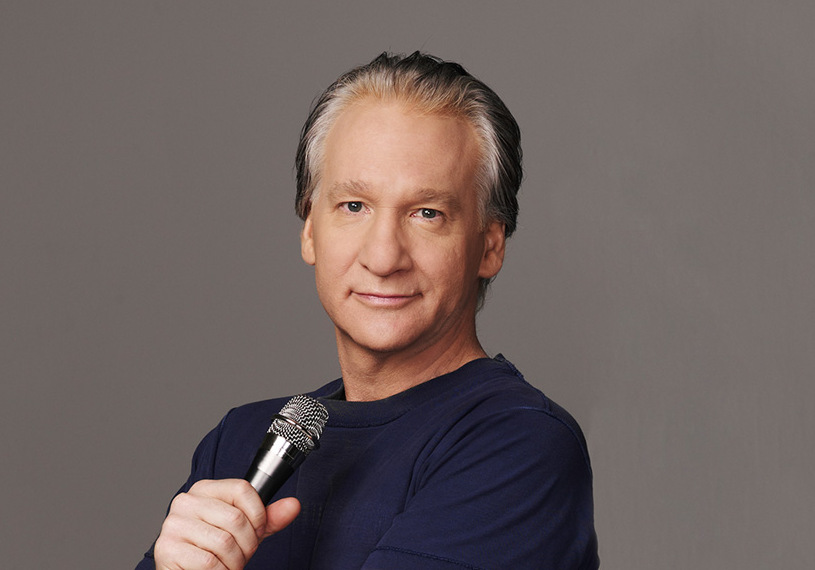
Maher, the alleged comic and anti-conservative scold who hosts an HBO program, was chosen by a student committee to be the  commencement speaker for the University of California-Berkeley’s December graduation. This was a lazy, embarrassingly juvenile and politically-loaded selection, but Maher had also just recently used his show to join fellow atheist and neuroscientist Sam Harris in a condemnation of Islam, calling it  “the only religion that acts like the mafia that will fucking kill you if you say the wrong thing, draw the wrong picture or write the wrong book.” Later on Maher nodded approvingly  as Harris also called Islam”the mother lode of bad ideas.”

This caused Muslim students at Berkeley to prove Maher correct about their religion’s entrenched intolerance of opposition, and they have been joined by other political correctness censors in the student body—there are a lot of them—to demand that the university rescind Maher’s invitation because of his “hate speech.”A  Change.org petition—-now THAT site is the real mother lode of bad ideas—now urges students to boycott the decision and asks the campus to stop him from speaking. It has gathered more than 1,400 signatures. The committee that chose Maher, naturally, backed down, but the University, so far at least, is sticking to its decision to invite him.

Yes, yes, universities ought to be marketplaces of ideas where all views are welcome, and yes, it is hypocritical and offends the traditions of liberal education to stop Maher from stating his views on Islam, or re-telling “The Aristocrats,” or making a fool of himself, or whatever he’s going to do because some students or all students disagree with him, just as it was for Rutgers students to force Condolezza Rice into withdrawing after she was invited to speak at Rutgers. The dilemma illustrated by this flap is a classic ethics problem, which I will henceforth call the Bill Maher Conundrum, which has been long debated and never decisively settled:

Is the ethical nature of an act defined by its intent, or by an objective assessment of the act alone without reference to motive? Continue reading

No, I’m Not Going To Write About Ethics And #Gamergate

Whatever.

Whatever.

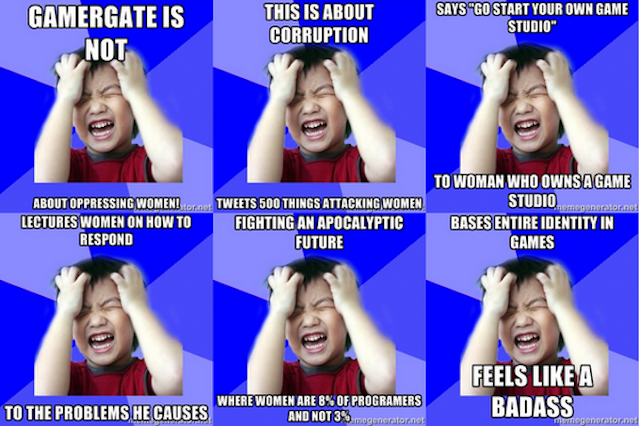
I keep getting emails asking when I’m going to discuss Gamergate on Ethics Alarms. Several readers have sent me extensive links to bring me up to date. I’ve read them, or at least tried. Not since I was assigned the tome Peace and War by Raymond Aron has any text bored me more.

Gamergate appears to have all the markers of an ethics train wreck, but to me, at least, the train might as well be in Mongolia. I can’t contribute anything of value on this topic, because gaming is not part of my life, skill-set or interests in any way. This is a culture I don’t understand, and frankly, don’t have the time or interest to understand. I make a yeoman effort to keep up with popular culture, because I think once it gets too far ahead of you, your ability to understand the world around you is severely limited. But triage is essential. Just a few years ago, I knew who all the celebrity contestants on “Dancing With The Stars” were; this year, I never heard of half of them. More than half the stories on TMZ lately are about “celebrities” that are completely off my radar screen. I am confident, however, that in about six months, most of these stealth celebrities will be where Snookie and “The Situation” are now, which is obscurity, has-been Hell, or maybe jail.

There are ethics lessons to glean from this endless gamer scandal, but Ethics Alarms will just have to glean them elsewhere. For those who feel neglected, I highly recommend the recent post by Ken at Popehat, along with his links. It hits most of the salient ethics issues, and Ken, I gather, follows this stuff, as do his Popehat colleagues. My hat’s off to him, and them. But #Gamergate is one ethics controversy that I am not qualified to explore, and don’t want to be.

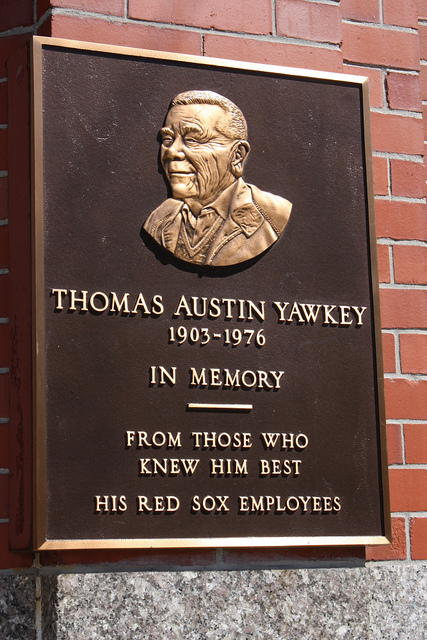
Ethics Alarms Encore: “Tom Yawkey’s Red Sox Racism, and How Not to Prove It”

Yawkey TributeEvery now and then a comment out of the blue reminds me of a post that I had forgotten. That was the case here. Reading it again for the first time in five years, I was struck by how the crux of the post is still relevant today (that crux has nothing to do with baseball), and indeed how the intervening five years have made what I thought was a bad trend a genuine political and cultural malady.

And the World Series is going on, and I feel badly about the Red Sox having such a miserable season. This post, which few read when it was first published as the blog was attracting (let’s see…) less than 200 views a day as opposed to nearly 4000 a day now, is a good one, and I enjoyed it.  That “self-professed ethicist” has his moments…. Continue reading

Pop Song Ethics Flashback: “Why Do They Always Say “No?” by Lawrence Cook and The Jim Dandies

It probably isn’t the winner in the Ethics Alarms quest to identify the most unethical pop songs, but the 1949 ditty “Why Do They Always Say No?” is one of the most instructive nominations. The fascinating and essential feature of ethics is that our understanding of right and wrong evolves, changing and advancing with wisdom, cultural debate and reflection. This song is a tuneful reminder, arriving at our attention just as the culture, especially on campus, is struggling over exactly the dilemma the song celebrated. In 1949, however, literally no one thought about romantic or sexual gamesmanship as an ethical issue, or at least not a momentous one.

Have a listen (It’s on the B side of the record pictured, and starts playing at the halfway mark):

The lyrics are credited to Harry Pease, Frank Davis, Ed G. Nelson and Billy Glason. Only the latter has much of a footprint on Google, and none of them rate a Wikipedia entry. I doubt that it took four guys to write this song: It’s not exactly “A Day in the Life.” Glason (b. 1904) was probably the author. He shows up in the Encyclopedia of Vaudeville as a “singing comedian,” known for devising new punchlines for ancient  jokes, such as

Q: “Who was that lady I saw you with last night at that sidewalk cafe?”

A: “That was no sidewalk cafe! That was our furniture!”

Pease, Davis, and Nelson were all musicians, though it’s also hard to imagine that the elemental tune required three collaborators. The lyrics are more disturbing read than heard:

Why do they always say no
When they know they mean yes all the time
You ask a girlie for a kiss or two
She’ll let you know that’s something I don’t do
How can they tell such a lie
And still look you straight in the eye
Whenever they say no to you go right ahead
Cause it’s 10 to 1 that they mean yes instead
Oh, why do they always say no
When you know they mean yes all the time

Why do they always say no
When you know they mean yes all the time
You start to love them and they pout and fret
Down in their hearts they want all they can get
What keeps them acting that way
They don’t mean a word that they say
A girl that said she’d never marry me
She’s the mother of my happy family
Why do they always say no
You know they mean yes all the time

Why do they always say no
When you know they mean yes all the time
You ask your girlie for a kiss or two
She’s lets you know that’s something I don’t do
How can they tell such a lie
And still look you straight in the eye
Whenever they say no to you go right ahead
Cause it’s 10 to 1 that they mean yes instead
Oh, why do they always say no
When you know they mean yes all the time

You know they mean yes all the time.

“You know they mean yes all the time.”

Sure you do.

_________________________

Special thanks to my volunteer scout Fred, whose wife found this piece of musical ethics archeology.


Pop Song Ethics, Part II (The Dark Side)

We are coming up on the anniversary of my post asking for nominations for the most ethical pop songs from past decades. Both here and in my office mail box, I received excellent suggestion—so many, that I have not been able to find the time to finish the project. However, I am determined to have the final list ready by the anniversary date, November 14, 2014.

So there is still time to get your nominations in. Meanwhile, as I was driving home from a Virginia Beach ethics seminar and keeping myself occupied during the three hour drive with the Sirius-XM 50s-60’s-70’s and 80’s stations, I heard this song, by Leslie Gore, from 1964:

http://www.youtube.com/watch?v=zBBVkF7IV3o

With the domestic abuser ethics issue still percolating in my fevered brain, it occurred to me, as it had not before, what a vile message the song sent to teenaged girls. “What else can” Leslie do about her abusive boyfriend? Dump him, that’s what. I wonder if Janay Rice knows this song.

Or sang it. Continue reading