Comment of the Day: “Ethical If We Want It To Be: NBA Flopping and Fooling the Ref”

This is a wonderful comment by Dwayne N. Zechman, which goes to the heart of what makes sports ethics so perplexing. Let me leave it to Dwayne now, and I’ll have some comments at the end. Here is his Comment of the Day on the post Ethical If We Want It To Be: NBA Flopping and Fooling the Ref:

“I admit I’m having a little trouble with this one.

“If I understand correctly, your premise is that each sport has its rulebook, and what’s ethical or not is mostly determined by what’s in that rulebook. The outside margins of “mostly” come from long-standing traditions, and de facto rules related to safety or practicality. The game isn’t life–it’s a distinct “closed system” if you will, and the rules about life might not apply. Or perhaps it’s better to say that we can choose to declare (in the rulebook or through tradition) that certain rules of life do not apply within the game and that’s okay. Doing so diminishes neither the ethical rule nor the game itself.

“So the beginning of my trouble is that this smacks a little of a combination of “Everybody does it”, “If it isn’t illegal, it’s ethical”, and The Compliance Dodge. Okay, I can accept that, though, because we’ve already stipulated that specific ethical principles can be exempted from a game/sport.

“Next comes my own dissonance in trying to reconcile this article with other recent articles here on Ethics Alarms about pro football, where the same exemption of ethical principles is applied, but somehow shouldn’t be. Okay, I can accept this, too. There is a distinction in that an ethical principle shouldn’t be exempted from the game when there are clear, demonstrable consequences to the player that persist after the game is over and the player’s real life resumes. In a situation such as that, it’s impossible to exempt an ethical principle JUST for the game because the exemption itself renders the game no longer a “closed system”. Continue reading
Credit Ethics: New Ethics Alarms Policy

The sound of my palm belatedly smacking my expansive forehead

What will heretofore be referred to as “The Mary Frances Prevost Affair” has its silver lining. Watching another blogger incorporate the main body of my blog post into her own by-lined essay without credit or attribution has caused me to do a lot of thinking about the inadequacy of credit and attribution in the blogosphere  generally, with a relatively  few exceptions. Most of these are blogs written by academics who hold to the standards of their profession rather than the much looser practices of the internet. It also caused me to wake up to the inadequacy of my own attribution practices on Ethics Alarms. I have never taken an entire post from another source and represented it as my own, but I have frequently taken a factual account of a story from another website that itself was essentially  republishing, for example, an AP story, put the facts in my own words, sometimes with a stray phrase remaining, and not credited either source. I have often derived information in a post from multiple news sources but only linked to the one that I felt related the event the most thoroughly and clearly. Another writer’s work has sometimes sparked an idea for a post that was substantially different, and I have not credited the source of that spark.

All of this is common practice in blogging, but it is still wrong, and sloppiness is always a slippery slope. In the wake of “The Mary Frances Prevost Affair,” a colleague alerted me that I had included one complete sentence and part of another in an Ethics Alarms post that were identical to the post of another writer on the same subject. I didn’t even recall using the source, but upon going over my notes, I found that the earlier post had supplied me with the bulk of the facts I relied upon, though not the analysis of them. . I immediately contacted the author to apologize, and he was gracious and understanding. Nonetheless, this should never happen, especially on an ethics blog.

Therefore, as of today, Ethics Alarms will maintain a strict policy of crediting all sources that go into the inspiration, research and writing of the posts here. Links in the body of the text will be either be for informational purposes only, such as when I make a gratuitous cultural reference that nobody under the age of 50 is likely to recognize, or to back up direct quotes. At the end of each post, there will be credits and/or links listed, when appropriate, in some or all of the following categories: Continue reading

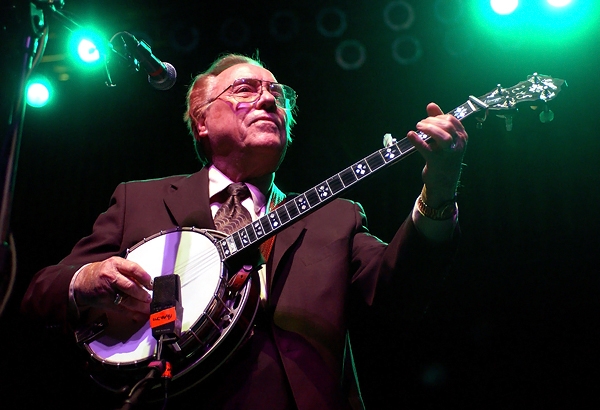
Ethics Quote of the Week: Earl Scruggs, Banjo-picker (1924-2012)

“If you don’t let things develop, it’s like keeping something in a bag and not letting it out to fly”

—-Bluegrass innovator and legend Earl Scruggs, who died yesterday, in an interview he gave in 2000. He was talking specifically about creating new sounds and kinds of music, but his larger point applies to everything in life, and is an ethical one.

Earl Scruggs almost single-handedly changed the banjo from an instrument associated with clowns and minstrel shows to a vital element in American music. His single-hand was his right hand, as he perfected a three-fingered playing style that gave the banjo as much range and depth as a guitar, cello or violin. With his long-time partner Lester Flatt, he injected bluegrass music into the American mainstream with his music for the film “Bonnie and Clyde,” and, of course, TV’s “The Beverley Hillbillies.”

What Earl Scruggs recognized was that just as the fact that “everybody does it” doesn’t make something right, the reverse is also true. The fact that “everybody” hasn’t been doing something, or even that it has never been done or even considered, doesn’t automatically make it wrong. Ethics doesn’t impose rules to freeze societal standards and values, but to give us systems to evaluate whether standards of conduct and values need adjustment or reconsideration. Often we hear the verdict “Now that’s just wrong!” to condemn something that may not be wrong at all, but just surprising, non-traditional and strange to those who never imagined such a thing. Too often that confusion of wrong and different inhibits creativity, innovation, and change for the better. That’s why innovation and condemnation are frequently linked, and why boldness and courage are prerequisites for positive change. Continue reading

A Secret Service Betrayal

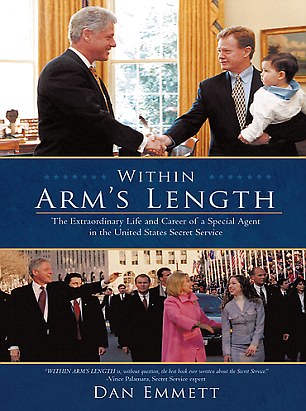
A despicable former Secret Service agent named Dan Emmett has self-published “Within Arm’s Length,” a tell-all  book about his work protecting the Clintons.  I’m not going to repeat any of his stories, and nobody should read his book either. This kind of thing is another fever on the way to the complete death of trust and professionalism.

Emmett’s job was to guard the First Family, and as part of his job he saw them all in private and unguarded moments. The Clintons had to trust that his sole objective was to ensure their safety, not to gather juicy material for a book, and they should not have had to worry about whether every stray remark or imagined slight would later find its way to the internet. “Within Arm’s Length” is nothing less than betrayal, and in my view, it falls just short of treason, and perhaps not short at all. Undermining the relationship between the Secret Service and the President of the United States, which this book does, threatens the safety of future Presidents. For agents to do their jobs, they must be trusted to the extent that nothing is withheld from them out of fear that they will disclose it. Emmett proves that such unquestionable trust is unwarranted, and in this sad era where betrayal is rewarded or shrugged off as predictable, probably impossible. Continue reading

Actor Ethics: Welcome to Colombia!

Yes, Sarah Bernhardt was probably unethical too. Actors!

I just blacklisted an actor, at least as far as my theater company is concerned, and I feel badly about it, because I don’t like banishing artists even when they deserve it. This individual did deserve it, however.

I held auditions a couple of months ago for a very difficult and complex production requiring special talents and a large cast. The turn-out was excellent, and the quality of talent was superb, with the actors obviously excited about the project. Since the script needs to be tailored to individual performers, the fear of an actor dropping out after being cast was especially strong (the maxim in the theater community is “cast early, cast often…”), so I took the unusual step of asking every auditioner who had a good chance of being cast to be honest about their commitment to the show. “If you want to be considered for this project,” I said, “I need to have your assurance that you are serious about it and will not tell me, after we have decided to cast you, that you have changed your mind. The show is like a big jigsaw puzzle, and casting you will affect whether we cast other actors, not just in your role but in roles that interact with yours. And I definitely do not want to cast someone who is going to turn around in a week or a month and say, ‘Sorry, I got a better offer.’ This is a commitment, and if we are committing to you, I need to know that you are committing to us.”

When the offers went out, a few actors nonetheless refused. One had just learned that she needed to seek more lucrative employment because her husband had been laid off; another had union problems. Over the next several months, there was another major loss, as an actress whom I had cast even before auditions—right before the delivery of her first child—told me that parenthood was more involving in reality than she had predicted when she committed to jumping into a major role so soon. I had thought this might happen, and, frankly, now felt that she was making the right decision.  I told her: “As a director, I was happy to let you be irresponsible for the benefit of my show, but as a parent, I’m glad your priorities are straight.”

The other day, however, one of the actors who had gladly accepted a role sent our producer a terse e-mail saying:

“Unfortunately, I can no longer do the show.  Thank you so much for all your help with everything; I’m very sorry for the inconvenience.” Continue reading

Ethics Dunce: Wall Street Journal Blogger James Taranto

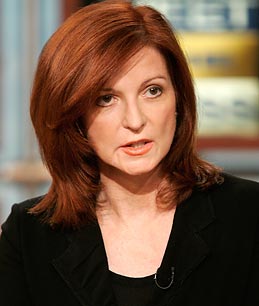
Useful fact: Mitt Romney is running for President, and Maureen Dowd isn't. You can't use her to judge his ethics, just as you shouldn't use him to judge her hair.

Oh James, James. What am I going to do with you? For the third time this year you have barged into Ethics Dunce territory, surely a place one of the most consistently perceptive, witty and reasonable of conservative commentators never belongs.

But what is an ethicist to do when you attempt to trivialize an outrageously dishonest and misleading campaign ad by Mitt Romney, in which a statement by President Obama [ “Sen. McCain’s campaign actually said, and I quote: ‘If we keep talking about the economy, we’re going to lose,’ “referring to the 2008 economy under Bush ] is edited to suggest something completely different [ “If we keep talking about the economy, we’re going to lose,” implying that “we’ means the Democrats] from what he was really saying, by showing that other politicians and New York Times columnists play the same unethical game? So what? How do the unethical journalistic practices of the Times columnists you deftly expose on a regular basis in any way make Romney’s ad less reprehensible? Continue reading

The Indignant Starbucks Squatter and the Compliance Mindset

OK...NOW it's selfish to squat at tables for hours.

I owe thanks to a blogger named JJ (and to Ken at Popehat, whose post brought him to my attention) for giving me one of the best illustrations of what I call “The Compliance Mindset” I have ever seen.

I’m sure it would horrify JJ to learn this, but he is ethically aligned with all the financial wheeler-dealers and unscrupulous mortgage lenders who crashed the U.S. economy. They also thrived in the Compliance Mindset, as do corrupt politicians, deceptive advertisers, dishonest journalists, sleazy lawyers, and millions of others in our culture who make life miserable for the rest of us for their own benefit. All of these people adopt the convenient belief that something must have a formal rule or law prohibiting it before it becomes wrong. This is, in fact, the opposite of the truth: if people were completely ethical, we would need very few rules. The Compliance Mindset is really an unethical rationalization that allows people to be rude, selfish, irresponsible, unfair, or worse because their conduct is technically legal and there isn’t a rule against it yet. Usually the rule or law arrives after a lot of needless harm has been done. Continue reading

Unethical Web Post of the Week: “Screw Civility” by Rick Robinson

Tell Alexander Hamilton how much fun incivility is...

That an ethics dolt like Rick Robinson has spent so much time advising those in the Halls of Power speaks volumes about why our government institutions are dysfunctional and corrupt. His biography says he even ran for Congress. With ethical values like his—weak, dubious, and confused—it is a miracle he wasn’t elected.

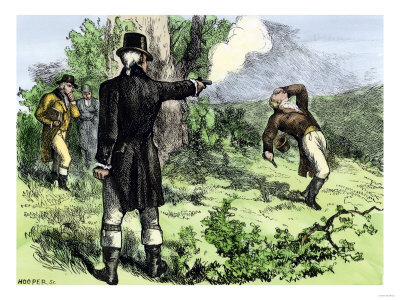
In an essay for Tucker Carlson’s conservative news site The Daily Caller, Robinson defends the uncivil rhetoric of Jimmy (““Let’s take these sons of bitches out …”) Hoffa Jr and Rep. Joe ( “You lie!”) Wilson on the historically false and ethically idiotic grounds that “America was built on a solid foundation of uncivil political discourse.” It is ethically idiotic because this is consequentialism (“Everything turned out all right, so it was the right thing to do”) and a rationalization (“They did it, so we can too!), and it is historically false because no nation, indeed no functioning organization of any kind, was built on incivility….especially this one. Continue reading

Ethics Hero Emeritus: Baltimore Orioles Pitching Great Mike Flanagan,1951-2011

Mike Flanagan, for more than three decades an ace pitcher, coach, executive and broadcaster with the Baltimore Orioles, died of a self-inflicted shotgun blast this week. It is obvious from listening to his devastated colleagues, former teammates and friends that he was genuinely loved and respected, and one reason was his overwhelming decency and strong ethical compass. Many members of the Orioles family recalled how Flanagan was known for taking young players aside and schooling them on how to represent the team with dignity, honor, fair play, hard work, and integrity.

In his lovely column today remembering Flanagan and his values, Washington Post sportswriter Tom Boswell recounts how the ex-pitcher once explained why he wouldn’t cheat. Many sportswriters and former player have offered the argument, during the continuing ethical debate over the culpability of players using steroids, that it is only natural that an athlete, any athlete, would cheat to prolong his career. Flanagan showed why they are wrong, and why we should never excuse unethical conduct on the grounds that “anybody would do it.”

Boswell: Continue reading

Cheater’s Remorse: ABC News Gets Ethical Without Knowing What “Ethical” Means

"Right now, cheating doesn't pay, so we're committed to ethics."

If you think ABC News is going to get any credit here for officially (sort of) banning the practice of paying so-called “licensing fees” to get exclusive interviews, I’m going to disappoint you. For there is nothing admirable about….

1….. engaging in the discredited practice of paying big money to central figures in news stories in order to gain access to them, and

2….disguising the practice by technically paying them inflated fees for the rights to photographs, even though the real reason for the pay-off is #1 above, then…

3….rejecting the practice when it leads to questions about how the network got an interview when it didn’t pay “licensing fees,” but…

4…noting that it might still go back to the unethical practice “perhaps once every couple of years,” since…

5….the other networks do it.

Yuck, pooie, ichhhh, petah!  ABC’s decision, outlined in a report by media watchdog Howard Kurtz, tells you everything you need to know about the state of ethics in broadcast journalism in general and ABC in particular, and I have seen prettier sights floating in an unflushed toilet bowl. Continue reading