Still Not Scared? How About THIS…?

During a closed meeting on this week, Attorney General Merrick Garland met with 35 state supreme court chief justices to urge their cooperation on limiting evictions. Garland praised the Michigan Supreme Court for giving tenants more time to apply for rental assistance by directing courts to stay eviction proceedings for up to 45 days. The AG also saluted the Texas Supreme Court for helping tenants facing lawsuits by sending them notices with assistance options.

The 35 justices should not have accepted Garland’s invitation (or was it a command?) Those who did accept should have ostentatiously walked out as soon as his purpose became clear. To call the meeting inappropriate is itself inappropriate: this was a straight up violation of the separation of powers, and a breach of professional ethics for everyone involved. Garland works for the President: he’s part of the executive branch. He’s also a litigant or a potential one in the matter he was discussing. The is an ex parte communication, as he well knows.

For the White House’s agents to strong-arm, or attempt to, members of the judiciary to allow the President’s party to pursue an unconstitutional policy is one more step to undo the structure of American democracy. This is a pure IIPTDXTTNMIAFB (“Imagine if President Trump did X that the news media is accepting from Biden.”). Creeping autocracy! Democrats and their puppet media would scream. Defying democratic traditions and weakening institutions! Except, you see, Donald Trump never did anything like this, and if he did, I assume all those good Democrats and progressives among the justices would have used the opportunity to call for impeachment, and the Republican chief justices, having respect for the Constitution, would refuse to attend.
Continue reading

Ethics Observations On The Financial Massacre Of The Aurora Massacre Plaintiffs

James Holmes’s 2012 attack on the Century Aurora 16 movie theater showing “The Dark Knight Rises” killed 12 people and wounded 70 others. Many of the survivors and relatives of those killed sued Cinemark, the theater’s owner, in state and federal court, arguing that lax security was the cause of the attack. Cinemark’s defense was that the shooting was unforeseeable. Two suits went forward, one in state court and one in federal court, with different plaintiffs. Cinemark prevailed in both. After the recent jury verdict for Cinemark in the state court case this summer, the company had sought nearly $700,000 from the victims under the “loser pays” Colorado law, which directs that the winning side in a civil case is entitled to recover its legal costs from the losing side. This is the predominant system in England and Europe. The litigation costs of Cinemark in the federal case are likely to be more than $700,000, maybe a lot more.

What’s going on here (the best question to begin any ethics inquiry)? Well…

1. The law suits were a terrible idea. This was the result, in part, of the increasingly popular ideological virus in our society that is slowly reprogramming previously functioning brains to believe that nobody should have to pay for their misfortunes, and that somebody with deeper pocket and more resources should always be obligated to pay instead. This is increasingly a staple of leftist thought: the government, insurance companies, corporations, people with more money, all of them should be potentially on the hook when misfortune strikes others, because that’s fair.

2. It’s not fair, though.  It is profoundly un-American and unethical.

If those parties have caused the damage, or had the power and responsibility to mitigate it, or promised to pay for it, then there are ethical arguments to support them paying some or all of the expenses. But if something terrible happens to you, those people should have no more obligation to be accountable for your harm than you should have responsibility for taking care of them. That’s not the message sent by the culture though. Lawyers love the message that if you are harmed, somebody else can be found to ease your pain. They love it, because they can share in the bounty if a lawsuit seeking damages prevails, and this attitude guarantees more lawsuits. Continue reading

Ethics Quote Of The Month: “Bridge of Spies”

bridge-of-spies-656

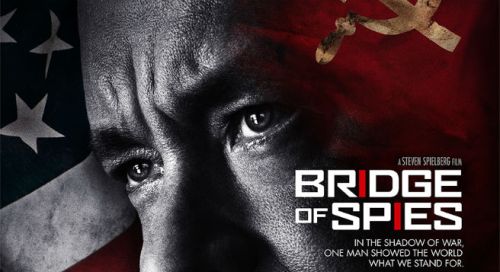
The shooting script for the Academy Award nominated film “Bridge of Spies” is now online. Written by Matt Charman and the Coen brothers, it, like the film that Steven Spielberg made out of it, provides an unusually accurate and nuanced portrayal of ethical lawyering. The movie is worth seeing, better more than once, and I expect that I will use many issues raised in it for class discussion as I teach legal ethics to lawyers this year.

There is one howlingly wrong scene, in which the lawyer, Jim Donovan (played by Tom Hanks) has a private discussion with the judge who will be sentencing his client, a convicted Russian spy. Donovan argues against a death sentence. If this happened, and I doubt it, it would have been an egregious ethics breach: this is called ex parte contact, and is strictly forbidden.

The film redeems this misstep many times over, especially in a scene that neatly explores both the duty of confidentiality and the duty of loyalty, as well as the crucial role of rules in society, and why “the ends justify the means” as well as those who advocate that philosophy must be rejected. “Ethics Bob” Stone told me that he now uses the scene in his business ethics classes.

The scene begins with Donovan meeting in a restaurant with a man who has been following him…. Continue reading

Now THIS Is An Unethical Judge…

Blind Justice

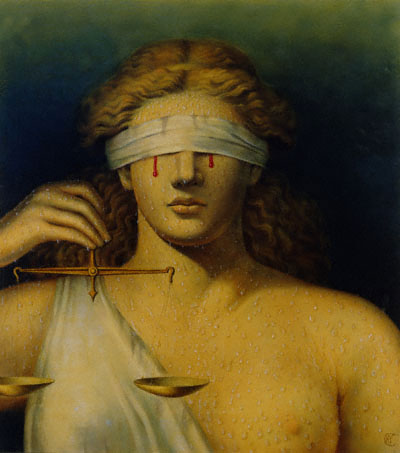
Texas Judge Elizabeth E. Coker will be resigning from her post as judge in the 258th District Court of Polk, Trinity, and San Jacinto Counties as part of a deal that allows her to resign rather than face disciplinary action. The ethical transgressions she apparently engaged in were many, shocking and outrageous.  Investigators found that she regularly engaged in ex parte communications  with members of the Polk County District Attorney’s Office, the San Jacinto County District Attorney, and defense attorneys regarding cases pending in her court, favored certain attorneys and was prejudicial toward others in both trials and court appointments, and even met with jurors, without the knowledge of counsel, while they were deliberating in criminal trials, in order to influence their verdict. Even as she was being investigated for judicial misconduct, Coker attempted to influence a material witness against her prior to that witness’ testimony before the Disciplinary Commission, and lied about it when she was questioned about her contact with that witness.

Yet as awful as all that is, these are not the most spectacular of her ethical breaches. Continue reading

Scalia’s Latest Controversy: Does An Appearance of Impropriety Have to Be Reasonable?

Supreme Court Justice Antonin Scalia is once again under critical fire for appearing to feed a conservative bias. He accepted G.O.P. Rep. Michele Bachmann’s invitation to address the Tea Party Caucus next month, as the group holds its first Conservative Constitutional Seminar. Some are claiming that the meeting is unethical, raising the specter of an “appearance of impropriety.” Continue reading