The Case of the Truant Prodigy and the Incompetent School System

Avery Gagliano is a 13-year-old student in the District of Columbia school system, and an acknowledged musical prodigy. She has won competitions and soloed with orchestras nationwide.She was one of 12 musicians selected from around the world to play at a prestigious event in Munich last year. All of this periodically disrupts her school attendance, and because the District continues to threaten treating her as a truant, Avery’s parents say they have been forced to pull her out of her classes, where she was a happy A student.

“As I shared during our phone conversation this morning, DCPS is unable to excuse Avery’s absences due to her piano travels, performances, rehearsals, etc.,” Jemea Goso, attendance specialist with the school system’s Office of Youth Engagement, wrote in an e-mail to Avery’s parents, Drew Gagliano and Ying Lam, last year. This a classic example of how bureaucratic rigidity, in the absence of employees or officials willing to take initiative and address a non-conforming anomaly, will lead to needless harm and absurd results. Nobody would, or if they did, they did so in such a dysfunctional system that it didn’t make any difference. Continue reading

Triple Crown Ethics: New York Racing Gets An Integrity Check

affirmed.1The best example of the ethical problem with the Star Syndrome, the expedient and destructive compromise organizations make to allow a high-level performer break rules and indulge in conduct that would not be tolerated in other employees, that I have seen in a long time involves…a horse.

California Chrome has won the first two races in the Triple Crown, with only the Belmont Stakes remaining. Horse racing hasn’t had a Triple Crown winner in decades, and has suffered as a result; everyone is rooting for its latest star to finally achieve the heights last reached by Affirmed in 1978. But CC used a nasal strip in his last six races, all victories, and while the devices, which aid breathing, are allowed by the racing rules of all states but one, New York, home of the Belmont, is the one. The owners of the horse say they may not run him if he isn’t allowed to use the strip (they are almost certainly bluffing, but its a good bluff); a request for an exception is pending.

The ethics here is simple as pie. If its a valid rule, then no exception should be made just because the horse in question is on the verge of making history. If it was an arbitrary rule, it should have been eliminated before now.  If the stewards allow California Chrome to use the strip because, well, he’s a big shot and it will be a shot in the arm for racing, but then go back to prohibiting ordinary horses to use it, that will be an outright rejection of fairness and integrity (not that this will be news flash for racing critics.).

If the rule was a good one in the first place, then it should apply to California Chrome. Waiving it just for him is favoritism, and unethical.

That, however, is exactly what will happen. Watch.


A Chaos Theory Law, An Anomalous Case, And Charles Grodin’s Lament

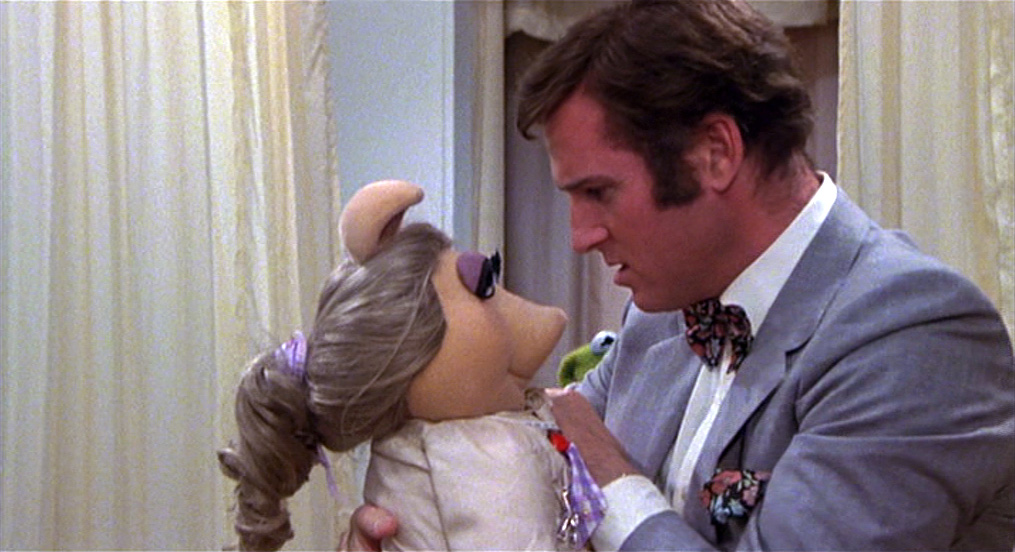
I swear, I'm not trying to belittle Charles Grodin by posting this photo of him back when he earned his living with his primary talent, which was comedy. I just want you to recall who the guy is, since he and the Nation obviously would like you to forget.

I swear, I’m not trying to belittle Charles Grodin by posting this photo of him back when he earned his living with his primary talent, which was comedy. I just want you to recall who the guy is, since he and the Nation obviously would like you to think he’s somebody else.

Charles Grodin doesn’t like the felony murder rule.

The felony murder rule, which essentially holds that anyone who is proven to have been involved with a felony during which someone was killed is guilty of First Degree Murder, is one of the harsher devices in American jurisprudence. I must confess, I sort of like it, and always have. Like all laws, however, it doesn’t work perfectly all the time.

The reason I like the rule is that it acknowledges the real danger of initiating felonies, crimes that are serious and destructive. If you burn a business down to collect the insurance, for example, you should be held responsible by the law if the fire gets out of control and someone is killed. The law combines criminal and civil offenses; the felony murder rule is like a negligent crime principle. It is a law that implicitly understands Chaos Theory at a basic level: actions often have unpredictable consequences, and even if the consequences are worse than you expected or could have expected, you still are accountable for putting dangerous and perhaps deadly forces in motion. If you commit a felony, you better make damn sure you know what you are doing, because if people get killed,  you will be held to a doubly harsh standard. Better yet, don’t commit the crime. Continue reading

Ethics Hero: Dick Masten—When Ethics Trumps Law

A heroic and ethical snack...

A heroic and ethical snack…

One way I can always start an argument on Ethics Alarms is to state my position that willfully breaking the law is per se unethical as a breach of citizenship. Like all rules, however, this one has exceptions. Dick Masten, the Director of Miami-Dade Crime Stoppers, recently demonstrated one of them.

The former police chief was ordered by Judge Victoria Brennan to reveal the name of a tipster in a cocaine possession case, State vs. Lissette Alvarez. Alvarez was arrested in 2013 and charged with cocaine possession. Brennan called for Masten to come into court and confer with her in chambers regarding the case. Miami-Dade Crime Stoppers sparked the eventual arrest after getting information from a tipster who was assured anonymity. Alvarez’s attorney insists that the tipster’s information is part of the evidence against his client, saying, “Ms. Alvarez, in this case, has every right to confront her accusers. But more particularly in this case, it’s not the accuser, but the evidence that the State will use against her.”

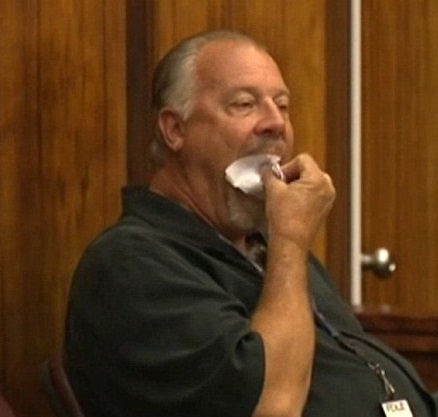
Ordered by the judge to reveal the name of the tipster, Masten, insisted that he couldn’t divulge information to be reviewed in closed court that might be discoverable as evidence. “There is a possibility that looking at certain documents, a defendant could work that case backwards and put the tipster at peril, and I’m not gonna let that happen,” he said. In a dramatic touch, Masten swallowed  a slip of paper that held the tipster’s name. “What is personal to me, is the promise,” Masten said before his ethical snack. “Some of these tipsters could end up dead. Not on my watch.” Continue reading

J.J. And The Chickens: When Compassion Should Trump Principle

J.J. and friend.

J.J. and friend.

This strange and infuriating news story about the autistic child who is about to lose his “therapy chickens” is yet another example of how even the best ethics practices not only have exceptions, but obvious ones. Obvious, that is, except for the muddled thinkers on the DeBary (Florida) City Council, who have decided to harm a young and vulnerable child while turning his family’s life inside out because the needs of one citizen shouldn’t be enough to justify an otherwise unwise public policy. That governing principle is undeniably true…except in this case. And since it is so screamingly obvious that the otherwise sound principle is cruel to apply in this case, it is the perfect, obvious, compassionate instance when making an exception to a rule that works 99.9999% of the time is not only reasonable, but the right thing to do. The city council in question doesn’t comprehend this. Dead-eyed petty bureaucrats seldom do. Continue reading

Ethics Bob Asks: “Did Torture Lead Us To Bin Laden”? My Answer: “So What If It Did? It Was Still Wrong.”

It's all for the best.

It’s all for the best.

The last time my friend “Ethics Bob” Stone blogged about ethics, it was way back in August, and he was writing about some guy named “Romney.” Now he’s back on the job, thank goodness, with a comeback post titled “Zero Dark Thirty: Did torture lead us to Osama bin Laden?”. And he’s ticking me off.

“Zero Dark Thirty” is Hollywood’s treatment of the search, apprehension and execution of Osama Bin Laden. The film suggest that methods of torture were employed by the CIA to uncover crucial intelligence that led to the terrorist mastermind’s demise. Torture opponents, including some U.S. Senators, are alarmed by this, and disputing the film’s account. (Imagine that: a movie that misrepresents history!) Meanwhile, conservatives, neocons, Bush administration bitter-enders, talk radio hosts and admirers of Dr. Fu Manchu and James Bond villains are citing the film as confirmation that they were right all along: torture is a wonderful thing.

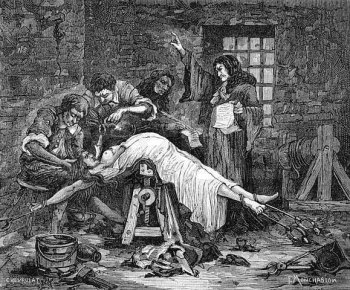
I am puzzled that Bob got in the middle of this debate as an ethicist. “It worked!” and “It came out all right in the end!” are not valid ethical arguments or justifications. The first is an embrace of a pure “the ends justify the means” rationale, a favorite tool of Auric Goldfinger and Dr. No. The other is consequentialism. When ethicists and principled opponents of torture allow the issue to be adjudicated on this basis, they are surrendering their principles at the outset. “Torture doesn’t work” is a pragmatic argument, not an ethical one. If the societal consensus regarding torture is going to be determined by how much we can benefit by returning to the rack and wheel, then ethical considerations have already been jettisoned. Continue reading

London’s Curfew Fiasco: Sir Paul, The Boss, and Exception Ethics

It was the stuff of legends, the kind of moment that onlookers would cherish and tell their grandchildren about. American rock icon Bruce Springsteen was on a roll before a huge Hyde Park crowd, and suddenly he was joined on stage by Sir Paul McCartney. The two giants of rock and roll began spontaneously jamming, and then some bureaucrat who worked for the concert organizers pulled the plug, cutting off power because the concert was running over its permit allotment and a local sound curfew.

Good ethics can require knowing when rules and even laws should be stretched, amended, finessed, or even ignored. This takes some skill, of course, and some character. It is much easier, and certainly entails lower risk, to just go by the book, and permit no exceptions. It is also lazy, uncaring, and leads to needless fiascos like this one. Continue reading

“I’m Warning You: If You Rescue That Drowning Man Over There, You’re Fired!”

“Not your concern…”

The brain-dead and ethics-empty conduct of Jeff Ellis Management, an Orlando, Florida-based company, in its recent firing of 21-year-old lifeguard Tomas Lopez is welcome in one respect, and one respect only. It helps explain the inhuman attitude of the two Brooklyn EMT’s who stood by and watched a woman die of a heart attack as they munched bagels. It begins to explain why two Seattle security guards stood by and allowed a woman to be nearly beaten to death while they looked on. It almost explains how a crowd of people on a California shore, including firefighters, stood by as a man named Raymond Zack took nearly an hour to drown himself. It might even provide some insight into the thought processes of Penn State assistant football coach Mike McQueery, who famously observed Jerry Sandusky as he engaged in a child rape but didn’t stop it. For one of the reasons so many Americans turn off their ethics alarms, reject their humanity and flunk their duty to rescue those in peril is that there are people like  Jeff Ellis, who deem human life less important than business, policy and profit, and who will punish any employee who doesn’t feel similarly and act accordingly.

The company fired Lopez after he pulled a struggling swimmer out of the ocean on Hallandale Beach in Broward County, saving his life. The rescue, you see, occurred 1,500 feet south of the firm’s contracted boundaries for lifeguard service.  Lopez was told that a swimmer was in peril off the neighboring beach, and ran to his rescue, leaving the “protected beach” area where his services had been contracted to serve. The near-drowning victim was swimming in the “unprotected area” without lifeguards, and there’s no point, the management company reasons, to hire it to provide lifeguards if the heroes like Lopez will dive in for free. Continue reading

Ethics Dunce: Safeway…Ethics Hero: Ryan Young. Justice? Waiting…

“You’re suspended, Kent.”

I’ve asked many times on Ethics Alarms why so many Americans stand by, inert and passive, when a fellow citizen is in peril.  Maybe the stunning ethics blindness exhibited by Safeway in a recent incident is part of the answer.

Ryan Young, who works in the meat department of a Safeway grocery store in Del Rey Oaks, California, was on the job when he witnessed a man beating a pregnant woman, apparently his girlfriend. Young told the man to stop, but he continued with his assault, shoving and kicking the her.  Young jumped over his counter, pushed him away, and ended the attack.

His reward was to be suspended without pay. Safeway has a policy that directs employees to summon security personnel and not to personally intervene when they see a crime or fight in progress. Even though police confirm that Young may have saved the woman and her unborn child from serious injury, the company is insisting that Young’s conduct warranted discipline, not praise. Continue reading

Happy 2012! Your New Year’s Ethics Quiz: “Firing Super-Clerk”

Last week, convenience store clerk Eric Henderson was confronted by two female robbers in Pensacola, Florida who demanded that he hand over the cash in his Circle K register.  Henderson  grabbed the gun pointed at him by one of the women, slammed her to the ground, and then chased the two into the street where they fled in a getaway car.

Henderson was promptly fired by Circle K  for violating a company policy that forbids heroics by employees in the middle of attempted robberies. Now Henderson has gone to the media, which is pointing out that he had been unemployed for two years (Occupy Circle K! But how long he had been out of work should have no bearing on the decision whether to to fire him) and that according to Henderson, the unarmed robber was urging her armed companion to shoot him. (Aside: Some of the news accounts also included this hilarious line: “The 30-year-old grabbed the gun pointed at him by one of the alleged robbers… Alleged robbers? Can we all agree that when there is an actual  gun to be grabbed, the term “alleged” is idiotic? What else is someone who points a gun at a convenience store clerk? A practical joker? Some one who wants to trade a Glock for Twinkies?)

Your New Year’s Day Ethics Quiz: Was Circle K right to fire Eric? Continue reading