I Am Increasingly Reaching The Conclusion That We Can’t Trust Anyone, “Experts,” Researchers and Scientists Included: My Dan Ariely Disillusionment

We’ve had some interesting discussions here about “experts” here of late, notably this post. I am rapidly reaching the point where anyone who appeals to authority to justify his or her position, particularly if the authority is a study, a report, an “expert” or a scientist, immediately inspires my skepticism and even suspicion. Now what?

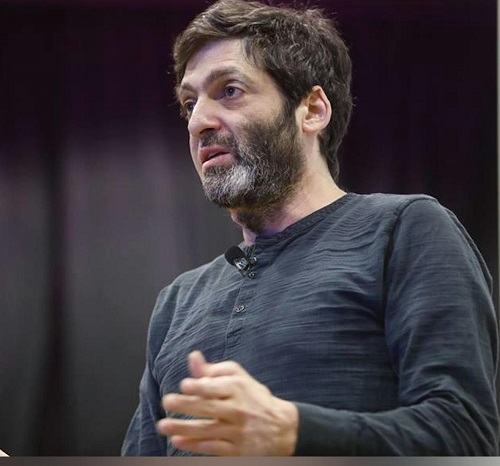
Once again, Duke professor and researcher Dan Ariely is in the news, and not in a good way. Ariely, professor of business administration in the Fuqua School of Business is named 636 times in the more than 3 million additional Epstein files released on January 30. He may be innocent of any wrong-doing and he and Epstein may have just played in a Fantasy Baseball league together, but the problem this creates for me is that I have been using Ariely’s work as authority in my ethics seminars for as long as I can remember.

For more than a decade, I told incoming members of the D.C. Bar as part of their mandatory ethics training that such sessions as mine were essential to making their ethics alarms ring. To support that thesis, I related the finding of research performed by Dan Ariely when he was at M.I.T. Ariely created an experiment that was the most publicized part of his best-selling book “Predictably Irrational,” giving Harvard Business School students a test that had an obvious way to cheat built into it and offering small rewarde for the students who got the highest scores. He tracked how many students, with that (small) incentive to be unethical, cheated. He also varied the experiment by asking some students to do simple tasks before they took the test: name five baseball teams, or state capitals, or U.S. Presidents.

None of these pre-test questions had any effect on the students’ likelihood of cheating, except for one question, which had a dramatic effect.  He discovered that students who were asked to recite a few of the Ten Commandments, unlike any of the other groups, never cheated at all. Never. None of them. Ariely told an NPR interviewer that he had periodically repeated the experiment elsewhere, with the same results. No individual who was asked to search his memory for a few of the Ten Commandments has ever cheated on Ariely’s test, though the percentage of cheaters among the rest of the testees is consistently in double figures. This result has held true, he said, regardless of the individual’s faith, ethnic background, or even whether they could name one Commandment correctly.

The classic moral rules, he concluded, reminded the students to consider right and wrong. It wasn’t the content of the Commandments that affected them, but what they represent: being good, or one culture’s formula for doing good. The phenomenon is called priming, and Ariely’s research eventually made me decide to start “The Ethics Scoreboard” and later this ethics blog.


On The Limitations Of Expertise

Guest Column by Sarah B.

[From your Host: This excellent essay arrived on an Open Forum, and as I sometimes do, has been elevated from Comment of the Day status to a Guest Column. I’ll even forgive Sarah for making me look bad in comparison to such thoughtful, eloquent and perceptive work.]

***

“The embarrassment is that chemistry was treated as a mere technicality rather than the foundation of the entire conclusion. The embarrassment is that skepticism—real skepticism, the disciplined refusal to accept claims without robust evidence—was framed as denial rather than diligence.”

This is, in my opinion, the money quote from The Brain, Microplastics, and the Collapse of Scientific Restraint. 

This particular article discusses the extraordinary claim that our brains contain a huge amount of microplastics.  The problem with this claim is that the study has a fatal methodological flaw.  The study relies on spectroscopy and detecting signatures of chemicals to determine a sample’s composition.  However, the fats in the brain break down into similar compounds as polyethylene, which means without further differentiation methods, there is no way to tell if the “microplastics” the study detected were actually just normal lipids found in the brain.  The whole article is worth reading, as it does an excellent job of explaining the issue. 

I recently saw a post on Facebook that decried the idea that experts could be challenged by some novice watching a few YouTube Videos and reading a few scientific papers.  This led to a long discussion in the comments, which was unfortunately extremely one-sided.  Most everyone agreed that trying to correct an expert in their field was utter hubris.

“Take something you are good at, like maybe changing transmissions.  Imagine someone who has watched a few YouTube videos comes up and tells you that you are doing it all wrong.  How would you respond?”

The main problem with this is that, in terms of changing a transmission, we can obviously see who is right and who is wrong.  The car will run, or the car will not.  Indeed, if you truly are an expert in changing transmissions, you can step up and, in simple terms, explain why your process is the correct one, what is wrong with the YouTube watcher’s process, and even perhaps teach your skeptic how to do it correctly. 

With any field of expertise, we have to remember that experts are people too, and all humans have flaws.  Experts can be tempted by money, power, prestige, and politics.  There are also limitations that even experts struggle to overcome.  For example, in many branches of research, there are serious problems (often ethical in nature) in creating a good control group. 

Unethical Quote of the Week: Justice Ketanji Brown Jackson

“My understanding was that independent agencies exist because Congress has decided that some issues, some matters, some areas should be handled in this way by non-partisan experts, that Congress is saying that expertise matters — with respect to aspects of the economy, and transportation, and the various independent agencies that we have. So, having a president come in and fire all the scientists, and the doctors, and the economists, and the PhDs, and replacing them with loyalists and people who don’t know anything, is actually not in the best interest of the citizens of the United States.”

—-Justice Ketanji Brown Jackson, making the case for a technocracy that directly contradicts the structure of government dictated by that U.S. Constitution thingy, in her questioning of  U.S. Solicitor General D. John Sauer during this week’s oral argument in “United States v. Slaughter”.

As Professor Turley archly comments in his post on Jackson’s classically totalitarian belief that the proletariat can’t be trusted and must be guided by supposedly wise and beneficent “experts” (like her), “Jackson simply brushed aside the fact that the president is given authority to execute the laws and that the executive branch is established under the Constitution…The use of “real-world consequences” seems to overwhelm any true separation-of-powers protections for presidents against the administrative state. It also allows the Court to delve into effective policy or legislative impacts in support of the expert class over what are framed as ignorant or vengeful presidents.”

To state what should be obvious about the so-called “expert class,” they have proven themselves to be very partisan and therefore not sufficiently trustworthy for Congress to bestow on them “independence” from Presidential oversight within the Executive Branch. We have seen that experts like university professors and scholars are overwhelmingly biased and partisan, that scientists are biased and partisan, that doctors, lawyers, economists, psychologists, judges and, yes, ethicists are biased partisan. The concept of the non-partisan, independent expert is a convenient ideology-driven mythology, and anyone paying attention to what we have witnessed in our country, society, and culture over the past couple of decades has to admit that it is as believable as Santa Claus.

Let me add in closing that the arrogance and smug entitlement that radiates from Jackson’s “people who don’t know anything” is staggering, obnoxious, and ironic. She’s a Supreme Court Justice and apparently doesn’t know what the Constitution means…

“Psychology Today” (Again) Shows Why “Experts” Cannot Be Trusted

Why is a standard issue anti-gun screed with moldy “common sense gun control” talking points being featured in “Psychology Today” under the guise of a “How to prevent suicides” article? Oh, lots of reasons, such as..

  • Anti-gun fanatics will use every opportunity imaginable to repeat their cant;
  • The fact that their objective, to somehow void the Second Amendment, is impossible doesn’t dissuade them from wasting our time;
  • Like most of the print media in the sciences, “Psychology Today” has been captured by the doctrinaire Left and allowed what should be a non-partisan topic be polluted by progressive activism;
  • Too many academics, scholars and experts today have no regard for integrity, and believe that they must accomplish their ideological goals by any means necessary, and
  • To someone whose only tool is a hammer, everything looks like a nail.

“Reducing Gun Violence, Particularly Gun Suicides: What we can learn from other countries when it comes to reducing gun deaths” announces its bias and how that bias has made its “expert” author stupid right in the headline. Other countries have nothing to offer us as far as gun policies are concerned. They do not have the same culture as the United States, nor do other nations enshrine individual liberty as securely as the United States. Other nations did not rely on guns and self-determination to the extent that the U.S. population has throughout its history, and other nations are far more submissive to government interference with their rights than Americans are.

Continue reading

“Bias Makes You Stupid” Crossed With “Self-Anointed Virtue”

A simple Ethics Dunce verdict doesn’t do justice to Omer Bartov, a professor of Holocaust and genocide studies at Brown University. There is so many things wrong with his New York Times column “I’m a Genocide Scholar. I Know It When I See It” I may not have the time and patience to list them all. Here’s a gift link so you can analyze them yourself.

The major flaw in the piece is flagged by the headline: it’s a long appeal to authority, the writer’s own, but also other “experts.” “It’s true because we say it’s true.” He holds Israel guilty of genocide because he relies on his own analysis and he’s “been teaching classes on genocide for a quarter of a century.” He’s also been marinating in the academic community’s intersectionalism bias and growing anti-Semitism for all those years. He needs to get out more.

It’s not just him, however. “A growing number of experts in genocide studies and international law have concluded that Israel’s actions in Gaza can only be defined as genocide,” Bartov writes. Yeah, this is how the US started freaking out about climate change, how 50 national intelligence experts proved that Hunter Biden’s laptop was Russian disinformation, and how the United States crippled its economy and the intellectual and social development of its children because experts kept lying about the Wuhan virus.

Sorry, I am no longer persuaded by “experts”; they have collectively proven incapable of objective analysis too many times. (Don’t get me started on legal ethics experts.) “So has Francesca Albanese, the U.N. special rapporteur for the West Bank and Gaza, and Amnesty International,” the author says, adding to his cherry-picked list of authorities who agree with him. “South Africa has brought a genocide case against Israel at the International Court of Justice,” Omar adds. Now there are three objective analysts!

Continue reading

Unethical Quote of the Week: Marci Shore, Timothy Snyder and Jason Stanley

“Legal residents of the United States sent to foreign prisons without due process. Students detained after voicing their opinions. Federal judges threatened with impeachment for ruling against the administration’s priorities…”

—–Marci Shore,Timothy Snyder and in the NYT Op-Ed, “We Study Fascism, and We’re Leaving the U.S.”

I’m trying to decide whether the appropriate response to this pathetic appeal to dubious authority is best answered with my traditional, “Good!” or a more vulgar response, like, “Don’t let the door hit you in the ass on the way out.” That first paragraph in the Times piece certainly shows their expertise: Goebbels could hardly have done any better at misinformation and deceit.

Exactly ONE “legal resident” has been sent to a “foreign prison,” the “Maryland father” who was an illegal immigrant and who had received a lot of “due process.” The “foreign prison” he was sent to was not foreign to him, since it is the only country of which he’s a legal citizen. No students have been “detained” for “expressing their opinions.” No Federal judges have been “threatened with impeachment” either, as any of the judges exceeding their authority to issue dubious injunctions against legitimate Presidential actions should be able to explain. Anyone, even the President, saying “those judges should be impeached” or even “I’d like to impeach those justices” is simply expressing an opinion, not making a “true threat.” Judges can’t be impeached for incompetence or even misjudging their own power. The “threat” might as well have been “I would turn them into toads if I could!” Oooh. Scary.

Continue reading

A Show Of Hands, Now: Who’s Shocked That A “Technology Misinformation” Expert Used A.I. Generated Fake Information?

geewhatasurprise. But as Mastercard would say, this story is priceless.

Professor Jeff Hancock is founding director of the Stanford Social Media Lab, and his faculty biography states that he is “well-known for his research on how people use deception with technology.” Apparently he knows the subject very well: Hancock submitted an affidavit supporting new legislation in Minnesota that bans the use of so-called “deep fake” technology in support of a candidate (or to discredit one) in an election. Republican state Rep. Mary Franson is challenging the law in federal court as a violation of the First Amendment (which, of course, it is). But Democrats don’t like the First Amendment. Surely you know that by now.

But I digress…

Continue reading

An Expert Bemoans How Experts Have Destroyed the Public’s Trust in Them While She Misleads the Public In Her Criticism

Zeynep Tufekci, a professor of sociology and public affairs at Princeton University, seemed to be leveling harsh criticism at the health community. “Under questioning by a congressional subcommittee, top officials from the National Institutes of Health, along with Dr. Anthony Fauci, acknowledged that some key parts of the public health guidance their agencies promoted during the first year of the Covid-19 pandemic were not backed up by solid science,” she wrote. “What’s more, inconvenient information was kept from the public — suppressed, denied or disparaged as crackpot nonsense…Officials didn’t just spread these dubious ideas, they also demeaned anyone who dared to question them…Dr. David Morens, a senior N.I.H. figure, was deleting emails that discussed pandemic origins and using his personal account so as to avoid public oversight. “We’re all smart enough to know to never have smoking guns, and if we did we wouldn’t put them in emails and if we found them we’d delete them,” he wrote to the head of a nonprofit involved in research at the Wuhan lab.”

Her condemnation appeared uncompromising: “I wish I could say these were all just examples of the science evolving in real time, but they actually demonstrate obstinacy, arrogance and cowardice. Instead of circling the wagons, these officials should have been responsibly and transparently informing the public to the best of their knowledge and abilities. Their delays, falsehoods and misrepresentations had terrible real-time effects on the lives of Americans. Failure to acknowledge the basic facts of Covid transmission led the authorities to pointlessly close beaches and parks, leaving city dwellers to huddle in the much more dangerous confines of cramped and poorly ventilated apartments. The same failure also delayed the opening of schools and caused untold millions of dollars to be wasted.”

Continue reading

Authority Malpractice, Broadway Division [Corrected]

Looking back over the nearly 17,000 posts here, I realize that the ethical issue of authority abuse has come up often, apparently because it drives me crazy. Experts and authorities, alleged, self-proclaimed or otherwise, are supposed to make everyone else better informed and smarter, not more ignorant and stupid. The “experts” that Ethics Alarms has fingered most frequently are pundits, politicians, historians (notably partisan Presidential historians like Jon Meacham, Michael Beschloss, and the late Arthur M. Schlesinger Jr. ) elected officials and baseball writers (with a special place reserved in Baseball Writer Hell for Tom Boswell).

One of the requirements for this sub-category on Ethics Alarms is that I personally know enough about the topic the expert is mangling to detect the authority abuse. Musical theater happens to be one of those topics on which I am qualified to speak and write with some credibility, so I was annoyed yesterday to hear Sirius/XM’s Broadway channel host Seth Rudetsky emit an inexcusable whopper.

Rudetsky is what is called an “industry star,” meaning that the Broadway community knows and appreciates his work though he is largely unknown to anyone outside that community except certifiable American musical nuts. He does have a little empire on Sirius, though, hosting and commenting upon about 50% of the content on the Broadway channel while apparently going out of his way to sound as screamingly gay as possible. (I believe this indulgence damages the popularity, cultural status and prospects of musical theater, but that’s a topic for another day).

Rudetsky styles himself as an “expert on Broadway history and trivia” (as it is phrased on his Wikipedia page), so I was gobsmacked when I heard him say, in his introduction to the “Annie Get Your Gun” duet “Old Fashioned Wedding,” that “there was this thing that Irving Berlin did” in his musicals where two characters would sing different songs and then Irving put the songs together, and they “fit.” Rudetsky recalled the “You’re Just in Love” duet in Berlin’s “Call Me Madam” (above) as an example, and said that “Old Fashioned Wedding” from the revival of “Annie Get Your Gun”was another instance of Berlin’s “thing.”

Continue reading

Comment Of The Day: “Ethics Quiz: The Rehabilitated Brain-Eating Cannibal”

I did not, when I decided that the saga of Tyree Smith justified an ethics quiz, foresee that the story neatly dovetailed into a larger theme covered extensively by ethics alarms of late, the untrustworthiness of “experts” and the danger of blindly accepting their pronouncements, influenced as they too often are by ideological biases and political agendas. Longtime commenter Michael R., however (3, 425 comments since October 26, 2012!) managed to connect the dots.

Here is his Comment of the Day on the post, “Ethics Quiz: The Rehabilitated Brain-Eating Cannibal”:

***

This is why it is time to remove the monopolies these professional groups have on essential services. The psychiatrists and psychologists have a monopoly on confining people for mental illness and, in this case, releasing the criminally mentally ill. How many times have they failed in this? James Holmes (above), the 2012 Aurora, Colorado movie theater shooter, is a good case in point. He had been banned from seeking psychiatric help because he was deemed too dangerous, but the very establishment that deemed him too dangerous to be around THEM, refused to sign papers that would let the police involuntarily confine him. At least they successfully determined he was a danger to those around him, they just refused to help the general public. We have them pushing puberty blockers and surgical sterilization on children with no evidence this will help. In fact, the actual ailments they suffer from were probably caused by the very ‘experts’ that get to decide the ‘treatment’.

Let’s look at medicine next. The medical associations regulate themselves and are calling for ideological conformity in all physicians. Anyone who disagrees about COVID masks, vaccinations, DEI, affirmative action, etc can’t be a physician. Pharmacists can refuse to fill prescriptions if they don’t agree with the physician’s treatment, or diagnosis, or they think the person looks sketchy. Medicine is an essential service. We can’t have such groups dictating if we can get care or not.

Continue reading