Twerk Ethics

[The following is blurry, but perhaps that is for the best. It is the only full version of the performance at issue currently available on YouTube, and it may not be there for long. Watch at your own risk.]

To listen to the horrified reaction to Miley Cyrus’s relatively obscene performance at the nationally televised MTV Music Video awards (not so long ago, Miley was that cute tween Hannah Montana on the Disney Channel) , one would think that rock and pop stars intentionally crossing the established lines of symbolic pubic sexual decorum was unprecedented. The furious and shocked condemnations seemed to emanate from some parallel culture, like the alternate universe that implicitly exists on CBS’s updated Sherlock Holmes drama “Elementary” (Sherlock is a precariously recovering alcoholic and drug addict; Dr. Watson is a former Charlie’s Angel) where nobody ever heard of “The Hound of the Baskervilles,” Basil Rathbone or the dancing men cipher, because Arthur Conan Doyle never invented the character. ( The British updated Sherlock, uncreatively titled “Sherlock,” is so far superior to “Elementary” —which isn’t bad–that  it’s unsettling.) Have Isadora Duncan, Josephine Baker, Sally Rand, Elvis, the Stones, Jim Morrison,, Madonna and Christina Aguilera been erased from the past by some music-hating cyborg from a dystrophy future where everyone sings like Matt Munro?

Gross simulated sexual display on television prime time has unethical elements, to be sure. It’s uncivil, to begin with, intentionally placing socially objectionable content before a lot of viewers who don’t want to see it. That’s a breach of respect, but a minor one in this context. Janet Jackson flashed a breast during the Superbowl half-time show, after all: the argument that this was a family event that shouldn’t have been unexpectedly transformed into a peep show was grounded in fact. This week, however, I heard earnest mothers protesting that their delicate pre-teens were watching the MTV awards and had the innocence cruelly seared out of them by the unexpected and horrifying sight of Miley twerking ( simulating sex while dancing—a brand new addition to the Oxford dictionary) on Robin Thicke, dressed as Beetlejuice. Those mothers, not to be excessively cruel myself, are idiots.

What did they expect to see? This is a live show populated by competing shameless self-promoting narcissists who know that the performer who says or does the most outrageous thing will win the publicity game, and be a topic of debate for days or even weeks. Miley won, that’s all. If a child saw something age-inappropriate, the parents can only blame themselves.  This was roughly the equivalent of letting your kid watch “The Walking Dead” and complaining to AMC that the show’s violence is excessive for children. Ethics breach #1 is by any parent who allowed a child to watch this show while wanting to protect the child’s exposure to sexually provocative material. Irresponsible, incompetent, and stupid. Continue reading
Of Puppy Ethics, Presidents, And Ruddigore

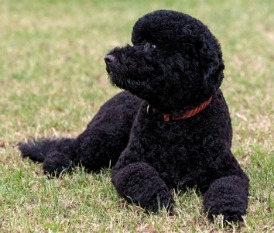
Sunny

One aspect of being President that cannot be much fun is knowing that anything you do in your very public private life has the potential of permanently altering the culture, like the book about Chicago gangster days left on the developing planet in a famous episode of “Star Trek.” President Kennedy didn’t wear hats because of his bodacious hair (all the better to shag those young girls), and ruined the U.S. fedora trade. Bill Clinton announced that oral sex wasn’t sex after all, and millions of U.S. junior high school students took the hint. Now President Obama and family are being called poor role models because they adopted a new pure-bred puppy from a breeder rather than finding an appropriate rescue dog, as animal welfare activists constantly urge us to do. Continue reading

Comment of the Day: “Ethics Dunce: Photographer Jill Greenberg”

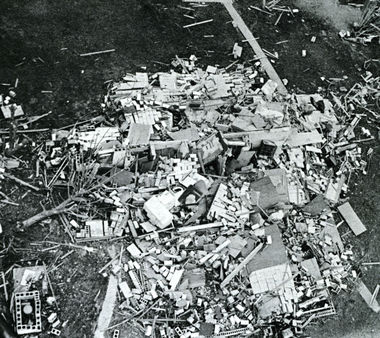
Tornado ruin

A home in Tanner, Alabama, after the events of April 3, 1974…

Here are the always thoughtful and often profound Fattymoon’s reflections, in the Comment of the Day, inspired by the post, Ethics Dunce: Photographer Jill Greenberg:

“This reminds me of the time I made a critical decision, on the spot, while covering the aftermath of a killing F5 tornado at Tanner, Alabama the night of April 3, 1974.


“Walter McGlocklin was walking away from me, carrying one of his two surviving daughters. He was cradling this little girl, her upper body and tear streaked face peeking just above her father’s right shoulder. The look of utter horror on her face! The lighting was perfect, an eerie cross hatch of flashlights and spotlights – I KNEW I had the picture of the year. I raised my Minolta 35 mm and focused in. And that’s when it happened. Something inside me said, Do NOT violate this little girl’s privacy. Do NOT allow this little girl’s unbearable pain to act as fodder to sell newspapers across the country. I slowly lowered my camera. It’s a decision, one of only a very few, of which I will forever be proud of.”

_______________


Ethics Dunce: Photographer Jill Greenberg


"No emoticons were upset in the writing of this post."

“No emoticons were upset in the writing of this post.”

In Slate, renowned photographer Jill Greenberg returns to the topic that gained her unwanted notoriety in May: her exhibition of photographs of children crying their little eyes out. Greenberg revealed at the time that she captured the powerful photographs by giving the very young children lollipops or something else they liked or wanted and then having family members ask the kids to return the item. Strangely,  as Drew Curtis’Fark, one of my favorite web  sources for stories is wont to say, some people had a problem with this.

Greenberg revisits the issue because she has a book of the weepy photographs coming out. Seldom does one read a more casual, “What is the matter with people?”, utterly clueless display of invalid rationalizations for unethical conduct as Greenberg belches out. Unfortunately, another tendency illustrated by the article is far more common: a news sources examination of an ethics issue without any apparent sensitivity or understanding of the ethics issues involved.

Here are Greenberg’s rationalizations, or at least the ones she gave to Slate. I’m sure she has many more.

  • The Trivial Trap, or “Don’t sweat the small stuff.” “I have two children of my own. Crying is not evidence of pain or any real suffering. It’s really just the way children communicate.” Ah. Not real suffering. Then it’s all right, then. The bottom line is that Greenberg is intentionally upsetting the children, who, it can be fairly said, are less anxious and happier when they are not crying. Children who are teased, frightened or otherwise made uncomfortable can also be said not to be in pain or “real” suffering. It’s still cruel, and an abuse of power, to treat them this way. Come to think of it, Greenberg could make the same argument about some of the models in child pornography. Would she, I wonder?
  • “Everybody does it” and the “They’re Just as Bad” Excuse. “Making children cry for a photographer can be considered mean. But I would say that making children laugh and show off their jeans for an apparel ad is just as exploitative and less natural.” And, I suppose, making a Bangladesh child cry by taking food from her to make her cry is just as exploitative  and more natural than giving her food to make her smile, because, after all, she’s usually starving anyway.
  • The Saint’s Excuse or “It’s for a good cause” a.k.a “The ends justify the means.” Slate:  “The still image continues to have a ton of strength. An image taken out of context from one fraction of a second to the next can tell a story, and if photographers are looking to tell a certain story, they can curate those slices of time to their advantage. What’s weird about the images is they seemingly can be applied to all these random disparate causes. My husband was saying they’re like emoticons.” True, Jill, but those little smiley faces don’t have to be tortured to get them to frown or cry, because, unlike babies, they aren’t real human beings.

The bottom line is that Greenberg made money and got a lot of ink by making children unhappy, so she can’t see why anyone would argue that the conduct wasn’t justified, and based on the article, neither does Slate or its writer, Jordan G. Teicher. The photographer’s methods are, of course, obviously and indisputably unethical:

  • She exploited the children for her own agendas and benefit.
  • She abused her superior power over the children to get the reaction she wants.
  • She induced anxiety in another, causing needless harm.
  • She created a product, the photo, which memorializes a form of child abuse.
  • She recruited the children’s parents into assisting in the exploitation for the artist’s purposes, rather that doing their job as parents, thus inducing a breach of loyalty and a betrayal of parental duty.
  • She created and profited from a materialization of an unethical abuse of a child, which is identical to what child pornography does.
  • She encouraged others to create similar photographs, which will be created, in some cases, with even less humane methods.

Of course her methods were unethical. She deserves every bit of criticism and hate mail that she has received. But the sophisticates, like Slate and others, just shrug off the concern as foolishness, much ado about nothing. So she made kids cry! They cry all the time! What matters is that she got some great pictures!

Many of society’s problems arise from the fact that our media can’t recognize, and thus encourages, unethical behavior, even obvious examples like making little children cry for fame and fortune.

__________________________

Pointer: Alexander Cheezem

Sources: Bored Panda, Slate, Fully M


Monica Lewinsky Turns 40: The Ethics Train Wreck That Never Stopped

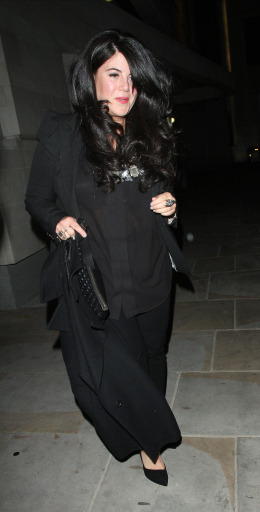
Monica in March

Monica in March

The fiasco of Anthony Weiner’s political “comeback,’ including his wife’s sad Hillary imitation, has naturally conjured up the vile memories of the Lewinsky scandal, and, in turn, Monica herself. Time magazine has a post noting her 40th birthday, and as she does not do interviews, provides a timeline regarding her progress, if you can call it that, since Bill weaseled out of the political coffin of his own making.

Monica’s life reads like a cautionary fable about the perils of allowing oneself to be exploited by a powerful man. She is an expatriot, living in England because her name is a joke in the U.S. She has no husband, children or serious romantic relationship. Unable to find a stable career where her reputation and notoriety isn’t a handicap, she has sunk to repeatedly trying to cash in on her unfortunate celebrity, with a personal handbag line, a documentary, as a host of reality TV show about romantic affairs, and as a Jenny Craig spokesperson, who was dumped because local chains refused to run her ads. Now, desperate for cash, she is said to be shopping a tell-all book about the seamier details of her White House affair.

In short, her life is crap, and Bill Clinton is the reason why. While he is lionized as an elder statesman as if he didn’t disgrace the presidency and permanently lower American expectations of the office, a young, smart, attractive woman who had every reason to expect a bright future at the age of 22, is lost because a powerful man, for selfish reasons, recklessly placed her at risk of being scorched by the fiery heat of  politics and history. Scorched she was, and she has never recovered. Continue reading

Why Photographer Arne Svensen Is An Unethical Creep

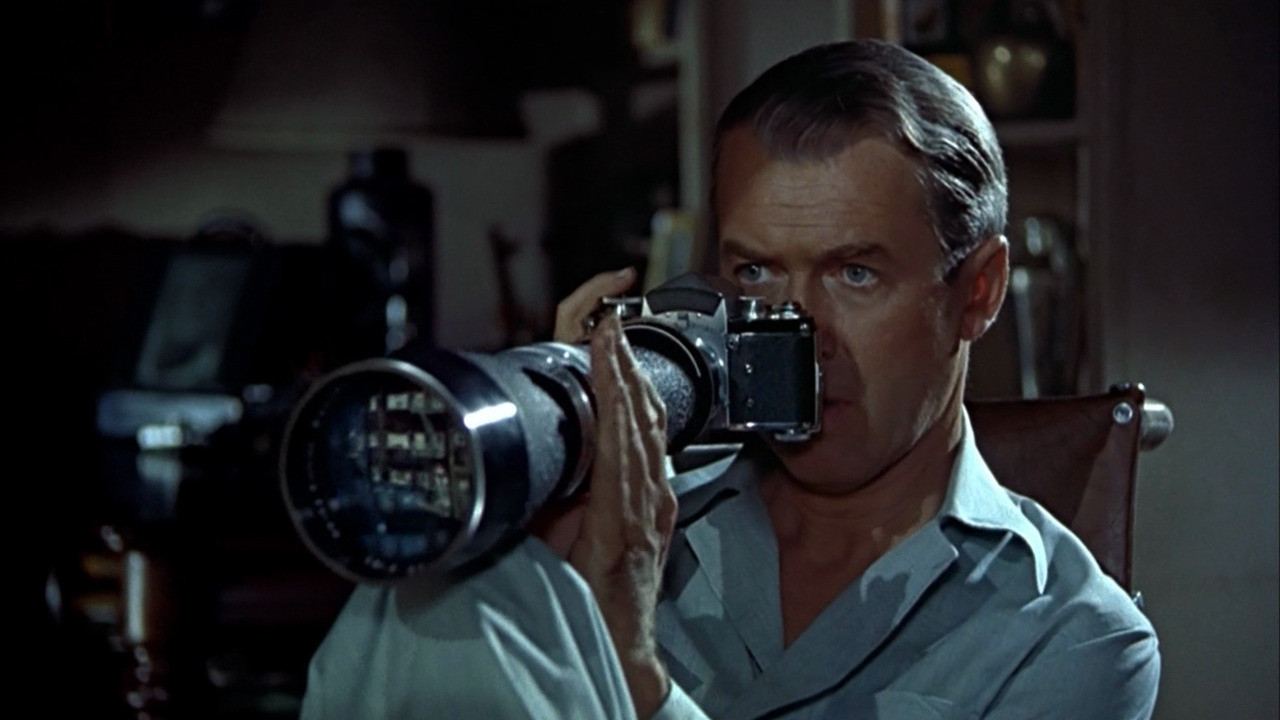
Photographer/artist/ Peeping Tom Arne Swenson as played by Jimmy Stewart in "Rear Window."

Photographer/artist/ Peeping Tom Arne Swenson as played by Jimmy Stewart in “Rear Window.”

“For my subjects there is no question of privacy; they are performing behind a transparent scrim on a stage of their own creation with the curtain raised high. The Neighbors don’t know they are being photographed; I carefully shoot from the shadows of my home into theirs.”

Believe it or not, this is how photographer Arne Svensen justifies his wildly unethical photographic peeping Tom excursions into his neighbor’s bedrooms for his own profit. This artist has provoked a controversy by 1) stalking the people who live in the New York apartment building across from his, 2) keeping a camera lens on them when they dare not to keep their windows shuttered as if they were vampires, 3) shooting photographs of whatever he sees that tickles his artistic sensibilities, fetishes or perversions, 4) choosing photos that do not show the faces of his subject victim, and 5) exhibiting and selling the results as artwork.

Amazingly, his neighbors object!

Let me cut to the chase here and be direct, because any minute now we are likely to find out that President Obama’s EPA has been secretly causing coal mine cave-ins and assassinating oil execs to forestall global warming, and that the President is outraged and just heard about it when we did, and will take strong action by telling the officials involved that they have to sit in the back during the next White House concert, and I’ll be distracted. Continue reading

NOW You Tell Us: The Undeniable Deceit In The Post-Sandy Hook Anti-Gun Push

It's a litmus test: if this story doesn't bother you, then you believe the ends justify the means, as long as you like the ends.

It’s a litmus test: if this story doesn’t bother you, then you believe the ends justify the means, as long as you like the ends.

From the Los Angeles Times:

“Gun crime has plunged in the United States since its peak in the middle of the 1990s, including gun killings, assaults, robberies and other crimes, two new studies of government data show. Yet few Americans are aware of the dramatic drop, and more than half believe gun crime has risen, according to a newly release report by the Pew Research Center. In less than two decades, the gun murder rate has been nearly cut in half. Other gun crimes fell even more sharply, paralleling a broader drop in violent crimes committed with or without guns. Violent crime dropped steeply during the 1990s and has fallen less dramatically since the turn of the millennium.”

Interesting timing, don’t you think? This information would have been invaluable during the months of Democrat-fueled hysteria following the Newtown tragedy, when gun violence suddenly was represented far and wide, on television, in print and on the stump, as a deepening crisis so serious and deadly that it warranted pushing all other priorities aside. Now, after the dishonest and emotion-based assault on guns and gun-ownership stalled, the public is provided with the information, always there and waiting in official government statistics, that would have placed the need for new gun laws in proper perspective. Instead, the public was treated to laments by mourning parents, scripted statements by Gaby Giffords, and harangues by Piers Morgan.

Gee. I wonder why more than half the public believes that gun violence is getting worse? Continue reading

The Ethics Conundrum of Jim Thorpe’s Body

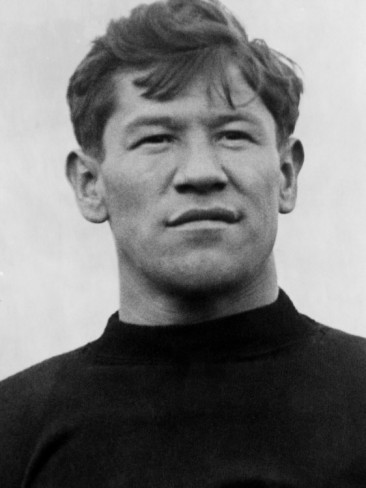
Jim Thorpe: Native American, Olympic Champion, baseball star, football star...football.

Jim Thorpe: Native American, Olympic Champion, baseball star, football star…football.

One thing is for certain: Jim Thorpe doesn’t care. The great Native American athlete whose sports legacy was as sterling as his life was tragic died in 1953, recognized by the country he honored with his record-breaking performance in the 1912 Olympics, but like so many of his race, mistreated and exploited by it as well. Since his death, however, a bizarre battle over his body has raged, and it is a perfect example of the Roshomon-like nature of  ethics in some situations. What is the right thing, the fair thing, the ethical thing? The answer sometimes depends on whose viewpoint is applied, and objectivity, the ideal viewpoint we strive for, doesn’t even exist. In an ethical conflict, moreover, there are good ethical principles on both sides of a dispute.

In Jim Thorpe, Pennsylvania, the ethical verdict of what occurred in a Pennsylvania  court last month is clear: the town has been double-crossed. A federal judge ruled that Thorpe’s remains, which lie in a mausoleum built by the town, can be moved to Oklahoma by his family, to be buried on lands belonging to his tribe. In 1953, however, two Pennsylvania towns signed a contract with Thorpe’s widow, committing them to consolidate and rename themselves after the Olympic, football and baseball legend, in return for being able to house Thorpe’s body and reap the tourism benefits of doing so. The contract was valid, if venal in inspiration: Mrs. Thorpe wanted and received cash in return. But a bargain is a bargain, and Thorpe’s presence and name has defined the town for over half a century. Losing Thorpe means losing the town’s identity and signature feature, which is a calamity. Continue reading

Unethical Quote of the Week: President Obama

“The notion that two months or three months after something as horrific as what happened in Newtown happens and we’ve moved on to other things? That’s not who we are. That’s not who we are. And I want to make sure every American is listening today…Shame on us if we’ve forgotten. I haven’t forgotten those kids. Shame on us if we’ve forgotten.”

—-President Obama, at a White House event designed to re-energize the push for stricter gun control laws.

Wrong.

Right back at you, Mr. President.

Right back at you, Mr. President.

Shame on the President…for not only making a facile, lowest-common-denominator appeal for gun control regulations, but for implying that policy should be made in the heat of emotional rather than after rational debate and analysis, looking at all sides of an issue, rather than just the most sensational.

Shame on the President…for insulting principled opponents of the Democrat’s irresponsible, hysterical and cynical effort to portray the complex issue of fire arms regulation as a matter of “saving the children” by accusing them of forgetting the horrendous massacre of toddlers at Newtown.

Shame on the President…for dishonestly suggesting that the measures under consideration, good and bad, would have necessarily done anything to prevent the Sandy Hook rampage by a deranged killer. If it would not, then why is the date of the event, whether it was 10, 100, or 1000 days ago, relevant to anything? Investigators found that Adam Lanza had a 28 inch Samurai sword in his arsenal. How many children might he have killed in the same amount of time with that, rather than his assault rifle? Watch “Kill Bill, Part I” and get back to me. Continue reading

Not Jackie Robinson, Not Even Shannon Faukner: Lauren Silberman Flunks The Traiblazer Test

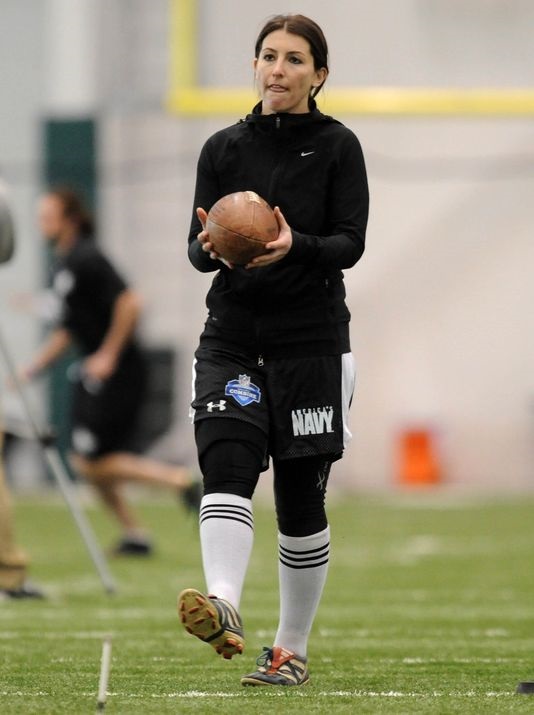
"Okay, now I kick this funny-shaped brown thingee where, again?"

“Okay, now I kick this funny-shaped brown thingee where, again?”

Call it the trailblazer’s duty. If your objective is to be a trailblazer and break through the obstacle of prejudice in an elite field, your efforts, even if not successful, had better not make the obstacle greater. The epitome of trailblazing excellence is Jackie Robinson, shattering major league baseball’s apartheid  by simultaneously becoming the game’s first black player in decades, and also one of its greatest players of all time. The bottom of the barrel in the trailblazing pantheon is probably Shannon Faulkner, who waged a high-profile legal battle to become the first female cadet at the Citadel, only to enter the school physically and mentally unprepared for the challenge, resulting in an embarrassing failure and rapid withdrawal.

Lauren Silberman, the first female to try out for the National Football League made Faulkner look good. Continue reading