The Professor and the Insensitive Law School Exam Question

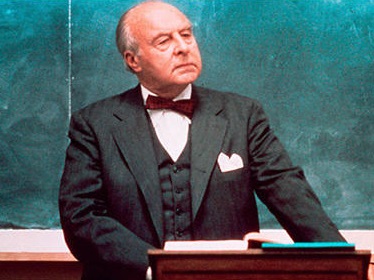
"Go ahead, tell Prof. Kingsfield that his exam is unfair because it triggers your emotions and you can't think straight. I dare you."

“Go ahead, tell Prof. Kingsfield that his exam is unfair because it triggers your emotions and you can’t think straight. I dare you.”

A Constitutional Law exam at UCLA Law School included this question:

CNN News reported: On Nov. 24, St. Louis County prosecuting attorney Robert McCulloch announced in a publicized press conference that Police Officer Darren Wilson (who has since resigned) would not be indicted in the August 9 shooting of Michael Brown. Michael Brown’s stepfather, Louis Head, was with hundreds of protesters assembled outside the police station, listening on loudspeakers and car radios when they learned Officer Wilson was not being charged. Standing on the hood of a car, Mr. Head embraced Michael Brown’s mother. Mr. Head asked someone for a bullhorn but it was not passed to him. He turned to the crowd, stomped on the hood and shouted, repeatedly, “Burn this bitch down!”

Police Chief Tom Jackson told Fox “News,” “We are pursuing those comments … We can’t let Ferguson and the community die [as a result of the riots and fires following McCulloch’s announcement]. Everyone who is responsible for taking away people’s property, their livelihoods, their jobs, their businesses — every single one of them needs to be prosecuted to the fullest extent of the law.”

County Attorney Robert McCulloch asks lawyers in his office whether to seek an indictment against Head by relying on a statute forbidding breach of the peace and another prohibiting rioting (six or more persons assembling to violate laws with violence). A recent hire in the office, you are asked to write a memo discussing the relevant 1st Amendment issues in such a prosecution. Write the memo.

The question is a fair and legitimate one, and very typical of law school exams, which often ask students to apply course content to current events. Nonetheless, it provoked a controversy.

Shyrissa Dobbins, a second-year law student in the course and is chair of the Black Law Students Association, complained, “Daily I think about Michael Brown and Eric Garner, and I have a challenge. Every day I think about this injustice and how I’m in a law school that won’t even make a statement about it.” Hussain Turk, a second-year law student who took the exam, argued that  exams should not ask students to address controversial events, and that the question was unfair, as it could be more emotionally difficult for black students to answer. “These kinds of questions create a hostile learning environment for students of color, especially black students who are already disadvantaged by the institution,” Turk said.

There is only one proper rebuttal for this foolishness:

“Grow up, deal with your biases, start thinking like lawyers or find a profession you can handle.”

Pathetically, the law professor, Robert Goldstein apologized in an email in an e-mail to students, saying, “I recognize … that the recent disturbing and painful events and subsequent decisions in Ferguson and New York make this subject too raw to be an opportunity for many of you to demonstrate what you have learned in this class this year,” and promised to discount scores students receive on the question if it lowers the overall score of the student.

Law school Dean Rachel Moran added to the misplaced sensitivity-fest, and her e-mail, said…

“In retrospect, however, he understands that the question was ill-timed for the examination and could have been problematic for students given the anguish among many in our community over the grand jury decisions in the Michael Brown and Eric Garner cases.”

Observations: Continue reading

On Peter Pan, Pippi Longstocking, And Ethics Of Applying Political Correctness To Art And Literature

Cultural events earlier this month brought to light, on two continents, the problem of maintaining the integrity of art and literature under the onslaught of political correctness.

In Sweden, a controversy has erupted over the re-broadcast of a 1969 television adaptation of the Pippi Longstocking books, the children’s classics authored by Astrid Lindgren. The Swedish national TV station, SVT, announced that it is revising a scene from the 1969 television series about Pippi  which she says her father is “king of the Negroes,”a direct quote from one of the stories. Believe it or not, this has set off a contentious national debate.

The family has approved the station’s  desire to change the TV version, but is keeping the term in future editions of the books. In 2006, the family added a preface explaining that today, the word is considered “offensive,” but that when the books first appeared, “Negro was a common expression for people with black skin who lived in other parts of the world than ours.” That’s a sensible solution. Period and context is important in art and literature: the urge by some to constantly purge the world of any reference, word or attitude in past creations that seem out of place now leads to a form of cultural self-lobotomy. Erik Helmerson, a columnist at Dagens Nyheter, an influential Stockholm newspaper, called the changes a form of censorship. “I’m very sensitive to the fact that people are offended by the N word,” he said in an interview. “I’d never use it myself.” He even called revising the TV series  “a huge interference into freedom of speech.”  “Where do we draw the line? What do we cut and what do we keep? Who should decide? Who needs to be offended before we cut a word?” Continue reading

Here’s A First: Kansas Suspends A Lawyer For Facebook Bullying

It's unethical for a lawyer to play a sad violin over Facebook??? Why yes, it is!

It’s unethical for a lawyer to play a sad violin over Facebook???  Why yes, it is!

Eric Michael Gamble was representing a biological father opposed to the adoption of his daughter, which had been approved by the 18-year-old mother.

After Gamble deposed the young woman, he messaged her on Facebook in a shamelessly manipulative fashion, saying…

‘I wish to offer you some reasons why you should stand up and fight for your daughter. As you know, I am the attorney for [the biological father]. We held your deposition in my office. I wanted to give you the chance to make things right. This may be your last opportunity to be a mom for [the baby]. As I told you after your deposition in my office, it is not too late. You still have a wonderful opportunity to have a real relationship with your daughter if you so choose. I have attached a document for you to consider signing and bringing to court or to my office. It is a revocation of your consent to adopt. If you sign this document there is a very good chance that you will be able to call [the baby] your own and [the baby] will call you her mom. I can’t begin to explain how beautiful and wonderful parenthood is. I have a little girl myself and she is my world just like you are your dad’s world. [The baby] deserves to know her parents. She deserves to know that you love her and care for her as well. Do not let this opportunity pass you by because you will live with this decision the rest of your life and [the baby] will know someday what happened. [The adoptive parents] do not legally have to ever let you see her again after court (although they are probably trying to convince you otherwise with the idea of an ‘open adoption’). The reason why you don’t know about the trial was because they don’t want you there because that doesn’t help [the adoptive parents] case. This is your time to get rid of the guilt and standup and do what is right and what [the baby] deserves. She deserves to have her parents love and care for her. She deserves to know her grandparents and extended family. If she’s adopted, she won’t have that chance. [The biological father] wants to be her dad and to love her. She deserves that. I urge you to print, sign, and notarize this document and bring it to my office before court. Trial is June 27, 2013, at 9:00 a.m. at the Johnson County Courthouse, Division 15. I hope to see you and your father there.’

What’s wrong with this? The legal ethics rules protect unrepresented parties in a matter from exactly this sort of pressure. Rule 4.3, in Kansas and elsewhere, prohibits a lawyer from giving advice to adversaries of his or her client, which statements like “This is your time to get rid of the guilt and standup and do what is right and what [the baby] deserves” clearly are. The rules also require lawyers to treat all participants in the justice system with fairness and respect. That message constitutes neither. Rule 4.4 says that “In representing a client, a lawyer shall not use means that have no substantial purpose other than to embarrass, delay, or burden a third person.” Gamble has a defense, of course: his substantial purpose was to have the adoption dropped like his client wanted, but since he wasn’t supposed to be talking to her anyway (other than to advise her to get a lawyer), that wasn’t going to fly. Rule 8.4, meanwhile, says that a lawyer must not “engage in conduct that is prejudicial to the administration of justice.”

After he lost the case, Gamble reported himself for the Rule 4.3 violation. This is usually a good tactic to encourage lenient treatment, but in this case, it didn’t work. In suspending Gamble for six months, the Kansas Supreme Court seemed to invoke all three of the violated rules, as it wrote,

“…As the hearing panel noted, respondent “attempted to manipulate the biological mother and, as a result, interfered with justice.” Respondent’s conduct “amounted to emotional blackmail” of an unrepresented 18-year-old who was dealing with a process that was already “’emotionally exhausting.'” His “electronic message was designed to embarrass, burden, and create guilt in the mind of the biological mother.” These “bullying tactics directly reflect on [respondent’s] fitness to practice law as an attorney.” Consequently, we hold that the respondent should be suspended for a period of 6 months. A minority of the court would impose a longer period of suspension. We unanimously order a reinstatement hearing under Rule 219.”

And the social media claims another victim.

Addendum: I was remiss, in posting this, not noting that the underlying issue in the lawsuit is a far more serious and complex ethical and legal one than the topic of this post: the matter of unwed mothers putting their new borns up for adoption without the father’s consent or participation. That has been a battle royale on Ethics Alarms twice, and you can review it here.

_________________________

Pointer: ABA Journal

Facts: Legal Profession Blog
Ethics Quiz: The Harvard Prof and The Erroneous Chinese Restaurant Menu

Perfect! Just what you need to handle that pesky flea, Professor!

Perfect! Just what you need to handle that pesky flea, Professor!

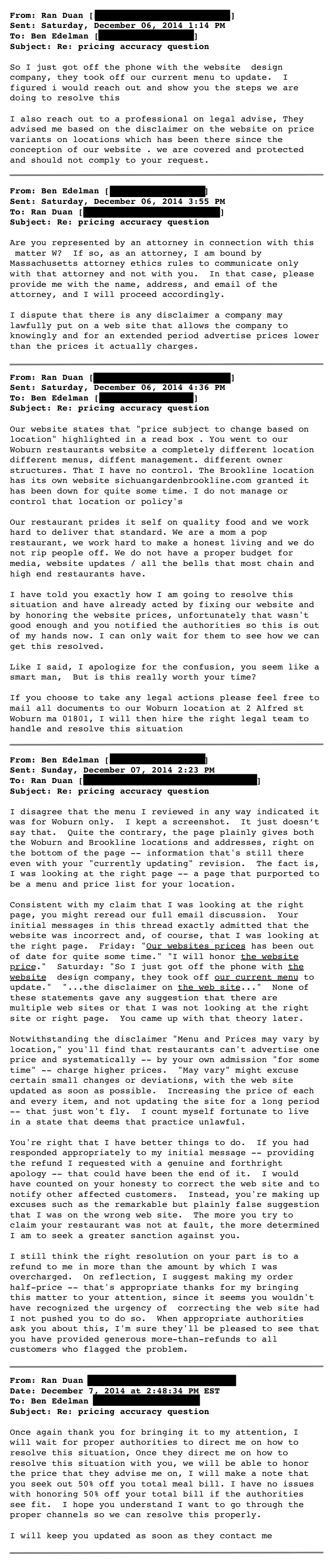
Ben Edelman, a rather well-noted Harvard Business School professor, had this fascinating exchange with a local Szechuan restaurant:

Edelman 1Edelman 2Your Ethics Alarms Ethics Quiz:

“Is Prof. Edelman’s conduct ethical?”

Continue reading

Signature Significance Verdict: Lena Dunham Is An Awful Human Being

 UPDATED!

Yechh.

Yechh.

If her boasting about abusing her little sister in her memoir wasn’t enough, Lena Dunham’s revealed conduct regarding “Barry” in the same tome rings the signature significance bell. No human being with a sufficient amount of decency would do something like this, even once.

In case you have not followed the latest ethics scandal involving the over-praised creator and star of HBO’s “Girls,” what occurred is this:

In one chapter of Dunham’s memoir “Not That Kind of Girl,” the feminist actress describes as factual an episode of sexual assault or rape that she says she experienced while an undergraduate at Oberlin. Her assailant was a well-known campus “Republican,” she says, a conservative whom she refers to as Barry—without the conventional quotes that would indicate a pseudonym.

There was, as it happens,  a real Oberlin college graduate from the same period named Barry, then well-known as a conservative, which then as now, is a species about as common at Oberlin as velociraptors. Besides his name and campus reputation, Barry fit some of the other details given by Dunham, such as wearing cowboy boots and sporting a flamboyant mustache. Now the 28-year-old man (the same age as Dunham)  is being tarred as a rapist, and has been forced to take down his social media accounts. He has hired a lawyer named Aaron Minc, with the help of donations from GoFundMe to help pay his legal fees, and has promised that any money he receives from the suit exceeding legal fees will go to charities assisting survivors of rape and sexual assault.

Dunham has not had the courage or decency to say anything, to or about Barry. But yesterday Random House did, in an extraordinary statement and admission: Continue reading

Transparency, Causation, Eggshells, Trust : Seven More Ethics Issues In The Eric Garner Case

jigsaw-puzzle-record

1. There is near unanimity in the response to the non-indictment by the Staten Island jury in the Eric Garner case. In light of the graphic video, it is hard to see how there wasn’t probable cause to indict. The coroner verdict of “homicide” would see to provide sufficient evidence all by itself. However, in the absence of the complete record of what the grand jury heard and saw, nobody can be certain that this was a miscarriage of justice. However, given the context of the case and its deleterious impact on faith in the justice system, that is no solace and scant mitigation. As in Ferguson, it is prudent and essential that the public see what the decision was based upon. It is true that those who are determined to see injustice, bias and racism will do so regardless of what the evidence shows–again, as in Ferguson—but the only evidence that has been made public, the various videos and the officer’s testimony–only makes the non-prosecution more suspicious.

2. Can the non-prosecution be justified? If so, the only reason I can see would be lack of proof of causation. Causation is tricky, and  juries get confused about how to analyze it. Since it is fair to assume Daniel Pantaleo did not intend to kill Eric Garner, the issues are a) whether his actions during the arrest were negligent, and b) whether they were the proximate cause of Garner’s death. That his conduct was negligent is not enough to sustain and indictment—that negligence had to be the reason Garner died. Remember, he was not choked to death. The medical examiner ruled that Garner died from a collection of factors: compression on his chest and throat, the position he was forced into, his obesity, weak heart, and asthma, all causing asphyxia.

  • If Pantaleo’s actions alone would not have caused Garner’s death, then it could be legitimately argued that he was not guilty of a crime. The other officers were given immunity for their testimony, which seems like either a bad decision by the district attorney, or intentional sabotage of the case against Pantaleo’s. If it was the collective action of the police that caused Garner’s death, it would be unjust to make Pantaleo the sole officer punished. If some of the testimony from the unchargeable cops made the case that it was another officer, or several, who really caused Garner’s death, that would explain the no indictment result.

In the widely seen video of the arrest, Pantaleo can be seen with his arm around Garner’s neck as Garner is taken to the ground and for some time thereafter, but in watching the video it’s difficult to determine whether Garner was in fact choked. And if he was, it did not appear it was long enough even to render him unconscious, much less kill him…I saw nothing excessive in the manner in which the officers subdued Garner. He was neither beaten with batons nor even punched. To me, it appeared to be a fairly typical scuffle with a large man who had clearly demonstrated his unwillingness to be arrested peacefully.

He misses the point. The question is whether the take-down was excessive for Garner, not some theoretical average arrestee. It is true that with a normal, healthy subject, what the officers did would not typically cause death….but Garner was obviously not normal, nor healthy. He was morbidly obese, and 350 pound middle-aged people tend to have the kinds of heath issues Garner in fact had. Nobody would argue that an elderly woman or a ten-year old girl or someone in a wheelchair should be manhandled like that. Such treatment was negligent for Eric Garner, and the deadly result could and should have been anticipated.

It is true that the officers couldn’t know that Garner had a weak heart and suffered from asthma, but it doesn’t matter: the rule in negligence is that “you take your victim as you find him.” If your negligence is the proximate cause of someone’s death, the fact that it wouldn’t have caused anyone else’s death is no defense. This is the so-called “Egg-shell Skull” rule.

Garner was an egg-shell perp. Continue reading

The Wall Street Journal’s Uncultured Culture Critic

Joanne Kaufman was here...

Joanne Kaufman was here…

In a jaw-dropping essay for her employer, The Wall Street Journal, alleged culture critic Joanne Kaufman proudly and candidly disabuses readers of any misconceptions they might have had regarding her qualifications for her job. She is not merely unqualified, but willfully, shamelessly, spectacularly unqualified. In a smug screed in which she admits to habitually walking out on Broadway shows at intermission, Kaufman reveals herself as lazy, arrogant, disrespectful of artists, and most crippling of all, to be afflicted by the attention span of the average Twitter addict.

“Don’t ask me what happened during the second acts of “Matilda,” “Kinky Boots,” “Pippin” and, reaching back a few seasons, “Boeing-Boeing” and “Billy Elliott, ”  Kaufman boasts.  “Really, I have no idea. But I am nothing if not cosmopolitan in my tastes, or distastes—French farces, English musicals set in gritty industrial cities, and American entertainments involving Charlemagne ’s Frankish kin.”

You can read her entire piece here; if the Journal doesn’t fire her, it is run by fools. “I’m of the “brevity is the soul of wit” school and of the belief that only a few bites are required to determine that you just don’t like a particular dish,” she happily admits. “My ideal night in the theater runs 90 minutes without an intermission (it is best not to put temptation in my path), which means that Shakespeare and I don’t tend to see a lot of each other.” This is the culture writer, remember. Yet she is admitting to membership in the lazy, sound-bite, bumper-sticker, multi-processing, distracted, ADD-addled public that has caused writers, playwrights, producers, book publishers, film-makers and song-writers to dumb down, redact, trivialize and simplify entertainment in an accelerating death cycle: plots don’t make sense, explosions start early, subtlety is forbidden, and no issue, thought or topic that can’t be fully explored in the time it takes to do a load of laundry is going can find its way on stage or screen. The Journal’s culture writer doesn’t have the time or interest to sit through King Lear, Hamlet, The Ice Man Cometh, or Death of a Salesman,  or to view all of “Seven Samurai,” “A Man for All Seasons” or “Gettysburg”—hey, a movie about one of those short Civil War battles for Joanne, please: she’s got a 15 minute segment of “Robot Chicken” to catch. Continue reading

Ethically Incoherent Statement Of The Month: Van Jones

Van Jones: Reasonable or biased?

Van Jones: Reasonable or biased?

Van Jones, the former White House “czar” of something or other turned smooth-talking racialist warrior on CNN’s “Cross-Fire” and various TV panels, was arguing for frank racial dialogue on ABC’s “This Week With George Stephanopoulos,” in the context of the protests over the Ferguson and Staten Island police grand jury decisions. Sounding reasonable as he often does, Jones then said that what should be an area of agreement is the need for a special prosecutor whenever police misconduct is before a grand jury, noting that it was an “obvious conflict of interest”for prosecutors who work with police as a core element of their job.

I have addressed this argument before, but let me be clearer. This is a conflict of interest that a competent and ethical prosecutor should acknowledge and be able to deal with as the legal ethics rule require. The prosecutor should get a waiver from his or her client—not the victim’s family, but the government the prosecutor represents—and honestly assess whether the fact that the police serve the same client will prevent the prosecutor from being fair and objective. If the answer is yes, then the prosecutor must recuse, but I see no reason why the answer should be yes, if the prosecutor is ethical and worthy of the position.(Jones and other advocates for this “solution” have a bias against prosecutors, whom they view as presumptively unethical.)

Theoretically, every case in which an officer’s credibility determines whether a citizen should be charged poses the same conflict: it is endemic to the prosecutor’s job. Indeed, prosecutors have a very good reason to want bad cops punished and removed from the police force; I’m not at all certain that there is a necessary bias on the part of prosecutors in favor of letting such cops escape legal consequences of their actions. That assumption is based on the assumption that prosecutors don’t care about  justice. Nobody who doesn’t care about justice becomes a prosecutor. Why would they? It is a hard, frustrating job and the pay isn’t anything special.

The strongest argument for a special prosecutor is a different ethical problem, the appearance of impropriety. If the decision to prosecute or not is tainted with suspicion of bias, then the justice system is compromised and breaks down. This is why, for example, it is terrible that the Justice Department, a super-politicized one at that, is supposedly investigating the I.R.S. scandal.

As George moved to another topic, Jones blurted out a final statement that caused me to spit-take a mouthful of coffee. It undermined all of his finely tuned rhetoric about fairness and non-partisan dialogue about race, and exposed, ironically, his own biases. He said;

“If there had been a special prosecutor in Ferguson, we would have had a different result.”

AHA! Continue reading

Journalism Ethics Reality Check: What The Entire News Media Did To Darren Wilson With Dorian Johnson’s “Hands Up” Story Is EXACTLY Like What Rolling Stone Did To UVA With “Jackie’s” Rape Account, Just Worse.

Am I the only one who sees this?

Two train wrecks, same track...

Two train wrecks, same track…

I discern that I was too subtle—imagine that!when I wrote,

In light of all this, it seems that women really have done a relatively poor job at intimidating the left-biased media as well as its progressive pundits and elected officials. If they had sufficiently pressured journalists into believing that to challenge their accounts of rape, substantiated or not, was proof positive of malicious animus, like the civil rights machine has regarding narratives of police racism, they could depend on much of the media continuing to repeat the Rolling Stone account as truth even if it is completely discredited. This is, after all, what we are witnessing right now, as the recent grand jury decision in the Eric Garner death has allowed columnists, reporters, and broadcasters—and thus protesters and politicians—to continue to represent what happened to Michael Brown as if Dorian Johnson’s discredited description of his friend’s death was fair, accurate and unbiased.

So let me be clear….

We are told the the news media is furious with Rolling Stone over its discredited and anonymously sourced gang rape accusation against the University of Virginia’s chapter of the Phi Kappa Psi fraternity. Why is it not similarly critical of itself for publicly and far more widely accusing a single, named Ferguson police officer, Darren Wilson, of a race-motivated, cold-blooded execution of an unarmed man based on the allegations of Dorian Johnson? They are, from a journalism ethics perspective, equally irresponsible and unprofessional, and predictably more harmful. It is, we can stipulate, worse for a police officer to be accused of first degree murder than for unnamed members of a fraternity to be accused of rape.

Note:

1. Both Rolling Stone and the mainstream media were eager to accept the stories being told as fact because of their own ideological biases.

Rolling Stone is committed to the current campaign of the left to portray college campuses as perpetuating a “rape culture.” The mainstream media, as it had already proved in its slanted and incompetent coverage of Trayvon Martin’s death and the trial of George Zimmerman, is a shameless ally of the cynical Democratic Party’s tactic of representing the nation as racist. Continue reading

Unethical Tweet Of The Month (Or Eternity?), “Jackie’s” UVA Gang Rape Ethics Train Wreck Division: Melissa McEwan

Melissa McEwan's profile photo. I'm not going to say a thing. No, really. Not a thing.

Melissa McEwan’s profile photo. I’m not going to say a thing. No, really. Not a thing.

“I can’t state this more emphatically: If Jackie’s story is partially or wholly untrue, it doesn’t validate the reasons for disbelieving her.”

Melissa McEwan,  feminist proprietor of @Shakestweetz, an-all tweet blog, responding to the meltdown of the Rolling Stone story accusing a University of Virginia fraternity of gang rape.

Look, I’m not going to insult you by explaining what’s wrong with the assertion that those accusing others of horrific crimes shouldn’t be held to strict standards of credibility.

What is more significant than McEwan or her tweet is that this frightening and dangerous state of denial is moving from the status of self-evidently insane to acceptable. As I suggested in the previous post about the Rolling Stone retraction of its explosive story by Sabrina Rubin Erdely, the Ferguson demonstrators, the “Hands up!” protestors, the Congressional Black Caucus, and  pundits like Eugene Robinosn who are still arguing that Officer Wilson should be indicted are doing essentially the same thing. Having decided that the Ferguson narrative pressed by civil rights activists communicated a deep truth about America, they refuse to accept that it was false even in the face of overwhelming evidence because they are intellectually and emotionally committed to that “truth.”

The tweet also forces me to upgrade the Rolling Stone fiasco to Ethics Train Wreck status. Continue reading