Is a Transgendered Woman Ethically Obligated To Tell Her Boyfriend That She Used To be Male?

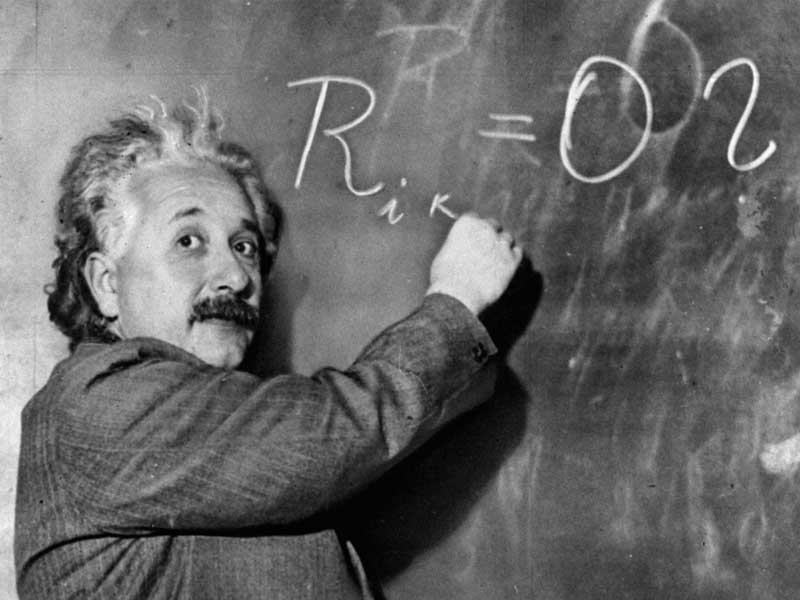
“Is this a bad time to tell you that I used to be a man?”

Sometimes I wonder if Emily Yoffe’s Slate advice column (“Dear Prudence”) is like the old Penthouse Forum, where it was clear to any reader who hadn’t purchased the Brooklyn Bridge twice that a team of giggling writers was coming up with the feature’s bizarre letters about orgies with amputees and people having sex in piles of fresh fish. But never mind: her most recent column makes an interesting ethical assertion is response to a woman who is troubled that her transgendered cousin refuses to tell her serious boyfriend about the jockstrap in her past:

“I think you should tell your cousin she’s living in a dream world and that she’s being unfair to John, even if he has a lack of desire for children. Of course, it could be that John flees, or it could be that he says, “She’s more than woman enough for me.” But it’s his right to know the crucial piece of history.”

I agree with Yoffe that the cousin is deluded if she thinks she can keep her past gender hidden forever if the relationship continues, and that the revelation of a secret of such magnitude is bound to be more disruptive the longer it is hidden. But is she correct that he has a right to know about it? Elsewhere Yoffe suggests that not telling him is dishonest. Why?

I understand the theory that couples shouldn’t withhold personal information from one another in the interest of mutual trust. Surely each member of a committed couple has an obligation to reveal any personal information that has the potential to affect the other. Is there an obligation to reveal personal information that one knows a boyfriend or girlfriend will be shocked to learn, or that will tap into visceral fears or biases? Author William Saroyan left his wife on their honeymoon when she revealed to him that she was Jewish, which highlights the irony of the problem: if a woman knows that a secret may cause a lover to reject her, however irrational that reaction would be, then is she ethically obligated to tell him but not obligated if she is sure he wouldn’t care? In other words, is one only ethically obligated to reveal the secrets that will destroy a relationship?

That seems strange. Continue reading

Comment of the Day: “Ethics Quiz: The Peculiar Ethics of Carnival Games”

Reader John Owens supplies  perspective and expertise on carnivals and local fairs in his Comment of the Day regarding the post “Ethics Quiz: The Peculiar Ethics of Carnival Games.”    Here it is: Continue reading

Twitter Ethics: The Guy Adams Affair

Twitter has come under fire from ignorant free speech advocates—essentially the same people who accuse me of “censorship” when I refuse to allow an anonymous comment, in violation of Ethics Alarms policies, on my own blog —because it removed a journalist Guy Adams’ account after he violated Twitter’s privacy rules by tweeting the email address of NBC executive Gary Zenkel over various Olympics coverage controversies. The main complaint is that apparently someone at Twitter notified Zenkel and alerted him to the process whereby he could get the tweet and the account taken down according to Twitter’s policies. Here is a representative reaction, from blogger Matt Honan at Wired:

 “Here’s an interesting thought experiment. Imagine that instead of going after an NBC executive, Adams’ target was a dictator. Imagine that Adams tweeted, say, Syrian president Bashar al-Assad’s email address, along with a call to action to protest his policies. Had Twitter worked back-channel with the Syrian government, showing it how to have Adams’ account taken down on a technicality, it would clearly be an indefensible act of censorship. Heads would roll.”

Heads might roll, but Honan is wrong. It would not be “an indefensible act of censorship.” It would not be censorship at all. Continue reading

Ethics Quiz: The Peculiar Ethics of Carnival Games

The AARP website has a post about rigged carnival games, a topic that I have always found intriguing from an ethics perspective. The games…The Basketball Shoot, The Balloon Dart Throw, The Ring Toss, The Milk Bottle Pyramid, The Duck Pond and the rest…are rigged, and I can’t remember a time when I didn’t know they were rigged. It didn’t stop me from playing the silly things. A carnival is a state of mind, a flashback to the days of P.T. Barnum and flim-flam artists. An ethical carnival? Isn’t that an oxymoron? We eat terrible food, pay to go on disappointing rides, listen to barkers who we know are lying through their teeth, and play games that are scams in order to win cheesy prizes worth a fraction of what we paid out to win them and that we wouldn’t dream of buying outside a carnival anyway. That’s the carnival experience. It’s all unethical, and we consent to it.

Or is this just a rationalization? Is capitulation the proper ethical course, or should we carefully regulate carnival games, make sure all of the food is cholesterol-lite and sugar-free, and force the barkers to issue disclaimers and warnings like the recitations in TV drug commercials?

That’s your Ethics Alarms Ethics Quiz for the day, my friends:

Do traditional unethical practices become ethical in the culture of a carnival and similar environments, where the public voluntarily participates in and consents to its own victimization?

With cotton candy dancing in my head, corn dogs singing their siren song and images of the Wild Man of Borneo howling in my fevered brain, I have to confess that my inclination is to say, “Yes.”

And you?

_______________________________________________

Spark: AARP

Graphic: Photolibra

The Name Shame

Millard understood.

Giving one’s children ridiculous, bizarre or otherwise perverse names is the height of parental arrogance and narcissism, an abuse of power in which Golden Rule considerations evaporate in the desire to place a distinctive mark on the child of one’s creation, like a brand or a particularly garish tattoo.

There is some weak historical evidence that an oddball name can point a child to leadership or other kinds of singular achievements by isolating him or her from peers. A number of U.S. Presidents have had rare names, with four using their middle monickers to be more distinctive, and one, Lyndon Johnson, being specifically named by his mother so he “would look good on a ballot.” But there is also evidence that strange names are handicaps, and no doubt at all that they risk making children a lot more miserable than calling them Ed, Elizabeth or Frank.

Over at Deadspin, Drew Magary has harsh criticism for the apparently rising trend of wacko names, and all power to him. He combed through a Parents Magazine survey of the names favored by 13,000 people, and arrived at the horrifying conclusion that “Americans are somehow getting even worse at naming children, and they show no signs of correcting themselves.”  Among his trenchant commentary on the names he discovered: Continue reading

Ethics Dunce: Rev. Stan Weatherford

Rev. Weatherford with a parishioner

The First Baptist Church of Crystal Springs, Mississippi has never hosted the wedding of a black couple in its 150 year history, so you can imagine how important it was to the congregation not to break a perfect record. All right, that’s unfair: only a handful of white church members protested to Rev. Stan Weatherford when they learned that he was preparing to wed Charles and Te’Andrea Wilson at First Baptist, but their threat that they would have him voted out of his job if he did was sufficient to cause him to tell Charles and Te’Andrea, just two days before the scheduled ceremony, that they would have to move the event to another church.

“I didn’t want to have a controversy within the church, and I didn’t want a controversy to affect the wedding of Charles and Te’Andrea. I wanted to make sure their wedding day was a special day,” Weatherford told local reporters. Continue reading

For Ethics Dunce Madonna: the Concert Performer’s Eight Duties

In London, we had Bruce Springsteen, playing so long for his audience and fans that his performance went past the curfew. In Paris, we have Madonna, stiffing paying customers who paid top dollar (“top euro?”) with a 45 minute appearance that was late getting started because the Material Myron couldn’t bother to get to her own concert on time.

Pop and rock music fans have long been more tolerant of unprofessional performers than their parents and grandparents, and to some extent they have created a tradition of tolerance to this kind of blatant disrespect and arrogance that is self-perpetuating. The betrayed fans in Paris rioted over Madonna’s inexcusable conduct, which is a bit much, but still: she disappointed and robbed them. 45 minutes of a star attraction isn’t fair return on tickets that many patrons slept in the street to acquire. Madonna owes everyone a refund, and apology, and a pledge to honor her duties as a performer from now on. For the benefit of her and the shocking number of other singers and recording stars who disappoint and abuse paying concert-goers this way, here are what those duties are, and their underlying ethical foundations: Continue reading

Ethics Quiz: Who Is More Unethical…the Coward Who Left His Girlfriend and Child to Die, Or the Girlfriend Who Agreed To Marry Him Anyway?

Would an ethical woman marry George?

I am a great fan of the old Seinfeld show in general and the George Costanza character in particular (all ethicists love George, who  exemplifies how messed up a life without ethical instincts can be), but I didn’t laugh at the episode when he smelled smoke at kids’ birthday party and trampled the children as he escaped in panic from the apartment. And that was just a TV sitcom; the actions of Jamie Rohrs, the Colorado man who ran out of the Aurora movie theater when James Holmes started shooting and drove away in his truck, leaving behind his girlfriend and her two young children—one of whom was fathered by him— go beyond unfunny to revolting. Luckily, and no thanks to Rohrs, Patricia Legaretta and her kids did not die, because a stranger, Jarell Brooks, helped them escape the theater and the massacre.

Then comes the rest of the story, revealed to Piers Morgan on CNN: after his act of aggravated cowardice, Rohrs had the gall to propose to the mother of his child, and Legaretta, incredibly, accepted.

Your Ethics Quiz:

Who is more unethical—Legaretta, or Costanza, er, Rohrs? Continue reading

Hypocrites of the Year: The NCAA

Emmert: “Never again will the NCAA be blamed for the results of the culture we encourage and support. We hope.” (Or words to that effect.)

What’s wrong with the NCAA’s epic sanctions against Penn State in the wake of the Jerry Sandusky pederasty scandal? I’ve been thinking about this for a couple of days, and I’ve concluded that the answer is “Just about everything.”

Most of the focus of the media and pundits have been on the “punishing the innocent” complaint. As a general rule, I detest aversion to punishing the innocent as a justification for inadequately punishing the guilty or otherwise avoiding necessary steps to address problems; it’s a rationalization for encouraging unethical, exploitive, illegal and even deadly conduct. This toxic rationale has caused incalculable harm across the globe; it currently abets illegal immigration, out-of-wedlock childbearing, and the international crimes of dictators. The United States, within our lifetimes, may drive itself into financial collapse by adopting the theory that it is unfair and unethical to “punish” the expectant beneficiaries of entitlements that the nation can no longer afford by reducing  benefits, or by taxing wealthy citizens who opposed the profligate spending in the first place. As Ethics Bob writes in his post about the Penn State sanctions,

“Accountability for wrongdoing often brings down the innocent along with the guilty. Think about the workers at Enron, Arthur Anderson, or MCI-Worldcom, who lost their jobs when their bosses’ malfeasance destroyed their companies… there is no way of punishing the guilty without harming people close to, or dependent on them. Even a mass murderer–when he is sent away his mother suffers along with him. When Al Qaeda militants are killed, their family members often die with them.”

Bob isn’t making an invalid “everybody does it,” argument, but a practical, “that’s the way the world works” argument.  If we believe in accountability, we have to accept the fact that the innocent will often be collateral damage. It isn’t fair, but this is utilitarianism at its most persuasive. Allowing wrongdoers to  prosper is ethically worse.

If the NCAA sanctions against Penn State were otherwise appropriate, I wouldn’t have a problem with the collateral damage. They aren’t appropriate, however. The sanctions are unethical. Continue reading

The Power To Ignore

“And now the news…”

The news media’s choice of news stories, which to highlight, which to ignore, which to bury, has never seemed more suspect. NBC has made heroic efforts not to cover the Fast and Furious scandal; the Washington Post made a painted-over slab of rock at a hunting lodge a front page story to embarrass Gov. Rick Perry, and now the latest madman shooting tragedy is being mined for all the anti-gun sentiment that can be stimulated by human interest stories about the victims and solemn grandstanding statements by politicians. Meanwhile, the fact that every psychologist experienced in such matters cautions that publicizing such shootings encourages future massacres carries no weight with journalists at all. They will lecture us on the panacea of gun control but refuse to restrain themselves from giving homicidal maniacs exactly what they seek…fame. Ironically, the anti-gun slanted news coverage may ultimately be more responsible for the next Aurora than lax gun laws.

Journalists also will avoid confusing the public with stories that suggest that the issue of gun violence is more complex than they would like to acknowledge.

A week ago, 71-year-old Samuel Williams and his wife were  with 34 other patrons at a Jacksonville, Florida internet café.  Duwayne Henderson, 19, and Davis Dawkins, also 19, burst in on the scene, Henderson with a handgun and Dawkins with a baseball a bat. They announced their intent to rob the café and its customers, prompting Williams, a concealed carry permit holder, to pull out his .380-caliber handgun, drop to a semi-crouching position, and open fire on the would-be robbers. Continue reading