Ethics Quiz: Twitter Ethics

An Ethics Alarms Quiz for a hot sleepy Sunday:

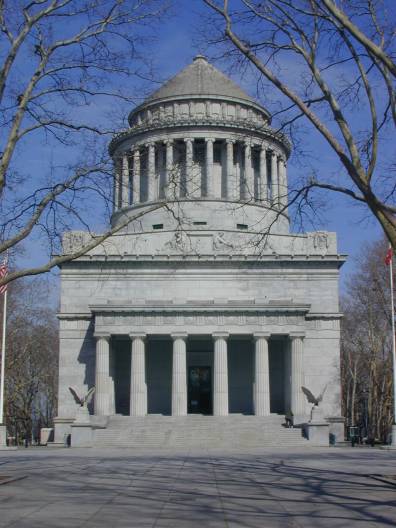
Grant’s Tomb or the National Stupid Question Monument

Young Georgia Ford of Great Britain wasn’t a veteran of Twitter, and when she sent a tweet to her followers naively asking if the Wimbledon tennis tournament was “always held in London,” she had no reason to expect that viral re-tweeting would make her an international laughingstock. It did though, as thousands of Twitterphiles, and some celebrities, pounced on her question and mocked her by name. “Wow, that Georgia Ford tweet from earlier is possibly the dumbest thing I’ve ever heard,” tweeted one Laurence T. Green, who obviously does not follow the speeches of Joe Biden, the political opinions of Bill Maher, or the periodic pronouncements of Rep. Allen West. Embarrassed and humiliated, with her name being made a synonym for ignorance, Georgia closed her Twitter account.

Your Ethics Quiz: Was Georgia’s treatment by the Twittersphere unethical, or was her tweet fair game for ridicule? Continue reading

Comment of the Day on “Ethics Quiz: Jury Nullification For A Molestation Victim”

Here is the Comment of the Day, Eeyoure’s deliciously indignant dressing-down of the jury whose verdict was discussed in today’s post, “Ethics Quiz: Jury Nullification For A Molestation Victim”:

“The jury’s verdict was absolutely perverse.  The jury ignored truth about specific law for which they were responsible for finding guilt or innocence, where evidence existed beyond reasonable doubt that the law was broken.  Simultaneously, the jury concluded that irrelevant evidence, plus the defendant’s testimony, proved guilt beyond doubt of a person who was not charged, not on trial, for breaking of law for which the jury was not responsible for finding guilt or innocence.

“The jury’s verdict was the culmination of an orgy of medieval reparations-groupthink, a determined seizing of lowest available ground in the terrain of societal unrest.  The members of the jury made themselves a proud, self-serving, self-satisfying gang of “justice”-dolers, caught-up in extolling the glories of vengeance.  This was a jury that obviously considered with the utmost gravitas (that is sarcasm) the notion that “justice delayed is justice denied.”  No matter how long was delayed the justice THEY felt was due, they saw it as their sovereign right to determine that such justice would not be denied, and to determine who would deliver (that is, who did deliver) that justice, blameless.  (more sarcasm coming) What a shining moment in jury-rigged righting of historical wrongs! (end sarcasm)

“Well, chances are rather high that none of the jurors will ever read here.  So, they can just each go their merry way, keep marching merrily along as ignorantly and unthoughtfully as ever, proud of the “justice” they have served.  Without ever taking the simplest, tiny, extra step of considering, for example, by their own jury-“reasoning,” how their verdict thoroughly justifies any friends, allies, or sympathizers of the old man who was beaten in the retirement home stalking THEM (the jury members and their hero) for the rest of THEIR (the jurors’ and hero’s) days – then suddenly, at a convenient and opportune moment, beating every one of THEM every bit as savagely as was beaten the man by the assailant whom they let off the hook.

“With “justice” like this jury has upheld, who needs to hold a stinkin’ court?”

Ethics Quiz: Jury Nullification For A Molestation Victim

Really?

A San Jose jury acquitted William Lynch of criminal assault, despite his admission that he had beaten a former priest who had molested him as a child. After the acquittal, Lynch was cheered outside the courtroom.

Lynch told reporters he fully expected to be convicted, but had hoped that his testimony would call more attention to the child abuse problems in the Catholic Church. He visited his victim, Rev. Jerold Lindner, at the retirement home where he now lives.  The 65 year-old who allegedly molested Lynch and his younger brother in 1975 was confronted by Lynch, and when he told Lynch that he didn’t remember him, Lynch attacked him and “beat him almost to death” according to witnesses.

Your Ethics Alarms Quiz question:

Was the jury verdict ethical? Continue reading

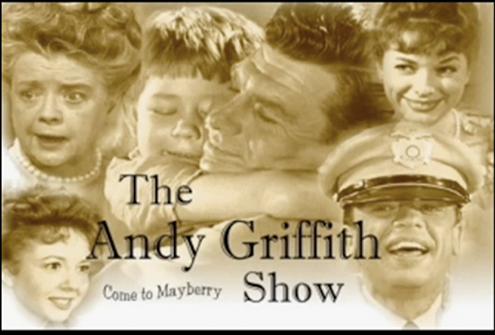
Rest in Peace, Andy: Mayberry Wasn’t Racist

In the wake of Andy Griffith’s death today, a friend of mine wrote this on Facebook: “If you’re waxing nostalgic about Mayberry as an idyllic 1960s Southern town, remember that it had no Negroes living there. Is it any wonder that show was so popular in the midst of the turmoil of the civil rights movement?”

The sentiment was undoubtedly motivated by good intentions, but boy, it is unfair. America was a largely segregated society in 1960, when “The Andy Griffith Show” began its trek to television Valhalla, and it was not up to the producers or writers of a folksy sitcom set in small North Carolina town to remedy that, protest it, or comment on it. This wasn’t “Andy Kills a Mockingbird.” It was a comedy, and a comedy unique and precious for celebrating basic ethical values like kindness, loyalty, friendship, tolerance, community, cooperation, patience, respect and virtue. There were no racist sentiments or attitudes expressed in Mayberry, and no reason to doubt that if a black family moved into the town, they would have been embraced, appreciated, and treated like everyone else. The fact that this may not have been true of a real North Carolina town of that period is as irrelevant as pointing out that real Scottish villages don’t disappear and reappear centuries later like Brigadoon. Continue reading

Unethical But Irresistible: The Trouble With Anonymous Sources

“Hello, CBS? Jan Crawford, please. Jan? I can’t talk too loudly because I’m on Justice Roberts’ wall…listen, I’ve got a…DAMN! Lost the signal again! That’s it, I’m dumping Sprint…”

The reverberations of Chief Justice Roberts’ surprise parsing of the Affordable Care Act continue unabated. He is, according to which pundit or analyst you read, a patriot, a fool, a traitor, a Machiavellian, a genius, a coward, a patsy or a hero. Now CBS reporter Jan Crawford has the Washington, D.C. elite chattering from their Manassas hotel rooms, where they have fled to find electricity and air conditioning, with a story that is headlined: “Roberts Switched Votes To Uphold Health Care Law.” Her story begins…

“Chief Justice John Roberts initially sided with the Supreme Court’s four conservative justices to strike down the heart of President Obama’s health care reform law, the Affordable Care Act, but later changed his position and formed an alliance with liberals to uphold the bulk of the law, according to two sources with specific knowledge of the deliberations. Roberts then withstood a month-long, desperate campaign to bring him back to his original position, the sources said. Ironically, Justice Anthony Kennedy – believed by many conservatives to be the justice most likely to defect and vote for the law – led the effort to try to bring Roberts back to the fold”

It is attributed to two anonymous “sources with specific knowledge of the deliberations.”

In the absence of named sources whose credibility can assessed for their own motives and reliability, Crawford’s report should be treated as no better than rumor. It is not being so treated, however. The story is headlined as fact, and the media is treating it as fact in many cases, though more responsible media sources are using the headline, “CBS: Roberts Switched Votes To Uphold Health Care Law.” Although all newspapers and legitimate news organization have ethical guidelines urging “caution,” “retraint”and “circumspection” in the use of anonymous sources to support a story, they are also addicted to them like crack. Most anonymous sources have good reasons to stay anonymous, prime among them the fact that they are breaking laws, regulations, professional ethics codes and bounds of trust by talking to reporters. Others have axes to grind and personal objectives served by planting stories. We can’t assess any of these things without knowing the identifies of the sources, and, of course, the targets of anonymous stories can’t defend themselves against ghosts. Continue reading

Making Mitt Seem Stupid: A Confirmation Bias Case Study

“Tina Fey, Sarah Palin…who cares who said what? Palin’s stupid, right?

Many progressives and liberals (this therefore includes the majority of journalists)  are so sure that conservatives are stupid that they allow confirmation bias to make them act stupidly and unethically. Either that, or some of them just choose to lie their heads off and pretend people don’t notice.

I first realized this a while back when the ABC website posted a feature called  “I Can’t Believe He Said That!” or something in that vein, featuring verbal gaffes by politicians. Well, actually it featured verbal gaffes by 19 Republicans and one Democrat (Joe Biden, of course.) Oddly, President Obama’s goof about the “57 states” wasn’t there, because, as we all know, he’s brilliant and his gaffes don’t count. Well, actually, the list was 18 Republicans, one Democrat, and Tina Fey. Yes, the celebrated Saturday Night Live Sarah Palin impressionist was represented with her “I can see Russia from my house!” line…except that it was attributed to Sarah Palin. Similarly, I have quizzed people about who first used the non-word “strategery.” Sure enough, about half in my unscientific poll, almost exclusively Democrats, thought it was President Bush, and not the real quote-master, SNL Bush satirist and comedian Will Farrell when he was playing Bush.

This was brought back to mind recently when “Doonesbury’s” Gary Trudeau  mocked Mitt Romney for making this spectacularly fatuous, Dan Quayle-like declaration in a stump speech,

“I believe in an America where millions of Americans believe in an America that’s the America millions of Americans believe in.”  Continue reading

The Homophobic Counselor, the Ethical Bigot, and the One-Legged Tarzan

Jennifer Keeton was expelled from the graduate program at Georgia’s Augusta State University in 2010 because her Christian religious convictions dictate that homosexuality is sinful and voluntary conduct, rather than an innate sexual orientation. A court upheld the school’s right to expel her on the basis that her beliefs made it impossible for her to meet their counseling standards, which the court ruled were neutral, and did not discriminate against her speech or religion.

The case may raise legitimate constitutional issues. The Alliance Defense Fund (ADF), a conservative legal group, and Constitutional Law professor Eugene Volokh (of Volokh Conspiracy fame) are assisting Keaton as she attempts to get reinstated. Ethically, however, I don’t think she has a leg to stand on.
In fact, I think her position resembles the old Dudley Moore-Peter Cook comedy routine where Moore is one-legged amputee who cries foul at being “discriminated against” by a film director who refuses to consider him for the role of Tarzan:

Similarly, how can a counselor claim to be able to provide full and competent services when her attitude toward gays dictates an unsympathetic, hostile and scientifically discredited point of view? Continue reading

Carolyn Hax Tackles An Ethics Classic

What do you do when you find out that the husband or boyfriend of one of your friends is cheating on her with another one of your friends?

This perennial advice column ethics teaser has been botched in more columns than I can count, so it was a pleasure to read the response to the dilemma by Carolyn Hax, the syndicated relationship advice columnist whose ethical instincts are invariably superb. Here was the substance of her answer:

“…to the husband or husband-poacher (whoever’s the closer friend), say something akin to: “I’ve heard this is happening, which means others have, too. That’s Issue 1. Issue 2: I want no part of this — I don’t even want to know what I already know. Issue 3: If Wife asks me something, I won’t lie. As someone who stands to lose friends in this mess, I hope you’ll clean it up.” Then butt out, knowing that if someone forces your hand, your next move has been declared in advance — and if your friend finds out that you knew, you can say: “I’m sorry. I did what I felt I could.” Continue reading

The Supreme Court Upholds The Individual Mandate and Obamacare: The Ethics Opinion

This morning the Supreme Court announced its decision upholding the key provision in the Affordable Care Act, a.k.a Obamacare. It is apparently a huge and complex decision, and is now available in text form online here.

The political and legal analysis will be coming soon from others far more qualified than I [UPDATE: The legal dissections have begun, and you can’t do better than to start here] , and while I am deeply interested in them, that’s not my job. I won’t be able to read the opinions and the various concurring opinions and dissents, not to mention digest them, for quite a while, but some ethical verdicts are already evident from what I do know: Continue reading

A Trivial But Vivid Case Study In Unethical Journalism

“Wait…did we leave out something from that story?”

Yes, I know: it’s another Boston baseball story (“Yoooouk!”), and I’m sure there are similar stories from other cities. And yes, I know that the journalists at issue are sports writers, which have traditionally been to journalism what a Big Mac is to gourmet cuisine. Nonetheless, this is an instance where some members of the Boston media have gone out of their way to misrepresent the facts of a story specifically to impugn the character of an innocent athlete and to rile up people  –in this case, Boston Red Sox fans, who often mutate into something far scarier than “people”—who depend on them for information, and who can be counted upon to over-react to everything.

Red Sox starting pitcher Clay Buchholtz recently ended up in the hospital and on the disabled list with a dangerous episode of internal bleeding. After a few days he was released, weak and medicated, and told that he could resume normal activities immediately. Baseball needed to wait a bit longer, understandably, and anyway, he isn’t eligible to play in a game for two weeks. Last night, he attended an event that he had committed to attend before his medical problem, a charity event to raise money for the Greg Hill Foundation. Lest there be any question, this is a good thing, and noble. Buchholtz could have begged off, for he was just hospitalized and surely doesn’t feel great, but he didn’t, choosing instead to assist a group that raises funds to help local families touched by tragedy.

And here is how this is being covered by some of the Boston sports media: Continue reading