Elizabeth Warren and an Affirmative Action Flashback

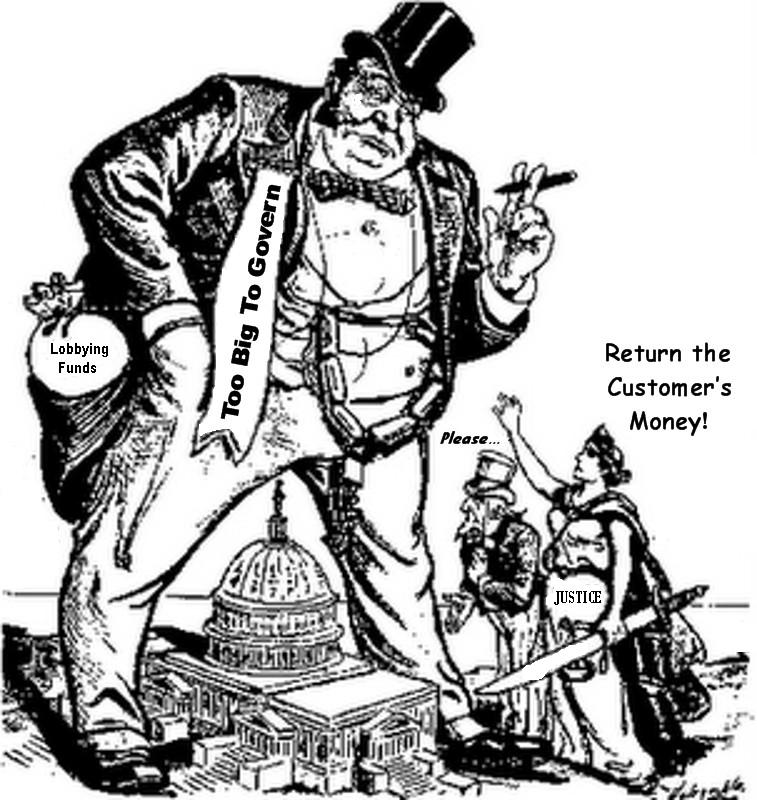
Over at Popehat, Patrick, the more flamboyant of the libertarian performance artists who blog there, has erected a harsh condemnation of Elizabeth Warren’s attenuated Native American pose, as well as her subsequent defense of it. A sample:

“The truth about Elizabeth Warren is that, when she chose to call herself a Cherokee Indian, she failed to consider that she might one day be called on her claims. The truth about Elizabeth Warren is that her decision to call herself a Cherokee Indian, at a time when she thought no one would ever call her on her claim, was more revealing of her character than all of her actions since becoming a politician in the spotlight. The truth about Elizabeth Warren is that she will lie about her background for professional advantage when she thinks that she can get away with it. The truth about Elizabeth Warren is that it is only now dawning on her that lying about one’s race in order to gain affirmative action benefits is considered, by many, to be no different from lying about one’s college diploma, or lying about winning the Congressional Medal of Honor. The truth about Elizabeth Warren is that she is no more deserving of a seat in the United States Senate than she is of a seat on the Cherokee Nation’s tribal council.”

I more or less agree with Patrick on all points, and the criticism of his post from commenters has reinforced that conclusion. For the most part, their protests boil down to “but she’s a liberal/Democrat/ ally of the 99% and running against a Republican, and that’s what matters, not her character!” If it hasn’t already become obvious, the official position of Ethics Alarms is that if the public chose its elected officials on the basis of demonstrated virtues like  integrity, courage, honesty, fairness and responsibility rather than partisan affiliation, single issues and official policy positions, the nation would be far better served. Patrick’s post, however, following on the heels of my own, also sparked a flashback to a conversation I had almost 40 years ago, when I was working in the administration of Georgetown Law Center. Continue reading →

When A Corporation Trusts Too Much: The Saga of the Unlimited AAirpass

If you sell this guy a ticket to your all-you-can-eat buffet and he eats the table, is he at fault, or are you?

A strange subplot of the American Airlines bankruptcy is the saga of its unlimited AAirpass, a special deal offered by the airline in 1981. The company sold passes for a lifetime of free and unlimited First Class travel with no limitations at a price of $250,000. An additional $150,000 permitted AAirpass customers to buy one “companion ticket” that would let one person—anyone— accompany them on any flight, anywhere, again, for life.

Apparently eschewing competent market research—and you wondered why this airline went belly up?—American assumed that the lifetime luxury travel passes would be bought by corporations for their high-flying employees. But no; the purchasers were almost all very rich people with a lot of time on their hands. As designed, American got a quick influx of cash, but at an unacceptable and strangely unanticipated cost: the AAirpasses placed the company at the mercy of  few profligate travelers who exploited American’s carelessness to the edge of absurdity, thereby raising a fascinating ethical question: If someone lets you have the right to ruin them, is it ethical to do it? Continue reading →

The Schizo Principal’s Facebook Dilemma

Principal Losos, a.k.a Suzy Harriston. Don’t ever call  her “Sooz”.

In Clayton, Missouri, the high school principal has resigned after being outed as a fake student on Facebook. Posing as Clayton High student Suzy Harriston, Principal Louise Losos amassed over 300 student friends from her school, until a former student pierced her false identity and urged everyone to de-friend it. Poor, fictional Suzy vanished, and shortly afterward so did Louise, who was placed on a leave of absence. Now she has resigned.

Can anyone think of a good reason why Losos should not have lost her job? In addition to being creepy, her posing as a student was a lie, and hardly proper conduct for the head of a school, a role model, and an ethical exemplar. If she were investigating a murder, or a series of unexplained thefts, or a suspected Al Qaeda cell working out of the Science Club, she might have some ammunition on her side, but the only use she seems to have put Suzy to was building student support for a friend of hers, a physical education teacher, whose job was in jeopardy.

There was one note in the Yahoo! report that complicates the analysis: Continue reading →

The Monsters, the Baseball and the Kid

“WAAA! I wanted that ball! By the way, where am I?”

I skipped this ten-minute controversy from last month, but I think it was worth mentioning from several ethics angles, so consider this catch-up.

Rangers fans Sean Leonard and Shannon Moore were at a Texas Rangers-Yankee game a few weeks ago when a  game ball was tossed into the stands by Texas’s Mitch Moreland. They caught it and gleefully posed for the TV cameras, which also caught a three-year old boy crying hysterically next to them. Immediately, the couple was vilified far and wide, on TV, in blogs and on radio talk shows ( Business Insider called them “The Monsters Who Made A Little Boy Cry”)  for taking the ball and not giving it to the child. The main accuser  who sparked all this hatred was Yankees broadcaster Michael Kay, who told his radio audience that the couple was taunting the unhappy boy.

Outrageous, all right, but Kay, not the couple. Kay’s description of what occurred was speculative and even fanciful, and for other commentators to commence vilifying the two fans without knowing anything about them, or even why the child was crying, was frighteningly unfair, irresponsible and cruel. Yes, you too can be caught on camera and turned into a national punching bag! Later, we discovered that…. Continue reading →

Estate Tax Ethics

This was not my father. For one thing, he was shorter.

My sister and I finally settled up the estate of our parents after over a year of paper signing, meetings with accountants, and mind-numbing calculations. The estate, as my folks wanted it, was divided 35%-35%-30%, with the last portion going into a trust for the three grandchildren. The amount of money in the estate was a shock to my sister and me, and a very pleasant surprise, though for all the problems the money will solve, we would have forfeited all of it to have Mom and Dad alive today. Still, being able to give over substantial assets to their children and grandchildren was one of their lifelong goals, and they would have been satisfied and proud that they succeeded so spectacularly.

My sister, a good, reliable liberal, asked me whether I felt guilty about the inheritance. I said yes, in the sense that I wish our parents hadn’t been so resolutely frugal in their retirement, and had spent more of the money they earned and saved on more of their own pleasure and enjoyment rather than squirreling it away for us. But did I feel any pangs of conscience because the money wasn’t going to Uncle Sam’s coffers?

Absolutely not. Continue reading →

The Jack Berghouse Cheating Conundrum: Bad Father? Good Father? Ethics Corrupter?

Should we condemn Jack Berghouse for being a good lawyer?

Should a parent defend a bad egg? A cheating bad egg?

Berghouse has intervened to keep his son, a sophomore at Sequoia High School in Redwood City, California, from being kicked out of the honors program for copying his homework assignment from the work of another student. He doesn’t dispute that his son cheated—-his son admits it, and was caught red-handed. Dad is suing the school because he says its policies are conflicting, and thus his son was deprived of due process. He may be right about that. He is also doing it because, as a father concerned about his son’s future, he worries that the blemish on his record will affect his ability to get into an Ivy League college. He’s probably right about that, too.

But is it right—that is to say, responsible and ethical— for parents to use lawyers and the court system to intimidate schools into whitewashing a student’s records? The vast majority say no, which is doubtlessly the reason why Berghouse reports that he is getting hate mail. Continue reading →

Credit Ethics: New Ethics Alarms Policy

The sound of my palm belatedly smacking my expansive forehead

What will heretofore be referred to as “The Mary Frances Prevost Affair” has its silver lining. Watching another blogger incorporate the main body of my blog post into her own by-lined essay without credit or attribution has caused me to do a lot of thinking about the inadequacy of credit and attribution in the blogosphere  generally, with a relatively  few exceptions. Most of these are blogs written by academics who hold to the standards of their profession rather than the much looser practices of the internet. It also caused me to wake up to the inadequacy of my own attribution practices on Ethics Alarms. I have never taken an entire post from another source and represented it as my own, but I have frequently taken a factual account of a story from another website that itself was essentially  republishing, for example, an AP story, put the facts in my own words, sometimes with a stray phrase remaining, and not credited either source. I have often derived information in a post from multiple news sources but only linked to the one that I felt related the event the most thoroughly and clearly. Another writer’s work has sometimes sparked an idea for a post that was substantially different, and I have not credited the source of that spark.

All of this is common practice in blogging, but it is still wrong, and sloppiness is always a slippery slope. In the wake of “The Mary Frances Prevost Affair,” a colleague alerted me that I had included one complete sentence and part of another in an Ethics Alarms post that were identical to the post of another writer on the same subject. I didn’t even recall using the source, but upon going over my notes, I found that the earlier post had supplied me with the bulk of the facts I relied upon, though not the analysis of them. . I immediately contacted the author to apologize, and he was gracious and understanding. Nonetheless, this should never happen, especially on an ethics blog.

Therefore, as of today, Ethics Alarms will maintain a strict policy of crediting all sources that go into the inspiration, research and writing of the posts here. Links in the body of the text will be either be for informational purposes only, such as when I make a gratuitous cultural reference that nobody under the age of 50 is likely to recognize, or to back up direct quotes. At the end of each post, there will be credits and/or links listed, when appropriate, in some or all of the following categories: Continue reading →

A Worm In The Culture: Warped Competition Ethics

I'm sorry, Serena, but you're just too good to be on the tennis team. We've decided that you should be on the chess team.

It is difficult for me to comprehend the kind of thought processes that Southampton (New York) High School to ban student Keeling Pilaro, the only boy on  the school’s field hockey team, from playing this season because he is too good at the game, which he learned as a child in Ireland.  I do know their logic is unethical, un-American, and unfair, at least as unfair ought to be defined in the land of the free and the home of the brave.

“They told me I wasn’t allowed to play because I had advanced skills that I learned in Ireland,” Keeling told  local TV reporters. “They told me because I have an ‘adverse effect,’ but they didn’t even explain what the adverse effect was, so that’s what I’m kind of confused about.”
The executive director of the Suffolk County field hockey organization told the local Fox affiliate that the boy was being banned because field hockey “is a girl’s sport.” “When a boy plays,” he explained, “it leads the way for other male players to come in and take over. “[Keeling is] having a significant adverse effect on some of his opposing female players. The rules state he would be allowed to play if he wasn’t the dominant player.”

“Adverse effect,” in field hockey-speak, apparently means an unfair physical advantage, danger to opponents,  keeping a girl from getting more playing time or taking away from a female’s ability to garner postseason awards.

Ah. So we’re talking about discrimination, then, are we? Just so we have our terms straight.

If the woman’s movement has integrity, and it often doesn’t, we would see women protesting this indefensible treatment of the sole male player on a female team. The only field hockey team in the school is the girl’s team: Keeling, by the same principles of fairness and equal opportunity that have been enforced to allow girls to try out for boy’s wrestling, football and baseball teams in high schools and colleges around the country if they have the skills to make the team, should have every right to play on the only field hockey team there is, and not be penalized for his superior skills. Have authorities ever kicked a girl off a field because she was too fast, too strong, too skilled, too good? Would they? I certainly hope not.

Imagine if Ted Williams, LeBron James, Joe Montana, Bobby Orr and Serena Williams had been kicked off their high school teams because they dominated. What kind of Maoist, mediocrity-rewarding, excellence-stifling values is Southampton High trying to infect the nation with by penalizing high performance and achievement? Apparently they don’t understand the nature of competition, which is a serious handicap for a school, and a malady that should not be passed on to a single student. The outstanding competitors make every other player better, unless a player doesn’t want to make the effort, doesn’t have the character to accept that one doesn’t have to win to achieve something important in a contest, or is playing for the wrong reasons. I remember that I was once admonished by a stage director of an amateur production that I was too skilful and experienced for the rest of the cast, and was making them look bad. I was aghast then, and that conversation makes me angry even now, decades later. “Tell them how to be better, then, ” I told her. “Because I’m sure not going to try to do any less than my best.”

We have to decide if we’re really serious about gender equality or not. Keeling is not bigger than the girls on his team, and he doesn’t have a beard and 18 inch biceps. There are two things different about him, and two things only: he is really good, and he has male genitals. I thought the lesson of the women’s movement was that one’s genitals shouldn’t matter, that what mattered was whether you could do the job. Or does that rule only apply to female genitals?

I can certainly understand, if not the logic that is stopping Keeling Pilaro from playing the sport he loves, where the seeds of such illogical logic come from. The seeds come from the bizarre regulations that allow women to be firefighters with upper body strength that would disqualify male recruits, and female soldiers to be certified as combat ready without having to meet the same requirements as a male soldier. They come from affirmative action. When equality doesn’t mean equality in our nation’s increasingly warped, discrimination-is-fairness culture created by regulators, activists and bureaucrats, “Through the Looking Glass” decisions like this one, telling a player he’s too good to be eligible for the team, can begin to make sense.

It doesn’t make sense. It’s not fair, it’s not healthy, and if one applies Kant’s Rule of Universality to it, we end up with a nation of gray, where, as the old Chinese proverb cautions, “the protruding nail will he hammered down.” No more Babe Ruths, no Dana Torreses; no David Beckhams, no Michael Jordans, no Carl Lewises, no Muhammad Alis, no Tiger Woods. And also, as this infection spreads, no Meryl Streeps, Thomas Jeffersons, Thomas Edisons, Eugene O’Neils, or Barbra Streisands. After all, we mustn’t make the less talented and accomplished look bad, feel bad, or make them have to aim higher and work harder to achieve their dreams. It’s wrong to excel. It has an “adverse effect” on those who can’t or won’t.

We all have a stake in whether Keeling Pilaro gets to play field hockey this fall.

The Plagiarist Strikes Back!

Move along, Atticus. Nothing to see here, and I wouldn't want you to barf.

Well, some of you called it. I was a sap. I expected better.

Mary Frances Prevost, the California criminal law attorney who substantially expropriated an Ethics Alarms post and placed her name on it, responded to my request for an explanation, and failing that, an apology, a retraction, and proper credit, with this (on her Facebook page), in which she said, in part:

“I received a histrionic run-on-sentence email from someone named “Jack Marshall” today accusing me of committing crimes, threatening to report me to my bar association(s), the Inns of Court, and essentially spend your days and nights harassing me.” I have also viewed a a highly unethical rant published purportedly by you on a blog suggesting strongly that I have engaged in unethical conduct throughout the entire course of my career. I have counseled with one of the country’s premiere ethics attorneys. Here’s the result: 1) accusing me of a crime is defamation per se and unethical; 2) suggesting that my entire law practice has been based on unethical conduct is defamatory and unethical. I maintained copies both of your email and blog. It is clear that you are hell bent on engaging in systematic harassment and unethical conduct, the likes of which can, and most likely will, develop into a lawsuit unless rescinded forthwith. It is clear you have little to do in your life besides sent me emails accusing me of crimes, and writing poorly written blog posts accusing me of immoral behavior. Interesting how one making such claims, engages in most egregious conduct himself….But the sheer amount of energy really suggests something more: a lack of work; too much time; off your meds. I suggest you take a look inward and remove your defamatory and unethical blog post regarding me. Indeed, you should come clean on your blog. You’ve practiced law only two weeks before giving up. Yet, your resume suggests far more experience. I think you should rethink what you’ve done.”

Now how do you like that? Continue reading →

Is a Plagiarist a Trustworthy Attorney? Let’s Ask Mary Frances Prevost!

This is me, apparently.

San Diego criminal defense attorney Mary Frances Prevost has an interesting post on her blog about the ethics of George Zimmerman’s first set of attorneys.

MINE.

You wouldn’t know it was mine, of course, because blogger/attorney/ former Washington Post journalist Prevost has slapped her own name on it. There it is, right at the beginning: “by Mary Francis Prevost.” I think that’s interesting.

Her post, entitled “The Trayvon Martin Case Trainwreck: George Zimmerman’s Attorneys Need To Shut Up!”, was posted the same day as the Ethics Alarms post, “Next To Board The Trayvon Martin Ethics Train Wreck? Why, The Lawyers, Of Course!”, which began, coincidentally enough, by quoting John Steel’s post from the Legal Ethics Forum that read, “[S]hut up, guys. Shut the h*** up.”  It was two introductory paragraphs later, however, when “her” post got into the substance of “her” analysis of the ethical problems with the farewell press conference given by George Zimmerman’s attorneys shortly before the shooter of Trayvon Martin was charged, however, that I really began getting a serious dose of deja vu, also known as “Holy crap! This woman stole my article!” Continue reading →