Of Hero Ethics, Credit, Fame, And Angel Cordero

Angel Cordero, unsung hero. And in good company.

Angel Cordero, unsung hero. And in good company.

Apparently a Cleveland man named Angel Cordero is every bit as deserving of accolades in the rescue of the three kidnapping victims of Ariel Castro [of alleged kidnapper and rapist Ariel Castro, that is. Reflect on this case the next time someone puffs themselves up to reprimand you for a missing “alleged” and lectures you about how the accused are “innocent until proven guilty.” Yes, we know—and that means we can’t lock them up and throw away the key until they have had a fair trial and been officially proven guilty beyond a reasonable doubt in the judgment of a jury. It does not mean,  in a situation where there is literally no possible interpretation of the facts that would not end with the conclusion that the man who owns the house where three women have been kept prisoner for ten years and who have told interviewers that he beat them, starved them and raped them, that to state the obvious is some kind of human rights violation. By the way, O.J. is guilty too.] as the more colorful, more publicized–and more ridiculed—Charles Ramsey.

I want Cordero to receive the credit and admiration he deserves. I don’t want him to feel bitter and unappreciated. If the media, public and popular culture is inclined to bestow its goodies on the heroes of this horrible story, I hope he gets his fair share. Still, I also hope that he would be sufficiently large of soul and solid of values to adopt the attitude that what is important is that the women were rescued, and not who gets credit for it, now or in the future. Continue reading
“The Only Answer”: An Ethics Hero, A Life Saved, And A Troubling Hypothetical

In this universe, a hero...and in an alternate one? I wonder...

In this universe, a hero…and in an alternate one? I wonder…

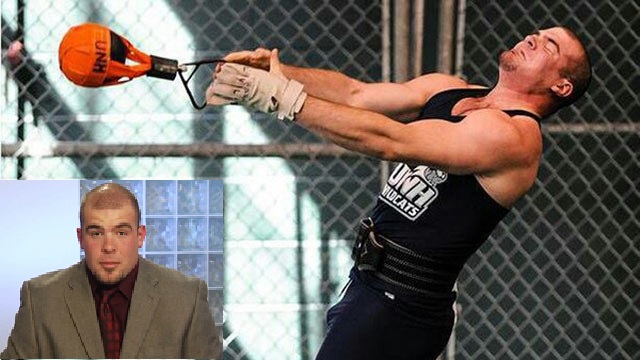
University of New Hampshire senior Cameron Lyle, a Division I college track and field competitor who excels in the shot put and hammer throw, has chosen to end his collegiate athletic career to save a stranger’s life.

He will donate his bone marrow today to a 28-year-old man suffering from acute lymphoblastic leukemia. Doctors told Lyle the man who will receive his marrow will live only six months without a transplant, and that there was a only one in five million chance for another non-family match. Yet the odds came up in his favor, thanks to  Lyle having his mouth swabbed to join a bone marrow registry two years ago. He was a perfect match.

Lyle says he never hesitated in his choice, once he was informed. “It’s just a sport,” he said. “Just because it’s Division I college level doesn’t make it any more important. Life is a lot more important than that, so it was pretty easy…It was kind of a no-brainer for a decent human. I couldn’t imagine just waiting. He could have been waiting for years for a match. I’d hope that someone would donate to me if I needed it.”

“He made his decision. He gave up his college season to do this. He’s a gentle giant,” Lyle’s mother said of her 6-foot-2-inch, 255-pound son. “He’ll do anything for anybody.”  Lyle’s coach Jim Boulanger, was also completely supportive, and, according to Lyle, came up with an instant Ethics Quote of the Month when the shot-putter told him of his plans.

“Here’s the deal,” Boulanger told Lyle. “You go to the conference and take 12 throws or you could give a man three or four more years of life. I don’t think there’s a big question here. This is not a moral dilemma. There’s only one answer.” Continue reading

The Triumph of Ronaiah Tuiasosopo

Ronaiah TuiasosopoIs, getting what he wants.

Ronaiah TuiasosopoIs, getting what he wants.

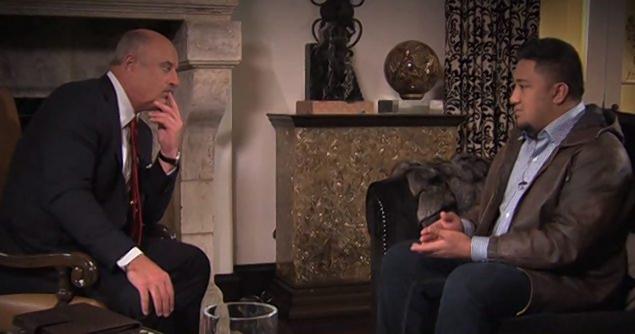
Ronaiah Tuiasosopo, the silly, sick man who hoaxed his alleged friend, Notre Dame star Matti Te’o, into a public humiliation that will shadow the rest of his life, has everything he wants now. “Dr. Phil” is featuring him on his show with a long interview—a match made in the stars, since Phil achieved his fame as a fake doctor, and Ronaiah his as a fake girlfriend to the most gullible college athlete in captivity. More interviews for the hoaxer will follow, with a book and movie deal near certainties. He behaved abominably, and now the American celebrity machine will reward him for it. I predict he’ll travel the same road as other bottom-feeders who have parlayed a lack of principles into fame, however brief.  Joey Buttafuoco. Jessica Hahn. Octomom Nadja Suleman.”Tanning Mom”Patricia Krentcil. Levi Johnston. They all were boosted to semi-star status by being slimy, foolish, or both, and Tuiasosopo fits right in. Continue reading

The Ethics Agony of Angus T. Jones

How could such a lucky kid complain?

Angus Jones, the “Half” of CBS’s resilient sitcom “Two and a Half Men, ” is receiving heavy doses of criticism and mockery in entertainment circles (and Blog World, of  course) for being so ungrateful and graceless as to post a YouTube video condemning the very TV show that has made him rich and famous over the last nine years, taking him from childhood to majority. The video was posted by the Alabama-based church Forerunner Chronicles, which apparently Baptized Jones recently. “You cannot be a true God-fearing person and be on a television show like [‘Two and a Half Men’]. I know I can’t. I’m not okay with what I’m learning, what the Bible says, and being on that television show.” He goes on to say,

“I’m on ‘Two and a Half Men’ and I don’t want to be on it. Please stop watching it. Please stop filling your head with filth.”

Is this disloyal and ungrateful conduct toward a show, a cast and employers that have given Jones wealth, celebrity and fame? Undoubtedly. If he had come by this station in life through his own efforts and fully informed choices, I would agree with the Hollywood chorus accusing the 19-year-old of “biting the hand that feeds him.” Jones, however, was indentured to “Two and a Half Men” at the age of ten, which is to say that he had little say in it or his life path so far. His parents, like the parents of most child actors, decided that his innate performing talent was worth a lot of money to them and him, and that this was reason enough to launch him into a field with a century-long track record of turning children into dysfunctional celebrity addicts, often setting them on the road to addiction, isolation, depression, failure, and death. Continue reading

The Gaby Rodriguez Virus—Hoax Your Friends For Fame and Profit—Spreads

Be careful! If you catch the virus, you might lie to your family that you’re going to die, and write a book about it!

High school senior Gaby Rodriquez got fame, a book, a movie deal and awards, not to mention an A for her school project, by traumatizing her family and friends with an extended pregnancy hoax. It was inevitable that when such blatantly unethical and destructive conduct is hailed as “courageous” by media pundits and pays off in speaking fees and book contracts as well, other ambitious liars would try the same trick. Sure enough, a young straight male Christian decided to hoax his friends and family by telling them he was gay.

It’s worth lying to everyone who cares about you and trusts you for a book deal, right? Timothy Kurek’s experience posing as gay for a year is the basis of his “Jesus In Drag” coming out this fall. The Today show should slobber all over this one, and I’m sure Timothy will become a familiar butt on the couches of Ellen, Dave, Jimmy and others. And, like Gaby Rodriguez, he will be hailed for his “courage” to exploit the trust of his family and to betray his friends so he could use their discomfort as book material. Continue reading

Ethics Hero: Martin Scorsese

One of the most respectful and compassionate acts a human being can perform is to rescue the memory and achievements of a great man or woman from obscurity. Not only does this confer deserved longevity on the legacy of someone who has contributed something good and lasting to civilization and culture; it also is a gift to the rest of us, enriching our knowledge and perhaps providing us with inspiration as well.

This is what Martin Scorsese does for the early French film pioneer Georges Méliès in his new movie, “Hugo.”  The film is a fictionalized account of how Méliès, a producer, director, actor and special effects innovator, was rediscovered by film-lovers and his countrymen after years of discouragement and depression. In a nice piece of irony and symmetry, Scorsese’s film duplicates the phenomenon his movie describes. Forgotten after World War I, Méliès and his work were celebrated late in the 20’s, and he received long overdue acclaim and recognition, including France’s Legion of Honor. After his death in 1938, his contributions to the art and craft of cinema faded from public awareness a second time. Once again, thanks to “Hugo,” the public is learning Méliès’s name and being delighted and inspired by his creations. Continue reading

Five Ethics Lessons from Jerome Cardano (“Who?”), and One More

Remember his name?

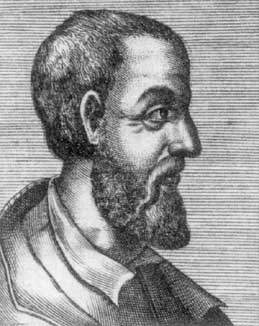
A chance reference in a book I was perusing yesterday reminded me of a fascinating historical figure whom I hadn’t thought about in decades—which still gives me an edge over most people, who have never thought about him at all. He is Jerome Cardano, or, in the Italian version of his name, Gerolamo Cardano, an archetypical Renaissance man from Italy who walked the earth between 1501 and 1576. When I first learned about him those many years ago, his remarkable life didn’t give me any ethical insights because I wasn’t thinking about ethics then. Now, reviewing the facts of his remarkable life, I find that it carries at least five lessons with value for anyone who strives to live in a more ethical culture, and to have his or her own life contribute to making the world a better place.

Lesson 1 : DiligencePlay the hand you are dealt the best you can.

Cardano’s mother attempted to abort him by taking various poisons, but succeeded only in making him unhealthy. He stuttered; he was incapable of sexual relations, and had chronic insomnia, supposedly resulting in an “annual period” where he got little or no sleep for two to three months. He was afflicted at various times with the plague, cancer, dysentery, and many lesser ailments, yet he led a life full of extraordinary accomplishments and adventures, and continued to be active and breathing for 75 years, when most of his class and era died before they reached 45. Continue reading

Comment of the Day on “The Twins and the Amazing Hockey Shot: the Public Flunks Its Ethics Test…Badly”

Reader Jim Weaver came up with an especially deflating and insulting Comment of the Day by taking literally my lament, in the post about the twin winning, then being denied, a cash prize while masquerading as his brother, that I was disappointed that after almost a decade of my ethics commentary that the public was still ethically out to lunch.

His comment:

“Did you really think that this blog would make a difference in America’s ethics? Is that really why you write this thing? If so, then you should be depressed because you are sadly deluded. 99.99% of the country has never heard of you or read your blog.

“I thought you wrote it to get attention and to try to drum up business for your training company. Just exactly how many readers do you have anyway?” Continue reading

Historical Theft at the King Memorial

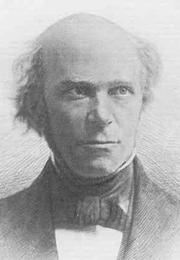
Rev. Theodore Parker

The new Martin Luther King Jr. Memorial is not just the King-in-Carbonite monolith that has caused so much controversy. There is much more to the National Mall’s latest addition, including inscriptions in marble of quotes from the martyred civil rights leader’s writings and speeches. There are more than a dozen examples of his oratory, a quotation from King’s 1963 “Letter From a Birmingham Jail,” and an excerpt from King’s Nobel Peace Prize acceptance speech in 1964.

Among them, this:

“The arc of the moral universe is long, but it bends toward justice.”

But Rev. King didn’t say it. Theodore Parker, an influential and eloquent Boston minister and abolitionist, did. King never pretended otherwise; it was one of his favorite quotes, and he used it often, but he usually credited its originator. Continue reading

The Saga of Heidi Montag and Spencer Pratt: Life in a Culture That Values Lies

Post-surgery Montag, trying to stay famous

If you have taste, a job, and a brain, or don’t read a lot of “Us” and “People” in doctors’ offices, you may never have heard of Spencer Pratt and Heidi Montag. They were stars of the once popular TV reality show “The Hills,” and despite being two vacuous and shallow individuals of minimal common sense, talent or education, they presumed that they could ride the “famous for being famous” gravy train in celebrity-and-media obsessed America indefinitely. They couldn’t.

The Daily Beast features a horrifying interview with the pair, which is worth reading for its ethics lessons on several levels. For one thing, the degree to which the culture of dishonesty has progressed in America  surprises even me. Allowing yourself to be presented to the public as a completely manufactured personality in exchange for fame and fortune has always been part of the celebrity experience, but the reality show phenomenon has removed it from everything else—now the lie is all there is. And there are thousands upon thousands of attractive, young dimwits who actually aspire to such ersatz enshrinement in the culture as their life’s pursuit. Paris Hilton and the Kardashian sisters are these deluded individuals’ goddesses, despite the fact that 1) there are not 500 IQ points among the four of them and 2) they all have the benefit of rich trust funds to fall back on, so their jaunts as pop culture comets are more like diversions than careers, though profitable ones. Continue reading