Watching The Super Bowl Is Unethical. You Know That, Right?

Super2015

I was going to call this post “Ten Reasons Why Watching The Super Bowl Is Unethical,” then “TOP Ten Reasons Why Watching The Super Bowl Is Unethical.” Ethical people should only need one good reason though, and while you can rationalize it away to slave your conscience and to avoid having to renege on that RSVP to tomorrow’s Super Bowl party, it is there, undeniable, and ugly.

So you don’t even have to argue that the fact that the most successful NFL team for more than a decade is also the one repeatedly caught cheating is irrelevant because “everybody does it,” or that the large number of felons, thugs and spouse abusers the teams employ (one ex-player—why, a Patriots’ ex player, in fact!—just went on trial for murder) doesn’t matter because the players aren’t really role models, or that the fact that the NFL corrupts and warps our universities by turning them into football’s minor leagues is overstated because such scandals as the University of North Carolina conspiring to let athletes take imaginary courses aren’t really the NFL’s fault. All you have to do is accept the fact that when you support the NFL, it’s TV ratings and the companies that profit from them, you are not merely killing people, you are cheering while you do it.

Disgusting.

What the hell’s the matter with you?

Yesterday I rewatched the 2013 PBS Frontline documentary, “League of Denial.” (That’s the link to the video; the transcript is here.) It was more horrifying the second time, especially in view of how the NFL has managed to stonewall, tap-dance and delay its way through another season without seriously admitting the extent of its head injury problem. One could even argue that the Ray Rice fiasco and other scandals helped the NFL by deflecting attention away from its biggest ethical deficit. Today, CNN, which is duly promoting the Super Bowl all weekend, reported on Roger Goodell’s “state of the NFL” press conference. It didn’t mention the concussion issue at all, just spousal abuse. It’s working, Roger!

As thoroughly and irrefutable shown by the documentary and the book it was based on, football causes dementia and death. The earlier you start playing it, the worse the effects are. The NFL has systematically waged a public relations war of denial and deception, taking carefully calculated half-measures that will not address the problem, relying on America’s love of the game to allow the industry to continue making billions by paying young men to maim themselves. In hearings before Congress, U.S. representatives compared the NFL to cigarette manufacturers denying that cigarettes were addictive and that they caused health problems. The comparison is fair, but once the truth was known about tobacco, the non-smoking public quickly realized that it shouldn’t be cheering lung cancer on. Cigarette ads on TV were banned; programs that children watched were pressured to avoid showing characters smoking. But then, nobody gets a visceral rush watching human beings slowly kill themselves by puffing away: is that the difference? As long as you get a kick out of the process of athletes turning themselves into future drug addicts, depressives, neglectful fathers, abusive husbands, drooling imbeciles and suicides, it’s okay to keep watching and cheering?

Keep telling yourself that. It’s intellectually lazy and ethical abdication, and that’s all it is. Watching the Super Bowl can’t be wrong because so many people do it, right? You know, since you’re here, what’s the matter with that argument.

You can also try the argument that the players are accepting the risk, so it’s OK for you to encourage them, in fact help pay them to liquify their brains for your amusement. That would be employing three more rationalizations on the Ethics Alarms Hit Parade: Continue reading


Of Black Lungs and Concussions: How Can An Ethical Person Be A Football Fan?

So now you know. And,,,?

So now you know. And…?

The worst thing about pro football is not its wife-beating, gun-toting, child-beating players, or that the league happily has been willing to ignore these little flaws while promoting such flawed men as heroes to America’s young. Nor is the worst thing about pro football the fact that one of its teams has a politically incorrect nickname. No, the worst thing about pro football is that it makes billions from inducing young men to cripple their cognition long before nature would even consider doing it to them, and corrupts its huge national audience by inducing it to not only cheer this process, but pay for it.

Sally Jenkins, in a frank, stark column for the Washington Post, compared the NFL to the coal industry of yore, when minors were dying of black lung and terrible working conditions, and the government had to step in:

Since the NFL insists on behaving like the coal industry circa 1969, the only solution to its problems is for Congress to step in and regulate the business of these 32 billionaire plunderers. This week, the Department of Veterans Affairs brain bank announced that 76 out of 79 deceased NFL players had chronic traumatic encephalopathy, a degenerative brain disease. The price for owning a team just went up. Jerry Jones, Bob Kraft, Dan Snyder, Steve Bisciotti and all the rest, if you want to enrich yourselves at the expense of the ravaged health of others, be prepared to pay for it. Your future is endless litigation and government interference.

The CTE thunderbolt follows closely on the league’s callous handling of domestic violence cases. A new raft of medical investigations and lawsuits say that CTE caused some of these devastating domestic explosions, such as Jovan Belcher’s 2013 murder-suicide. CTE leads to aggression, paranoia, impaired judgment and depression….Here’s the deal: Concussions are the black lung of the NFL. And the league knows it.

Sure it does, but my problem is, so do its fans. The nation needed coal, still needs it in fact, so regulating that industry was reasonable, imperative, and practical. The country doesn’t need to have a deadly sport to watch every Sunday (Thursday, Monday…). Once it could claim that it was innocent, that helmeted players were protected, and that the tragically crippled were aberrations. Not any more. Continue reading

Ethics Alarms On NPR: The Sterling Ethics Train Wreck

V.-Stiviano-Donald-Sterling

You are welcome to read the transcript and/or  listen to my interview on NPR yesterday with Michel Martin, both of which can be found here.

It’s too bad, really. They seem like such a nice couple…

Jerry and Jared Remy, Parental Accountability, Hindsight Bias, and The Bad Seed

This is a tragic local story with vast ethics significance.

Father and son.

Father and son.

Long-time Boston Red Sox broadcaster Jerry Remy, a native Bostonian and former player who has been a vivid part of the Boston sports scene since 1977, was stunned by tragedy last summer when his oldest son, Jared, 35, allegedly murdered his girlfriend by stabbing her to death as their  ive-year-old daughter looked on. Prior to the incident, most New Englanders were unaware of Jared Remy’s problems, but his ugly past soon found its way into the newspapers.

A recent Boston Globe investigative report appeared to be the saga of a “bad seed” right out of a horror movie, for Jared Remy, son the popular, affable Jerry, had been arrested, and released, 19 times, for an assortment of alleged crimes, many of them violent. They included battering and threatening a high school girlfriend; pushing a pregnant girlfriend out of a moving car; texting death threats to her, and attempting to beat her up; threatening to kill yet another girlfriend;  terrorizing a fourth sufficiently that police were called to their apartment eight times; and involvement in steroid peddling and abuse. The Globe also obtained the testimony of a woman who alleges that Jared joined her in brutally beating a high school boy, causing him permanent brain injuries.

The Globe story (and others) raised the question of how and why the Massachusetts justice system kept releasing Jared. It is a valid question, not peculiar to his case, unfortunately. Many have speculated that Jared’s  status as the son of popular Boston sports figure played a part in getting him extraordinary leniency, but as Remy’s lawyer pointed out, several of the incidents also involved complainants and alleged victims who refused to testify or withdrew their complaints. In the realm of domestic abuse, evidently Jared Remy’s specialty, this is too common. The Globe writer, Eric Moskowitz, also insinuated that the Remys went too far in supporting their disturbed, violent and troubled son, who had learning disabilities and other clinical behavioral problems. They apparently paid for psychiatric treatment, counseling and legal fees, and helped with his rent and other expenses, though the extent of this has not been confirmed by the Remys, the only ones who could be authoritative on the topic. The rest is hearsay.

Jerry Remy, who has battled depression his whole adult life, withdrew from his role as color commentator after his son’s arrest, missing the Red Sox championship run. Outside of a brief statement condemning his son’s actions and expressing condolences to the parents of the victim, Jennifer Martel, Remy was silent until announcing this Spring that he would try returning to the broadcast booth for the upcoming season. Then, as Spring Training for the Red Sox ran down and Remy seemed, outwardly at least, capable as ever of being an affable presence with whom to watch the home team’s exploits,  the Globe story appeared. The revelations about Jared unleashed an unexpected (by me, at least) backlash against his father, and Bostonians in droves bombarded the sports radio talk shows, blogs and news media websites with the opinion that Remy should step down as Red Sox color man for cable broadcasts. How they reached this ethically indefensible position is instructive regarding how inept and unskilled most people are in day-to-day ethical analysis, how emotion becomes a substitute for objectivity and logic,  how hindsight bias makes experts and judges out of individuals with the credentials of neither, and also how ignorant most of the public is about the ethical obligations and duties of the legal profession.

Here are the reasons being cited for why Jerry Remy should give up his career:

Continue reading

World Series Ethics: He Tipped His Cap

What would Ted Williams have done? We know the answer to THAT question...

What would Ted Williams have done? We know the answer to THAT question…

The Boston Red Sox won the World Series last night, making me happy. Something else happened too.

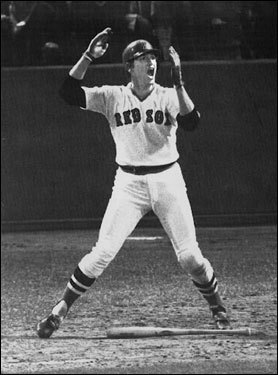
Some background is in order. The great Ted Williams used to give Boston baseball fans the biggest hat tip in baseball as they cheered him after a home run. This was when he was first known as “the Kid’ and indeed was one, as his Hall of Fame trajectory was obvious from the moment he stepped on a major league field in 1939 at the tender age of 19. Gradually but rapidly, a vicious local press and some ugly incidents in response to a few jackasses in the stands caused the Kid to sour on the admission-paying mortals who booed him when he struck out, and he decided to ignore their cheers, refusing to extend the traditional courtesy of a hat tip to the fans as he rounded the bases after a home run—which, since he was Ted Williams, happened frequently. Williams  spent his whole career in the city of Boston playing before those fans who offended him in his twenties, but right up to and after his final home run, which he hit, famously, in his last at bat, the Red Sox fans got no hat tip from Ted. He rounded the bases the final time as they cheered themselves hoarse, and never looked up or acknowledged their praise. Screw ’em.

That was Red Sox pitcher John Lackey’s attitude toward the current generation of Fenway fans, for similar reasons. He had been signed to a rich, long-term contract in 2010 to be a Red Sox mound ace, but arrived in Boston with his arm deteriorating and his abilities diminished. 2010 was a disappointing season for Lackey and 2011 was worse, as he pitched in pain for a team that was short of hurlers. The 2011 Red Sox became infamous for their late-season collapse and underachieving starting pitchers, and no one on that team was jeered on the field or savaged in the call-in sports shows like John Lackey. He missed the entire next Red Sox season recovering from arm surgery after the 2011 collapse, and thus missed the 2012 debacle that was even worse. In 2013, however, Lackey returned with a renewed right arm, a fit body and a fierce determination to finally live up to the big contract. He did, too. He pitched well all season, and became a key factor in the Boston charge to the World Series, as they rose from last place in their division in 2012 to first.

In 2013, Lackey received nothing but cheers from the surprised and grateful Boston fans. Nevertheless, he adamantly maintained the Kid’s attitude—“Screw ’em”—all season long. As he walked into to the Red Sox dugout after being relieved in another fine pitching performance and the Boston fans saluted him, Lackey refused to reciprocate with the traditional hat tip, all season long and through the play-offs. The fans were fickle hypocrites, and their loyalty conditional. They booed him when he was valiantly pitching hurt and embarrassed in 2011, and he wasn’t going to forget it. They were going to get snubbed like they deserved, and that was the way it was going to be.

Last night the Boston Red Sox won their third World Series in the last ten years. It was the first time the home team fans had been able to witness the deciding game since 1918 (as the Fox announcers informed the presumably senile audience over and over and over again), and John Lackey was the pitching star for the home town team. The night was a love fest for Boston baseball fans, as they cheered every move of their frequently star-crossed and quirky team, and no Red Sox player was cheered more loudly than John Lackey, as he walked off the field for the final time in 2013 in the 7th inning, with his team safely ahead by five runs. They stood and applauded and chanted his name, as he moved deliberately to the Boston dugout, head down, grim, just like Ted on that gray day in 1960 when he hit homer number 521.

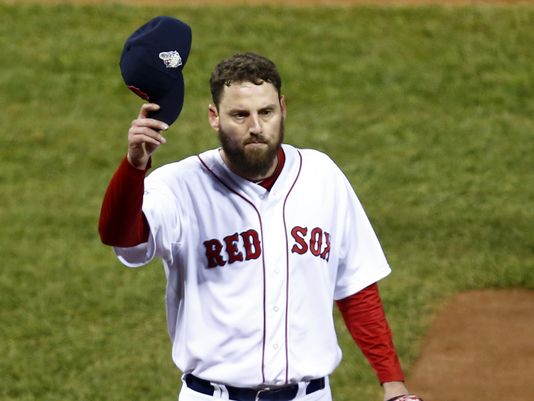
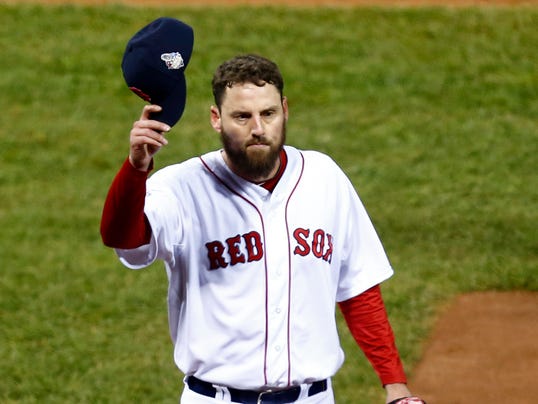
Then he tipped his cap.

It was a small thing, the smallest really, only a gesture and for most players, most of the time, an automatic one…except that it symbolized the ethical virtues of grace, forgiveness, gratitude, humility and fairness. This memorable, wonderful night for the Boston Red Sox and the grand old city it represents—my home town– was no time to let bitterness and resentment prevail. Unlike Ted Williams (who wouldn’t make his peace with Boston fans until years later, when he returned as an opposition manager), John Lackey found the strength and decency to let it go.

It was, as I said, a small thing. But it took character, and it was the right thing to do.

______________________________
Graphic: USA Today

Ethics Quiz (And a Poll!) : The Fan, The Girl, and The Grope

I wrestled with whether it was ethical to show this video or  just link to it on another website instead. I have, as you might have surmised by now, an ethical objection to the practice of taking videos, photographs or recordings of people without their knowledge or permission and publicizing them, and that objection is intensified when it is done for the purpose of embarrassing them or shaming them, unless the conduct is illegal or so unquestionably vile that society is obligated to issue an objection in the strongest terms possible. I think that the borderline episodes of this are  important to discuss and yet it is difficult to do that without aiding and abetting what may be unethical conduct, as I help publicize what perhaps should have been left private.

I haven’t resolved this dilemma. When a video has gone viral, as this one has (as well as another I show here), I think that the impact of my embedding the clip in order to discuss it is minimal, and that the value of presenting the actual video for readers to see outbalances the harm to the victim/victims, if that’s what they are, of posting it on one more site on the web among many. I invite opinions to the contrary. (In the instant case, I should note, the episode was inadvertently captured by a TV cameraman—he shot what he thought was a sleeping fan, and then the copping and feeling began—and broadcast live. Someone else then put the touching moment online.)

With that introduction, here is the video, YouTubed and picked up by Gawker (naturally) as well as many other sites. It shows a male fan at a Yankee game with a sleeping or otherwise unconscious young woman resting her head on his chest. While she sleeps, he appears to fondle her breast, thus spawning endless leering references, since it was at a ballgame, of “stealing second.” We do not know whether the young woman was a stranger who collapsed his way (this actually happened to me once, and at a ballgame, so it’s not that far-fetched), a friend, his wife, his girlfriend, or, as some disturbed individual on one site suggested, his sister.

For the sake of this quiz, we will assume they are a couple. YouTube pulled the video I had embedded, so to see the action, go here.

All set?

Your Ethics Alarms Ethics Quiz today is…

Assuming this was the fan’s wife or girlfriend, was it unethical for him to cop a feel, in public, while she was unconscious? Continue reading

Ethics Dunce: SB Nation Contributor Bill Hanstock

Amazingly, this is the actual size of Bill Hanstock's head!

Amazingly, this is the actual size of Bill Hanstock’s head!

The article on SB Nation is called “White people celebrate Heat loss in exceedingly white fashion,” and consists of the writer, a guy named Bill Hanstock, whose article more effectively made me detest an author than any piece I’ve read in a long time, mocking individual spectators at the Chicago Bulls -Miami Heat NBA game (which ended that team’s epic winning streak) based on their faces, their choice of clothes, their beverages, their accessories, their ages, their hair (or lack of it), and most of all, their race.

The instant verdict here: not only is the article unfunny and unethical, not only should SB Nation’s editor be sacked for allowing such garbage to pollute the site and the web, but Hanstock is, to put it mildly, a virulent jerk. Continue reading

A Word to the Wise-asses

Dear Wise-Ass,

I know that the fact you know I am a Boston Red Sox fan presents an irresistible opportunity for you to taunt, mock and tease me about the catastrophic choke-job my team just displayed to the world. To give you the benefit of the doubt, I am assuming that you are not a devoted and loyal fan of a sports team yourself, and thus think baseball is “just a game.”  If that is the case, I forgive you for your supposedly humorous comments, which have approximately the same level of sensitivity and kindness in my current state as the following:

  • “So I hear your mother kicked off! Aren’t you a little old to be an orphan? “
  • “Lost your house, did you? Hey, I have a big cardboard box you can have!”
  • “Still unemployed? I know: why don’t you start a career as a professional loser?”

I’m pretty sure you wouldn’t say any of these things (unless you’re a Yankee fan, in which case your whole moral compass is suspect), and I wonder if you understand that picking at the raw and bloody wound that is a beloved team’s tragedy is every bit as cruel and hurtful as such cracks would be. Incomprehensible as it may be to you, this was and is very important to me. My devotion to the Sox began when I was 12, and the team has given me more pleasure, grounding and wisdom than 99% of the people I have met in my life. Irrational though my emotional reaction may be, I’m in pain, and you shouldn’t have to empathize with the source of the pain to know that intentionally prolonging or magnifying that pain isn’t a very nice thing to do, and is nowhere near as funny as you seem to think its is.

I just thought you should know.

                                                                Jack

A Fan’s Obligation: 12 Life Lessons From Being a Red Sox Fan

Thanks Carlton. I won't forget.

This is not going to be a fun day.

The Boston Red Sox, the baseball team to which I have devoted a remarkable amount of my time, passion and energy over a half-century, are threatening to complete late season collapse of embarrassing and historic proportions. A spectacularly bad month of September has the team holding on to its once assured post-season play-off slot by its fingernails, and the squad appears to be dispirited and unhinged. Today the Red Sox play a double-header with the New York Yankees, the team’s blood-foe, and its prospects don’t look good. I, of course, must watch both games.

Following a losing baseball team is emotionally hard—I listened to or watched every game the Red Sox played in a six year period in which they never had a winning season— but following a collapsing winning team is much, much worse. It feels like a betrayal, yet at the same time the fan feels guilty for being angry with the players, who undoubtedly are suffering more than you are. This is, after all, their career. Still, you have had your hopes raised over many months; you have, if you are a serious fan, attached your self-esteem to your team’s fortunes. Watching it tank is like watching a presidential candidate you have argued for, and gone to rallies for and contributed to make an ass of himself in a debate. (And no, I’m not a supporter of Rick Perry.) Continue reading

The Real Meaning of Manny Being Manny

The only surprising aspect of the news yesterday that former baseball slugger-savant Manny Ramirez had been arrested for allegedly slugging his wife—the one alleging being said wife—is that any baseball fans were surprised. If anything was written in the Book of Fate, it was that this man, so completely lacking in respect for basic ethical values, was destined for trouble with the law.

While he was playing, of course, Manny’s uncivilized and cheerful contempt for basic rules and principles of right and wrong were tolerated by his employers, amused sportswriters and evoked cheers from fans. He was a great, great hitter, you see: who cares if he was habitually rude, unprofessional, slovenly, careless, disloyal, disrespectful and above all, selfish to his core? Look! He’s having fun! Isn’t that charming? Stop harping on little details, like hustling, sportsmanship, or being honest. Let Manny be Manny! Continue reading