Ethics Train Wreck Watch: The Petraeus-Broadwell Affair

There is too much information awaiting disclosure to do a thorough ethical analysis at this point, but it is already clear beyond question that the David Petraeus-Paula Broadwell scandal is an ethics train wreck, with many more individuals and perhaps institutions involved than the direct participants. Today’s news reports that the adulterous affair prompting the much-respected CIA Director’s sudden resignation was triggered by Broadwell’s  threatening e-mails to another women she suspected of vying for the General’s affections clinches train wreck status. This thing is still rolling.

Other features of the wreck-in-progress: Continue reading

The Criminal Justice Ethics Breakdown: Unforgivable, Incomprehensible, and Horrifying

"Yeah, that's bad, but can you believe those gas prices?"

There is no longer any way for the defenders of the criminal justice system, or indeed American democracy and its ideals, to deny that thousands, and perhaps tens of thousands, of Americans languish in prison for crimes they did not commit. This fact is so terrible in its implications for the nation, the system, the public and the legal profession that I feel incapable of grasping it all, still, though this has been slowly dawning on me for a long time. Right now, it is all I can manage to escape denial, for the deprivation of so many innocent people of their liberty is my responsibility, as well as yours, and that of everyone else. Even in the midst of serious policy debates over so much else that is vital to our future, how can anyone argue that this isn’t the highest priority of all?

Yesterday, the Washington Post revealed that

“Justice Department officials have known for years that flawed forensic work might have led to the convictions of potentially innocent people, but prosecutors failed to notify defendants or their attorneys even in many cases they knew were troubled. Officials started reviewing the cases in the 1990s after reports that sloppy work by examiners at the FBI lab was producing unreliable forensic evidence in court trials. Instead of releasing those findings, they made them available only to the prosecutors in the affected cases, according to documents and interviews with dozens of officials. Continue reading

The Perils of Ignoring Professionalism

Robert Stack as Eliot Ness with the rest of TV's "The Untouchables." Now THOSE guys were professional. You'd never see THEM text messaging jokes to Al Capone...

The Washington Post ran a story Tuesday describing how the defendants in an elaborate FBI sting operation escaped conviction as a consequence of the revelation of racy text messages between the agents and their undercover informant. Agents and their key informant bantered “about sex, booty calls, prostitutes, cigars, the Village People, the informant’s wives and an agent’s girlfriend.”  When the arrests were first announced by the Justice Department, the operation was regarded as a model law enforcement success. But federal prosecutors failed to win a single conviction,  in large part because defense lawyers used the text messages to raise juror doubts about the credibility and professionalism of FBI agents. Now the Justice Department says that in light of the first two trials, the government is evaluating “whether to continue to go forward” with the remaining prosecutions of 16 defendants, seven of whom had their cases end in hung juries.

During the most recent trial of six men and women on charges of paying bribes to win business with a foreign government, the defense attorney used the FBI’s texts both to attack the character of the informant and to suggest that the lead agent was an untrustworthy, bigoted, anti-gay misogynist. The FBI believes this was unfair, and an example of a lawyer’s trick defeating justice. Informants, almost without exception, are sleazy characters, and managing them takes skill and guile. The agents felt it was essential to build trust, which meant working to develop a collegial  relationship, at least in the informant’s mind. The text banter, they say, was designed to ensure the loyalty of a low-life, which required the agents to sometimes act like low-lifes themselves. Thus they texted messages back and forth that included bawdy jokes, innuendos about sex, anti-gay stereotypes and more, all in a buddy-buddy tone that the jury found troubling. “The texts were one of many things that point to an absolutely amateurish operation,” the jury foreman told the Post. Continue reading

Paterno, Hoover, and Jones’s First Law

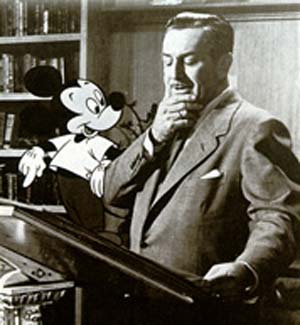
Would Uncle Walt have resisted the curse of Jones's First Law?

Jones’ First Law, one of many useful corollaries to Murphy’s Law (“Anything that can go wrong, will.”) is usually stated:

“Anyone who makes a significant contribution to any field of endeavor, and stays in that field long enough, becomes an obstruction to its progress – in direct proportion to the importance of his original contribution.”

This week was a good one for Jones (whoever he was; I can’t seem to find out) if not for the rest of us, because two classic examples of his principle were on display:  Penn State coach Joe Paterno, who managed to stay coach long enough to unravel his legacy and help lay the groundwork for an ethical, moral, legal, public relations, and financial catastrophe for the institution he had dedicated his life to, and J. Edgar Hoover, the subject of a newly-released Clint Eastwood directed film that shows how he too stayed long enough as the key figure of an institution he built—the FBI—to become an embarrassment to it. Continue reading

Ethics Train Wreck On Facebook: Jessica Studebaker and the Sneaky Voelkerts

The imaginary Jessica Studebaker

David and Angela Voelkert are so obviously perfect for each other. It’s just a tragedy that they can’t get along.

By the time the couple’s multiple deceptions were sorted out, Angela had been scared out of her wits, David had spent four days in jail, and federal prosecutors looked like they had never heard of Facebook. The perfect recipe for an ethics train wreck—lies, more lies, and incompetence—and that’s exactly what they got.

Last Friday, the FBI arrested David Voelkert, 38, a South Bend, Indiana man who had recently exchanged messages with a 17-year-old Facebook friend named Jessica Studebaker. As described in an FBI affidavit, Voelkert’s Facebook exchanges with Studebaker included telling her that he had placed a GPS device in his ex-wife’s car to surreptitiously monitor her movements, and that he was looking for “someone to take care of” Angela Voelkert, so the teen “ should find someone at your school…that would put a cap in her ass for $10,000.” Continue reading

Read This To Your Mother…or Somebody’s Mother

The Nigerian Prince wants to meet your mother.

As my sister and I try to unravel the details and records of my mother’s nearly 90 years, we both have concluded that she would have been an easy mark for scammers and frauds if she didn’t have two lawyer offspring reviewing her decisions. The number of elderly, mentally-failing Americans who lose their life’s savings to these predators is a national tragedy. They are particularly prominent on the internet. I was very frustrated with my mother’s resistance to e-mail and the Web…now I’m not sure it wasn’t too dangerous for her to navigate.

The F.B.I. has an excellent and informative web page that should be shown, read to, and explained to every senior in your life. From the introduction:

“Senior citizens are most likely to have a “nest egg,” to own their home, and/or to have excellent credit—all of which make them attractive to con artists...People who grew up in the 1930s, 1940s, and 1950s were generally raised to be polite and trusting. Con artists exploit these traits, knowing that it is difficult or impossible for these individuals to say “no” or just hang up the telephone. Older Americans are less likely to report a fraud because they don’t know who to report it to, are too ashamed at having been scammed, or don’t know they have been scammed. Elderly victims may not report crimes, for example, because they are concerned that relatives may think the victims no longer have the mental capacity to take care of their own financial affairs.”

The site goes on to describe how various scams work and how to spot them; indeed, you don’t need to be a senior to be vulnerable. The list is daunting: Continue reading