Prediction: The Ferguson Ethics Train Wreck

michael-brown-ferguson-shooting

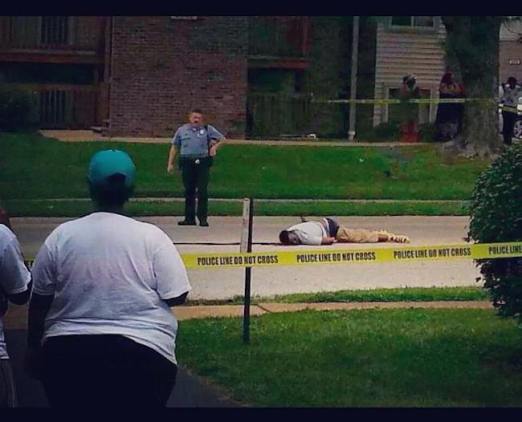
The witness accounts of the death of Mike Brown that have received all of the publicity suggest that the unarmed teen, after being shot in a police cruiser while resisting arrest, bolted from the car and was shot dead by Officer Darren Wilson as he tried to escape, even after the victim stopped and appeared to surrender. This is the account currently on Wikipedia, for example, and even in the absence of a fair and careful investigation, is the account accepted as fact by the “Justice for Mike Brown” protestors.

To those who are convinced that the police are evil, jack-booted racists and that a police officer with no record of equivalent misconduct would shoot down an unarmed and surrendering teen in public, this undoubtedly seems like a plausible scenario.  It sure doesn’t to me. I can see one way it might have happened this way: After Brown, who was huge, hurt and frightened Wilson in the car when they fought, Wilson lost his composure, and fired in rage. If that was the case, then he should be prosecuted for murder. Nothing in even that scenario proves or even suggests racism, but Brown was black and the officer was white, and for too many in the African-American community, that is proof enough.

Now another account has surfaced, on that might support Wilson’s account. It is also more plausible, because it both explains and even justifies the shooting. That account suggests that rather than turning from his flight and surrendering, Brown charged Wilson, placing him in legitimate fear of  bodily harm.

At this point, we have no way of knowing what the truth is. Maybe Wilson executed Brown. Maybe he is a racist. Maybe he is a psychopath. And maybe Brown’s conduct justified the use of deadly force by the officer, and the teen was largely responsible for his own demise. Presumably we will eventually know the truth.

I confidently predict this, however, based on what occurred in the Martin-Zimmerman case: Continue reading
Ferguson’s “How Dare You Challenge Our Narrative?” Protest

Mike-Brown-Signs

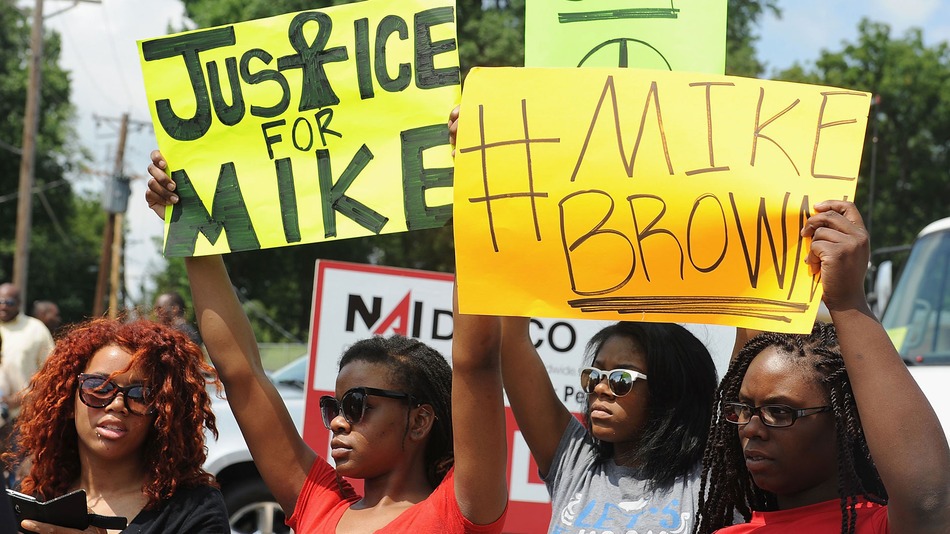
There was another large demonstration in Ferguson last night. This one appears to have been more proportionately and wisely managed by Ferguson police, who still had a bad day that didn’t do much to erase the impression that its leadership is not equipped to deal with the challenges posed by race politics in 21st Century America. The inexplicably delayed information on the circumstances surrounding the shooting death of teenager Michael Brown, including the name of the officer involved (who can now count on receiving death threats and having celebrities try to help vigilantes by tweeting his address), “infuriated”  Brown’s family and the African American community in Ferguson, on the theory that video showing Brown robbing a convenience store and assaulting its owner was an attempt to smear the victim of a racist killing, and to “justify” an execution.

It’s an unethical theory, and the news media and fair observers should reject it. Indeed, they have a duty to reject it.

A young man is dead, and that is a tragedy. Another young man, the one who shot him, is also involved, and his life, while not over, is going to be permanently scarred in the best case scenario. If “justice,” the word that the demonstrators in Ferguson and elsewhere are using as a mantra, is being used to mean what it is supposed to mean (and, it is not), then the young police officer deserves justice too. That means, at very least, waiting until all the facts are known that can be known, and making a dispassionate, objective, non-politically motivated analysis of what occurred, who was at fault, what crimes, if any, were committed, and how to prevent such incidents in the future.

Is that too much to ask? To insist upon?

So it seems. Continue reading

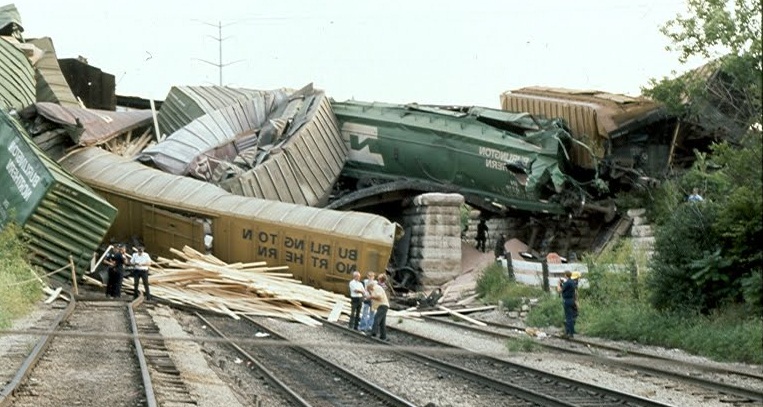
Mid-EthicsTrainwreck Observations On Ferguson

train_wreck

1. This is traveling the identical route as the Trayvon Martin-George Zimmerman fiasco, and I wonder when the intentional similarity will begin dawning on the public, discrediting the participants and embarrassing the news media, which is as Pavlovian as the most conditioned canine.

2. In an environment where race grievance vultures lie in wait, the usual rule of prudence—an ethical value— for law enforcement becomes a fatal error. Now, if a police department waits and investigates before making an official report or filing charges when a white individual has killed a black one, it will be spun by those seeking to find sinister motives, and the news media will take the cue.

3. As in the Martin case, the victim was immediately portrayed by his family as being as threatening as a Care Bear, except for his race. Martin was introduced to the public by the news media with an old photo that made him look about 12. Michael Brown was introduced by his promising future: he was going to college, and his parents were proud of him, as if these factors are proof of unquestionable virtue and innocence. He was unarmed, and a teenager. But as I learned for the first time by seeing the surveillance video of the alleged robbery, he was a huge teenager. A man that big doesn’t have to be armed to be dangerous. Naturally, all public impressions of the incident were formed before any of this came to light. This also addresses the new outrage by protesters that the video was released to “justify” the killing. The video let us know that Brown wasn’t a harmless kid, and that’s valid information now. Continue reading

When Ethics Becomes Impossible: Captain Johnson’s Ferguson “Solution”

Ron Johnson

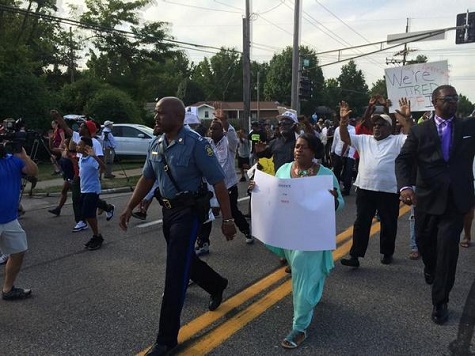
Yesterday,  Ferguson, Missouri’s newly appointed police commander, Capt. Ron Johnson of the Missouri State Highway Patrol, walked with those protesting the shooting of African American teenager Michael Brown.The police shooting in Ferguson this week and its aftermath became an instant Ethics Train Wreck, its carnage seeded by tragedy, local tensions, growing distrust of police nationwide, worsening race relations exacerbated by Democrats and the media resorting to race-baiting to stifle criticism of the Obama administration, as well as such episodes as Occupy confrontations with police in Oakland and the Trayvon Martin-George Zimmerman fiasco.

Johnson’s actions calmed what had been escalating violence, with community protests spilling over into looting, irresponsible and inflammatory statements being made by both police and protesters, and an excessive, military-style response by St.Louis police that treated sometimes over-enthusiastic demonstrating as if it was Rodney King-style rioting. What Johnson did worked, in other words, and that’s both the best and the worst that can be said about it. Ethically, it was the best available option. When a situation reaches the ethics chaos stage that Ferguson has, however, this is rough utilitarianism at best. Continue reading

Police Misconduct, Professional Courtesy, and the Insideous Virtue of Loyalty

"No, I still have your back...I'm just going to have to give you a speeding ticket, that's all!"

“No, I still have your back…I’m just going to have to give you a speeding ticket, that’s all!”

In 2011, Florida Highway Patrol Trooper Donna Jane Watts pulled over—after a brief chase– an off-duty Miami police officer whose vehicle she clocked at over 120 mph. Lead-footed officer Fausto Lopez explained to Watts that he was late for an off-duty job. The tradition among police, as in other professions (like the law and politics), is to extend “professional courtesy” in such situations, or as I call it, unwarranted privilege and corruption.

 Watts, however, arrested Lopez, who had a history of reckless driving, and he was eventually fired. Continue reading