1. What is so hard to understand about the concept of Freedom of Speech and Freedom of Assembly? The Daily Beast negligently covers a story about how some alt-right groups are planning some kind of anniversary/reunion event in Charlottesville. (Funny, I thought we celebrated anniversaries of good things) and how some activists are plotting to block them. I especially like this sentence:
“Activists warned Charlottesville last year that the Unite the Right rally could turn violent. Now they’re determined to keep neo-Nazis out of their city for the anniversary.”
The rally turned violent because the counter-demonstrators turned it violent with help from authorities, who couldn’t, couldn’t, or didn’t want to keep the alt-right and the antifa demonstrations away from each other. This is the Berkeley trick: “Your speech will incite violence from us, so its irresponsible for you to speak. This issue was supposedly settled when the ACLU fought to allow Nazis to march in Skokie, Illinois 40 years ago. In the end, the Nazis didn’t march but the principle that they couldn’t be blocked because of their message was made clear. I wonder if the self-righteous, speech-restriction fans represented by Black Lives Matter activist Lisa Woolfork even know about that case, given such ignorant quotes as,
“[Charlottesville authorities] seem to have gotten the message that white supremacist ideology is dangerous, but they are not willing to take, I believe, the truly moral step to say Kessler’s rally is a white supremacist Nazi rally, and therefore is inimical to our values and that we can ban that.”
No Lisa, you can’t ban that. You can’t ban ideas, no matter how dangerous you think they are, or how dangerous they in fact may be. The theory that the government should ban speech based on morality is infinitely more dangerous than anything these alt-right jerks say, but you still have the guaranteed right to promote such democracy-rotting garbage. Another Lisa quote:
“We did not ignore the white supremacists and let them proceed to go about their business undisturbed without any censure. These ideas are harmful, and they lead to horrible consequences in the real world.”
And I repeat: What is so hard to understand about the concept of Freedom of Speech and Freedom of Assembly? It sure seems to be especially hard to understand for the Left recently. Continue reading →
1. Remember, this creep is a popular and influential “progressive.” Here was what Michael Moore tweeted yesterday on Karl Marx’s birthday:
“Happy 200th Birthday Karl Marx! You believed that everyone should have a seat at the table & that the greed of the rich would eventually bring us all down. You believed that everyone deserves a slice of the pie. You knew that the super wealthy were out to grab whatever they could.”
Nobody who spins Marx this way after his abstract theories were used to enslave and kill millions while leaving nations devastated and impoverished is worthy of respect, or indeed anything but horror. Such a statement requires ignorance, delusion, dishonesty or idiocy, probably all three. Moore is the Left’s Richard Spencer.
1. An especially despicable example of airbrushing history. It’s done. Yawkey Way, the street bordering Boston’s iconic Fenway Park that was renamed in honor of the owner of the Red Sox and the park following his death in 1977, has been returned to its old name of Jersey Street. The team petitioned for the change, an example of ingratitude and willful betrayal seldom seen in a public institution. A rough equivalent would be the University of Virginia banning the name of Thomas Jefferson. It is not an exaggeration to say that the Boston Red Sox franchise owes it esteemed (and profitable) status in Boston’s culture to Tom Yawkey, who owned the team for almost half a century. He has a plaque in baseball’s Hall of Fame, too. But Yawkey, who was born in the 19th Century was a man of his time, and was late accepting the need to integrate baseball, like every other baseball team owner until 1947, when the Dodgers broke the color line. By the final decade of Yawkee’s ownership, he had certainly learned his lesson: his team had the longest stretch of excellence since Babe Ruth was sold, led by such black stars as George Scott, Reggie Smith, Jim Rice, Cecil Cooper, and Luis Tiant.
Never mind. Last year, Orioles centerfielder Adam Jones triggered a public relations crisis for the team when he claimed that he had heard racial slurs from some fans in the centerfield bleachers. (I don’t doubt him.) The easy solution was to throw Tom Yawkey’s memory under the metaphorical bus, since purging his name (his wife, Jean Yawkey, also owned the team after her husband’s death) from the franchise he built. It proves that John Henry is “woke,” you see.How cynical and cowardly.
2. Another one bites the dust. Good. Representative Patrick Meehan (R-PA) had already announced that he wouldn’t be running again after it was revealed that he had paid taxpayer funds to a sexual harassment victim on his staff, abruptly resigned yesterday to avoid a House ethics investigation. “While I do believe I would be exonerated of any wrongdoing, I also did not want to put my staff through the rigors of an Ethics Committee investigation and believed it was best for them to have a head start on new employment rather than being caught up in an inquiry,” Meehan said in his disingenuous statement, insulting anyone who read it,“And since I have chosen to resign, the inquiry will not become a burden to taxpayers and committee staff.”
Riiiight.
Meehan also said he would payback $39,000 to the Treasury to reimburse the cost of what he described as a “severance payment,” as in “negotiated damages for workplace misconduct that he didn’t want to have made public.”
Say what you will about #MeToo, it has chased a lot of public trust-abusing creeps out of Congress. Continue reading →
An Ethics Alarms commenter with the evocative screen name of Fuck you, who is a bit behind on his surfing, or perhaps a really, really slow reader, was moved to author today’s Comment of the Day on a post from seven years ago regarding the tactics used by Mississippi law enforcement to foil a legal demonstration by Fred Phelps’ merry band of homophobes.
Why is this a Comment of the Day? It perfectly embodies the rudimentary, lizard-brain level of ethical analysis that predominates in the public, in much of the media, and among our elected officials. It is helpful, to me at least, to read such comments, for this is exactly the find of gut-level, emotion-based, legally and ethically ignorant reaction that my work exists to overcome. I’ll have more to say after the Fuck You has his say.
As an aside, it was nostalgic reading the names of the commenters on the original post. There, for example, fighting as usual, were liberal logic-cop tgt and uber-conservative Stephen Mark Pilling. Ah, those were the days…
Fuck you for this comparison. I know I’m coming in years later with this and I hope that others have already expressed a similar sentiment. I also understand the point you are trying to make. But still FUCK YOU. I sincerely hope that if you ever lose someone dear to you, these fucking hatemongers show up and protest that person’s funeral. FUCK YOU. Yes they have a right to protest but this type of shit should definitely qualify as a reasonable restriction, like yelling fire in a crowed theater.
FUCK YOU. This comparison is not only an insult to the Marine in question but also to the civil rights activists from decades ago that you just compared to the fucking WBC. FUCK YOU.
Once again Fuck you, you goddamn scum ass mother fucker. Oh, and FUCK YOU.
A California appellate court yesterday dismissed a defamation lawsuit brought Dame Olivia de Havilland against FX Networks. De Havilland, now 101, is one of the last surviving—and lucid—members of Golden Age Hollywood royalty. Those who are culturally literate know her as Melanie Wilkes, Scarlet’s angelic sister-in-law, in “Gone With The Wind,” Maid Marion in MGM’s definitive “Robin Hood” with Errol Flynn (de Havilland’s most frequent leading man), my personal favorite, poor Bette Davis’s evil tormentor in “Hush, Hush, Sweet Charlotte,” and many other roles in an epic career that won her two Academy Awards. (If you don’t know her, get cracking! What’s the matter with you?)
De Havilland had sued for damages, claiming her portrayal in the Ryan Murphy-produced 2017 docuseries, “Feud: Bette and Joan” about the feud between Davis and Joan Crawford, misappropriated de Havilland carefully nurtured image without her consent, and harmed her reputation by portraying her inaccurately, especially a scene where she is shown referring to her sister, actress Joan Fontaine (“Rebecca,” “Jane Eyre,” “Suspicion”—What is the matter with you?), as a “bitch.”
“When ‘Feud’ was first being publicized, but before it went on the air, I was interested to see how it would portray my dear friend Bette Davis,” de Havilland wrote the New York Times, explaining the suit. “Then friends and family started getting in touch with me, informing me that my identity was actually being represented on the program. No one from Fox had contacted me about this to ask my permission, to request my input, or to see how I felt about it. When I then learned that the Olivia de Havilland character called my sister Joan ‘a bitch’ and gossiped about Bette Davis and Joan Crawford’s personal and private relationship, I was deeply offended.”
“Feud,” she said, represented itself as historically accurate fiction, but falsely portrayed her as a hypocrite “with a public image of being a lady and a private one as a vulgarity-using gossip,” undermining what de Havilland described as a hard-earned reputation for “honesty, integrity and good manners.” Continue reading →
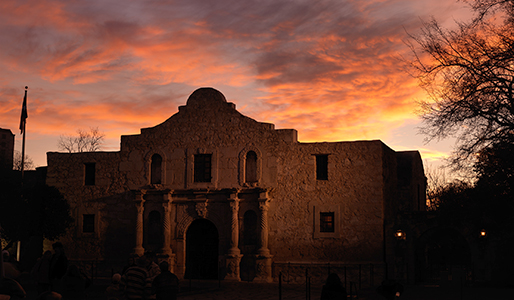
While the Alamo was under siege, the provisional Texas government organized at Washington-on-the-Brazos. On March 2, the convention declared independence and the Republic of Texas was born, at least on paper. The Alamo’s garrison showed its support for independence from Mexico by sending its own delegates to the convention.While they were unaware that Texas had declared independence, the roughly 200 Alamo defenders stayed at their post waiting on help from the settlements. Among them were lawyers, doctors, farmers and a former congressman and famous frontiersman from Tennessee named David Crockett. While the youngest was 16 and the oldest defender was Gordon C. Jennings, age 56, most defenders were in their twenties. Most were Anglo, but there were a handful of native Tejano defenders as well. Legendary knife fighter and land speculator James Bowie was in command before falling ill and sharing duties with Travis. Several women and children were inside the Alamo, including 15-month-old Angelina Dickinson. Just before the final battle, Travis placed his ring around her neck, knowing she would likely be spared. One of the last messages from the Alamo was a note from Travis asking friends to take care of his young son Charles.
The final attack came before dawn on March 6, 1836. As Mexican troops charged toward the Alamo in the pre-dawn darkness, defenders rushed to the walls and fired into the darkness. Travis raced to the north wall but was soon killed. Bowie was most likely killed in his bed, while reports differ as to Crockett’s death. Many believe Crockett survived the initial attack but was put to death by Mexican soldiers soon afterward.
Mexican soldiers breached the north wall and flooded into the compound. The fierce battle centered on the old church, where defenders made a last stand.
BEXAR, Texas, March 6, 1836 — Alas, alas! Forever more, the name of the Alamo shall stand alongside that of Thermopylae in the annals of history as a tale of unmatched bravery to be handed down from generation to generation.
The bastion of Texas Liberty has fallen, and to a man, Lt. Col. William Travis and his fellow defenders — like the immortal 300 Spartans — have been martyred.
After withstanding an unrelenting siege of twelve days’ duration by one of the mightiest armies ever assembled on this continent, the walls of the old mission that had housed Travis (a man as brave as the fabled King Leonidas), Col. James Bowie, the Hon. David Crockett and some 200 other defenders were breached before the sun rose to-day.
Savagery was unleashed therein as a juggernaut orchestrated by the modern-day Xerxes, Mexican Gen. Antonio López de Santa Anna, swept over the Alamo….
Since I was a small boy, this episode in American history moved me more than any other. It still does. I first learned about the Alamo when I watched Fess Parker as Davy Crocket, swinging his rifle like a baseball bat at Mexiacn skulls, the last man standing as behind him we could see more of Santa Anna’s soldiers pouring over the wall. We never saw Davy fall—my dad explained that this was appropriate, since nobody is sure how or when he died, unlike Travis and Bowie, and the last verse of the Ballad of Davy Crocket played…
His land is biggest an’ his land is best from grassy plains to the mountain crest He’s ahead of us all meetin’ the test followin’ his legend into the West Davy, Davy Crockett, king of the wild frontier!
The politics and complexities of the Texas war of independence don’t alter the essential facts: a group of men of different backgrounds, under the command of three prototypical American figures—the pioneer (Crocket), the settler (Bowie), and the law-maker (Travis), all of whom were trying to recover from dark periods in their lives—chose to make the ultimate sacrifice for a cause they believed in fervently enough to die for, in the company of others who felt the same. It was, after all, the perfect ethical dilemma, the choice between an ethical act for the benefit of society and a non-ethical consideration, the most basic one of all: staying alive. They all had the same choice, and rejected life for a principle.
That’s what I remember about the Alamo.
2. There is hope. Once again, I gave a 90 minute presentation to a Boy Scout troop and parents last night, and challenged them this time with several hypotheticals that Ethics Alarms readers would recognize, such as this one, the plight of Ryan Seacrest and those who snubbed him on the red carpet, the “Mrs. Miniver” flower show, and this one, from personal experience, which set off the most lively debate of all:
The Option
Your professional theater company has limited funds, so it offers its actors an option. They may choose a flat fee for their roles, or get a percentage of the show’s profits, if there are any, on top of a much smaller base fee.
The company just completed an extremely profitable production, the biggest hit your theater has ever had. Nine of the show’s ten cast members chose the percentage of profits option, a gamble, because most of the shows lose money. One, the star, who you know could not afford to gamble, took the flat fee for the role. After the accounting for the production is complete, you realize that every member of the cast will make $1000 more than the star, because of the show’s profits.
Question 1: What do you do?
Give him the extra $1000. It’s only fair.
Pay him the flat fee. A deal’s a deal.
You can weigh in:
Question 2: You remount the production, and the exact same thing happens. The actor chooses the flat fee, the show is again a huge money-maker,,and the rest of the cast will make much more than him because they chose the percentage. Do you give him the extra amount again?
No. Now he’s taking advantage of me.
Yes. Nothing has changed.
As before, the approximately 50 11- and 12-year old boys were astute, serious, thoughtful, and gutsy, and their ethical instincts were superb. Continue reading →
1 Let’s get the Oscars out of the way. I didn’t watch, choosing instead to finish streaming Netflix’s excellent “Seven Seconds.” I have skimmed the transcript and checked the reporting, however, and these items leap out..
On the “red carpet,” Ryan Seacrest was snubbed by the majority of the stars he tried to chat with them. Seacrest was accused of sexual harassment by his ex-personal hair stylist last year. His employer hired an independent counsel to investigate, and could not confirm her allegations, so he kept his job.Never mind: he was snubbed like a leprous skunk at a picnic anyway.
This is a flagrant Golden Rule fail. Not one of the over twenty stars who walked by him while he was trying to do his job would feel fairly treated if they had been in his position. It also is as perfect and example as there is of how the #MeToo movement is a witch hunt, not interested in facts, or fairness, just power and the ability to destroy without due process.
If I was going to watch the Oscars, the treatment of Seacrest in the pre-show would have changed my mind. These are awful people. To hell with them.
The disgusting and smug Jimmy Kimmel hosted, because he’s “America’s Conscience of America” despite seeking ratings by encouraging parents to be cruel to their own children for his amusement.
He began the night with a penis joke.
As I noted in yesterday’s Warm-Up, the Oscars are now part of the effort to divide the nation. Bigotry is good, as long as it’s trendy bigotry:
…Presenting the best director award, Emma Stone introduced the nominees as “these four men and Greta Gerwig.” Nice. Misandry is funny! (Gerwig lost. GOOD.)
…Maya Rudolph assured the presumably racist white viewers, “Don’t worry, there are so many more white people to come.” Bite me, Maya.
In the past I have devoted whole posts to the Academy’s snubs in its “In Memoriam” segment, which is supposedly Hollywood’s final salute to film artists who made their final exits. At this point, I really don’t care what the Academy does, but the loved ones and fans of the snubees care, and that should matter to the Academy. Here is the complete list of omissions that at least someone has complained about. I’ve highlighted the ones who really should have been included:
The names fall into five categories. Bill Paxton is in one of his own: he was left out of the list due to a silly technicality: he died right before last year’s Oscars, so it was too late to include him in 2017, and some jerk decided that since he was a 2017 death, he couldn’t be honored this year either. The second category is flat-out mistakes: Dorothy Malone won a Best Actress Oscar; if that isn’t enough to be listed, what is? Director Tobe Hooper was responsible for a film that revolutionized horror movies, “The Texas Chain-Saw Massacre,” and also directed “Poltergeist.” He was an important director. When two of your films launched sequels, remakes, sequels to remakes, and endless knock-offs, Hollywood should show some respect: it made millions because of Tobe Hooper.
Category 3: John Hillerman and Powers Boothe were successful and prolific film actors in some major movies, though both are remembered best for their TV work. There is no good argument for omitting them. In the fourth category are TV actors who made a few mostly forgettable films: West, Jeffreys, Merrill, Ferrer and Hardin. I can see the argument: they will be honored at the Emmys.
Stephen Furst deserves a category all his own. He played a memorable character in a classic, iconic film: “Flounder” in “Animal House.” That should have been enough to earn a place in the roll call.
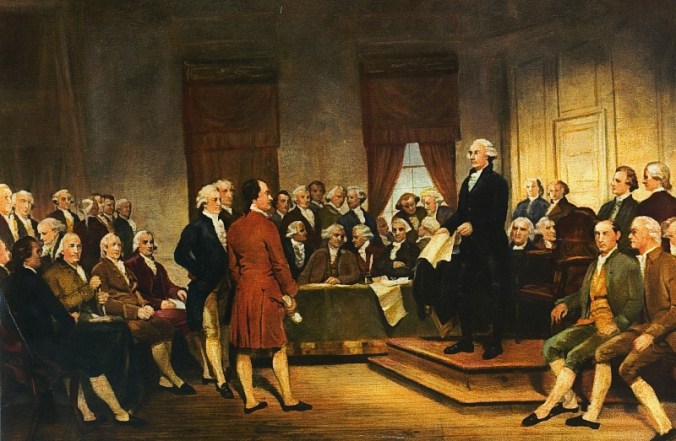
1 Addendum to the “Weapons of War” post: I almost included this in the post itself, but it was long enough. During the debates here over the Confederate statue-toppling orgies and the Charlottesville riot, we often heard the defense that Robert E. Lee, et al., were unworthy of statues, monuments and memorials because they were traitors. I always viewed this as a rationalization for the real reason the Confederates are being airbrushed out of our public history, which is that their political and social beliefs don’t measure up to 21st Century ethics. The “traitor” argument is a neat way to distinguish Robert E. Lee from slave-owners like George Washington. However, as the post explains, the United States was founded on the principle that it is not treason for citizens to seek to create a new government when they concluded that the current one has abused its power and cannot be reformed. That is certainly what the Confederacy believed. Under the Founding documents, they had every right to leave the Union, and would have done so peacefully had Lincoln allowed it. Robert E. Lee was wrong, and he was a racist, but he was no traitor. By Jefferson’s formula that was ratified unanimously by the Continental Congress, he was a patriot.
2. Everybody’s flailing. President Trump floated the much-mocked “arm teachers” suggestion, and then used the cultural DeLorean to retrieve the “popular culture is too violent” explanation. The gun violence in the U.S. is very much driven by our culture, and pop culture both reflects and affects it. Hollywood made some efforts to tone down the violence last year; it also had the worst year at the box office in a quarter of a century, so we’ll see how long that lasts. The President just doesn’t understand the Constitution very well: the government can’t force video games, music, TV shows and movies to be less violent, but it can launch efforts to build a public consensus to dial back the fictional killing.
You know, like Tipper Gore’s effort to get the sex, obscenity and violence out of rap music. That sure worked well. The Obama approach would be to send out a menacing letter saying something like, “We recommend that you tone it down, but of course we can’t make you, but you know there are a lot of ways we could make your life miserable if you displease us, not that we would ever try to muscle you or anything since it you have the right of free speech. Just a word to the wise between friends. Nice little business you have there; it would be a shame if anything were to happen to it…”
The President’s critics sneered that he is “flailing” on the issue. I don’t see that he is flailing any more than anyone else. To the zealots, “flailing” means “not advocating the repeal of the Second Amendment.”
3. At least Vox is honest. In this article, left-wing Vox argues that the solution to gun violence “isn’t a big mystery,” but then only uses innuendo to explain what the solution is. Guess! here’s the biggest clue (emphasis mine): Continue reading →
Chris Marschner’s epic Comment of the Day arrived at 11:14 pm last night. My immediate reaction was that it validated all of the toil and time I have put into this blog since it was launched in 2009. I know I have indulged myself more than is professionally admirable of late, complaining about the traffic here, the lack of broader web circulation of essays that I believe are important and objectively superior to commentary elsewhere that routinely gets hundreds of thousands of clicks, likes and shares. In my lore rational moments I also know that, as Hymen Roth once pulled me aside and reminded me, “Jack, you idiot, this is the life you have chosen!” This is ethics. Most people don’t want to read about or think about ethics, and most people are bad at it and don’t want to get better. I make much of my living teaching ethics to lawyers who admit to me that if they didn’t have to get ethics credits to keep their licenses, they would rather be locked in a room with Slim Whitman recordings being blasted at them than sit through an ethics seminar.
Chris’s essay— “essay” doesn’t do it justice; perhaps “opus”–reminded me of what I set out to do here from the beginning, which was to create an online colloquy about applied ethics and ethics analysis, using events, issues, episodes and dilemmas from every aspect of our culture, national experience and daily life. As the 9th full year of Ethics Alarms begins, I can see that we have attracted, beyond the readership, which of course is hard to analyze, a remarkable, diverse, dedicated and passionate group of regular commentators whose output in the discussions and debates following the posts is the best it has ever been and getting better. I could not be more proud of that. I also complain about lost commenters, the many, many once regular and valued participants here who have fallen away, often without explanation. ( Spike Jones: Mary–“Bon soir, John. Prosit. Auf wiedersehen. Au revoir. Adios. Aloha.” John: How do you like that? She didn’t even say ‘goodbye’! ) But this is the regular cycle of any blog; I know it. I just get attached to the faceless people I interact with daily, and take their exits personally, forgetting that lives and priorities change, and that I, too, am just a distant voice, who could, after all, be a dog.
I read many websites and blogs, and with the possible exception of the original Volokh Conspiracy before it moved to the Washington Post, no site’s comments approach the routine excellence I see here, in content, seriousness, and original thought. So you know just how excellent Chris’s comment is, when I say that it is among the very best that has been posted on Ethics Alarms.
The first time I mentioned the now burgeoning effort by anti-gun advocates to turn the emotional blackmail portion of the current push to children, Chris Marschner issued a typically tightly reasoned examination of the debate ending with, “I’d be happy to discuss my ideas with any of the kids now being paraded before the public on this subject.”
I’m sure that was sincere, though, as you will see, stated with a bit of an edge, as you will soon see.None of these nascent cable news stars would be capable of discussing the topic with him, except in the most rudimentary fashion. . This is the state of affairs that sparked my previous post, making Chris’s Comment of the Day especially apt. And sharp.
I really do not know what is meant by the term “common sense gun control”. Given that it is a relatively amorphous phrase it is difficult for me to reject or accept the argument that we need even more common sense gun control.
I have no problem with background checks or even enhanced background checks but it seems to me that, given that school shootings are often committed by young people, that common sense would indicate that we eliminate the rules to seal a juvenile’s police records, their medical records, and school disciplinary actions. If we had common sense regulations that would allow government officials to ferret out socially aberrant behaviors and intervene beforehand many if not all of these shootings could have been avoided without having to infringe on the rights of law abiding gun owners.
Furthermore, common sense would tell us that if we gave the government the power to review all online posts we might be able to also ferret out cyber bullies and their victims which leads to more deaths annually than school shooters. According to DoSomething.org :
1.”Nearly 30,000 Americans commit suicide every year. 2.In the U.S., suicide rates are highest during the spring. 3.Suicide is the 3rd leading cause of death for 15 to 24-year-olds and 2nd for 24 to 35-year-olds. 4.On average, 1 person commits suicide every 16.2 minutes. 5.Each suicide intimately affects at least 6 other people. 6.About 2/3 of people who complete suicide are depressed at the time of their deaths. Depression that is untreated, undiagnosed, or ineffectively treated is the number 1 cause of suicide. 7.There is 1 suicide for every 25 attempted suicides. 8.Males make up 79% of all suicides, while women are more prone to having suicidal thoughts. 9.1 in 65,000 children ages 10 to 14 commit suicide each year. 10.There are 2 times as many deaths due to suicide than HIV/AIDS. 11.Over 50% of all suicides are completed with a firearm. ”
Think of it, one person dies at their own hand every 16.2 minutes. We need legislation to stop this. We need legislation to stop the cyber bullies. We need legislation to stop the carnage. We must think of the children. We cannot simply focus on the firearm because nearly half do not use a firearm to kill themselves. We can do more than simply control firearms. We must stop the killing by any means. Continue reading →



 Ethics Alarms
I’m sure that was sincere, though, as you will see, stated with a bit of an edge, as you will soon see.None of these nascent cable news stars would be capable of discussing the topic with him, except in the most rudimentary fashion. . This is the state of affairs that sparked my previous post, making Chris’s Comment of the Day especially apt. And sharp.
Here it is, on the post Morning Ethics Warm-Up, 2018 President’s Day Edition: