Welcome To The Slippery Slope! Fordham’s Coffee Shop Bigotry

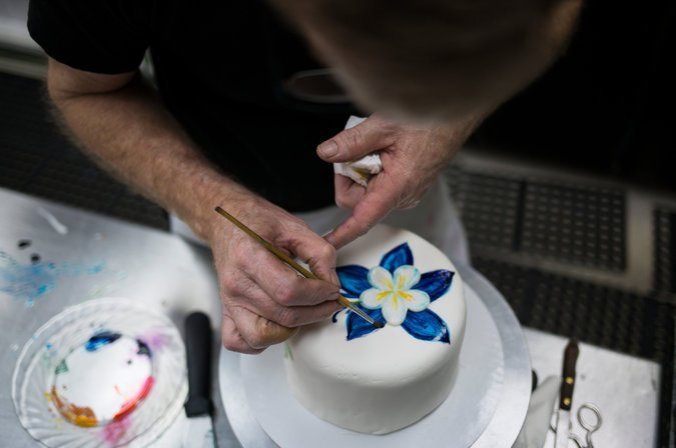
A recent episode at Fordham illustrates quite effectively the way American society could unravel as a result of a Supreme Court decision supporting the Masterpeice Cakeshop’s claim that its faith-based objection to same sex marriage should justify restricting service to some customers.

Rodrigue’s Coffee House is an off-campus coffee shop run by a student club at Fordham University.

The shop has a “Safer Space Policy” that reads…

“Rodrigue’s strives to be a safer space on Fordham’s campus. For these reasons, consider the following:

Do not make assumptions about someone’s gender, sexuality, race, class, or experiences. Be aware of your own identity, while being considerate of the personhood of your peers. Be mindful of the ways in which your words and actions impact others. Be aware of the boundaries of other’s space, physical or otherwise, and respect their consent. No racism – No sexism – No homophobia. If you feel that someone has transgressed this policy, we want you to feel comfortable confronting them or approaching a member behind the counter, who is available as a resource to assist you.”

This is Authentic Frontier Gibberish and first degree virtue signalling, and could be fairly translated as “We are pompous and oppressive social justice warriors who are intolerant of the views, statements, or opinions of anyone who does not share our rigid and undeniably correct ideology. We hereby declare our right to ostracize such non-conforming individuals on the basis of what we, in our sole discretion, consider hate speech. Fear us.”

Fordham College Republicans visited the coffee shop wearing MAGA hats. Sure, they did this to provoke a response, knowing what the likely reaction would be, much like a gay couple deliberately asking for a wedding cake at a Christian bakery.  Memorialized in the video above, the president of the club didn’t disappoint, and angrily ordered the College Republicans to leave the premises.

“This is a community standard—you are wearing hats that completely violate safe space policy. You have to take it off or you have to go…I am protecting my customers,” the president said. Note that she was “protecting” his customers from exposure to the thrice-removed (initials, the phrase “Make America Great Again” which is benign on its face, and its association with the Trump campaign) message on a cap.

“We are your customers, we bought something,” one of the young Republicans replied.

“I don’t want people like you supporting this club… no one here wants people like you supporting our club,” the president answered. “I am giving you five minutes….You are threatening the integrity of our club. This is a community standard—you are wearing hats that completely violate safe space policy. You have to take it off or you have to go.”

When one of the students then asked her to explain what she thinks the MAGA hat stands for, to which she shouted, “Fascism, Nazis! You have three minutes.”

Legally, of course, this conduct is distinguishable from the conduct of the same-sex marriage decrying cakeshop owner. There is no law prohibiting a proprietor from behaving like a vile, intolerant, rude, bigoted asshole, just basic standards of decency.  Nor is there a law protecting conservatives from invidious discrimination in public accommodations based on passively displayed political beliefs, although if this kind of thing starts proliferating, there will be.

However, the toxic effects on the culture by the two examples of intolerance and disdain for other citizens and human beings is exactly the same. Each is similarly mean-spirited, each is based on excessive self-righteousness, and each equally harms society, and the nation by elevating tribalism to standard practice. The theory of the coffee shop proprietor, I suppose—that the mere presence of a hat with initials on it is “unsafe” —-is marginally more outrageous and idiotic than the baker’s claim that selling a cake for a wedding he will not attend, is not invited to, that will never impose on his consciousness once the customers walk out the door unless his cake turns out to be poisoned, and that will take place whether he provides the cake or not,  is a burden on his religious faith. Marginally. They both constitute  unethical mistreatment of other human beings who deserve better, and breaches of the Golden Rule. That in both cases the victims of the unethical conduct may have intentionally presented themselves to be abused does not mitigate the abuse.

I might as well state the obvious, that the members of the intolerant club operating the shop are 100% behind the cause of forcing the cakemaker to sell the gay couple a wedding cake, but believe it is fair and just to refuse to sell Republicans a muffin.

Sometimes I am embarrassed that I even have to write a post. This is one of those times.

If higher education is manufacturing future citizens who think and act like the club president running the coffee shop, then higher education is doing the nation more harm than good.

Comment Of The Day #4: “Back To The Bigoted Baker: It’s Complicated…More Than I Thought”

Ryan Harkins’ Comment of the Day, the fourth on the post about the Great Cake Controversy ,responds to #3, by Extradimensional Cephalopod.

The four COTD’s cover a great deal of legal and ethical territory and if not the full spectrum of positions on this difficult topic. Ryan’s three predecessors can be read here:

After you read #4, I’ll ask you which of the COTDs come closest to your own opinion. If the answer is “none of them,” by all means try for #5!

Here is  Ryan Harkins’ Comment of the Day on the post Back To The Bigoted Baker: It’s Complicated…More Than I Thought:

EC,

I hate to answer for the baker, so I hope you don’ mind if I respond with how I would answer.

What if I walked into the shop and asked for a wedding cake for no reason at all? Nobody’s getting married; I just want the cake. Is it against his religion to make that style of cake for anything other than weddings?

It would not be against my religion, no.

One thing I want to point out about your line of inquiry here is that you are divorcing the mechanical action of making a cake from the purpose of making a cake. A cake is a cake, and apart from any purpose, it remains a cake with no further meaning than a configuration of confectionery molecules. But the purpose for making the cake defines the context. If you wanted me to bake you a cake so you could bury it in your backyard, I wouldn’t have any religious objections to that, but I would certainly object to having the fruits of my labor just thrown away. Just as I would object if you wanted me to write you a book so could use the pages of the book as toilet paper.

The purpose of making a wedding cake is for it to be displayed and consumed at a wedding. If you aren’t going to use the cake for a wedding, ontologically speaking, could it even be a wedding cake?

Do I have to show him a marriage license?

I wouldn’t require that. My general standpoint would be to take people at their word. That being said, if I knew you and you were known for pranks, were opposed to marriage in general, and nothing I knew about your recent activities hinted at a wedding, I might want some actual proof that a wedding was occurring.

I’m an atheist; will he refuse to acknowledge my marriage because you can’t have marriage without a god? Does only the Christian deity count for a “real” marriage?

Since I’m Catholic, I’ll just toss out what the Catholic Church teaches about marriage. Marriage is universal. Historically, marriage permeates pretty much every culture. Marriage is an institution that has, for the most part, united a man and his wife to the children they bear together. Marriage does not require a profession of faith, because it is a foundational institution of mankind. That is why eating, drinking, and shelter don’t require a profession of faith. They are also foundational aspects of the human condition. So, there is no objection to two atheists marrying.

Where the religious context comes into view is with the nature of that marriage. Catholics profess that Jesus elevated the institution of marriage to a sacrament. This means that a valid marriage between baptized individuals cannot be dissolved save by the death of one of the two parties. But that does not mean every marriage is sacramental. If one of the two parties is not baptized, the marriage is still a valid marriage, but it is not a sacramental marriage. Thus it could be dissolved, and either party would be free to re-marry.

A funny oddity of terminology crops up in Catholic teaching. Since a valid, sacramental marriage cannot be dissolved, but since parties can licitly separate for serious reasons (abuse, abandonment, adultery, addiction), a Catholic can be married and divorced at the same time…

I would argue that the artistic quality of the cake has nothing to do with who is getting married, or if there’s even a marriage at all–at least, as far as religion is concerned.

I agree with you to a certain extent, here. The artistic quality is its own concern. It is the teleological purpose of the cake that is the true contention. So that raises a question: if I bake a cake that I do not intend to be used at a wedding, but looks just like a cake that I do intend to be used at a wedding, is it a wedding cake? To use some technical terms, there is the essence of a thing, and there are the accidents of a thing. The essence of a thing is what is essential to a thing being that thing; accidents are just features that particular thing has that are not essential to a thing being that thing. The essence of a chair is something to sit on. Accidents of a chair are having one leg, or three, or four, having a back, not having a back, etc. So what is the essence of a wedding cake, and what are the accidents of a wedding cake? I think the only essential difference between a wedding cake and a non-wedding cake is the intent for which the cake is made. The only part I waffle on is the cake-topper…

On a separate note, I assert that religion ultimately must be subordinate to the law of the land.

I’m uncomfortable with how you phrase this, so let me toss out what I think about this, and let me know if it does or doesn’t conform with what you’re thinking. Continue reading

Comment Of The Day #3: “Back To The Bigoted Baker: It’s Complicated…More Than I Thought”

And now there are FOUR Comments of the Day on the post about the Great Cake Controversy. This is a record number for a single Ethics Alarms post. It is a true ethics conflict: which should have priority in a pluralistic society, the right of all citizens to be treated equally under the law, and to have the government ensure their right to the pursuit of happiness, or the individual right to act and live in concert with one’s sincerely held religious beliefs, and to not be forced into expressive speech, part of the right to liberty? This part of the controversy doesn’t even include the ethical question of whether either party should have allowed this to be come a legal dispute.

When I post the fourth COTD, with was a response to #3, I’ll include links to the other three and include a poll for readers to register their opinion regarding which comes closer to their own view

Here is Extradimensional Cephalopod’s  Comment of the Day on the post Back To The Bigoted Baker: It’s Complicated…More Than I Thought:

There’s an obvious question here (well, several) that occurs to me: What if I walked into the shop and asked for a wedding cake for no reason at all? Nobody’s getting married; I just want the cake. Is it against his religion to make that style of cake for anything other than weddings? Do I have to show him a marriage license? I’m an atheist; will he refuse to acknowledge my marriage because you can’t have marriage without a god? Does only the Christian deity count for a “real” marriage?

I would argue that the artistic quality of the cake has nothing to do with who is getting married, or if there’s even a marriage at all–at least, as far as religion is concerned. If I asked someone to draw me a picture of a bird, they don’t have to know anything about me in order to make it. Their art doesn’t have anything to do with me, and they are not expressing any objectionable ideas. They’re not endorsing me in any way by taking me on as a customer. Therefore, this isn’t like refusing to make a swastika cake. This is like refusing to sell a cake to Nazis. (Yes, Nazis should be able to buy cake like anyone else. Preventing them from doing so is just bullying, and won’t teach them anything except more hate. How will they learn how to appreciate different people if only other Nazis talk to them?) Continue reading

Comment Of The Day #2: “Back To The Bigoted Baker: It’s Complicated…More Than I Thought”

This the second of the Comments of the Day on the post about the Great Cake Controversy; a third arrived last night, which will appear shortly. It was authored by the always provocative Mrs. Q—you can tell because she always uses ampersands. I used to turn them back into “and,” and then decided that this was a signature feature.

The three Comments of the Day on this topic are as different as they could be. I detest the Colorado baker controversy, because three people could have and should have avoided the whole thing, saved a lot of time, money, and ink, and just exhibited some empathy and proportion rather than avoiding the Golden Rule so emphatically. I detest it, but it certainly is a rich ethics subject.

Here is Mrs. Q’s  Comment of the Day on the post Back To The Bigoted Baker: It’s Complicated…More Than I Thought:

When my wife & I were looking for wedding rings we stopped at a place where the owner after talking to us went on a strange rant about some NFL player who came out gay. The owner went so far as to physically mimic kissing another guy in telling his story, and shivering with wide toothed disgust at the thought. He didn’t say he wouldn’t sell us a ring, but obviously we didn’t want one from his store & the feeling was mutual.

We could have gone on Yelp and given the store a bad review or complain to someone who could “go after” him politically, but at the end of the day our relationship didn’t (doesn’t) need others affirmation. We were certainly hurt – not by his thoughts but the manner in which he shared his thoughts. Yet we picked our proverbial battle and let it go. Why? because we too are Christian and know no one person can ever really give us what we need. Hurt feelings can be gotten over and forgiveness heals wounds far faster than enacting revenge because someone doesn’t agree with us or what we do.

We have to ask what will be next. I don’t believe suddenly we’ll see “No Homo’s Allowed” signs on shops. And ultimately that’s not what I believe this case is about. Also I’m not convinced that these bakers are bigots either. Instead I suspect what this case is ultimately about religion and thought police. Orthodox Muslims having to make non-Halal foods, Jewish deli’s selling pork, Christians making Satanic themed confections. I’d rather see a few victim-minded SJW’s get butt-hurt than force others to sign off on what are ultimately another persons *private* beliefs. Forcing business owners to think as we wish sets a dangerous precedent while walking away from a shop not being affirmed only requires one to find another place to go. And honestly it’s fairly easy to find smug leftist affirmation at businesses. Yes…even in small towns too. Continue reading

Comment Of The Day #1: “Back To The Bigoted Baker: It’s Complicated…More Than I Thought”

There were so many thoughtful and diverse comments on the post about the Great Cake Controversy that I could have justified four or five Comments of the Day. I chose two. This is the first, by the indefatigable Michael Ejercito. Here is his Comment of the Day on the post Back To The Bigoted Baker: It’s Complicated…More Than I Thought:

“Art is notoriously difficult to define. To that list, I could argue for the addition of gardeners, landscapers, bathroom floor tilers, interior designers, architects, website designers, marketing consultants, and on and on. Is a sign-maker an artist? A printer?”

This is a feature, not a fault, of the First Amendment. Courts must make findings of fact based on evidence and testimony. Courts did in fact do just that in Hurley v. Irish American Gay, Lesbian, and Bisexual Group of Boston, 515 U.S. 557 91995) and Rumsfeld v. Forum for Academic and Institutional Rights, Inc., 547 U.S. 47 (2006).

In its amicus brief, the Department of Justice spent a total of six paragraphs detailing how public accommodations laws do not ordinarily implicate freedom of expression.

“Justice Kennedy became involved in some of this discussion about where to draw the lines — the ready-made/custom cake distinction, the speech/conduct distinction, and the distinction between selling a cake in a shop and supervising the cutting of a cake at a ceremony…”

It is a distinction that must be made.

It is a tenuous argument, at best, that the sale of sign-making supplies constitutes expression. Thus, Colorado’s laws properly apply to such, and it is unlawful to refuse to sell sign-making supplies because the purported customer is a Westboro Baptist or a militant Islamist. And religious discrimination laws must cover unpopular religions, or else it fails to achieve its own purpose. Continue reading

Back To The Bigoted Baker: It’s Complicated…More Than I Thought

The last time (in July) I dealt with the apparently thornier-than-I-thought issue of the Colorado baker who refused to sell a wedding cake to a gay couple, I assumed that the Supreme Court would treat this as a pure public accommodations case, and side with Colorado and the couple. I was wrong. Now it is beginning to look like baker Jack Phillips may even prevail, based on the justices’ comments during oral argument.

Then I wrote, quoting my post when this case first surfaced…

“The court’s conclusion  is impossible to rebut. The cake the baker was asked to bake for the gay wedding differed not at all from one he would normally sell a straight couple. In truth, this had nothing to do with expression. He was just refusing to serve a gay couple because of their sexual orientation. Selling them a standard cake would neither constitute, nor would it be recognized as a “message” in support of gay marriage.

The Court agreed that a wedding cake with a customized message celebrating a same-sex marriage as such might implicate First Amendment speech issues, but “we need not reach this issue,” the court said. “We note, again, that Phillips denied Craig’s and Mullins’ request without any discussion regarding the wedding cake’s design or any possible written inscriptions.”

In other words, Phillips was gratuitously and unnecessarily being a cruel jerk. An alleged Christian who is unable to detect the basic Golden Rule application in treating fellow citizens with the minimal level of respect inherent in allowing them to buy a standard wedding cake requiring no “Yay Gay!” or “Charlie and David Forever!” messages in pink frosting deserves no sympathy or quarter from the law. Could the couple have just shrugged and found another bakery? Sure, they could have. Linda Brown could also have just shrugged and found an all-black school to attend, too.

The gay couple are not the villains here. Jack Phillips broke the social contract, as well as the law.”

Recent articles about the SCOTUS appeal have added some facts that I had missed, or not given sufficient weight. For example, Continue reading

Morning Ethics Warm-Up, 12/2/17: Flying Morons, A Fake News Crash, Death By Bias, And Me

Good Morning!

1 Moron on board. Passengers can create personal wi-fi networks o and name them what they want while flying on some airlines, like Turkish Airlines.One passenger on a flight from Nairobi to Istanbul named his wi-fi network “bomb on board.”

Brilliant. Passengers could see that the network was in operation on the plane when they used their own devices, and became, ah, upset. In a statement, Turkish Airlines said the flight made an emergency landing at the Khartoum airport in Sudan, but the flight was safely resumed after security inspections on all passengers and the aircraft.

2. Terry McAuliffe for President! A 220-page report from Timothy Heaphy, a former U.S. attorney, was commissioned by the city council to find out what  happened in Charlottesville when a white nationalist group opposing the removal of a Robert. E. Lee statue was opposed by a group including violent antifa thugs. It was released yesterday, and USA Today reports that it concluded…

“This represents a failure of one of government’s core functions — the protection of fundamental rights. Law enforcement also failed to maintain order and protect citizens from harm, injury and death.”

Among the report’s other findings:

• Charlottesville police didn’t ensure separation between counter-protesters and so-called alt-right protesters upset with the city council’s decision to remove the Robert E. Lee statue from Emancipation Park.

• Officers weren’t stationed along routes to the park, but instead remained behind barricades in relatively empty zones.

• City police didn’t adequately coordinate with Virginia State Police, and authorities were unable to communicate via radio.

• State police didn’t share a formal planning document with city police, “a crucial failure.”

• Officers were inadequately equipped to respond to the clashes between the two groups, and tactical gear was not accessible to officers.

The handling of this episode by city and state officials was a warning about how tenuous support is for core American rights and values, though the news media didn’t cover it that way. Ethics Alarms did. Here is what I wrote at the time about the Governor of Virginia, now being prominently mentions as a possible Democratic Presidential nominee…after all, he is long-time Clinton loyalist, so why not?

[We] have Virginia’s governor Terry McAuliffe, who used the power and influence of his office to declare that people holding views he does not approve of are not welcome in the Old Dominion. In the midst of some patriotic grandstanding, he said…

“You are not wanted in this great commonwealth. Shame on you….There is no place for you here. There is no place for you in America.”

This is leftist fascism, by definition. Who is Terry McAuliffe, or Virginia, or anyone, to say who can or should have a “place” in the United States of America? How is this statement applied to white nationalists any different legally or ethically from applying it to Muslims, or lesbians, or abortion advocates, or Catholics, Jews or libertarians?

It isn’t. The entire point of the Bill of Rights is that the government does not get to tell us what to thing, what we can chant, what we can protest, and where we can live.

Charlottesville’s mayor made similar sentiments known, and the result was that the police obeyed the cues, and a riot resulted.

Then the news media blamed Steve Bannon and President Trump. Continue reading

Morning Ethics Warm-Up, 11/24/2017: The Infuriating Clinton Enabler Flip-Flops, And Ominous Messages From The Times

Good Morning After…

1 Damn First Amendment! I’m hoping that everyone was watching the Macy’s Thanksgiving Day Parade and missed it, but yesterady’s New York Time front page had very strange headline above the fold: “Using Freedom To Lead Attack On Gay Rights.” The online version was more descriptive of te tone of the article: “Fighting Gay Rights and Abortion With the First Amendment.” The article seeks to paint the Alliance Defending Freedom, which opposes policies that its members believe infringe on their right to live according to their religious beliefs, as sinister. By emphasizing the fact fact that the guarantees of the First Amendment aid and abet the dastardly objcetives of these horrible people, the Times appears—to me, anyway–to be questioning the First Amendment itself. Don’t all advocacy groups “use freedom” to argue for their positions? Doesn’t the New York Times fight the Republican Party and Donald Trump “with the First Amendment”? Yes, we have free speech in this country, at least until progressives acquire sufficient power to limit it, as their rhetoric increasingly portends. Where is the Times headline, “Progressive Use Freedom to Lead Attack on Liberty”?

From the article:

“We think that in a free society people who believe that marriage is between a man and a woman shouldn’t be coerced by the government to promote a different view of marriage,” said Jeremy Tedesco, a senior counsel and vice president of United States advocacy for the group, which is based in Scottsdale, Ariz. “We have to figure out how to live in a society with pluralistic and diverse views.”

But civil liberties groups and gay rights advocates say that Alliance Defending Freedom’s arguments about religious liberty and free expression mask another motivation: a deep-seated belief that gay people are immoral and that no one should be forced to recognize them as ordinary members of society.

Oh, no doubt, the civil liberty groups are correct about that, but so what? Motives have never been the criteria whereby legitimate use of the First Amendment is measured and limited.  Whether religious groups believe that LGBT individuals should not have the same rights as other citizens because they have been condemned by God, or whether they just think they are inherently icky, or whether they are inherently icky because they have been condemned by God, or whether they have been condemned by God because God thinks thet thinks they are inherently icky, part of the First Amendment states that they have a right to their beliefs, and another part says that they have a right to argue for those beliefs without government interference. Yup: they are dead wrong about gays (though not necessarily about abortion), just as the Times is wrong about many, many things. But implicating the First Amendment while attacking Alliance Defending Freedom’s positions is a dangerous game, and one more bit of evidence that a large swathe of the ideological Left regards the nation’s core principles of freedom or speech and religion as problems rather than blessings. Continue reading

Morning Ethics Warm-Up, 10/24/17: It’s The Andrew Sullivan Show!

Still trying to clear the decks..

1 Last week, Andrew Sullivan delivered a couple of excellent pieces of commentary with ethical clarity. My definition of an ethical analyst is one who can steer away from the magnetic pull of cognitive dissonance, and realize that, for example, just because Democrats and progressives deplore President Trump as much as you do doesn’t mean you have to regard their battiest and most unethical positions as better than they are. Sullivan qualifies. Here he is making what I once thought was an obvious point: that Democrats and progressives embracing open borders (and condemning as racist anyone who doesn’t) was irresponsible:

I don’t believe it’s disputable at this point that the most potent issue behind the rise of the far right in America and Europe is mass immigration. It’s a core reason that Trump is now president…[and the] reason why I have dwindling hopes that the Democratic Party will be able to defeat Trump in 2020. Instead of adjusting to this new reality, and listening to the electorate, the Dems have moved ever farther to the left, and are controlled by ever-radicalizing activists. There’s a nuanced, smart — and shockingly honest — piece in Vox by Dara Lind about this. Money quote:

For Democrats, it’s been a simple calculus. Democrats’ attempts at “tough love” centrism didn’t win them any credit across the aisle, while an increasingly empowered immigrant-rights movement started calling them to task for the adverse consequences of enforcement policies. Democrats learned to ignore the critics on the right they couldn’t please, and embrace the critics on the left who they could… Democrats in 2017, in general, tend to criticize the use of immigration enforcement, and tend to side with those accused of violating immigration law, as a broad matter of principle beyond opposing the particular actions of the administration … Democrats are no longer as willing to attack “illegal immigration” as a fundamental problem anymore.

This is, to be blunt, political suicide. The Democrats’ current position seems to be that the Dreamer parents who broke the law are near heroes, indistinguishable from the children they brought with them; and their rhetoric is very hard to distinguish, certainly for most swing voters, from a belief in open borders. In fact, the Democrats increasingly seem to suggest that any kind of distinction between citizens and noncitizens is somehow racist. You could see this at the last convention, when an entire evening was dedicated to Latinos, illegal and legal, as if the rule of law were largely irrelevant. Hence the euphemism “undocumented” rather than “illegal.” So the stage was built, lit, and set for Trump.

Bingo.

2. A post that fell through the cracks months ago involved one more example of California morphing into Bizarro USA. Then the post was about a speech-dictating bill passed by the legislature; this month, Jerry Brown signed it into law. The bill was SB-219, changing the laws regarding health care facilities, including nursing homes. Continue reading

Ethics Hero: Jimmy Carter

Say what you will about former President Jimmy Carter, he has never shied away from confronting what he believes are unpleasant truths. Thus he earns an Ethics Hero designation by telling New York Times columnist Maureen Dowd;

“I think the media have been harder on Trump than any other president certainly that I’ve known about. I think they feel free to claim that Trump is mentally deranged and everything else without hesitation.”

Hilariously, USA Today immediately proved Carter’s point by writing, in its naturally objective and fair story on the quote,

“Perhaps Carter is seeking to placate Trump as part of a job interview: The 93-year-old former president said he is willing to undertake a diplomatic mission to North Korea to discuss its nuclear weapons program.”

In a related and illuminating story, former NPR CEO Ken Stern, nine years after he left the taxpayer- funded radio news network, has suddenly realized that there may be some liberal bias in the news media! His op-ed for the New York Post begins,

“Most reporters and editors are liberal — a now dated Pew Research Center poll found that liberals outnumber conservatives in the media by some 5 to 1, and that comports with my own anecdotal experience at National Public Radio. When you are liberal, and everyone else around you is as well, it is easy to fall into groupthink on what stories are important, what sources are legitimate and what the narrative of the day will be.”

Gee, that’s kind of nice. What we usually hear from reporters, editors and media management is that the accusation of partisan bias, based on such overwhelming evidence that it makes a “beyond a reasonable doubt” standard look like a breeze, is just a Fox News myth, a conservative concoction and a false talking point. It would have been more nice, of course, if Ken Stern had come to this obvious conclusion and used his position to do something, rather than wait nine years and speak up when the average informed person reads his name on an article and thinks, “Who the hell is Ken Stern”?

I confess, I detest these too little, too late confessions of enlightenment, which are usually self-serving. I smell a book and an interview tour, don’t you?

Well, I won’t be reading it. Later in his conveniently tardy piece, Stern writes, Continue reading