Push-Up Ethics

I don’t know why this took so long…

The Washington Post reports that there is a movement afoot to stop allowing young women to substitute so-called “girls’ push-ups” (with the knees on the floor) for the actual toes-on-the-ground exercise while males are still required to do the real thing. The American College of Sports Medicine (ACSM), which provides guidelines for exercise testing by fitness and medical professionals, still uses the modified push-up to assess women’s upper-body strength in its latest exercise testing textbook, published in 2021. Male strength is measured in part using the full push-up.

But Melanie Adams, a professor of exercise science at Keene State College in New Hampshire, told the Post that based on a 2022 study of female college students and push-ups that she led, the assumption that women could only do the weenie version was unwarranted. Some female college students could perform more than 20 full push-ups in succession, a total many men can’t match. Because the root exercise builds strong, important muscles in the upper-body and core, however, starting boys on real push-ups while girls are told to use the inferior version gives males a head start on superior strength that women will have a hard time overcoming.

Continue reading

He Has “No Sense Of Decency,” And Neither Do They: Trump’s Threats To Heidi Cruz Settle It, As If It Wasn’t Settled Already: Anyone Who Would Be Willing To See Donald Trump Become President, No Matter How Horrible The Alternatives May Be, Is An Irresponsible Citizen And Unworthy Of Respect

Beneath contempt.

Beneath contempt.

And this applies to the Republican Party, too.

Yes, it is that simple.

(The disgusting Heidi Trump story is here.)

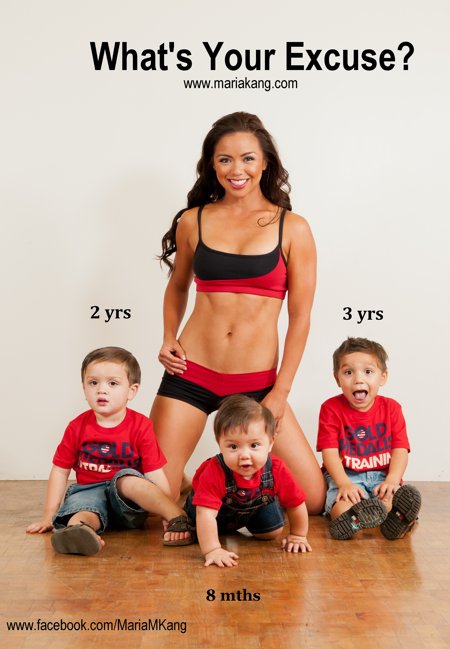
“Hot Mom” Maria Kang Is A Self-Obsessed Narcissist, and Yes, There’s A Reason Humility Is An Ethical Virtue

Kang

Lots of Americans are obsessed with outward appearances, unreasonably devoted to being attractive at all costs and for as long as possible,convinced that their own priorities are what everyone should embrace, and feel superior as a result. Most don’t go out of their way to broadcast these obnoxious attitudes and to accuse others of being inferior, rationalizing slugs while thrusting their cosmetic successes in the faces of those who no longer can squeeze int their fashion jeans.

Maria Kang, pictured above in all her buff glory, did, reaped the predictable result, and now is being called the aggrieved victim while she remains resolutely self-righteous.

Yechhh. Continue reading

Ethics Malpractice from “Dear Margo”: The Tale of Witchy, Tubby and Sue

"Well sure---his inner qualities are much more important to me now that he's so hot!"

I read a lot of advice columns, which often involve ethical issues and very often expose the ethical incompetence of the supposed experts who write them. Some advice columnists are ethically spot-on with regularity, like The Washington Post’s Carolyn Hax. Some, like the past and present”Ethicists” of the New York Times, are off-base almost as often as they are on. Then there are the advice mavins like “Margo,” in the Boston Globe. I don’t know how such people get to be advice columnists, but I suspect it either involves picking names out of a hat or the exchange of sexual favors. [Full disclosure: I give out personal ethics advice myself over at AllExperts.com, when a legitimate questioner can find me—ethics isn’t listed as one of the site’s topics—and when the question isn’t a thinly veiled homework question, which it usually is.]

As an example of ethics malpractice, consider this question posed to Margo. “Sue” wrote that she had broken up with her ex-boyfriend over arguments about his weight and eating habits, which “grossed her out.” Eight months later, he’s fit and fabulous, and has a new girlfriend.  “I really would like him back because he’s hot and slim,” Sue writes, plaintively. “How can I step on his witchy new girlfriend so I can get him back?” Continue reading

Vanity Size Ethics

Esquire has revealed the result of its investigation, and it is this: many manufacturers of men’s pants routinely mislabel their products’ waist measurements, representing waist sizes as less, and sometimes considerably less, than they really are. Old Navy, by far the most outrageous of the size-liars, sells pairs of trousers with a 41 inch waist band as a 36. Other companies, like Hagar and The Gap, play the same game, though not as egregiously.

The practice is intentional, apparently, and even has a name in the industry—“vanity sizing.” The theory is that pants with smaller waist measurements make men feel better about their pot-bellied bodies, and thus have a competitive advantage over truthfully labeled pants. All other things being equal, a man is more likely to buy a comfortable pair of jeans that have a 36″ label on the waist than ones with a 38″ label. Continue reading