Can a Lying Journalist Be a Trustworthy Lawyer?

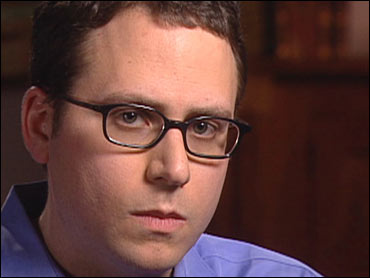
Stephen Glass: Would you trust this man?

When New Republic Editor Charles Lane fired Stephen Glass, the infamous journalist for that and other magazines who in 1998 was exposed as having fabricated many articles he had represented as true, he was quoted as saying,  “Glass is a man without honor who operated out of hostility and contempt; he has no place in journalism.”

Now the question is whether such man now has a place in the law.

A petition for review has been filed by the California Commission of Bar Examiners contesting the  State Bar Court’s finding that Glass is now morally fit to practice law. He passed the California bar exam in 2007, but the committee blocked his admission, finding that his previous record of professional dishonesty, though in another profession, showed such a deficiency of character that it disqualified him from legal practice as unfit. Then a hearing judge over-ruled the Commission, and found that Glass had reformed sufficiently to render trustworthy. The opinion was upheld 2-1 by the State Bar Court. Continue reading

Ethics Dunce: The California State Bar

This question should be easy.

This will be a short post, unless I snap in the middle of writing it and get hysterical.

Why is The California State Bar August’s first Ethics Dunce? This news item says it all:

“A California State Bar panel is considering whether an illegal immigrant who passed the exam to practice law should be admitted despite his status.”

Pardon me, California State Bar, but exactly what is there to “consider?” 

I can see the value of some general consideration of the insanity of California’s laissez faire attitude toward illegal immigrants, and the fact that California residents seem to have no problem with allowing them to use schools, hospitals, public schools, universities and others services that their bankrupt state can barely afford. I can see the need for some reconsideration of the foolishness of creating incentives for illegal immigrants to continue living a lie in America by giving them the benefits of a Dream Act, like the one Governor Brown recently signed into law. Continue reading

Ethics Dunce: The Ever So Tolerant Wisconsin Bar

Hot on the heels of the story about the New Jersey lawyer who managed to avoid interruption to his legal career after admitting forgery, we have more disturbing evidence that a profession that insists on self-regulation may have a rather different concept than the public about what constitutes “fitness to practice law.”

The professional ethics rules in every state declare that substantial dishonesty and especially failure to obey the law call into question a lawyer’s trustworthiness and are grounds for suspension of disbarment. Many states automatically disbar any lawyer convicted of a felony. But in Wisconsin, a local newspaper investigative report reveals, there are 135 attorneys continuing to practice law despite convictions for battery, theft, fraud and repeat drunken driving. Some even had active licenses even as they served time behind bars, giving a new meaning to the term, “jail house lawyers.” Another 70 of Wisconsin’s  attorneys-in-good-standing managed to avoid discipline by getting charges reduced or entering into deferred prosecution agreements. Continue reading

Nice Guy, Unethical Lawyer

A Massachusetts lawyer, Daniel Szostkiewicz, tried to help out a former client by hiring her as his receptionist in August 2007. She asked him to pay her “under the table,” so she could keep state health benefits for her husband, who was ill. Szostkiewicz agreed. Six months later, he fired her, and his ex-receptionist applied for unemployment. This led to the state discovering the undisclosed payment arrangement.

Szostkiewicz has received a three-month suspension, with all but one month stayed as long as he allows his law firm to be audited.

I think he got off too easy. Continue reading

Trust, Redemption, and Bank-robbing Lawyers

The story of Shon Hopwood is certainly an inspiring one…so far. While serving more than a decade in federal prison for a series of armed robberies, his time in the prison law library turned him into an expert in case law, and he pulled off a rare feat: a petition for certiori he prepared on behalf of a fellow prisoner successfully persuaded the U.S. Supreme Court to review the case. Now Hopwood is out of prison, and is turning his life around. He has been working as a paralegal, he now has a family, and at 34, he plans to apply to law school.

It is likely that a law school will admit him, but not at all certain that any state bar would give him a license. Can a former bank robber pass the profession’s character requirement? Should he, no matter how good he is at writing Supreme Court briefs? Continue reading

Ethics Quote of the Week

“Edwards, who wore expensive Italian suits, had panicked prior to a debate in front of an American union group. The label inside his jacket read “Made in Italy.” Sensing he might be about to step in a political cow pie if one of the unionists inquired, he asked Young about the label inside his own suit jacket. Young’s read “Made in the USA.” Edwards ordered Young to immediately take both jackets to a tailor and switch the labels. Later Edwards played back a videotape of the debate and complained to Young about how his suit appeared to be wrinkled where the labels had undergone the old switcheroo.”

————– Former John Edwards aide Andrew Young in his soon-to-be-released  book, The Politician

There are those who argue that small deceptions like this are meaningless. They are wrong. Continue reading

Disbar John Edwards

The last shoe dropped in the sordid John Edwards tale, with his admission that he was indeed the father of his mistress’s infant daughter, as many suspected. This comes months after he emphatically and repeatedly denied this fact to the media, in the course of admitting that he indeed did have an affair with the child’s mother, Rielle Hunter, after months of denying that. His efforts at covering up all of this ultimately incorporated his terminally ill wife, his friend and supporter Fred Baron, who paid his mistress to make herself scarce, and his aide Andrew Young, who was induced to publicly claim that he, not Edwards, was the father of baby Quinn. All of the deception initiated by Edwards took place while he was running for the Democratic presidential nomination, on a platform of moral obligation and justice. Continue reading

Law Students, Lawyers and Judges With Broken Ethics Alarms, 2009

I won’t keep you in suspense: my favorite is the Harvard law school whiz who celebrated his job offer from a top law firm by getting drunk and burning down a church. Forgot to check the batteries in the ol’ ethics alarm, I guess!

Here are two cautionary end-of-year lists: from the Avvo blog, the “Top Lawyers Behaving Badly” list for 2009, and, though not rich a source for  black humor, the even more disturbing “Year’s Most Infamous Lawyers” from the Business Insider.

Ethics Alarms thanks  Robert Ambrogi for finding them, as well the Avvo and the Business Insider for doing such an excellent job of compiling them.

Robert Bowman: Aspiring Lawyer, Ethics Martyr

Robert Bowman, according to a panel of New York judges, does not have the requisite good character to be admitted to the practice of law in New York. The reason for the panel’s finding is superficially logical: he owes nearly a half-million dollars in student loans. This is, says the panel, per se proof of irresponsible and negligent financial management, making him an unacceptable risk for any client.  The panel is almost certainly wrong. Continue reading