Police Misconduct, Professional Courtesy, and the Insideous Virtue of Loyalty

"No, I still have your back...I'm just going to have to give you a speeding ticket, that's all!"

“No, I still have your back…I’m just going to have to give you a speeding ticket, that’s all!”

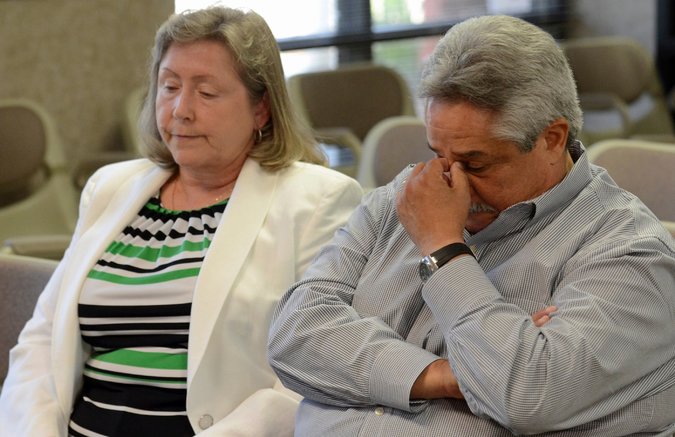
In 2011, Florida Highway Patrol Trooper Donna Jane Watts pulled over—after a brief chase– an off-duty Miami police officer whose vehicle she clocked at over 120 mph. Lead-footed officer Fausto Lopez explained to Watts that he was late for an off-duty job. The tradition among police, as in other professions (like the law and politics), is to extend “professional courtesy” in such situations, or as I call it, unwarranted privilege and corruption.

 Watts, however, arrested Lopez, who had a history of reckless driving, and he was eventually fired. Continue reading

Sixth Grader Lauren Arrington Is No Plagiarist—This Science Fair Ethics Train Wreck Is Adult-Engineered

You know, it's really all YOUR fault!

You know, it’s really all YOUR fault!

Florida sixth grader Lauren Arrington found herself a sudden media star when her science fair project was featured on NPR, CBS, and other media outlets for allegedly breaking new ground.  Rather than rub hormones on chicks or build models of volcanos, Lauren’s project focused on the Indo-Pacific lionfish, a troublesome invasive species that is causing ecological havoc in ocean waters along the Southeastern United States and the Caribbean. The NPR story, “Sixth Grader’s Science Fair Finding Shocks Ecologists,” was typical: it quoted Lauren’s “Eureka!” thusly…

“Scientists were doing plenty of tests on them, but they just always assumed they were in the ocean. So I was like, ‘Well, hey guys, what about the river?’ “

Gee, I wonder why a 12 year-old girl was thinking about that? Well, it seems that her father, Dr. Albrey Arrington is the executive director of the Loxahatchee River District, and has been involved in lionfish research. Not that there is anything necessarily unethical or unusual about a parent suggesting a science fair project to his child that is in that parent’s own area of expertise, or even providing access to resources for the child to accomplish the project, but as we will see, Dr. Arrington set his daughter up for trouble she couldn’t possibly understand. Continue reading

Hall v. Florida: The Supreme Court Opts For Ethics Over Law

On a purely ethical basis, it is difficult to argue with the majority opinion in Hall v. Florida, where the U.S. Supreme Court ruled that executing a convicted killer whose IQ had been determined to be 71 was still cruel and unusual, and thus a violation of the 8th Amendment, despite Florida law’s cut-off for mental retardation being a score of 70. On the basis of law, however, the SCOTUS decision is hard to defend. Funny, I thought the job of the Supreme Court was to interpret laws.

“Intellectual disability is a condition, not a number…,” wrote Justice Kennedy for the 5-4 majority, in which he joined the so-called “liberal wing.”  “This is not to say that an IQ test score is unhelpful. It is of considerable significance, as the medical community recognizes. But in using these scores to assess a defendant’s eligibility for the death penalty, a State must afford these test scores the same studied skepticism that those who design and use the tests do, and understand that an IQ test score represents a range rather than a fixed number.”

The problem is that the whole concept of a “condition” like intellectual disability is a subjective one. The theater company for which I serve as artistic director is presenting the Abby Mann historical drama “Judgment at Nuremberg,” and one of the most troubling scenes involves a man, the son of a Communist, sterilized by the Nazis because he was “mentally defective,”  or perhaps because of his family’s political views. The Nazi test: make a sentence out of the words hare, hunter, and field. A witness for the prosecution, the man who was sterilized fails to answer the test on the stand, just as he failed when quizzed by the Nazis. Continue reading

Confirmation Bias or Contrived Ignorance: The New York Times and the Inadvertent Voter Fraud of Mario Hernandez

Accidental illegal Mario Hernandez waits to finally get the citizenship he thought he already had. Those 10 votes he cast without being eligible don't matter, because he wasn't trying to defraud anyone. What else is there to the story? That's it, right? Problem solved!

Accidental illegal Mario Hernandez waits to finally get the citizenship he thought he already had. Those 10 votes he cast without being eligible don’t matter, because he wasn’t trying to defraud anyone. What else is there to the story? That’s it, right? Problem solved!

Last week, the New York Times happily related the heart-warming tale of Mario Hernandez, a former federal employee and an Army veteran who for decades thought he was a United States citizen but wasn’t. The problem was rectified at last when he was sworn in as a citizen in a ceremony in Jacksonville, Florida. In the process of telling the story, the Times casually notes that he voted in every major election since Jimmy Carter’s in 1976. The Times’ ethics alarms are long dead: to them, this is just a detail on the way to arguing one of its pet agenda items, that the immigration system needs fixing. It does, but one weird story where a series of record-keeping errors resulted in a botched citizenship status doesn’t prove it. Because he has a different concern, however Wall Street Journal blogger James Taranto did the math. Hernandez, a non-citizen, voted in ten elections, by his own admission, and nobody knew.

That is significant, and does prove something. It proves that the Democratic, NAACP, Eric Holder mainstream media claim that there is no evidence that people are voting in elections who shouldn’t is a problem worthy of addressing is a cynical excuse to cry racism to tar Republicans who are pushing for an obvious, practical, responsible requirement of photo ID cards to establish voter eligibility. As Taranto points out, such a system would have not only prevented Hernandez’s invalid—but tallied*—votes, but also would have alerted him decades ago of his citizenship problem. More important, the incident illustrates the inherent dishonesty of the argument that because a large number of such votes by non-citizens haven’t been caught, they problem doesn’t exist. If one non-citizen, however innocently, could have voted ten times over decades without it being noted, it is fair to assume that there is a problem. Voter IDs address the problem; it is irresponsible not to address the problem, and to argue that only racism could be behind an effort to improve the integrity of a system that allows a single non-citizen to cast ten votes is unfair, irresponsible and intentionally misleading. Continue reading

Ethics Hero: Pasco High School (Dade City, Fla.)

Graduate

I need this story to get the previous post out of my head.

In Mark Harris’s novel “Bang The Drum Slowly,” best known as the inspiration for the film that introduced Robert DeNiro to the movie-going public, a major league baseball team exhibits uncharacteristic kindness toward a third-string catcher who is dying of Hodgkin’s Disease. The book, like the film and the stage adaptation, is about kindness and the Golden Rule, an ethical value that seldom inspires literature or art. Kindness is not particularly exciting, but it may be the most ethical of all ethical virtues. The serious illness and impending death of someone in our life often brings the importance of kindness into sharp focus. “Everybody’d be nice to you if they knew you were dying,” says the doomed catcher, Bruce Pearson, to his room mate and champion, star pitcher Henry Wiggen.  “Everybody knows everybody is dying,” Wiggen replies. “That’s why people are as good as they are.”

Pasco High School student Vanessa Garcia  learned that she had an inoperable brain tumor when she was in elementary school. Until two years ago, treatment had kept the tumor  in remission, but the mass began growing again when she was 15. Undaunted, Garcia continued to go to school, work diligently, and keep a positive and uncomplaining outlook, earning the admiration of her classmates, teachers and school officials. Continue reading

Ethics Quiz: Trust and the Vampire Candidate

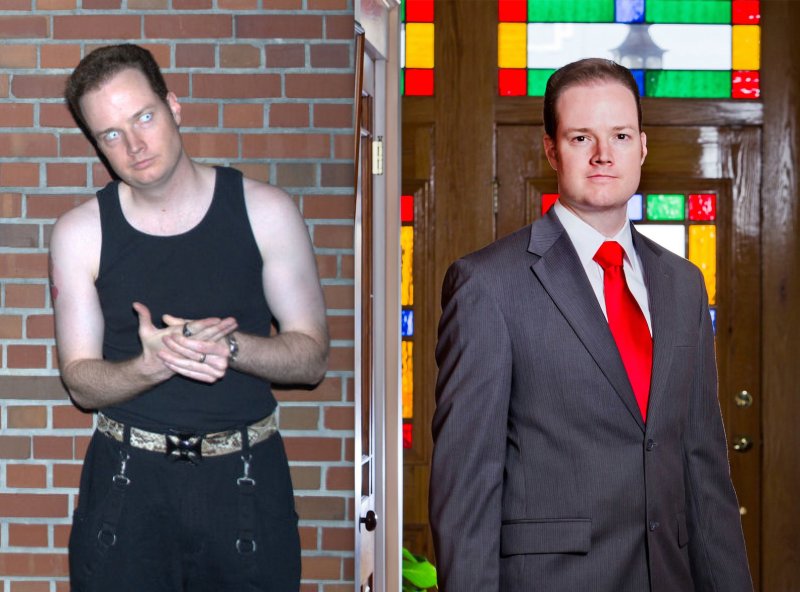
jake-rushConservative Republican candidate Jacob A. Rush, a 35-year-old attorney, has begun a campaign in Florida’s 3rd Congressional District to win the primary against incumbent U.S. Rep. Ted Yoho, a Tea Party stalwart seeking a second term. Rush’s campaign website portrays  him  as a “conservative straight shooter,”and he may indeed be that. A Florida blog uncovered the fact that Rush is also, however, a long-time member of the Mind’s Eye Society,  “a nationwide community of gothic-punk role-players who take on the personas of vampires and other supernatural beings” for fantasy battles “against their own bestial natures, hunters, and each other.”

It’s all fun and games with improvisational theater tossed in, though with a decidedly adult set of themes. Rush liked ( likes?) to play a character named “van de Winst”, a lusty vampire, and photos of the lawyer were found on the web showing him and/or members of his club, playing vampire,  burning books, aiming shotguns at dogs, pretending to be demons, displaying Satanic symbols, being chained and gagged…you know, that kind of thing. Fun stuff.

After this all came out—how could he think it would not?—Rush explained in a press release:

“All my life, I’ve been blessed with a vivid imagination from playing George Washington in elementary school to dressing up as a super hero last Halloween for trick or treaters. Any cursory review of the Internet will show that I have played heroes and villains…. I have never hid nor shied away from disclosing my hobby activities. When I was hired at the Sheriff’s office, I fully disclosed my gaming and theatre background on the application, and these hobbies posed absolutely no problem or raised any flags. In fact, when applying for undercover work, these hobbies were considered an advantage, so much so my shift lieutenant nicknamed me ‘Shakespeare.'”

And he included this photo of him and his wife…

Rush and wife

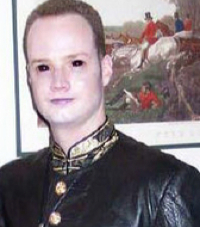
…wisely choosing not to send this one:

Rush vanpire

WOW.

And thus your Ethics Alarms Ethics Quiz for today is….

Is it  Jacob Rush’s unusual personal hobby relevant to his ability to serve in Congress?

Continue reading

Ethics Hero: Dick Masten—When Ethics Trumps Law

A heroic and ethical snack...

A heroic and ethical snack…

One way I can always start an argument on Ethics Alarms is to state my position that willfully breaking the law is per se unethical as a breach of citizenship. Like all rules, however, this one has exceptions. Dick Masten, the Director of Miami-Dade Crime Stoppers, recently demonstrated one of them.

The former police chief was ordered by Judge Victoria Brennan to reveal the name of a tipster in a cocaine possession case, State vs. Lissette Alvarez. Alvarez was arrested in 2013 and charged with cocaine possession. Brennan called for Masten to come into court and confer with her in chambers regarding the case. Miami-Dade Crime Stoppers sparked the eventual arrest after getting information from a tipster who was assured anonymity. Alvarez’s attorney insists that the tipster’s information is part of the evidence against his client, saying, “Ms. Alvarez, in this case, has every right to confront her accusers. But more particularly in this case, it’s not the accuser, but the evidence that the State will use against her.”

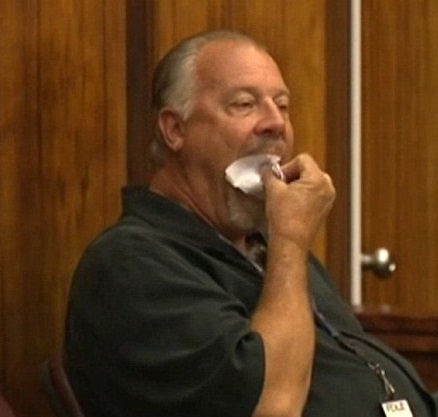
Ordered by the judge to reveal the name of the tipster, Masten, insisted that he couldn’t divulge information to be reviewed in closed court that might be discoverable as evidence. “There is a possibility that looking at certain documents, a defendant could work that case backwards and put the tipster at peril, and I’m not gonna let that happen,” he said. In a dramatic touch, Masten swallowed  a slip of paper that held the tipster’s name. “What is personal to me, is the promise,” Masten said before his ethical snack. “Some of these tipsters could end up dead. Not on my watch.” Continue reading

Ethics Dunce: CNN’s Chris Cuomo

Bob BarkerCNN morning anchor Chris Cuomo is a fascinating study in modern broadcast journalism. Handsome, engaging, obviously intelligent and wearing his New York liberal Democrat family’s brand for all to see, he will either become an annoying MSNBC-style left-wing media scold (like his dim predecessor Soledad O’Brien), manage to walk the perilous tightrope between fair newscaster and openly liberal commentator, or (my prediction) go into the Cuomo clan business and run for office. Lately, however, his adventures have me wondering if his ego will swallow his judgement, setting him on a trajectory for MSNBC itself.

On Wednesday’s New Day, Cuomo couldn’t hide his obvious disappointment over Florida Republican David Jolly’s victory in the much-watched Florida special Congressional election. He  noted that The Price Is Right theme music was played Jolly’s  victory rally on Tuesday, and expressed disgust: “What a metaphor for what politics has become – that they are playing the theme song of The Price Is Right when they celebrate a victory, because it’s about the money! It makes me sick.”

The impression Cuomo left was indeed disgusting, that Republicans were celebrating the triumph of their big money campaign over the Democrat’s similarly obscenely funded campaign, calling attention to their victory in what had become, due to its presumed bellweather status, a local race that had attracted support from deep-pocket king-makers from both parties. Ironically, Democrat Sink outspent the Republican Jolly, who won, making Cuomo’s indictment an example of selective prosecution. His indignation that the Republicans would be mocking the role of money in politics, however, seemed to justify his making them out to be villains. Continue reading

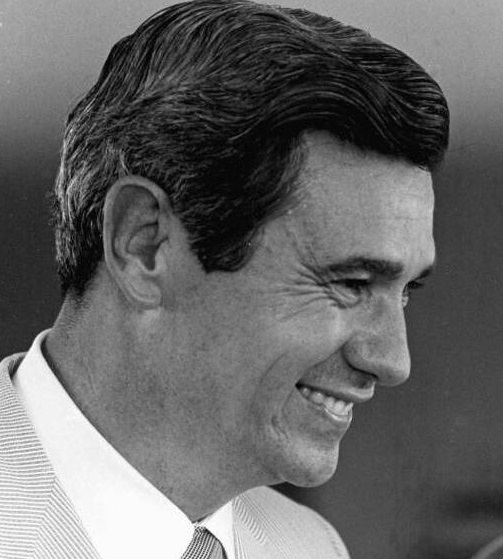
Ethics Hero Emeritus: Reubin Askew ( 1928-2014)

Askew

In a better United States where only character, demonstrated skill, experience and leadership ability were necessary to become President, Reubin Askew would have been one. Unfortunately looks, luck, money and timing are important too. Askew had the looks, all right; he just missed the other three.

Never mind. Reubin Askew, who died yesterday, did all right.

His father was an alcoholic, and soon his mother had divorced him and was supporting Reubin and his five siblings as a single mother in Pensacola, Florida. She worked as a waitress, seamstress and hotel maid, while Reubin shined shoes, bagged groceries, delivered newspapers and sold his mother’s homemade pies door to door to do his part to support the family. After graduating from high school in Pensacola,  Askew served two years in the Army and, thanks to the G.I. Bill, graduated from Florida State in Tallahassee, where he was elected student body president. He was an Air Force officer during the Korean War, and in 1956 graduated from the University of Florida law school. That same year he joined a Pensacola law firm, and married Donna Lou Harper, who remained his wife for 57 years, until he died.

Askew ran for Florida’s House of Representatives in 1958, and won. After four years in the House, and eight more as a state senator, he ran for governor.  He was already nicknamed  “Reubin the Good,” and his opponent, Republican Claude Kirk, ridiculed the well-publicized fact that Askew, a devout Christian, never drank, smoked or used curse words by referring to him as a “mama’s boy,” not tough enough for high office. Askew’s rebuttal: “I love my mama.”  He won easily. Continue reading

And The Trayvon Martin-George Zimmerman Ethics Train Wreck Rolls On…Apparently Forever

It may be a train wreck, but if you're a liberal race-baiter, it's such a darned comfy one...

It may be a train wreck, but if you’re a liberal race-baiter, it’s such a darned comfy one…

The Michael Dunn trial ended without a verdict on the first degree murder charge, and the news media just couldn’t help themselves. Although the facts of two cases have virtually nothing in common, various prominent media figures could not resist connecting it to the Trayvon Martin killing and George Zimmerman’s trial, thus compounding the damage they have already inflicted on the public’s understanding of law, race, and ethics.

Other events spurred them on as well. There was the George Zimmerman interview in which he described himself as a victim, and this set some people off. Zimmerman is a victim—a victim of being made the race-conflict advocate’s poster boy for profiling villainy and bigotry when there are absolutely no facts that support such a characterization. He’s just not the dead victim in his tragic episode. Nor is the status of irresponsible, gun-toting fool necessarily incompatable with the status of victim in his case, but such nuances are beyond the comprehension of many among us, especially the many with press credentials.

Then the Providence College Black Studies Program announced that it would continue to give out an annual award called the Trayvon Martin Award for Social Justice, intended to honor those who have shown leadership and commitment to ”challenging and eliminating racism” and “empowering others to seek social justice.” The inexcusable implication of the award is that Trayvon Martin was the victim of racism, and that Zimmerman’s acquittal was social injustice, when in fact it was the epitome of the justice system working well. The program established the award in 2012, before Zimmerman had been tried or permitted to mount a defense in court, so this was no surprise. In fairness, the award needs to be renamed the Trayvon Martin “Our Minds Are Made Up So Don’t Confuse Us With Facts” Award. But then, fairness is not what the enshriners of this false but convenient narrative care about.

This morning,  CNN’s  over-opinionated morning news co-anchor Chris Cuomo (I’ll bet you he runs for office as a Democrat within five years or less) was showing part of his taped interview with Dunn prosecutor Angela Corey. I admit that it was fun watching Corey squirm under Cuomo’s biased and misleading questioning regarding the Martin and Dunn trials; she contributed greatly, after all, to the rush to judgment and trial-by-publicity in the Zimmerman case. Still, Corey tried to make a valid point to Cuomo (whose partner, Kate Bolduan, increasingly sits compliantly and submissively in silence while Cuomo takes over the broadcast and crosses lines of journalistic objectivity left and right): by focusing on a few high-profile cases, media coverage distorts the public’s perception of Florida’s stand-your-ground law as well as the justice African-Americans, victims as well as those accused of crimes, receive in the courts.

Cuomo proceeded to prove Corey correct. First he falsely described the Martin case, describing it as an instance of a young black man, minding his own business, getting into a confrontation, who “wins a fight, essentially”–these were Cuomo’s exact words—gets killed for it, and his killer goes free. This would be unforgivable from a guy in a bar; it is outrageous from a news anchor. If Martin had been shot by Zimmerman after the fight had ended, as Cuomo’s false description suggests, then he would have been guilty of murder beyond question. The evidence presented at trial indicated that Zimmerman shot Martin while he was losing a fight, and when he had no way of knowing how victorious the man on top of him intended to be. That created sufficient evidence of self- defense to win Zimmerman an acquittal. Cuomo was spreading false information to fit a politically motivated false narrative. Continue reading