Light-Hearted Ribbing or Taunting? The Pineapple Pizza

Whatever else they may be, the Paris Olympics are definitely….strange.

Hong Kong (is that China or not? I can’t quite figure it out…) won a razor-thin fencing Gold over Italy, 15-14. There was a bitter dispute over the final, decisive point: referees replayed the video three times, and each competitor was convinced he had won. Cheung Ka Long of Hong Kong was ultimately declared the victor, and became the first athlete from Hong Kong to win two Olympic gold medals. He’s historic, see, so that must mean he deserved to win.

The Italian Fencing Federation, meanwhile, said it would file a formal complaint over what it called “unacceptable refereeing.” “Filippo Macchi is the real winner,” Paolo Azzi, the federation’s president, wrote on social media. “He was denied the gold he deserved.”

The New York Times immediately declared that the claim the fencing gold was stolen is “baseless.” (Kidding!)

To slap back at Italy, Pizza Hut’s Hong Kong and Macao branch announced that it is offering free pineapple toppings on its pizzas, a desecration of the dish that, understandable, Italians consider blasphemy. I think it’s funny, but maybe not. Italy truly feels it was robbed. Is the pineapple pizza ploy more like taunting than good-natured joshing? Is Hong Kong disrespectfully rubbing in the pain of a close defeat, or sending a message of “Come on, let’s laugh and be friends!”?

If I ran a Chinese restaurant chain in Italy, I’d announce new menu items like Peking duck with tomato sauce.

Life Imitates “Seinfeld”: For Fake Fat-Free Yogurt, Substitute Fake Gluten-Free Doughnuts

The Savory Fig, founded by Michelle Siriana, is a self-proclaimed vegan bakery in Patchogue, New York. Siriana makes and sells vegan scones, cinnamon rolls, cookies, and brownies, but also, amazingly enough, yummy gluten-free, vegan doughnuts. Vegan and gluten-freed doughnuts tend not to taste so good, for reasons you can guess if you’re familiar with how the fatty, buttery morsels are usually made; they also tend not to have the pleasant texture of the Krispy Kreme variety. Siriani’s doughnuts, however, are miraculous, fluffy and light with delectable icing.

Cindy Snacks, a vegan food market in Long Island, sold The savory Fig’s pastries and sometimes posted photos of the doughnuts on social media as part of its marketing strategy. In an Instagram post on March 3, the store’s proprietor revealed a scandal: an order they received from The Savory Fig contained the this doughnut …

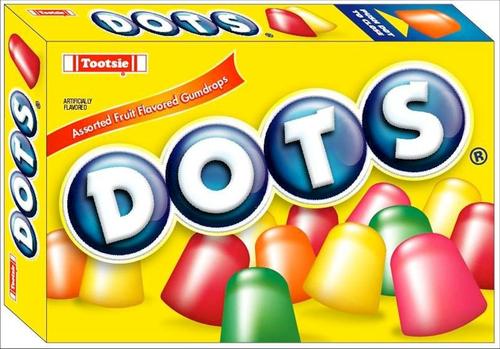
…with pink and orange, D-shaped sprinkles—D, as in “Dunkin’ Donuts.”  Pink and orange, as in Dunkin Donuts. Concerned that the doughnuts she had been buying and selling as vegan and gluten-free were neither, the alarmed owner texted Siriana, “If these are Dunkin’ Donuts the ingredients could kill somebody as we have so many people with severe dairy allergies that shop here. I’m concerned with the donuts this week and am very nervous to put them out.”

Continue reading

From China, An “It Isn’t What It Is” For the Ages: “Rat Head Gate”

“War Is Peace. Freedom Is Slavery. Ignorance Is Strength.” The frighteningly Orwellian progressive movement and its Democratic Party facilitators have emulated Big Brother in their conviction that if you repeat an obvious lie often enough (and the news media helps out by at least looking the other way), enough lazy, careless citizens will accept whatever you say. Thus biological men have no advantage over women in athletic contests, the Southern border is secure, the economy is great, hiring people because of their color isn’t racial discrimination and a fetus isn’t a human life. On the Ethics Alarms Rationalization List, this is #64. Yoo’s Rationalization or “It isn’t what it is,” named after the Bush Administration lawyer who explained that waterboarding wasn’t torture. Totalitarian regimes depend on #64, which is why its emergence as a Democratic Party staple is especially ominous.

China, speaking of totalitarian regimes, has developed a culture in which “It isn’t what it is” has become the proverbial hammer for authorities who see every controversy as a nail. At the cafeteria of the Jiangxi Vocational Technical College of Industry Trade in Nanchang, China, a student found a desiccated rat’s head in his bowl of rice and memorialized the unordered meal item on his cell phone. When he confronted the cafeteria staff, however, he was assured that it wasn’t a rat’s head, but a duck’s neck. (That’s apparently considered just yummy in China. They even charged the student extra. I’m kidding…)

I’d include a photo, but it’s too disgusting; trust me, the head belonged to a rat. It has fur, it has little rat teeth. The nauseated student’s video quickly spread on Chinese social media, but the school stuck to its duck head story, because “It isn’t what it is” only works if you repeat your lie with gusto, and forever. Last week, the Jiangxi Vocational Technical College put out an official statement that the thing was duck, not rat, and the local food supervision bureau also confirmed that it was a duck neck. School officials warned students not to discuss the incident online anymore, or they would face serious consequences.

Continue reading

WaPo’s Environment Scold Earns a “Jacques Brel” For Halloween!

As the Ethics Alarms glossary explains, the Jacques Brel is a special Ethics Alarms award bestowed on those who evoke the late, great French troubadour’s observation, “If you leave it up to them, they’ll crochet the world the color of goose shit.” Seldom have I encountered a more deserving recipient than Washington Post environment reporter Allyson Chiu, who was allowed by apparently standard-less editors to inflict on the world her essay, “How you can make more socially conscious Halloween candy choices.”

To be fair, it isn’t quite as obnoxious and deranged as the article I encountered a while back that instructed climate change phobics to carefully divide the plies in each roll of toilet paper to double the utility of each roll (and save trees, see), but its headline is funnier. What has to happen to someone—indoctrination, a bad experience at Willy Wonka’s chocolate factory—to think like this?

Here are what some of Allyson’s fellow travelers tell her to relay to readers:

Continue reading

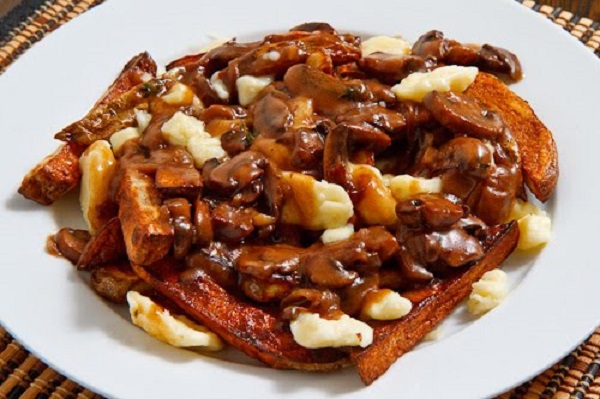
Has “The Great Stupid” Reached Its Zenith With Anti-Putin French Fries With Cheese Curds And Gravy Sanctions?

I really thought punishing Russian cats to show solidarity with Ukraine was as ridiculous as anti-Putin virtue-signaling mania could get. I was wrong. I stupidly forgot Heinlein’s Law: “Never underestimate the power of human stupidity.”

It is time to officially declare “The Great Stupid” a world-wide pandemic. Woodrow Wilson set the Spanish Flu against the world by sending infected doughboys out to fight in a pointless European war, and now social media combined with Americans’ narcissism and addiction to serial pandering “in these difficult times” has done it again.

Poutine, a strange gloppy dish popular among some in France and Canada, is being pulled from some restaurants in those countries to protest Russia’s invasion. In French, the word for the french fries, cheese curd and gravy recipe, from the French-Canadian pronunciation of the English word “pudding,” is pronounced like the Russian dictator’s name. That’s close enough to justify, in the “minds” of some protesters, punishing the food and its fans.

Removing poutine from menus, it is safe to say, will have as much effect on Putin’s conduct as President Biden slashing U.S. oil production will have on the course of climate change. It’s that stupid.

The move did at least spawn a good formulaic joke on Twitter, as one wag wrote, “Please stop confusing Putin and poutine. One is a dangerous and unwholesome mix of greasy, lumpy and congealed ingredients, the other is a delicious food.”*

_________________________

Pointer: Curmie

  • [I’ve eaten poutine. There’s a reason it hasn’t caught on in the United States.]


Cowardly, Culture-Betraying Grovel Of The Month: Karen Taylor Of Breakfast Cure

breakfast-cure-karen-taylor-congee

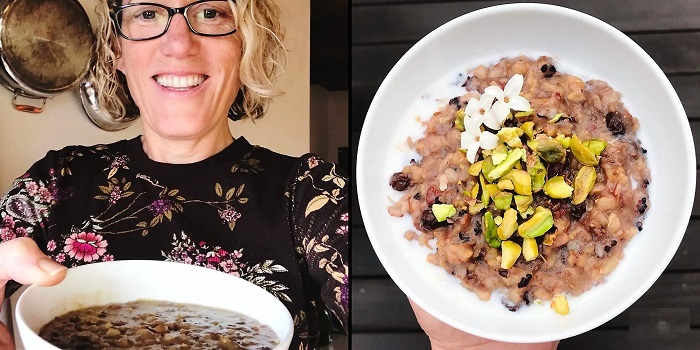
Breakfast Cure, an Oregon company, was attacked on social media by Asian Americans and the Woke Mob of culturally-appropriating congee, a traditional Asian rice porridge. The company sold its version of the dish in pre-packaged meals, and asserted that they were yummy. The problem is that the company was run by…a white woman.

How dare a white woman’s company claim to make a version of congee to fit the ” modern palate” and “improve” a recipe beloved by Asian cultures for centuries? So, as we have come to expect. company exec Karen Taylor begged for forgiveness:

“Recently, we fell short of supporting and honoring the Asian American community and for that, we are deeply sorry. We take full responsibility for any language on our website or in our marketing and have taken immediate steps to remedy that and educate ourselves, revising our mission to not just creating delicious breakfast meals, but becoming a better ally for the AAPI community.

Continue reading

And The July 5 Comment Of The Day Trifecta Concludes With Arthur In Maine’s Delicious Analysis of “Your 4th Of July Ethics Quiz: Food Racism?”

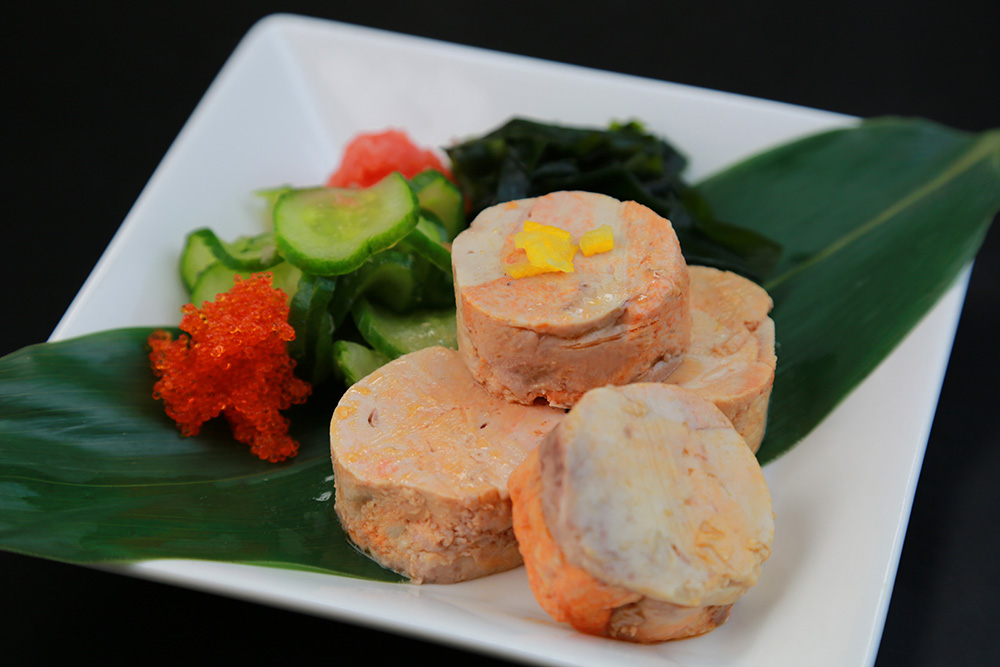
鮟肝

Finally, in the last of today’s opening trio of outstanding and varied Comments of the Day, Arthur in Maine, whom I did not know until this comment was a former chef, whips up a filling and pleasurable examination of of the issues raised in “Your 4th Of July Ethics Quiz: Food Racism?”...

There’s no longer any doubt in my mind: people are actively looking for ways to be offended. In the case of BLM, for example, the belief is clearly simple-minded rage at the rank-and-file level, but among those further up the chain it’s obviously about power and the grift. Calibrate your outrage correctly, and one can lead quite a handsome life.

Racism (and its first cousins misogyny and homophobia) is the perfect charge to level to achieve this (lucky souls like Lori Lightfoot can, and do, score the trifecta by claiming all three).

As a recovering professional chef (I haven’t lifted a pan for a paycheck in more than 30 years, and still miss it almost every day) I can tell you that serious pro cooks may be able to wow you with the complexity of their offerings. But the foods most of them prefer to eat generally trace back to poverty foods – those developed in poor cultures, where most people ate what the rich folk wouldn’t.

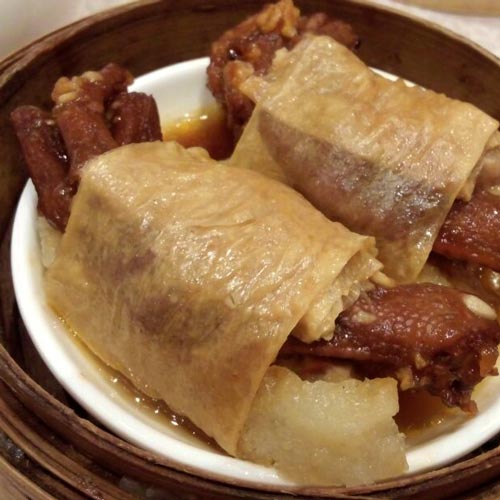
Most Americans, regardless of when or how their ancestors first showed up, simply don’t understand that in most other parts of the world NOTHING goes to waste. We give our scraps to cats and dogs. But very few other places do that. Thus, it’s little wonder that someone figured out a way to make duck feet in a way that actually tastes good. For the record, I would order those in a heartbeat, with full knowledge, just to try them! But in a place like China centuries ago, wasting protein like that was unthinkable, so you did what you could to make them tasty and that’s what’s for supper.

This doesn’t mean I like everything – not by a long shot. I find tripe revolting, and it’s extremely popular in first-world France. As a true afficionado of sushi, I’ll try anything – and just about the only thing I’ve ever been horribly disappointed in at a great sushi bar was ankimo – which is steamed monkfish liver. [Above] It was described to me as the “foie gras of Japan,” and I can see why. But it was still vile. I like foie gras, but not when it’s overlayed with the aroma of a cod-liver-oil-based ointment my mother used to use on us when we were small.

Some cultures happily eat grubs – no thank you. Others eat various insects; again, I’ll pass, but you’re welcome to my helping. The fact is that every culture has its culinary oddities and we’ve all got different tastes. This doesn’t mean our distaste for something is racist. It merely means that it’s so far outside of our culinary comfort zones that we just can’t get our heads around the idea. Many cultures find the American fondness for huge slabs of meat served up with starch baffling, for a variety of reasons.

This, by the way, extends beyond ingredients. There are those only too happy to make accusations of “cultural appropriation” when it comes to food. It is not. When I cook Chinese or Thai or Indian or Mexican food, I do so as a student, not as an appropriator. I do it because I’ve had the good fortune to taste these wonderful cuisines done properly. I want to understand how they’re done, partly because cooking professionally makes you fascinated by differing techniques and ingredients, and partly because I love to eat them and access to these foods locally, prepared by those from that region, is sharply limited. In the case of Chinese, especially, Chinese-American food has been so heavily adapted to North American tastes that it bears little resemblance to the real thing – and almost all of the adaptation has been done by Chinese cooks and restaurant owners. I really want to try the real thing.

Far as I’m concerned, when I make up a dinner of low-country shrimp and grits, the last thing on my mind is contempt for the poor Blacks for whom this was subsistence food. Rather, I’m thinking “this is absolutely ingenious. They took cheap stuff (grits) and free stuff (shrimp) and whatever else they had lying around and made it transcendent!” For me to cook it is not appropriation – it is the deepest possible respect.

I could make a similar argument with music, but I think you folks get my drift. This is “The Great Stupid” and “A Nation of Assholes,” to use Jack’s terms, colliding head-on to form a Great Nation of Stupid Assholes. We’d better come up with a way to pull out of this dive, and quickly.


Your 4th Of July Ethics Quiz: Food Racism?

duck_leg_wrap

Let’s play the ever more popular quiz show, ” Is It Racist?”!

Today’s topic: Late-night television host James Corden has long featured on his show a food-centered “Truth or Dare” variation called “Spill Your Guts or Fill Your Guts.” Celebrities choose to either answer personal questions or take a bite of a food that most viewers would deem nauseating or not properly food at all. Recently the cherubic British comic employed a table in the bit filled with Asian delicacies like chicken feet, pig’s blood and thousand-year eggs.

That was too much for the online outrage squad, apparently. An online petition condemning Corden’s use of Asian foods as disgusting has attracted than 46,000 signatories. The premise is that making fun of Asian food is racist.

Kim Saira, 24, a Los Angeles activist who organized the petition, told an interviewer, “James Corden is a white person and is actively using ingredients from Asian cultures and profiting from it and showing it in such a negative light. There’s a way to not like foods and still be respectful about it.”

The New York Times interviewed Lok Siu, an associate professor in the Department of Ethnic Studies at the University of California, Berkeley who agreed that Corden’s joke is indeed racist because it disrespects people’s cultures. The choice of Asian foods to highlight as disgusting to typical Americans makes Asian Americans feel more vulnerable or marginalized.

Really, Professor?

Oh yes indeed! “You use food as a metaphor to describe that distance, the kind of strangeness between a group of people that you don’t understand and their habits, the way they’re eating, the smell that comes with the spices,” she said. “There’s something around the way we discuss food, the way we think about food in our acceptance or rejection of it, it’s a rejection of a culture and the people that’s associated with it.” Siu regards the food as a metaphor for Asians not qualifying as “normal.”

Continue reading

The War On Dollar Stores

The problem–well, one of them—with trying to control how other people choose to live their lives is that nobody’s smart enough to do it without making things worse. Still,a lot of sociologists and politicians think they are smart enough.

Oklahoma City, Tulsa, Fort Worth, Birmingham, and Georgia’s DeKalb County have passed restrictions on dollar stores, and other communities are debating whether to follow their example, where laws and zoning regulations limit how many of these small stores can open within a particular area. Other laws dictate what they can and can’t sell, most notably fresh food. You see, the antipathy to dollar stores is based on the narrative pushed by activists that they saturate poor neighborhoods with cheap, over-processed food, squeezing out other retailers and lowering the quality of nutrition in poor communities. An analyst for the Center for Science in the Public Interest makes the argument, “When you have so many dollar stores in one neighborhood, there’s no incentive for a full-service grocery store to come in.” Dollar stores, like Dollar Tree and Dollar General, the researchers say, make neighborhoods seem poor, and scare away better stores,  “locking in poverty rather than reducing it,” as one told the Washington Post.

Ah! Poor nutrition  is the fault of dollar stores!

Oops! Continue reading

Ethics Dunce: WeWork

I wonder: how many of the sensitive progressives doubtlessly applauding the fear-monger about President Trump being an “authoritarian” see the obvious hypocrisy on working for a comany like the shared workspace company WeWork, that uses its power of its employees to force them to accept the company’s social values in their personal choices?

On July 13,  WeWork announced that it is banning red meat, pork, or poultry at company events like its “Summer Camp” retreat and internal kiosks, called “Honesty Markets.” (Yecchh. Do you dislike this preening company already like I do?) It also announced that WeWork’s 6,000 global employees won’t be reimbursed if they eat meat at their business meals, except for fish. Eating fish is OK, because…well, just because. The owners didn’t like “Finding Nemo,” or something. You know, fish have mothers too.

The company boasts that these policies  will save 445 million pounds of carbon dioxide emissions, more than 16 billion gallons of water, and the lives of 15,507,103 animals by 2023. 15,507,103. Wow—those are some precise statistics. Of course, the policy makes no sense. Why are eggs acceptable to WeWork, when egg-raising causes as much theoretical environmental damage as raising chickens to eat? Oddly, WeWork doesn’t impose strict environmental controls on the buildings it uses for offices and work space.

Could it be that this is just blatant, shameless, cynical virtue-signaling? Of course it is. Continue reading