Why Don’t People Understand What’s Unethical About Nepotism?

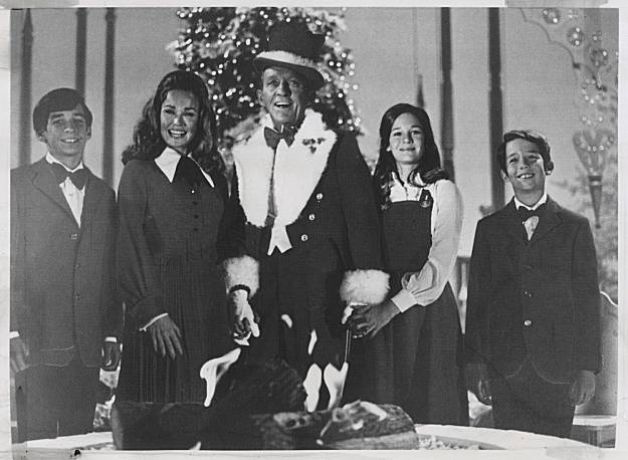
Bing and family

I suppose it is part of the larger problem that people don’t understand what’s wrong with conflicts of interest, and thus fall into them too easily. At its core, nepotism always, always, creates a conflict of interest for the supervisor, boss or manager, or leaves a strong suspicion of one, which is just as bad, the epitome of “the appearance of impropriety.” Nepotism simultaneously destroys the organization’s members’ trust in leadership—Was he or she objective? Was love and loyalty to a child rather than merit and the best interests of the organization behind the decision? Were there objectively better candidates? Will this bias harm me? —and the hired, no matter how good or qualified the son or daughter may be. If the organization declines and heads have to roll, the suspicion will always be that favoritism protects the offspring. If the organization is successful, there will still be a widespread belief that Sonny Boy or Darling Daughter is whispering in the parents’ ear, a mole, on the side of the parent rather than subordinates. Nepotism almost always destroys any organization’s morale, trust, and cohesion.

Why is this so difficult? It is spectacularly obvious, and the only defenses that are ever offered are… Continue reading

Did You Enjoy Your Pro Football Today? Here’s What You Were Cheering For…

brain_dissect08

From “Frontline”:

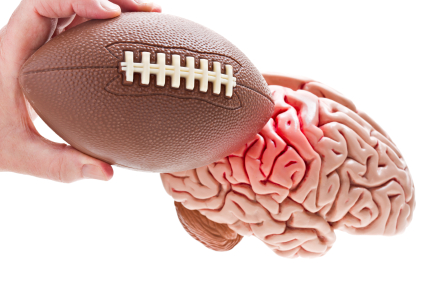
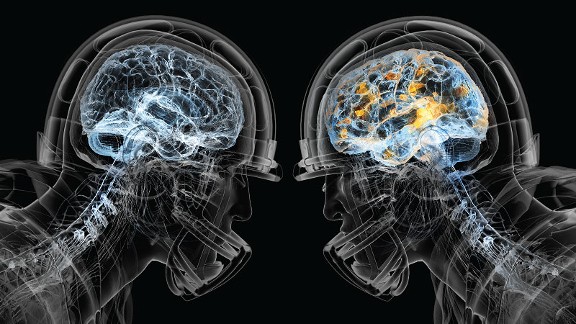
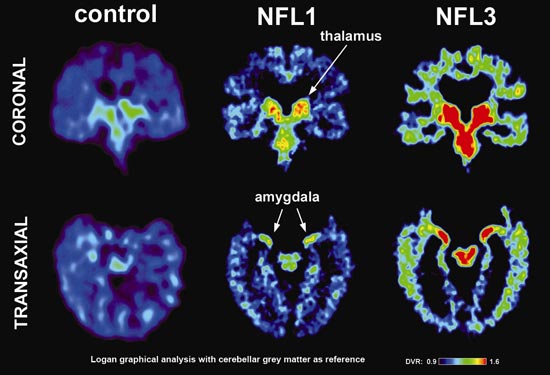
Researchers with the Department of Veterans Affairs and Boston University have now identified the degenerative disease known as chronic traumatic encephalopathy, or CTE, in 96 percent of NFL players that they’ve examined and in 79 percent of all football players. The disease is widely believed to stem from repetitive trauma to the head, and can lead to conditions such as memory loss, depression and dementia.

In total, the lab has found CTE in the brain tissue in 131 out of 165 individuals who, before their deaths, played football either professionally, semi-professionally, in college or in high school.

Any other non-essential industry that carried this much risk of crippling injury and death for its employees would be immediately the object of public protests, activist action, new government regulation and major fines and sanctions. Because of all the money involved and because of an ongoing effort by the NFL to deflect attention from its unconscionable business (there was more uproar over Tom Brady’s suspension than there has been over the concussion scandal), players are still getting brain-injured every Sunday, Monday and Thursday while the crowds cheer, the beer flows and the networks cash in. Parents still steer their kids into playing tackle football, and the carnage continues.

Yes, pro football is an exciting game. Too bad that keeping it exciting kills people, but it does. The game isn’t worth it.

No game is.

I wonder how long it will take for that to sink in?

The Ethics Alarms New NFL Season Ethics Quote Of The Week: Ex-Football Fan Steve Almond

football-brain-injury-symptoms

“We know, on some level, that a good many of the players we cheer for each Sunday will be revealed as all too human when they wind up battling dementia. But… fans have a whole suitcase full of rationalizations intended to preserve our right to consume, and thus sponsor, this hyper-violent game. “The players know the risks!” we insist. “They get paid millions!” But ultimately, our most effective dodge resides in our willingness to view the game as one big movie.”

Steve Almond, author of “Against Football, in an essay today for the Washington Post titled “Hollywood’s version of the gridiron is just fantasy football
(It hypes violence for the sake of drama — then reassures us everything is okay)”

Perfect timing for this article, a reminder of what fans are really watching and cheering for during the pro football season, which began today.

No, I won’t be watching.

Her’s another chilling quote from Almond’s article: Continue reading

Unethical Quote of the Month: NFL Hall of Famer Chris Carter

You tell it like it is, Chris!

You tell it like it is, Chris!

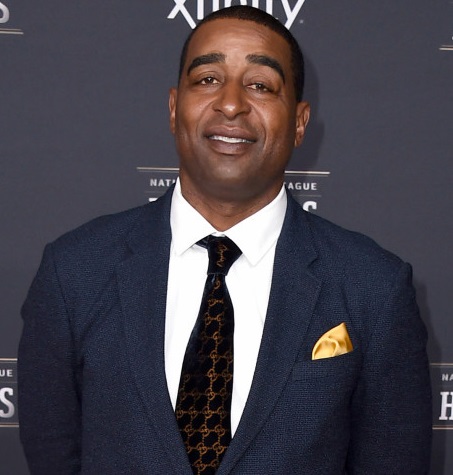
“Y’all not all going to do the right stuff, I got to teach y’all how to get around all this stuff, too. If you going to have a crew, one of those fools got to know he’s going to jail. We’ll get him out. If you going to have a crew, make sure they understand can’t nothing happen to you. Your name can’t be in lights, under no circumstances…In case y’all not going to decide to do the right thing, if y’all got a crew, you got to have a fall guy in the crew.” 

—NFL Hall of Famer Chris Carter, speaking to first year NFL players in a 2014 league-sponsored rookie symposium to help them “adapt to professional football.” His advice was then echoed by fellow Hall of Famer Warren Sapp.

That the NFL’s retired role models and immortals were–Have been? Still are?—giving out such toxic and unethical “wisdom” under the league’s auspices went unnoticed until a recently retired player,the 49ers’ Chris Borland who quit after just one season because he feared brain damage, referenced Carter’s speech on ESPN. Not only did the NFL’s speakers instruct its rookies to make sure they have a designated “fall guy” if they decide to break the law, it had Carter’s speech on its website all this time.

Now it’s all about damage control, of course. ESPN, which currently employs this ethics-challenged “sportsman” as an analyst, said in a statement… Continue reading

De’Andre Johnson Ethics Quiz: Is It Ever Ethical For A Male Athlete To Punch A Woman?

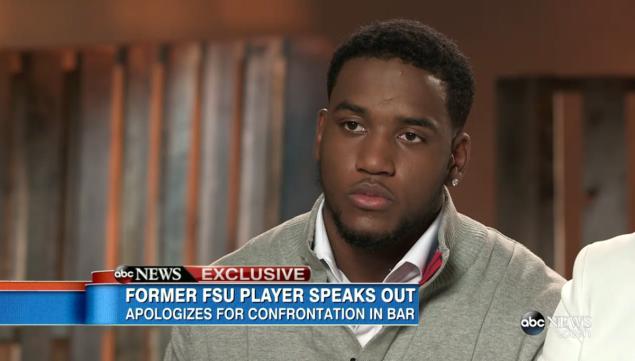
deandre

Nineteen year-old De’Andre Johnson was kicked off the Florida State team after “The Tallahassee Democrat” obtained a video showing Johnson punching a young woman in the face in an altercation at a bar in June. He has also been charged with battery. Johnson’s lawyer says that woman was taunting him with racial epithets and hit him twice before he punched her.

Lawyer Jose Baez told NBC News that Johnson “tried to deescalate the situation” but the woman “kneed him in the groin area” and “took another swing before he retaliated.”  “It wasn’t until she struck him twice that he reacted,” Baez said. “But he is very regretful that he didn’t turn around and walk away immediately.” Baez added, however that his client “makes no excuses for what happened.”

The video above does not seem to support Johnson’s defense, but never mind.  After the Ray Rice episode, no football player who lays a hand on a woman in anger will be able to avoid severe punishment. All athletes, and football players particularly, are on notice that as far as hitting women goes, it is strict liability unless the men’s lives are in danger, and maybe not even then.

But hypothetically, I’m curious. Racial epithets are fighting words. If a black athlete punched a white man, even a much smaller white man, after racial abuse and a knee to the groin, there would probably be no charges filed, and not much criticism either. How different, if different at all, should the ethical judgement be if the individual engaging in the abuse is a woman? What if she shows no signs of stopping unless she is physically stopped? What if she looks like this…

Gina Davis


Or. say, THIS…

Katka2

Or even this…

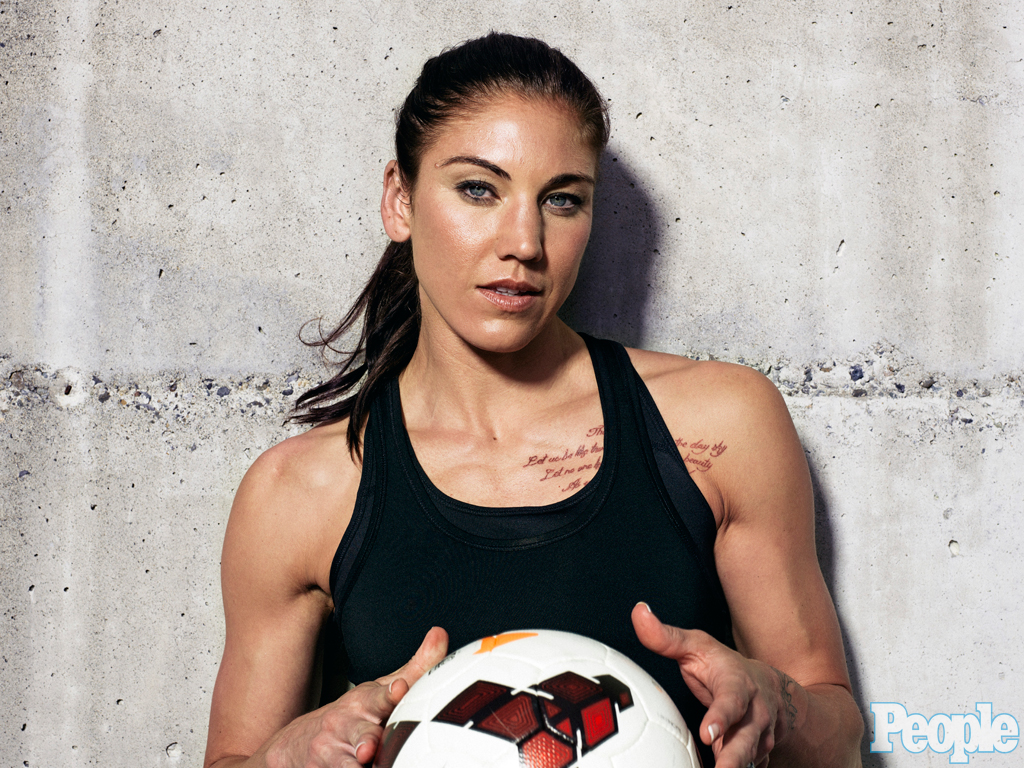
hope-solo

Hope is over six feet tall, you’ll recall and is rumored to have a penchant for striking people off the athletic field.

Thus your Ethics Alarms Ethics Quiz of the Day is this:

Is it always unethical for  any male athlete to punch any woman in a situation not involving the male’s mortal peril?

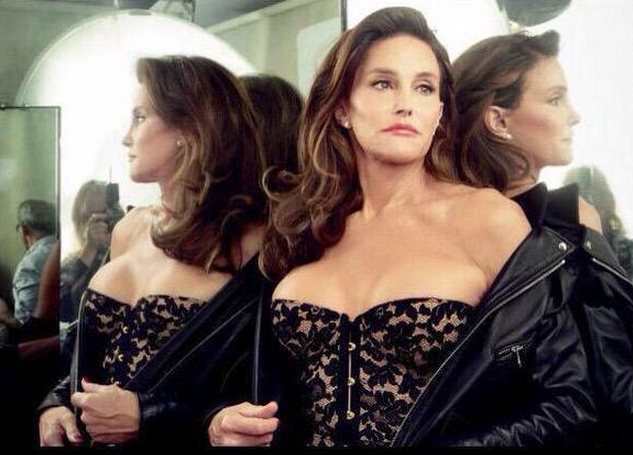
ADDENDUM…lest we forget: what if the woman is this former Olympic medal winner…

caitlyn-jenner

?


What A Surprise: The Patriots Cheated. Now Comes The Integrity Check For The NFL And Its Fans

deflated-football

From the New York Times:

…On Wednesday, the N.F.L. released its report on its investigation into the scandal surrounding the surreptitious and rule-violating practice of deflating game-day footballs. Using detailed accounts and circumstantial evidence, it implicated Brady as part of the operation, saying he surely knew that the two employees, McNally, 48, and Jastremski, then 35, were purposely deflating footballs to a level beyond the permissible threshold for Brady’s benefit.

“There is less direct evidence linking Brady to tampering activities than either McNally or Jastremski,” the report said. “We nevertheless believe, based on the totality of the evidence, that it is more probable than not that Brady was at least generally aware of the inappropriate activities of McNally and Jastremski.”

The N.F.L. report absolved other top Patriots officials, including Coach Bill Belichick, the owner Robert K. Kraft and the equipment manager Dave Schoenfeld, saying that there was “no wrongdoing or knowledge of wrongdoing” on their part….

I wrote the headline before I remembered: the NFL has no integrity, and neither do its fans. It was very clear that the Pats had cheated to get to the Super Bowl, and had the NFL cared anything about integrity, it would have completed its investigation in time to tell the Indianapolis Colts that they, and not the New England Serial Cheats, were going to the biggest game of the year, since it had lost the chance to a dastardly opponent. Instead, the league basked in the marquee match-up and one of the best games ever, and waited until now, four months later, with football as far out of mind as it can be, to announce that the New England Patriots, again, had cheated. Clever. Too clever.

I wrote a lot about this when it occurred, and had to put up with the predictable “innocent until proven guilty” crowd, the “it’s only a game ” crowd, the ” they would have won anyway” crowd, the “everybody cheats” crowd, the “it’s not like he invaded Iraq” crowd—essentially Barry Bonds defenders, Obama enablers, and Bill Clinton fans with football jerseys and Patriots beer mugs.  Now I get the Hillary Clinton crowd, who will ask, “What difference, at this point, does it make?” The NFL can make billions being as corrupt as it is, maiming athletes and turning colleges into shams, because so many, many Americans value a visceral rush on winter Sundays over fairness, justice, and honesty.

Observations: Continue reading

The Washington Post Editorial Board Demonstrates How Stupid Decisions Have Unprofessional Consequences

"As you can see, the logo and mascot are completely offensive. Well, you can see, but to let you see, you'd have to see it, and we won't take responsibility for letting you see it, because you shouldn't. Trust us."

“As you can see, the logo and mascot are completely offensive. Well, you can see, but to let you see, you’d have to see it, and we won’t take responsibility for letting you see it, because you shouldn’t. Trust us.”

Last August, the showboating Washington Post editors announced that they would no longer use the name of the city’s NFL team when writing about the city’s NFL team. It’s offensive you know. Well, to some. Well, to a theoretical some, those who want to make an ideological and philosophical point while forcing political correctness down the throats for the vast, vast majority of sports fans to whom “Washington Redskins” is the name of a well-loved (if lousy) football team, and nothing more or less, and no statement negative or positive about Native Americans at all.

In this the board is emulating the school that wouldn’t let a little deaf boy sign his own name, “Hunter,’ because the sign language designation was a hand-and-fingers approximation of a pistol, and pistols are offensive to even more people than politically incorrect team names are. This is really, really crazy stuff, even more for a newspaper than a school, in which it was just cruel. Newspapers are supposed to convey information clearly and unambiguously. Making symbolic stands requiring the self-censorship of words is a breach of professional duty and trust. The editors’ duty is to their readers, not to a theoretical Native American who reads a the footballs scores and has the vapors when he reads “Redskins.” (I still doubt that there are such people.)

Over the weekend the Post produced an embarrassing editorial that fulfilled all my dire predictions about the new policy: Continue reading

Ethics Hero: San Francisco 49ers linebacker Chris Borland,

concussions NFL

It is indeed strange to call someone an ethics hero for taking reasonable steps to save his own life. In the case of Chris Borland, however, it is appropriate.

Borland, one of the NFL’s top rookies in 2014, announced that he is retiring after just one season he does not want to risk the long-term effects of repetitive head trauma.

Borland, 24, said  he made his decision after consulting with  concussion researchers, and current and former teammates, as well as researching  the relationship between football and neurodegenerative disease.

“I just honestly want to do what’s best for my health,” Borland told ESPN.  “From what I’ve researched and what I’ve experienced, I don’t think it’s worth the risk.” Continue reading

Some Final, Hard Words Before Kick-off

cteliving

I made this comment to the main post on the Super Bowl, and decided that the point is important enough to elaborate on a bit and post here.

I’ve  become depressed talking to people on Facebook and elsewhere about the post. They don’t even pretend to have a real argument. Some fall back on the same rationalizations I explored in the post: one guy on Facebook’s rejoinder consisted of writing, “why worry about this when Congress and the White House are full of liars.” And people “liked” that response, which makes no sense at all.  The rest of the determined Super Bowl fans say, “Yeah, you’re right, but I like football and don’t want to think about it.”  That just is not a rational, ethical response to learning that your support is perpetuating a corrupt system that is exploiting and hurting people. It isn’t.

The NFL is not on the same scale of evil as slavery (yeah, I know, but we need the slaves to keep our lifestyle, so I don’t want to think about it) or the Holocaust (Yeah, but I don’t know any Jews, and the country’s doing well, so I don’t want to think about it) or a daughter-molesting husband (Yeah, but he’s a good provider, and I love him, so I don’t want to think about it). Sure, this is a game, but the process of self-delusion, corruption and passive acceptance of evil is exactly the same. Tell me how it isn’t.

And you know, it takes a lot less sacrifice to stop making it profitable for the NFL to lie and pay young men unto dementia and suicide than it did to reject slavery in the South, or Nazism in Germany, or even for an abused wife to report her husband for raping their daughter…because it is just a game. You can live a very happy life, a full life, a fun life, without the NFL being part of it. It’s corrupting American society and you. Don’t you they see that?

I guess slavery and the Holocaust didn’t have cool commercials, so that’s something…

Watching The Super Bowl Is Unethical. You Know That, Right?

Super2015

I was going to call this post “Ten Reasons Why Watching The Super Bowl Is Unethical,” then “TOP Ten Reasons Why Watching The Super Bowl Is Unethical.” Ethical people should only need one good reason though, and while you can rationalize it away to slave your conscience and to avoid having to renege on that RSVP to tomorrow’s Super Bowl party, it is there, undeniable, and ugly.

So you don’t even have to argue that the fact that the most successful NFL team for more than a decade is also the one repeatedly caught cheating is irrelevant because “everybody does it,” or that the large number of felons, thugs and spouse abusers the teams employ (one ex-player—why, a Patriots’ ex player, in fact!—just went on trial for murder) doesn’t matter because the players aren’t really role models, or that the fact that the NFL corrupts and warps our universities by turning them into football’s minor leagues is overstated because such scandals as the University of North Carolina conspiring to let athletes take imaginary courses aren’t really the NFL’s fault. All you have to do is accept the fact that when you support the NFL, it’s TV ratings and the companies that profit from them, you are not merely killing people, you are cheering while you do it.

Disgusting.

What the hell’s the matter with you?

Yesterday I rewatched the 2013 PBS Frontline documentary, “League of Denial.” (That’s the link to the video; the transcript is here.) It was more horrifying the second time, especially in view of how the NFL has managed to stonewall, tap-dance and delay its way through another season without seriously admitting the extent of its head injury problem. One could even argue that the Ray Rice fiasco and other scandals helped the NFL by deflecting attention away from its biggest ethical deficit. Today, CNN, which is duly promoting the Super Bowl all weekend, reported on Roger Goodell’s “state of the NFL” press conference. It didn’t mention the concussion issue at all, just spousal abuse. It’s working, Roger!

As thoroughly and irrefutable shown by the documentary and the book it was based on, football causes dementia and death. The earlier you start playing it, the worse the effects are. The NFL has systematically waged a public relations war of denial and deception, taking carefully calculated half-measures that will not address the problem, relying on America’s love of the game to allow the industry to continue making billions by paying young men to maim themselves. In hearings before Congress, U.S. representatives compared the NFL to cigarette manufacturers denying that cigarettes were addictive and that they caused health problems. The comparison is fair, but once the truth was known about tobacco, the non-smoking public quickly realized that it shouldn’t be cheering lung cancer on. Cigarette ads on TV were banned; programs that children watched were pressured to avoid showing characters smoking. But then, nobody gets a visceral rush watching human beings slowly kill themselves by puffing away: is that the difference? As long as you get a kick out of the process of athletes turning themselves into future drug addicts, depressives, neglectful fathers, abusive husbands, drooling imbeciles and suicides, it’s okay to keep watching and cheering?

Keep telling yourself that. It’s intellectually lazy and ethical abdication, and that’s all it is. Watching the Super Bowl can’t be wrong because so many people do it, right? You know, since you’re here, what’s the matter with that argument.

You can also try the argument that the players are accepting the risk, so it’s OK for you to encourage them, in fact help pay them to liquify their brains for your amusement. That would be employing three more rationalizations on the Ethics Alarms Hit Parade: Continue reading