The Flint Water Bills: Is This The Most Outrageous Ethics Story Of The Year?

“What do you mean it’s brown and poisonous? Water is water! Pay up.”

This story out of Flint, Michigan is so wrong, so astoundingly and obviously unethical, such a satire of government ineptitude at its worst and bureaucratic soullessness at its most damning, that I literally didn’t believe that it could be anything but a momentary hiccup, and that it would be resolved by the state, the city, an elected leader with guts and the sense God gave a mollusk, within a day or two, after the voices of millions were heard screaming. “WHAT????”

I was wrong. You want to know why it is insane to place your freedom, health, livelihood and survival and that of your families in the hands of government? THIS is why. Exactly this.

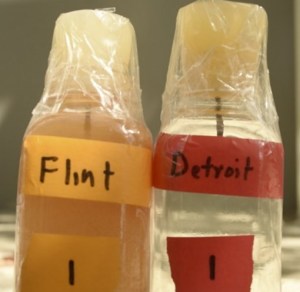
Thousands of Flint, Michigan residents risk losing their homes if they don’t pay their overdue water bills  less than three years since the start of a prolonged, botched, water safety crisis that led to extremely dangerous levels of lead in the city’s water pipes. In a move that will stand through the ages as the epitome of shamelessness and gall,  the Flint government sent threatening letters to more than 8,000 residents warning them they will face a tax lien if they do not pay water and sewage bills they have avoided for six months or more. Residents have until May 19 to pay the delinquent bills, and after that, a process begins that could end with foreclosure on their homes. Flint sends these letters annually to property owners whose payments are at least six months late, but skipped this process in 2016, given that the water the residents weren’t paying for was only technically water at all. The better label was “poison.” This year’s letters cover two years of past-due balances. Continue reading

When a Law Makes a Problem Worse

Where should we file this legislative botch? Perhaps we should file it under incompetence, lack of diligence, irresponsibility, or inexcusable ignorance of unintended—but completely predictable–consequences.

In California, a statute  passed overwhelmingly by the State Legislature required that lawyers who work on loan modification agreements for homeowners facing foreclosure cannot require any payment until the work is complete. The law was intended to eliminate unscrupulous firms from running scams on desperate Californians, more of whom face foreclosure than in any other state, in which the firms charged large up-front fees and then did nothing. Unfortunately, it also made it unprofitable and risky for legitimate, honest lawyers to put in many hours battling lenders skilled at running out the clock in the hopes of being reimbursed by clients who are already in financial deep water. Thus stressed California homeowners, having been given protection by their tunnel-visioned representatives, now can find no legal help at all, honest or otherwise. Continue reading

The Most Unethical Businesses and Viatical Settlements

A British website has posted its list of the “10 Most Unethical Ways to Make Money.” Like all such lists, there are some eyebrow-raising choices, both in what is included and what is not, usually attributable to the political and ideological biases of the list-makers. For example, until we have figured out a way to run civilization without oil, it is more than a bit unreasonable to declare the entire oil industry unethical, climate change or no climate change. Oil is on the list, though, while child porn, drug dealing and gambling are not. The list could be the result of a collaboration among Greenpeace and Ron Paul.

Still, most of the inclusions on the list, like blood diamonds, ivory, and sweat shops are neither surprising nor controversial. Placing one of the businesses on the list, however, qualifies as a public service. Most people have no idea what the industry is, or what is unethical about it.

That business is the viatical settlement industry, which preys on human impulsiveness and irresponsibility to make large profits. Unfortunately, the list’s brief explanation of the industry misses its most unquestionable and sinister incarnation: buying structured settlements. Continue reading

One More Reason to Distrust Banks

National Public Radio did a feature on foreclosure auctions, following one real estate investor as he sought a bargain at an auction in Boston. The auction held a surprise for the investor, the reporter, and me. After the young man who was being followed by the NPR correspondent won a lively bidding battle for a $300,000 house at the bargain price of $84,000, the bank refused to sell it to him. The reason: the auction was a “reserve” auction rather than an “absolute” auction, meaning that there was an unpublished price at which the bank would sell the property, but winning bids below that amount could be rejected. The investor was angry. The NPR reporter was confused.

The auction was rigged. Continue reading

The Ethics of Voluntary Mortgage Default

Friend and reader Loren Platzman alerted me to the article, “Walk Away From Your Mortgage!” in the Sunday Times Magazine ( the magazine was, in fact, sitting unopened by my desk at the time. Some days, I just know that reading Randy Cohen’s “The Ethicist” column is going to ruin my weekend.) The thrust of the article, an installment in the “The Way We Live Now” series, is that American cultural tradition has reinforced the belief that there is something unethical and shameful about voluntarily letting the bank foreclose on a property when falling property values have placed the mortgage “under water,” meaning that the home is worth less than the amount still owed on it. Continue reading