This was another dreary Saturday (almost all Saturdays have been dreary since Grace died, to be honest) until Ethics Alarms provided a triple treat. A new commenter debuted with a Comment of the Day, and I always love that. Better yet, the comment arrived on an old post, one from July of 2012. I also love that, as it shows that these poor rhetorical exercises with too many typos don’t always vanish like random pebbles thrown into the surf, but sometimes provide amusement and perspective to readers months and even years later, giving hope that my existence has some meaning after all.
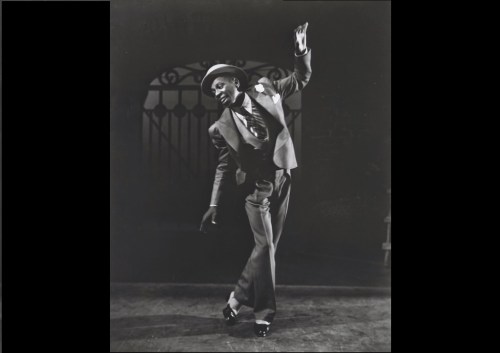
Best of all, however, is that Kevin Hall’s Comment of the Day focuses much deserved attention on the amazing Nicholas Brothers, probably the greatest tap dancers who ever lived, whose memory is tragically faint because of the racism that restricted their careers. That number above, from a film that was seen almost exclusively by black audiences when it was released, is perhaps the most famous film performance by Harold and Fayard Nicholas, and it is certainly characteristic of their amazing style, but there are others. There is also a website dedicated to their lives and artistry. I feel about the Nicholas Brothers a bit like King Arthur does about the legend of Camelot as he expresses it in the final song in that Lerner and Lowe musical…
Ask every person if he’s heard the story And tell it strong and clear if he has not…
The dance number in question, “Bojangles of Harlem,” was, as I wrote in the introduction, Fred’s homage to two great black tap dancers who were teachers and inspirations for him, Bill “Bojangles” Robinson and John Bubbles. The post explained why the salute to Robinson was important, but did not elaborate more on Bubbles. He was not as big a star as Robinson nor as well known, either at the time of the film or ever, and is less remembered today. Nevertheless he was an important cultural figure, and it can be argued that Astaire’s number was really more of a tribute to Bubbles than Robinson, not that many noticed.
First, you need to know about Bubbles. Born John Sublett (1902-1986), he teamed at the age of ten with the six-year-old Ford Lee “Buck” Washington in a decades-lasting act, “Buck and Bubbles.” in which Buck stood and played piano and Bubbles sang and danced. As adults, “Buck and Bubbles” ultimately played at New York’s Palace Theatre, the London Palladium, the Ziegfeld Follies, the Cotton Club, the Apollo, and became the first blacks to perform at Radio City Music Hall. Their popularity allowed them to break the color barriers in theaters across the country. Continue reading →
We recently came through the usual Halloween bag of “blackface” controversies, and Ethics Alarms, as it has before, tried to guide the discussion to the material distinctions that social justice warriors, who strategically deal in absolutes when seeking power through real and contrived offense, refuse to acknowledge or are intellectually incapable of doing so. The short version of the Ethics Alarms message: make-up for legitimate theatrical purposes isn’t “blackface,” isn’t “racist,” and shouldn’t be object of knee jerk condemnation based on emotion or ignorance.
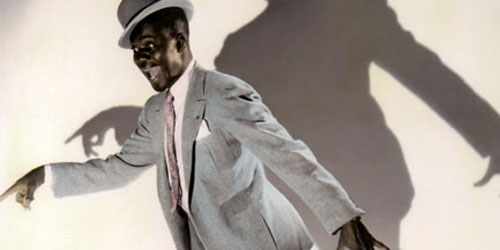
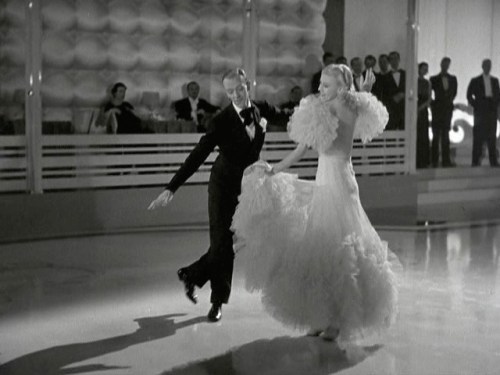
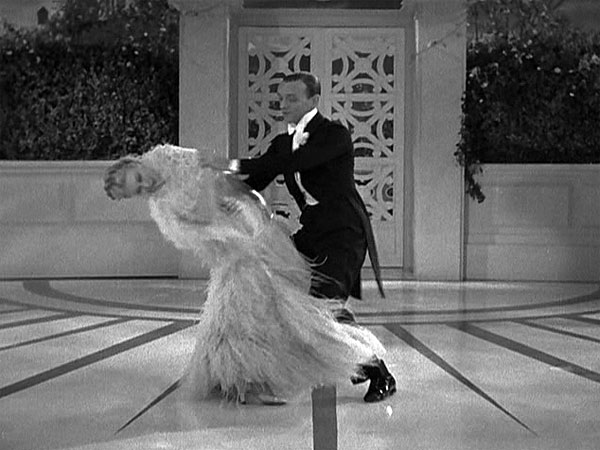
Today Turner Movie Classics showed “Swing Time,” the 1936 musical that is probably the high water mark in the Ginger Rogers-Fred Astaire canon. It has the best song (“The Way You Look Tonight”), the best novelty scene (Astaire pretending to be a klutz in a dance lesson with Ginger, then shocking her and her boss—and saving her job— by showing “what a great teacher she is” by dancing, well, like Fred Astaire) and arguably two of the best dances by the two, “Never Gonna Dance” and “Waltz in Swing Time.” The film also contains a controversial “blackface” number, “Bojangles of Harlem,” in which Fred pays homage to two great black tap dancers who were teachers and inspirations for him, Bill “Bojangles” Robinson and John Bubbles. Local TV stations have long been reluctant to show “Swingtime” because of guaranteed complaints that the number is racist, or, if they cut the number (which is unconscionable), complaints pour in from film and Astaire fans that they have defaced a classic out of misplaced political correctness.
If one argues that the number is “racist” because of Fred’s make-up, then one is necessarily arguing that no white performer can ever offer an admiring salute to an African-American great by emulating him. Astaire’s choreography (by Hermes Pan) contained specific references to trademark steps and gestures by both Bubbles and Robinson, though more of the former than the latter. (Some would say, maybe even Fred, that this was because he didn’t dare set himself up to be compared to Robinson, whom many regard as the greatest tap-dancer of them all.) Blackface, as typified by minstrel shows, was a burlesque of negative black stereotypes. There isn’t a hint of this in Astaire’s number: he wears dark make-up because he is honoring two contemporary black dance stars who he knew, learned from, and respected. The make-up is the epitome of a legitimate theatrical device, and racially demeaning neither in intent nor effect. Those who see it as such are either deliberately misconstruing the number, or don’t know what they are talking about. (There is an unfortunate racially demeaning set piece that appears for a couple of seconds at the start, a large caricature of exaggerated black features. You can take the film out of 1936, but you can’t take 1936 out of the film.)
The ironic part of the effort to quarantine “Bojangles of Harlem” is that the number is one of the few reminders in our culture of who Bill Robinson was, and—here’s Jack on his “duty to remember” and cultural literacy soapbox again–he was an important figure in American theatrical, cultural and civil rights history that should be remembered. Instead, Robinson is almost completely forgotten: I bet most of the NAACP members who get up in arms when TMC shows “Swing Time” have no idea how significant Robinson was, and the contributions he made to art and society. Continue reading →
“[Hillary] is judged — she is judged a little bit, I have to say, all of the controversy surrounding her and they’re both — Donald Trump and her, she’s judged a little bit on a Ginger Rogers standard, which is, is that the bar is so low for him. I mean, Ginger Rogers, the famous like she did everything Fred Astaire did but backwards and in heels.”
–—Matthew Dowd, ABC News political analyst, during today’s “roundtable” discussion on ABC’s “This Week” regarding the various scandals and controversies keeping Hillary Clinton’s poll numbers within striking distance of Donald Trump.
1. See, what did I tell you? It’s starting already. As with Obama, the news media, taking the lead from Democrats and feminists, will shamelessly use accusations of bias to argue away any and all legitimate criticism of Hillary Clinton as a manifestation of sexism. Boy, am I sick of that; everyone should be. It is a cheap, destructive tactic, designed to suppress opposition. And to have the gall to do this in the wake of the FBI notes showing a Presidential candidate either lying her head off or confessing utter incompetence, ignorance and stupidity…how insulting to viewers. Continue reading →
I didn’t set out to make the news media’s tolerating unethical race arguments the theme today, I really didn’t. While I was researching ESPN’s decision not to hire whites on its new website, to which the Wall Street Journal shrugged and said, by not saying, “Wait….WHAT?” in effect, “Sure, go ahead, discriminate!”, I came upon this piece of journalistic offal called “100 Times A White Actor Played Someone Who Wasn’t White” on the Washington Post website. It was authored by Meredith Simons, a law student and freelance writer. Well, Meredith, free-lance writers get away with these miserably researched and unfairly gathered articles a lot, but if you try to sneak this kind of crap past a judge or a senior partner, you’re going to have a rude awakening.
The fact that her article is incompetent and unfair in myriad ways doesn’t mean that Hollywood has been an equal opportunity employer throughout decades past. It hasn’t, but it has reflected the society and tastes in which it operates, and often has been a leader in race attitudes, as in the film “Imitation of Life.” There is work to be done, but careless articles like Simons’ just causes ignorance and confusion.
The immediate impetus for her hit piece on Hollywood casting was apparently the controversy over the casting of white actor Joseph Fiennes as Michael Jackson in a planned biopic. Simons calls him “African American icon Michael Jackson,” which is the lawyer’s trick of framing an issue to rig the debate—good one, Meredith—but skin-bleaching, child-molesting, whitebread pop star Jackson is hardly an “African American” icon: he’s a national pop icon who went out of his way to reject race and racial labels. That is what the song “Black and White” was about, right? Sure, the casting was a gimmick, but it’s a clever and legitimate gimmick that I would guess Jackson would have approved of enthusiastically. When they make “The Rachel Dolezal Story,” will Simons complain if a black actress gets the part?
So based on a phony race controversy—two, in fact, with the Oscar nomination spat included—Simons comes up with an even more phony list. “Despite decades of protests over racially inappropriate casting and the recent protests over the lack of diversity among Oscar nominees, filmmakers continue to cast white actors as minority characters on a depressingly regular basis,” she writes.
(A tip for Social Justice Warriors: don’t write about the performing arts and casting if you don’t know a damn thing about either. The purpose of the performing arts is 1) to make a good product and 2) to make money. Anything that in any way interferes with either is irrelevant. There is no such thing as “racially inappropriate casting” if it furthers either of these objectives, or ideally both. It is not Hollywood’s job to eradicate racial inequality in the U.S. If it helps, that’s responsible and ethical of the movie-makers. This is, however, neither its art nor its business.)
Simons’ list is the epitome of the Texas Sharpshooter fallacy done badly. The fallacy consists of cherry-picking facts that support a predetermined argument and “drawing a circle around them” as if they are the sole relevant facts, while intentionally or mistakenly omitting equally relevant facts that would tend to disprove it. Bad lawyer that she is, she draws a metaphorical circle around “facts” that don’t even support her argument. I’m not going to go through the entire hundred (say “thank-you, Jack!”) but I’ll point out some of her most egregious botches.
To begin with, either she didn’t see the movies on the list, or intentionally misrepresents them. My favorite, and typical of her terrible research: Continue reading →
"There goes Fred, getting all religious again...."
With some hesitation, I must re-open the issue of officious inter-meddlers and grievance-mongerers who get satisfaction and empowerment from claiming to be offended by things that could not possibly harm them or genuinely infringe on their rights. The atheists are at it again.
My position has been stated here and elsewhere many times: in the absence of genuine long or short term harm, the ethical human response to a symbolic grievance is to keep one’s response proportional to the offense, which sometimes means considering how many individuals will be made miserable in order to satisfy one individual or a small group, and letting it go. Forcing a university to change the long-standing name of its football team based on a dubious argument that the name is an offense to Native Americans when most Native Americans couldn’t care less, for example, is wrong. Forcing a school to stop teaching kindergarteners to sing “Rudolf the Red-nosed Reindeer” because a Jewish parent thinks the song promotes Christianity is wrong.
I haven’t seen the remake of “True Grit,” but I know I will, and like many other fans of the original 1969 version, I’m trying to conquer my biases. The latest effort by the usually brilliant Coen brothers creates ethical conflicts for me, and I am hoping I can resolve them right now. Can I be fair to their work, while being loyal to a film that is important to me for many reasons?
The original, 1969 “True Grit” won John Wayne his only Oscar for his self-mocking portrayal of fat, seedy law man Rooster Cogburn,
who is hired by a young girl to track down her father’s murderer. I love the film; I saw it on the big screen nine times, in fact. Remaking it with anyone else in the starring role feels like an insult, somehow, as if the Duke’s version was somehow inadequate.
Intellectually, I know that’s nonsense. Artists have a right to revisit classic stories and put their personal stamp on them, and they should be encouraged to do it. Every new version of a good story, if done well, will discover some unmined treasure in the material. Why discourage the exploration? Continue reading →
Weaver has apologized, swearing that when she posed for the picture with her pastor, she did not know the photo would upset anybody. “It was fun, done in innocence. My friend is dressed up as syrup. He wife was going to be a pancake,” said Weaver. “I never intended to offend anyone. I took the picture off my Facebook. I apologize if it ever meant to offend anyone.” Weaver,who apparently has lived in a cave since 1957, also said she was not aware that Aunt Jemima represented black stereotypes to many people, and was unaware that wearing blackface was also considered offensive to the vast majority of Americans. Yes, she really did. (Note: I know Aunt Jemima as a brand of pancake mix; I did not think the logo gracee any syrup containers. I assumed Weaver confused confused the good Aunt with her white rival. Mrs. Butterworth, who is a syrup brand. Aunt Jemima obviously hangs out with pancakes, so the pastor’s wife was on firm ground, no matter what. But thanks to a syrup-minded reader, I have been set straight: there is Aunt Jemima syrup, too)
State Sen. Thelma Harper, an African-American, said she and members of the Black Caucus want to put Harper before the House Ethics Committee.“This is what we have had to live with, making a mockery of being black and copying the language that Aunt Jemima used,” said Harper.
This controversy has everything! Halloween ethics! Blackface ethics! Facebook ethics! Political ethics! Syrup ethics!
 Ethics Alarms