 It looks like I’ll be a guest on NPR’s “Tell Me More” this morning around 11:20 to talk about the Donald Sterling controversy.
freedom of thought
The Donald Sterling Mess: Watching An Ethics Train Wreck Develop Before Our Eyes

I realized that the Donald Sterling controversy was going to be a full-blown ethics train wreck when, as I should have predicted but didn’t, President Obama once again tossed his office, authority and power into a completely non-governmental matter that his involvement could only confound, and can’t possibly help. “When ignorant folks want to advertise their ignorance you don’t really have to do anything, you just let them talk,” the President responded during a news conference in Kuala Lumpur, after being asked about Sterling’s alleged remarks. At least he didn’t say that V. Stiviano, the NBA owner’s mistress who recorded the comments, could have been his daughter.
This continues a pattern, exemplified by the President’s gratuitous statements as the Trayvon Martin case was unfolding, of Obama being willfully ignorant of the injustice done when the President of the United States uses his bullhorn to warp independent investigations before they are complete, and attempts to sway public opinion in matters outside his proper duties. The NBA is currently examining the circumstances of Sterling’s statements, and Obama’s irresponsible interjections can do nothing but upset the process. He simply cannot or will not restrain himself. My view: this stuff is easy, an approximation of being Presidential for a leader who is foundering in dealing with the important, legitimate challenges of his job. It is an expression of weakness.
Meanwhile, it is increasingly likely that, in classic ethics train wreck fashion, everyone connected to and responding to this episode is or will be tainted. Sterling’s girlfriend, for example, broke the law: California is a state like Maryland ( Hello, Linda Tripp, wherever you are!) and others, where it is illegal to record anyone without their consent. Her motives were also despicable: reputedly she had vowed vengeance because Sterling’s wife (oh, yes, her sugar-daddy is still married) has sued her for embezzlement. His wife calls her a gold-digger; perhaps that is unfair, and perhaps she really loves the 80-year-old evident racist for the purity of his soul and vitality in the sack rather than his bank account, just as I may be secretly a bighorn sheep. But the incident roiling the worlds of sports and culture is clearly the product of domestic warfare and at least two thoroughly awful people. Continue reading
Strict Liability For Biases and the Racist NBA Team Owner Principle
Keep the lock secure, and all the bad stuff inside might not matter…
I had an unusual roommate in law school, a former Marine, smart, handsome and charismatic. Let’s call him “Carl.”
He was also a racist, and unapologetic about it. He was an anti-Semite too. After Carl died at the age of 27 in a freak accident, his funeral was attended by several Jewish and African-American law students who considered my roommate a good friend. They had no idea that he was prejudiced, because my friend treated everyone with fairness and respect, at least in my experience. I would ask Carl about this, and he would express surprise that I would be confused at his behavior. “I would never treat anyone with disrespect, no matter who he or she was, or unfairly either,” he said. “That would be wrong, and not Christian.” (He was a Roman Catholic.) Carl also gave annual contributions to the United Negro College Fund, and he was far from wealthy.
That was my introduction to the truth, and it is a comforting one, that biases can be overcome if someone has the character and the strength to recognize them as biases. Racism is just a bias, you know; a particularly harmful and strong one, but still a bias. Having a bias, even a strong one, is not unethical, just as thoughts themselves, without more, are not unethical. A bias is an ethics impediment, a condition that makes being ethical more difficult, and for many of us, impossible. My friend was one of the most honorable and ethical people in his conduct that I ever knew. He had a bias, knew that to be an ethical human being he had to overcome it daily, and did.
If, however, his black and Jewish friends had learned about his private arguments with me, they would have been hurt, and could not have remained friends with him. It would simply be a matter of trust….although, in fact, Carl was completely worthy of trust no matter what race or creed you were. But it is impossible, I think to continue to trust anyone once you know that he is prejudiced against your race.
This brings us to the ugly tale of Donald Sterling, owner of the NBA’s Los Angeles Clippers. His girlfriend, who is black, recorded an argument between the two of them in which he reprimanded her for posting photographs of African-American companions. Continue reading
Bob Newhart, Legatus And GLAAD: “What’s Going On Here?” Is Tricky To Answer
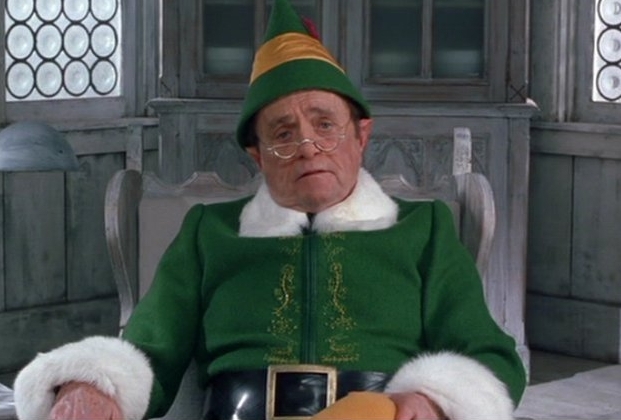
“Hey, Bob—What’s going on here?”
The news item about comedian Bob Newhart cancelling an appearance for the Catholic executives networking group Legatus under pressure from GLAAD is fascinating.
From the perspective of Ethics Alarms, it illustrates a peculiar phenomenon I experience often, where a prominent story seems to have been designed by the Ethics Gods specifically to combine and coalesce several issues that have been discussed here recently. For Bob’s travails neatly touch on the issues of pro-gay advocacy groups attempting to restrict expression they disagree with( The Phil Robertson-A&E Affair, Dec. 19), a comedian being pressured to alter the course of his comedy (Steve Martin’s Tweet Retreat, Dec. 23) and an entertainment figure being criticized for the activities of his audience (Mariah’s Dirty Money, Dec. 23). You would think I could analyze the Newhart controversy by just sticking my conclusions from those recent posts, plus some of the more illuminating reader comments, into my Ethics-O-Tron, and it would spit out the verdict promptly.
It doesn’t work that way, at least in this instance, and that prompts the other observation. In most ethics problems, the starting point is the question, “What’s going on here?”, which forces us to determine the factual and ethical context of the choices made by the participants. Here, the question can be framed several diverging ways, leading to different assessments of the ethics involved. Thus, asking “What’s going on here?” in the Bob Newhart Episode, we might get: Continue reading
On The NFL Player’s Slur, The MSNBC Journalist’s Lie, Words, Conduct, Reason And Proportion

If Riley Cooper were black, of course, then he would be “cool.”
There are words, there are thoughts, and there is conduct. Thoughts are not unethical. Conduct can be unethical. Words can be considered conduct when they are intended to have, or do have, material and measurable direct effects. Verbal abuse is conduct. Using a rude, vulgar or hateful word may not be verbal abuse.
Although the NFL and his team, the Philadelphia Eagles have every right, and some good reasons, to punish, suspend or even terminate Riley Cooper because a video reveals the Eagles player as saying, “I will jump that fence and fight every nigger here!” at a Kenny Chesney concert, I don’t see any conduct there, just words. He did not direct the racial slur at any individual, and there is no evidence that it was intended to harm or intimidate any African-Americans. He did not intend for the outburst to be publicized of communicated to anyone but the friends he said it to. On a pure just punishment for harm intended or achieved basis, it is ridiculous for Cooper to be facing the loss of millions and his athletic career because he uttered a single racial slur that was captured on a video. It cannot be defended logically or as a reasonable position. Using one racial slur in that setting doesn’t prove that Cooper is a racist. It doesn’t prove hate. Even if it did, hate is not illegal or even unethical until the hater acts on it in an unethical way. And a word is just a word. We don’t, or shouldn’t, fear mere words in a rational American society. We shouldn’t have taboos, or people who “cannnot be named,” like in the Harry Potter books. The ease and certitude with which otherwise intelligent people capable of making judgments involving proportion and common sense blithely go along with the batty idea that uttering a word, only uttering it and nothing more, should result in devastating consequences, is frightening. It is a per se unethical position, because it is unfair, and incompetent, because it is essentially crazy.
Having said that, I can understand why, since so many people are irrational about words, why the NFL or the Philadelphia Eagles, as a business decision, may decide that they don’t want Cooper associated with them any more. That is a rational choice, and may even be the best choice. That is not the same as saying that he deserves that result. If the bulk of NFL fans are fanatically politically correct, then the NFL and its teams cannot afford to ignore that. Sorry Riley. Continue reading
Kobe Bryant’s Two-Word Ethics Train Wreck

"Fucking" + "faggot"= ?
In the heat of an NBA game, Los Angeles Laker star Kobe Bryant shouted a two-word epithet at a NBA ref, estimated to be the 9,675,987, 555, 321,005, 349,674, 021st time a player has insulted a ref in hoops since they started keeping count in 1973. Unfortunately, the two words were “fucking faggot.”
And it was picked up by the TV microphones.
In rapid succession, the Gay Lesbian Transgendered advocates were all over the NBA, calling a foul; Bryant was apologizing, and the NBA was fining Bryant $100,000.
Ethics train wreck. It’s a train wreck because whatever happens at this point, the result has ethical problems, and the lesson is ethically muddled. There is no question at all that if the remark by Bryant hadn’t been picked up by the mics, there would be no issue, no controversy. But it was, which means that a comment intended for one individual (if that) became a national display of incivility (or worse.) Continue reading
The Ethics of Silencing Hate
Good and just people are not just bothered by the bad things people do, but also by the bad things they may be thinking while they do it. This is reasonable, on its face, because a lot of the time (though far from always), misconduct arises from ideas, emotions, motives and intentions that are not very admirable and sometimes despicable. The indisputable connection between what we think and what we do increasingly is fueling the idea that we can and should try to control people’s thoughts—not by encouraging good ones through education, culture, philosophy, role models and positive reinforcement, but by preventing bad thoughts through punishment, enforced conformity, censorship, and linguistic controls.
The civil rights movement, once dedicated to wiping out discrimination, which is a kind of conduct, now focuses on eliminating bigotry and bias, a form of thought. Hate crime legislation extends penalties for criminal acts beyond the act itself to what the criminal was thinking while he committed it. The term “hate speech” is frequently used to describe any intense negative opinion as a way of both suppressing and de-legitimizing political opinion. The label effectively argues that an opinion, even a reasonable opinion by itself, should be shunned and even suppressed based on the “illegitimacy” of the thought process used to arrive at it.
As many predicted, this device or tendency (which you call it depends in part on how cynical you are) has intensified with the election of our first African American president, allowing the kind of intense opposition rhetoric, satire, condemnation, hyperbole and ridicule that has been directed at virtually every president before him to now be characterized as hate speech, or proof of racial prejudice. People, of course, have a right to engage in this tactic, but it is wrong.
Over on Facebook, over a million people have joined a fan page called “DEAR LORD, THIS YEAR YOU TOOK MY FAVORITE ACTOR, PATRICK SWAYZIE. YOU TOOK MY FAVORITE ACTRESS, FARAH FAWCETT. YOU TOOK MY FAVORITE SINGER, MICHAEL JACKSON. I JUST WANTED TO LET YOU KNOW, MY FAVORITE PRESIDENT IS BARACK OBAMA. AMEN”, inspired by a joke that is a lot older than Barack Obama, and probably older than Millard Fillmore. Continue reading
 Ethics Alarms